
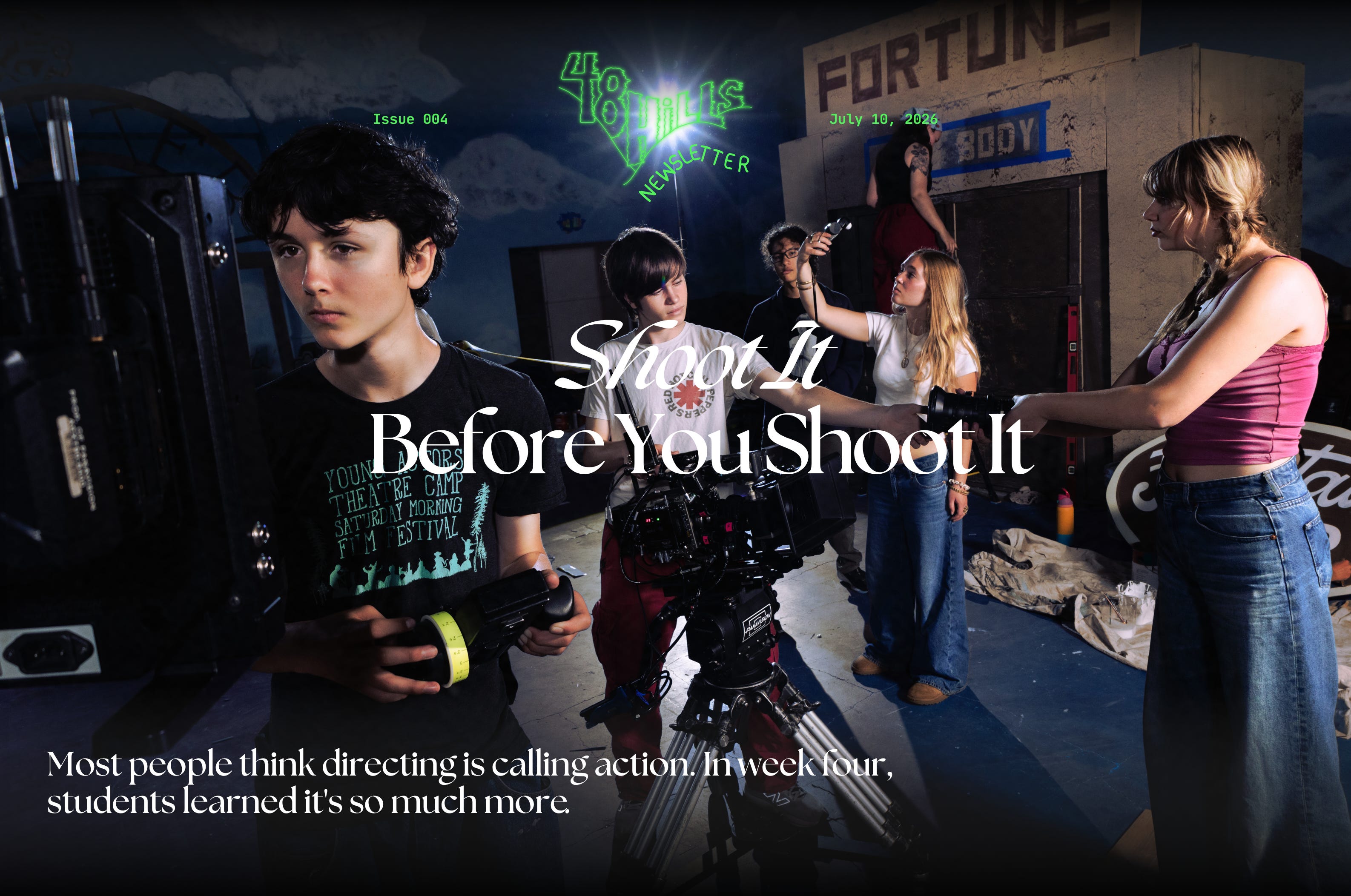
Pre-production is officially complete. This week, cameras are rolling.
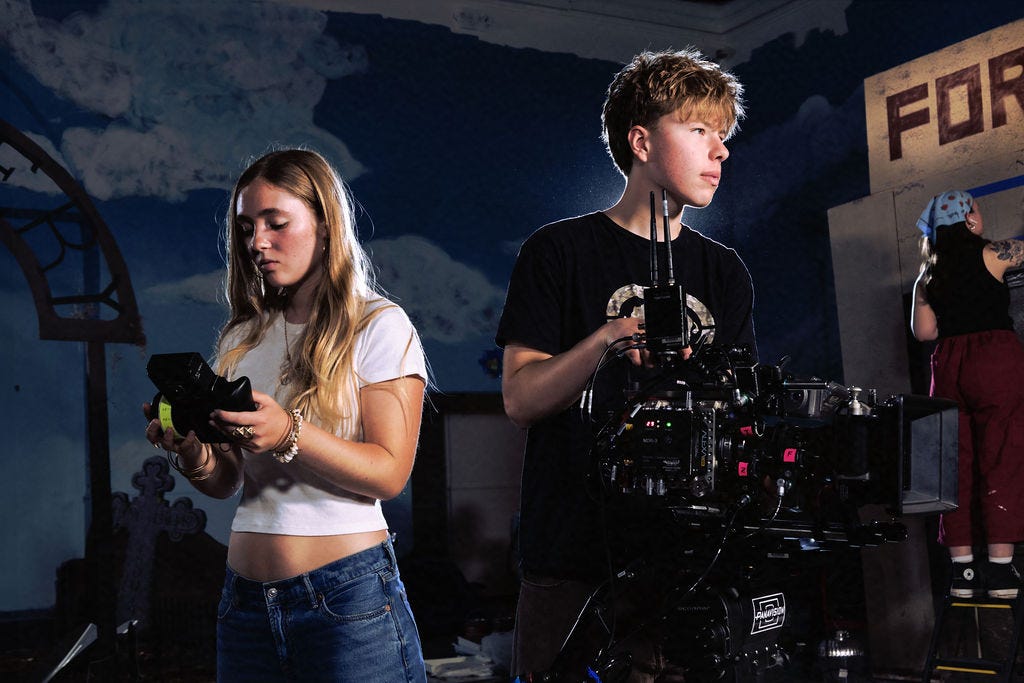
But first, each of our directors was assigned a scene and told to treat it like their own mini movie. They’re responsible for everything inside it: the performances, the shot list, the plan they build with their cinematographer. They’re even shaping the rooms themselves in some cases. One directing student spent part of the week with Olivia, head of the Art Department, rearranging the furniture inside his character’s house to fit how he wants to stage the scene. Another director brought their own books from home to populate the abandoned lot their characters have turned into a makeshift home.
Owning a scene sounds manageable until you count the shots and the characters you must track over the arc of a scene. Take one scene where five inseparable best friends – all of whom should be distinguished as their own person – wander into a historian’s museum. With the historian, that’s six characters spreading out through a room. Each one needs a shot to capture their performance and fully thought out blocking, with continuity too. A scene like that can swallow a shoot day if the director doesn’t have a plan.
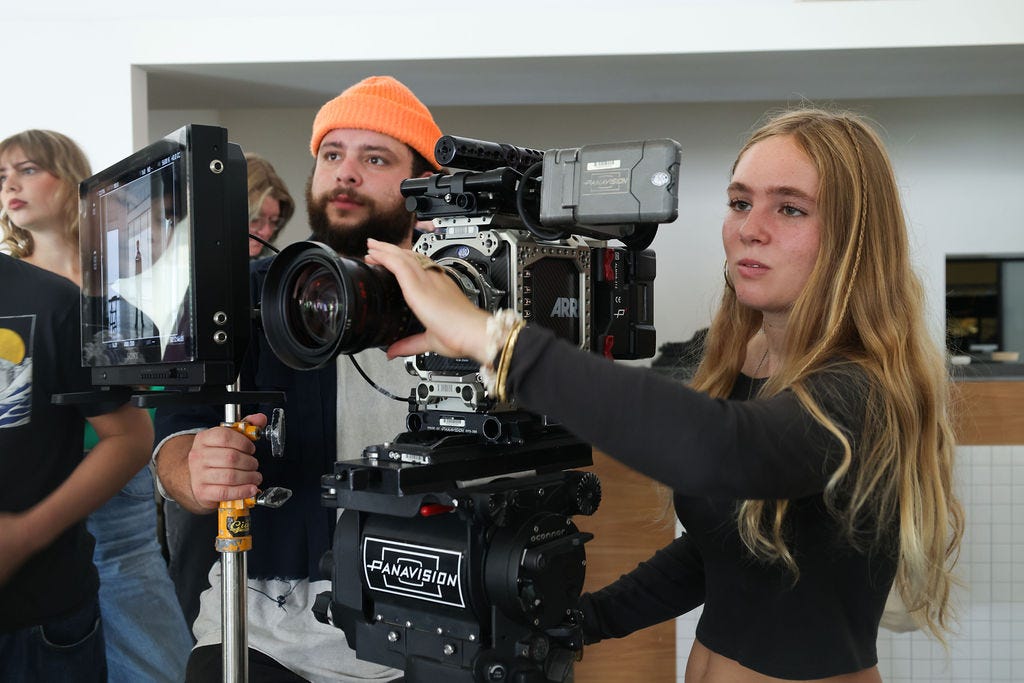
So the week became a crash course in something harder to teach than logistics: judgement. Where a director focuses their attention, and ours as viewers, when time is limited. Can you fit two characters into one shot to elongate your shooting time? How do you simplify a character’s physical movement in a scene while not forcing an unnatural stiltedness upon them? And what about before they move at all – how can the way a character is staged, in combination with the camera’s framing, tell a big part of our story before a character has spoken a word?
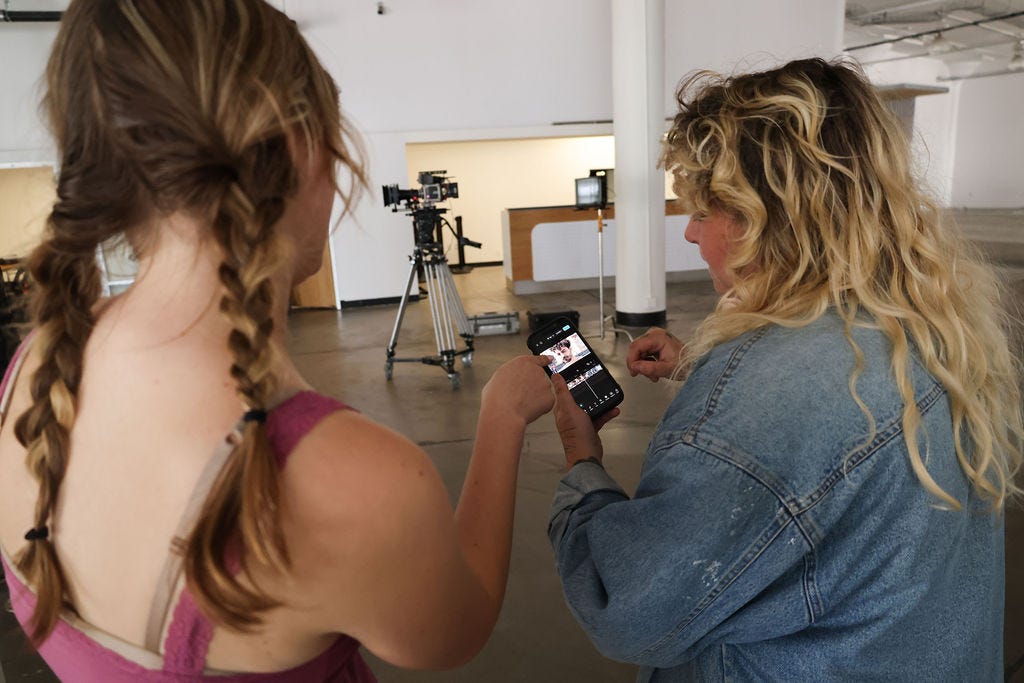
The directors and DPs began by building their shot lists and storyboards. But then we asked them to take their actors into our half-built locations, shoot their entire scene on an iPhone, then edit it.
The edit is critical. Plenty of shot lists look great on paper but fall apart in the cut. Eyelines don’t match. Two angles that seemed different turn out too similar, so cutting between them looks goofy. Even with a perfect storyboard, some of this is only discoverable in an edit.
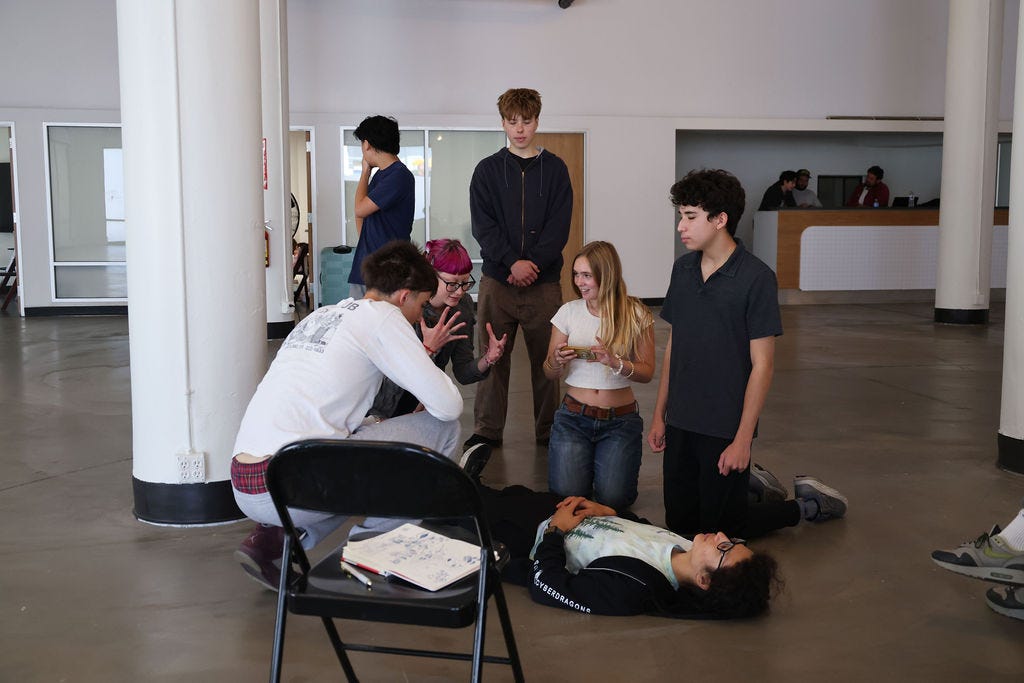
If you work in a field where the advice is to test and fail fast, this is that. A director who discovers a broken cut on a phone in week four can fix it for free. A director who discovers that same problem on set, with a full crew and just a day to get the scene, puts a film’s budget and timeline in jeopardy. Working filmmakers know this — a director who has already watched their scene cut together walks onto set with a tested plan. That changes how they carry themselves on set.
Almost every student arrives wanting the fancy shot. The long tracking move, the fisheye, the elaborate opening. So all week, in sessions with Joe, Eliza, and Link, the directors stood in front of the “studio” and answered one question about every choice: why?
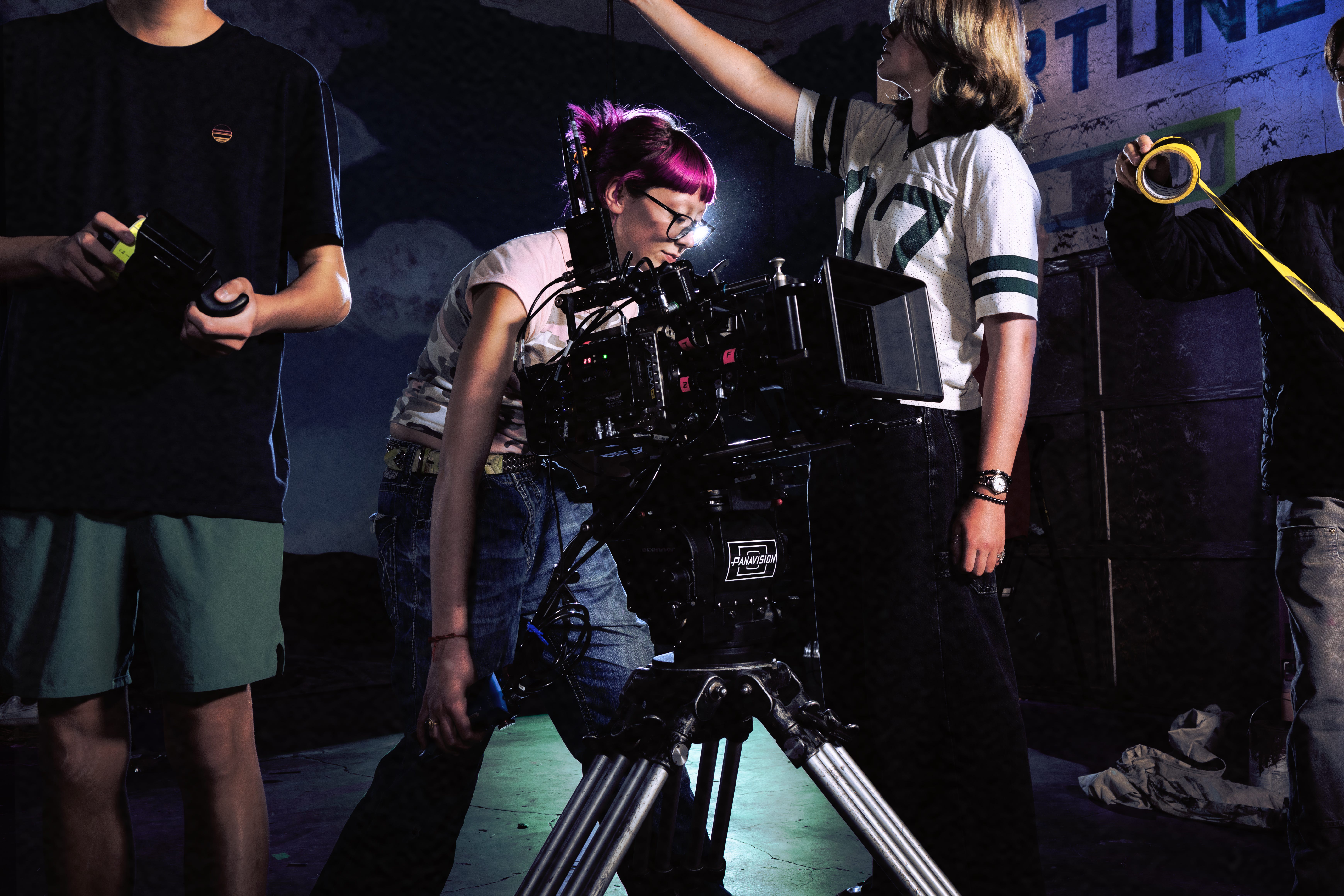
The writers built an arc of information into each scene. If the script opens on a character showing off something she stole and your version opens on a different character entirely, you need a reason for that. Maybe the scripted opening wasn’t working. Maybe you found a better way in. Both are fine. But flourish that can’t serve the story or character won’t make the cut at 48 Hills.
These three teachers don’t share the same taste. A shot list that holds up across three different sensibilities is a shot list each director can drive with confidence and clarity.
Casting finished in week four as well. First, students soft-cast the actors they felt strongest about, then ran chemistry reads, bringing different scene partners together to see which pairings lit up the scene.
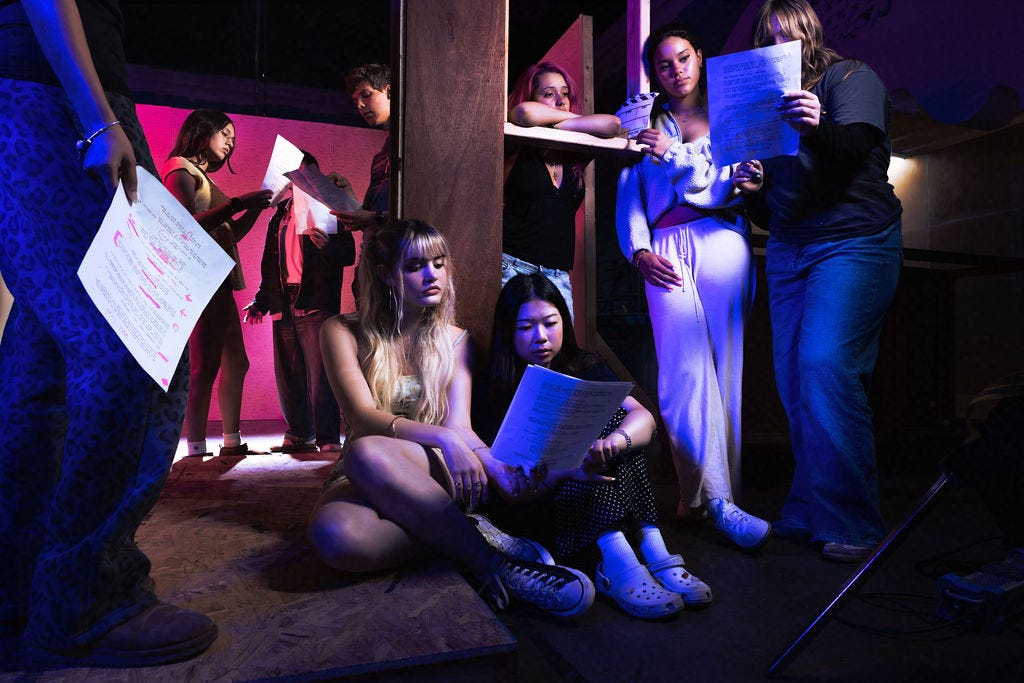
Several performances were strong enough to bend the characters themselves. You don’t know if your dialogue works or not until your actors say the words aloud. It’s a gift that doesn’t always feel that way as a writer. But if you can push past the initial pain of discovering your dialogue isn’t there just yet, you discover your actors are granting you a chance to learn what isn’t working just yet, so long as you really pay attention. The script tells you what it wants to be.
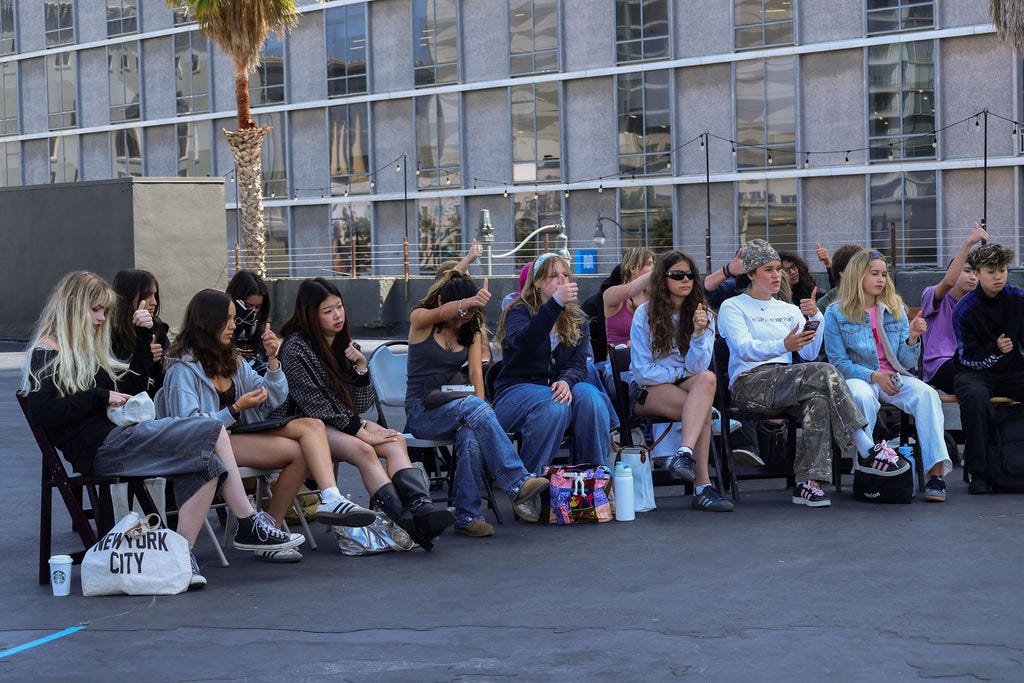
Take, for example, a scene where two characters were meant to be excitedly antagonizing each other. Each actor that came in to audition struggled to gain the momentum in the middle of the scene necessary to reach its emotional zenith. There was a strong starting point and a clear end the writers intended for, but the middle was a sunken bridge. It didn’t allow the actors the proper runway to get from quiet tension to full-on hysteria. Adding two more lines in the middle of the scene changed everything – suddenly, it was actable.
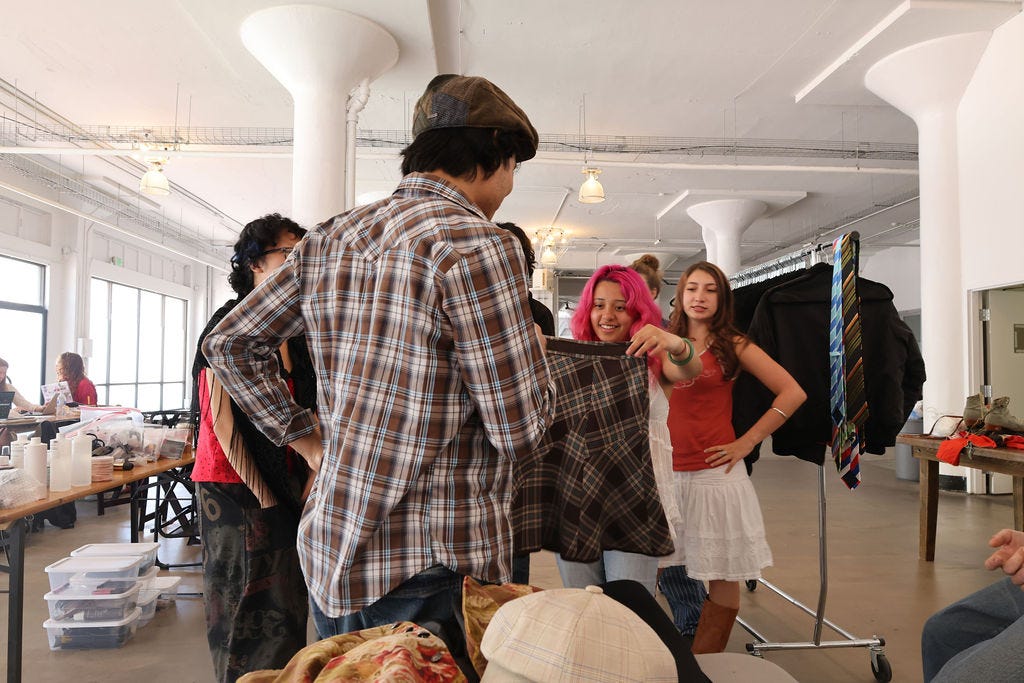
The costume and hair and makeup students followed, inventing lived histories through bold makeup choices and purposefully aged clothing.
That’s how the Costume Department works here. Kinsey, who has spent a decade designing in the industry, brings her students into rehearsals and has them imagine the costume in real time, on a person. When a designer gets stuck on who a character is, they can walk upstairs and ask the actor, or ask the director what they’re visualizing. On a professional set, you might get an actor over Zoom if you’re lucky.
Costume student Stella’s design for our ‘diner waitress’ shows how a costume choice gets tested against the world. She researched the character, decided building the uniform from scratch wasn’t feasible, went hunting for the real thing, told Kinsey she feared it would never turn up, and then found it: a yellow waitress dress that fit the character exactly. Then she went to see the diner the Art Department is building and noticed the green tints in the tile. Now the waitress may go green instead. The dress fit the character, but Stella caught that it also has to fit the room.
Her other design needed no revision. Dahlia: a lonesome dreamer with a big interior world received a look that was carefully layered, polka dot tights, the kind of staple outfit that puts her in the lineage of Juno and Lady Bird. Kinsey’s review: you see it and it reads. That’s Dahlia.
That’s the third lesson, which you can only learn in a live filmmaking setting. The students spent weeks developing these characters on paper, and then real actors and a real set arrived with new information. The strongest designs adapted accordingly.
Drew Daniels arrives on set. The last film he shot, Anora, won the Academy Award for Best Picture, and when our directing and cinematography students show him a shot list, he’ll ask the same question we asked all week: why this shot? Our students will be prepared to answer.
More from the first week of the shoot in the next issue.
No posts
Comments
Nothing yet. Say the first thing.
Sign in to join the conversation.