
By Jenna Norton, Alexa Romberg, Sylvia Chou, Rui Carlos Pereira de Sá, and anonymous members of 27 UNIHTED
Since June 2026, National Institutes of Health (NIH) Director Dr. Jayanta Bhattacharya began speaking publicly about a narrowed NIH scope that would stop research intended to inform policy and policymakers. Instead, he said NIH should be focused on stakeholders who directly benefit from NIH research: patients, doctors, hospitals, and public health. He made such comments in multiple venues, including at the American Society of Health Economists; the National Bureau of Economic Research (NBER) Coordinating Center on the Economics of Alzheimer’s Disease and Alzheimer’s Disease-Related Dementias Prevention, Treatment, and Care; the Population Association of America meeting, and an NIH Health Disparities Workshop. Since then, NIH staff report that “policy” is now on the NIH’s growing list of banned words. (Or in the Orwellian doublespeak of Bhattacharya’s NIH: “terms that may potentially be associated with misalignment with the agency’s priorities.”) This change and it’s impacts have also been covered through in-depth reporting by Nature. But public health is directly influenced by policy, in healthcare settings and beyond. We cannot hope to improve public health if NIH actively prevents research intended to inform policy and policymakers.
Thanks for reading! Subscribe for free to receive new posts and support my work.
Policy and public health are intimately linked
This link is so inextricable that during the first Trump Administration, the U.S. Department of Health and Human Services made “Use health policy to prevent disease and improve health” an explicit goal for Healthy People 2030. To quote Healthy People 2030 (emphasis added):
Health policy can have a major impact on health and well-being. Healthy People 2030 focuses on keeping people safe and healthy through laws and policies at the local, state, territorial, and federal level.
Evidence-based health policies can help prevent disease and promote health. For example, smoke-free policies can help prevent smoking initiation and increase quit attempts. Similarly, policies requiring community water systems to provide fluoridated water can improve oral health.
Establishing informed policies is key to improving health nationwide.
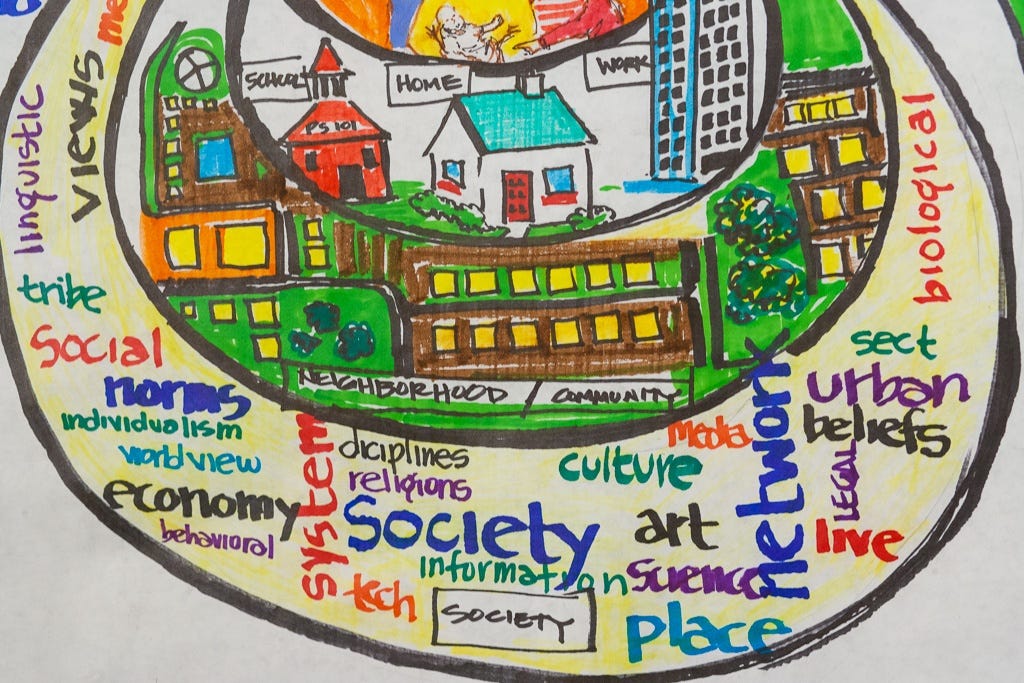
Image source: Nicka Smith, Kaiser Permanente Institute for Health Policy: https://www.flickr.com/photos/taedc/9237142179
Policies that impact public health extend far beyond those that establish public health departments, shape healthcare delivery systems, or guide health insurance access. They also include the infrastructure, transportation, food, education, environmental, housing and other policies that frame the conditions of our daily lives. In fact, for more than a decade, the American Public Health Association has advocated for “health in all policies,” working with local constituencies to build coalitions that improve the health of their communities.
The NIH mission is broader than the healthcare system
Not all health challenges can be met through medical interventions. The NIH mission — “to seek fundamental knowledge about the nature and behavior of living systems and the application of that knowledge to enhance health, lengthen life, and reduce illness and disability” — is appropriately agnostic as to how and where applications of knowledge will best enhance health. Dr. Bhattacharya’s list of direct beneficiaries from NIH-funded research is a dramatic narrowing of stakeholders. For example, public schools are an important contributor to health, and NIH has funded the development of effective, school-based interventions to prevent suicide and substance use, enhance nutrition and physical activity, and improve diabetes management. Likewise, some health needs are met by organizations outside healthcare settings, such as Tribal organizations, community-based programs, and justice settings.
NIH has long invested in research that informs effective health-related policies. Across many sectors and settings, NIH has built the evidence base to shape policy at the state and national level, including policies addressing air quality, trans fats in food, smoking on flights, and BPA in children’s toys, as well as at the local level, such as sidewalks and green space. NIH also recognized that implementation of new policies provides a unique time-window to study both intended and unintended effects of policy changes. For years, until 2025 when NIH began throttling notices of funding opportunity, NIH offered multiple funding opportunities designed specifically for time-sensitive research on changes in local, state, or national policy. Some individual NIH institutes and centers offered similar time-sensitive mechanisms specific to their missions, such as understanding the impact or implementation of new drug policies, environmental policies, and obesity-related policies.
Continued NIH support is necessary to ensure evidence-based health policies
Major funders of U.S. biomedical and health research include industry (66%), federal government (25% total, and 20% by the NIH alone), universities (7%), philanthropy (1.2%), and state governments (0.9%). If NIH steps back from public health policy research, which of these could we expect to fill the gap?
While industry may have the capital to fund such public health policy research, they lack the equipoise. Industry has a questionable track record when it comes to public health science. Profit motives often conflict with public health objectives, creating opportunities for bias. In fact, this is an issue regularly raised by the Make America Healthy Again movement, led by Secretary of Health and Human Services Robert F. Kennedy, Jr. Do we really want tobacco executives in charge of research informing smoking policies or the fast food lobby determining nutrition science directions? We’ve seen the results of such a funding strategy: industry has repeatedly skewed and undermined public health research when it might affect their profit margin, from smoking, to acid rain, to the ozone hole, to climate change. This pattern has been documented again and again and again. (And again and again and again.) Even if industry could be trusted as the only voice to inform such research, their interests lay elsewhere: nearly 90% of industry-funded health research targets commercial products such as biopharmaceuticals and medical devices.
All other non-industry funders combined could make only the most minimally perceptible dent in the gap that will be left by NIH’s recent refusal to fund public health policy research. Further, charitable funding may in some cases be subject to the same bias and skew as industry funding, as charitable foundations lack the systems of open competition and transparency that undergird the NIH. For example, charitable donations that disproportionately stem from wealthy donors may lead to conscious or unconscious shifts in priorities toward donor agendas. In fact, when the tobacco industry wished to put their thumbs on the scales of science, they did so through philanthropic funding of research.
As a government funded entity with (until recently) rigorous standards of peer review and political independence, the NIH is the only major funder capable of delivering public health policy research free from the influence of monied interests. But in order for NIH to continue to produce such research, we must choose to protect the institution, including its ability to fund public health policy research without political censorship.
Conclusion
All good public health policy must be evidence-based. That requires funding meritorious science, prioritized by scientists and not politicians. NIH has long supported research into life-saving interventions: clean water systems, vaccination, obesity prevention. This work was guided by the principle that a cure does not need a paying customer, and public health is not a quarterly balance sheet. Public health is a long-term, compounding investment in the people of this country. No ready substitutions exist to replace NIH-funded policy-related research. Barring policy research is contrary to the principle of public health itself.
*Updated on 8/11/2026 to reference coverage on this policy change by Nature: https://www.nature.com/articles/d41586-026-02489-2
Thanks for reading! Subscribe for free to receive new posts and support my work.
Comments
Nothing yet. Say the first thing.
Sign in to join the conversation.