
In many abrupt and careless changes over the past 18 months, NIH leadership has avoided or ignored input from those with relevant expertise or experience. This has caused foreseeable and avoidable harm. This is Concern 6 of The Bethesda Declaration: One Year Later, a comprehensive overview of the harmful policies witnessed by NIH staff from January 2025 through June 2026. But even recently NIH continues to propose changes to long-standing policies with minimum staff input. For example:
(1) NIH is no longer supporting independent clinical trials K awards. Request For Input here.
(2) NIH is reducing transparency in peer review and funding decisions with the “Unified Funding Strategy.” Request For Input here.
We urge you to consider commenting on both of the above, and sharing them with your community and institution. Finally, despite lack of communication from NIH, we still understand that K99 award eligibility may soon be restricted, disallowing visa-holders from using this pathway to independence. We will address these issues more fully in upcoming communication. Ok! Back to the The Bethesda Declaration: One Year Later…
In case you missed them, we’ve already covered concerns 1 (an antiscience agenda), 2 (discriminatory policies), 3 (ignoring ethical standards), 4 (an unstable research environment), and 5 (lost critical expertise). We will be sharing the remaining three concerns in the coming weeks.
If you share these concerns, please add your voice (named or anonymous) so we can draw attention to these issues. Read the full report and learn more about the Bethesda Declaration Movement on the 27 UNIHTED website.
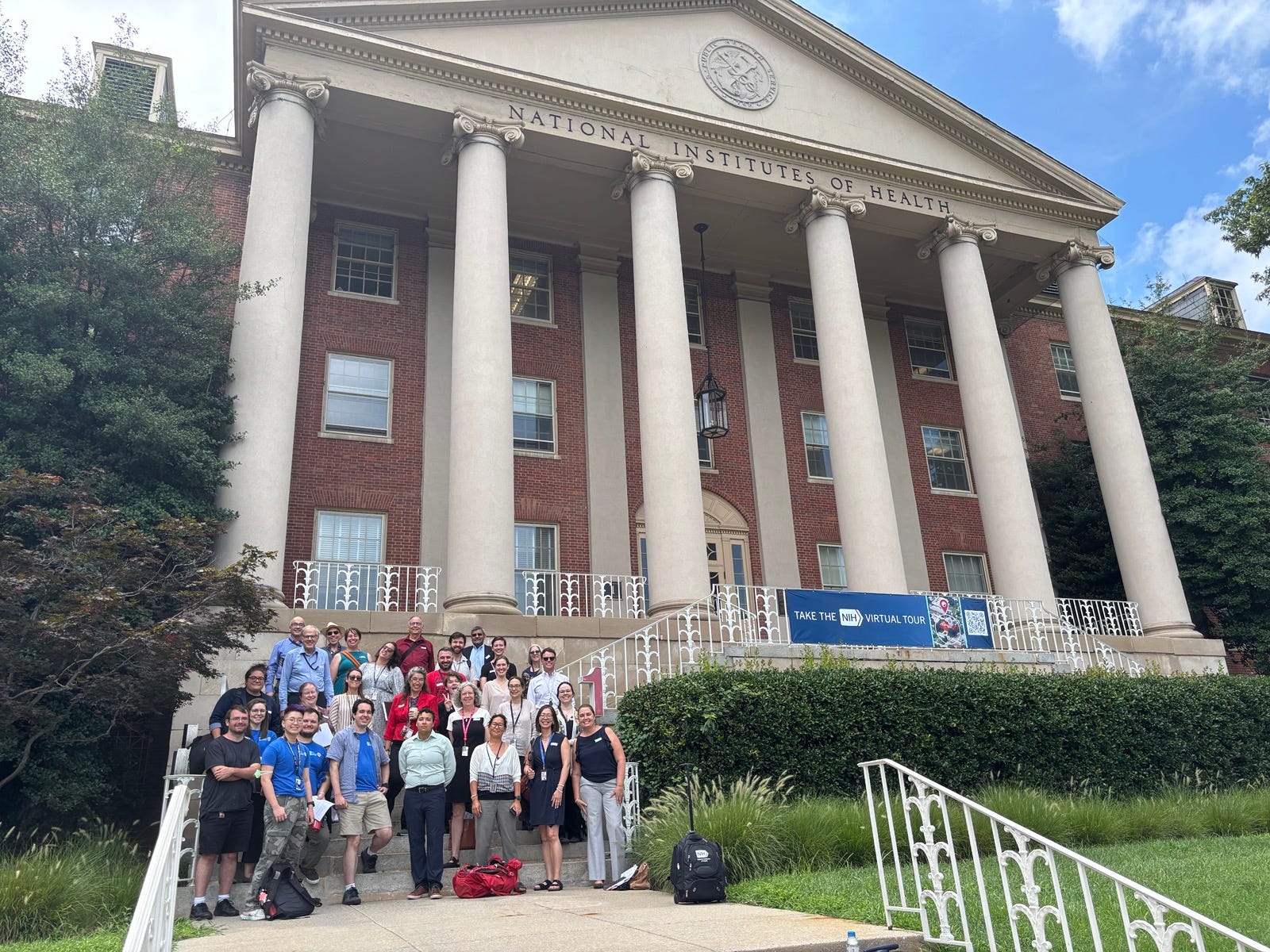
Institutional expertise is an essential component of organizational success. It is an asset that any competent management team must deploy for effective and prudent stewardship of available resources. This is particularly true at NIH, because the consequences of ignoring institutional expertise can endanger lives. In addition, the ecosystem of NIH grant funding is large and complex because it must address a wide variety of needs for the health research enterprise. These include filling research gaps with specific funding opportunities and projects, supporting shared research resources and infrastructure, training the research workforce, and supporting entrepreneurship through the small business programs. As such, developing and implementing effective policies at NIH depends on institutional knowledge that cannot be improvised. The staff who implement, administer, and oversee this ecosystem carry decades of scientific and administrative experience.
Since January 2025, Director Bhattacharya, HHS, DOGE, and OMB have in multiple instances envisioned, developed, and implemented changes without staff input, forcing staff to execute flawed and often conflicting policies that cause harm. These instances involve political disruption of peer and programmatic review without staff consultation, even though peer review is mandated by the Public Health Service Act (42 U.S.C. § 6A). This has led to extensive delays, termination or non-awarding of grants for health research, disrupting taxpayer investments intended to benefit the American public. The cost of the mismanagement of NIH’s best asset—its trained and experienced staff and consultants—is uninformed decisions, foreseeable error, and inconsistent or inappropriate implementation of policies. Such exclusion of institutional knowledge inevitably results in foreseeable harm as well as wasted time, effort and resources. The ultimate impact of this mismanagement falls disproportionately on those least able to weather it, such as patients and participants in abruptly terminated studies (as discussed in Concern 3) and early career scientists losing funding just as their work begins to bear fruit (as discussed in Concern 4). In biomedical science, technology development and human health, the consequences of these process failures are catastrophic.
Termination appeals denied without (or against) Scientific Program Officer consultation. When grants were terminated under new policies and practices beginning in 2025, grantees were able to submit an appeal to justify the merit and appropriateness of their science. These appeals were seldom successful, and were often denied without input from relevant scientific staff. When input from relevant staff was sought, it was often disregarded. Disregarding the scientific judgement of scientific staff with appropriate expertise has been a common practice under Director Bhattacharya, as discussed in Concern 1.
Ill-considered changes to the management of peer review. Over the last 18 months, a number of changes have been imposed on the peer review process at NIH, without the input of knowledgeable peer review staff. These changes include consolidation of institute and center peer review branches into CSR, which impedes nuanced review of specific funding opportunities tailored to address the unique needs of the research communities supported by individual institutes and centers. In addition, NIH no longer requires study sections to reflect “diversity with respect to the geographic distribution, gender, race, and ethnicity of the membership,” despite statutory requirements that such committees be balanced with respect to the U.S. population. Changes to the Early Career Reviewer program eliminating smaller workloads designed to enable junior investigators to more easily transition to full-scale review may impede participation in peer review by this next generation. The termination or reduction of benefits to scientists who volunteer on advisory committees and study sections, including the elimination of continuous submission and the narrowing of the window of qualifying service for late submission, undermines service in peer review and impedes the recruitment of reviewers. In addition to these policies being implemented without staff input, these changes occurred without expert input from the Center for Scientific Review Advisory Council that would typically offer guidance to the director of CSR, because the council was recently disbanded. The cumulative effect of these changes undermine rigorous and fair peer review of research applications submitted to NIH.
NIH mandated a 50% rate of multiyear funding (MYF) without staff input. As discussed in Concern 4, MYF pays the full cost of a grant award upfront, reducing the impact of the NIH budget. In addition, MYF reduces the ability for NIH staff to effectively oversee awards, as further funds cannot be withheld should studies fail to achieve study objectives or reach critical milestones such as adequate participant recruitment. The MYF mandate has also been particularly damaging to clinical trials. NIH is not considering clinical trials for MYF because they involve human study participants and require annual oversight for safety and productivity. Because these studies still count against the 50% directive, clinical trial applications face the dual obstacles of funding decreases and de-prioritization of non-MYF awards. This may lead to a decrease in federal investment in clinical trials, which seek to bring new therapies and treatment approaches to patients with chronic and life-threatening diseases.
Solicit input from staff with relevant experience and knowledge before adopting any new policy or processes. NIH staff understand the consequences of process change and can identify foreseeable harms before implementation. Routine incorporation of staff input, through working groups, pilot testing and structured review, would prevent many of the avoidable disruptions documented in this report (Concerns 4, 6 and 7).
Ensure new policies are deployed with appropriate support, training, and mechanisms of adequate implementation. Policies implemented on extremely rapid timelines, without staff consultation or preparation, are bound to produce unnecessary disruption and harm.
Stay informed!
Read the full report.
Follow 27 UNIHTED here or on Bluesky, Instagram, LinkedIn, or Facebook for up-to-date content on what’s happening inside NIH.
Look out for the next post in our Bethesda Declaration: One Year Later series on how Changing of policies without staff input is creating foreseeable damage.
In case you missed it, find our first, second, third, fourth, and fifth post of the series.
Inform others! Share this post with your colleagues.
Call your members of Congress and urge them to enact protections for NIH, including stopping the discriminatory censorship at NIH and saying no to Russell Vought’s proposed rule on financial federal assistance.
Help us stop Russell Vought from doing further damage (or at least pull him out from where he’s hiding in the shadows and give him the infamy he deserves!) by urgingCongress to impeach, convict and remove him from office.
Need more ideas? Check out the 27 UNIHTED Advocacy Menu.
No posts
Comments
Nothing yet. Say the first thing.
Sign in to join the conversation.