
In early July, the newly appointed Interagency Autism Coordinating Committee (IACC) dropped its new strategic plan.
With the help of anonymous experts in the field, we prepared a breakdown of the IACC, its recent politicization, and the newly proposed strategic plan so you can easily comment and let the IACC know how concerned you are about what they’re proposing.
The Interagency Autism Coordinating Committee (IACC), a group of federal and public members, advises the Secretary of Health and Human Services (HHS) about federal activities related to research on autism spectrum disorder and behavioral interventions. Now, RFK Jr. is using his position as the HHS Secretary to push forward dangerous and unproven theories on autism.
Earlier this year, RFK Jr. replaced the public IACC members with political appointees, including anti-vaxxers and doctors from Defeat Autism Now! (DAN!). DAN! is an organization that promotes scientifically unproven, ineffective “treatments” that do more harm than good, like promoting supplements, restrictive diets, “detoxification,” chemical castration, hyperbaric oxygen therapy, and vaccine-injury claims.
The new members drafted a 336-page “2026-2028 Strategic Plan,” which tells the government what activities the government should use taxpayers’ money to fund. The IACC will vote to adopt their insidious plan at the next meeting on August 27th.
Changes to make it easier to institutionalize individuals with autism. People with autism should not be condemned to living in an institution.
Research into debunked causes and attempts to “treat” autism. Many community members argue that autism does not need to be treated and instead we must look into better ways to support individuals throughout the autism spectrum. This language stigmatizes these individuals even further by infantilizing them, which can lead to negative treatment and perpetuate stereotypes of these individuals.
Shifts where funds for autism go. Essentially, the proposed plan puts autism research back 20 years by investigating topics that already received substantial exploration. These plans may take away funding for credible research, giving federal priority to a set of biomedical mechanisms whose relevance to autism, symptom regression, and treatment remain unsubstantiated, or even disproven, time and time again.
You’ve got two days to share your concerns with the IACC’s Strategic Plan — comments on the proposed plan are due by August 20th. Comment by emailing IACCPublicInquiries@mail.nih.gov and commenting via email or with an attached Word document, not a PDF.
You can also watch the next IACC meeting on August 27th through NIH videocast or register to come in person to the meeting, which will be held at: 6001 Executive Boulevard, Rockville, MD 20852. (Note: pre-registration is required to attend the in-person meeting)
The IACC is a federal advisory committee that brings together all autism-related efforts within HHS. It provides valuable advice to the HHS Secretary and helps develop a strategic plan for autism research across the federal government, influencing $2 billion in federal spending. Established under the Children’s Health Act of 2000, the IACC first met in 2001. Through the Autism Collaboration, Accountability, Research, Education, and Support (CARES) Act of 2024, Congress reauthorized the IACC until September 30, 2029.
By bringing together both federal and public members, the IACC was created to host a welcoming space where a wide variety of perspectives can be shared and explored openly.
According to their website, the IACC’s mission is to:
Provide advice and recommendations to the HHS Secretary on federal autism activities.
Facilitate information exchange and coordination of autism-related activities among member agencies.
Help the American public understand how federal agencies support autism-related activities and gather public input to inform their recommendations.
The IACC cannot directly set federal policy, nor can it lobby Congress for additional funding for autism-related initiatives.
The IACC’s strategic plans and recommendations strongly shape national autism research priorities, funding decisions, and public health policy. The reauthorization of the Autism CARES Act mandates that the NIH autism budget be guided by the IACC Strategic Plan.
The IACC has traditionally been managed by the NIH’s National Institute of Mental Health, which also contains the Office of National Autism Coordination. Congress established the National Autism Coordinator (NAC) role for HHS to make sure all federal agencies involved in autism activities are aware of each other’s efforts. The NAC also prepares reports to keep Congress informed about ongoing autism initiatives. Additionally, the National Autism Coordinator assists in gathering public membership applications and the HHS Secretary gives the final approval to members.
The IACC includes both government officials and public members to ensure representation of diverse viewpoints and open discussion.
Federal Government Members: Representatives from federal agencies who serve people with autism.
Public (Non-Government) Members: Public members make up 1/3-1/2 of the IACC and serve four-year terms as Special Government Employees. Legally, three members must have autism, three must be parents or legal guardians of individuals with autism, and three must be representatives of leading research, advocacy, and service organizations for individuals with autism.
According to the IACC Charter, the NIMH Director appoints the IACC Chair, who acts as the main advisor to the HHS Secretary and serves a term of up to two years. Traditionally, the Chair has always been the NIMH Director. Additionally, the NIMH Director designates an NIH employee as the Designated Federal Officer (DFO), who ensures that the IACC follows all federal laws by attending every meeting and approving the agendas.
According to its Charter, the committee’s job is to:
Track and coordinate autism research, services, and support activities across federal agencies.
Review and summarize progress in autism research, including research on causes, prevention, treatment, screening, diagnosis, interventions, and access to services and supports across the lifespan.
Advise the Secretary of HHS on changes or improvements to autism-related activities and policies.
Recommend ways to improve public involvement and make sure public feedback is included in autism-related decision-making.
Create a strategic plan for federal autism research, including:
proposed budget needs
recommendations to reduce unnecessary duplication across federal autism programs and research efforts
Provide reports to Congress and the President, including:
annual updates on research advances
updates every two years on the strategic plan and progress toward its goals
Congress created the IACC to be governed by federal advisory committee laws designed to ensure transparency and accountability. The committee must:
Meet at least twice each year.
Announce meetings publicly in the Federal Register.
Hold meetings open to the public, except in specially approved circumstances.
Keep public records and make meeting materials available to the public, subject to Freedom of Information Act exemptions (5 U.S.C. § 552(b); 41 C.F.R. § 102-3.170).
Over the last year, the community has raised many concerns about changes to the IACC membership roster and the governance of this important committee. These changes implemented under RFK Jr.’s leadership signify a move away from proven science and community needs and consolidate his power.
Lack of compliance with the Federal Advisory Committee Act requirements, which ensures access, accountability, and transparency.
Reduces representation from people with autism.
Of the 18 federal agencies represented overall, 70% of agency leaders have no prior experience with the IACC.
Lack of expertise in epidemiology, clinical trials, developmental neuroscience, and implementation science.
Appointing concerning members:
Political appointees who support RFK Jr.’s agenda now make up a majority of members.
The majority of public members are anti-vax and are lobbyists who even drafted legislation for exemptions to required vaccines based on their belief that vaccines caused their child’s autism.
The majority of members own clinical practices or businesses that would profit from the government endorsing their un-scientifically supported biomedical agenda. Some sell “treatments.” Another owns a facility that would profit from institutionalization.
To read more about the IACC and its development, you can check out 27 UNIHTED’s previous Substack.
Changes to make it easier to institutionalize individuals with autism: Advocates to isolate people with autism from the community and their families by housing them in disability-specific farmsteads. At least one person on the IACC owns one of these institutional sites.
Research into debunked causes and attempts to “treat” autism: The new plan encourages families and providers to use assessments and treatments before they are proven safe and effective. Additionally, the plan gives legitimacy to experimental or ineffective treatments that could harm children and/or undermine trust in public health agencies.
Misuse of tax payer funds: The plan insists that federal action must be proportional to the amount of scientific evidence, yet its proposed funding architecture and translational infrastructure give substantial federal priority to a set of biomedical mechanisms whose relevance to autism, regression, and treatment remains unsubstantiated.
Conflicts of interest: IACC members have financial, clinical, or research ties to organizations promoting biomedical frameworks and have also set the priorities for autism research.
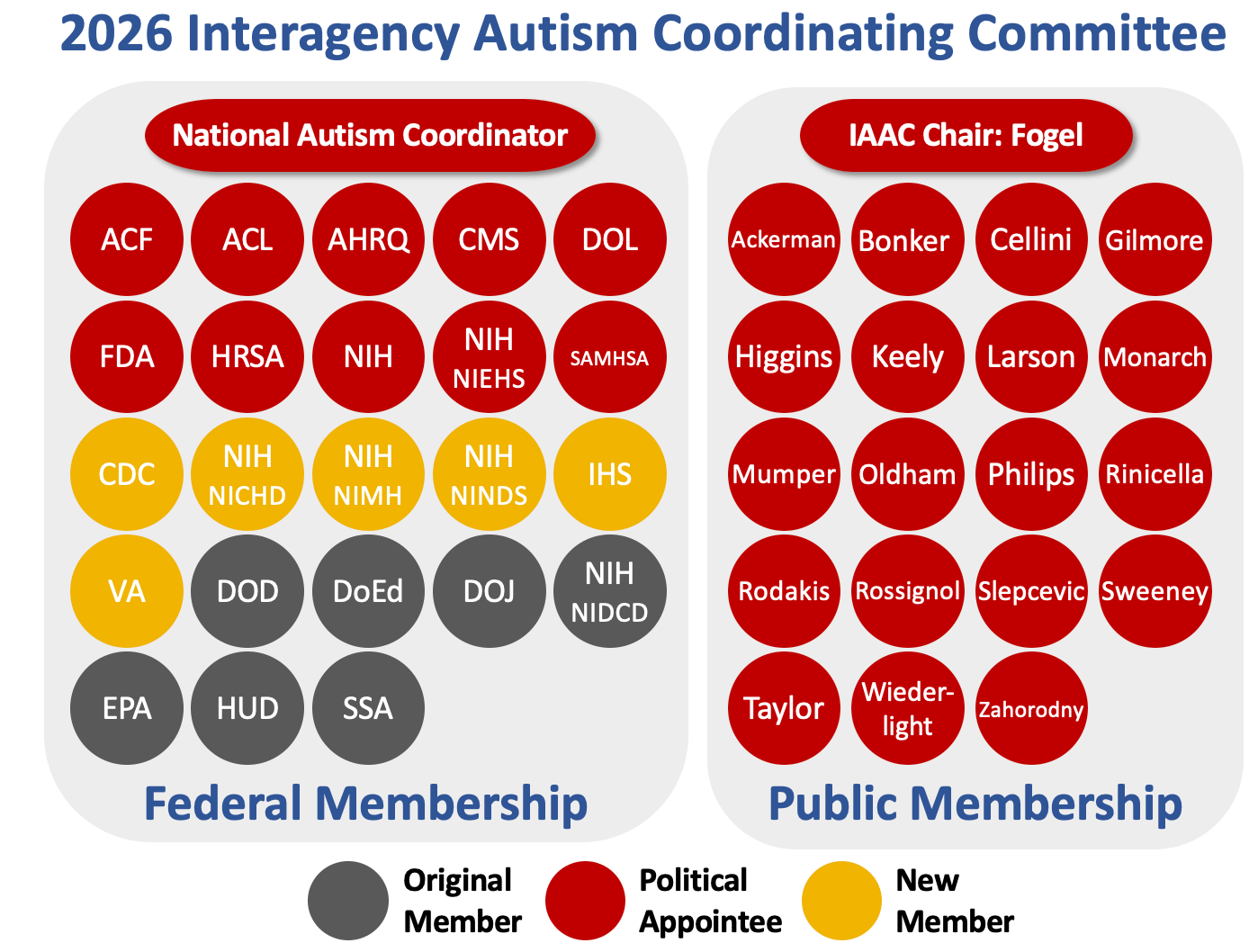
The 2026 makeup of the IACC. All of the public members and almost half of the federal members are now political appointees. See details below. Source: Anonymous NIH employee.
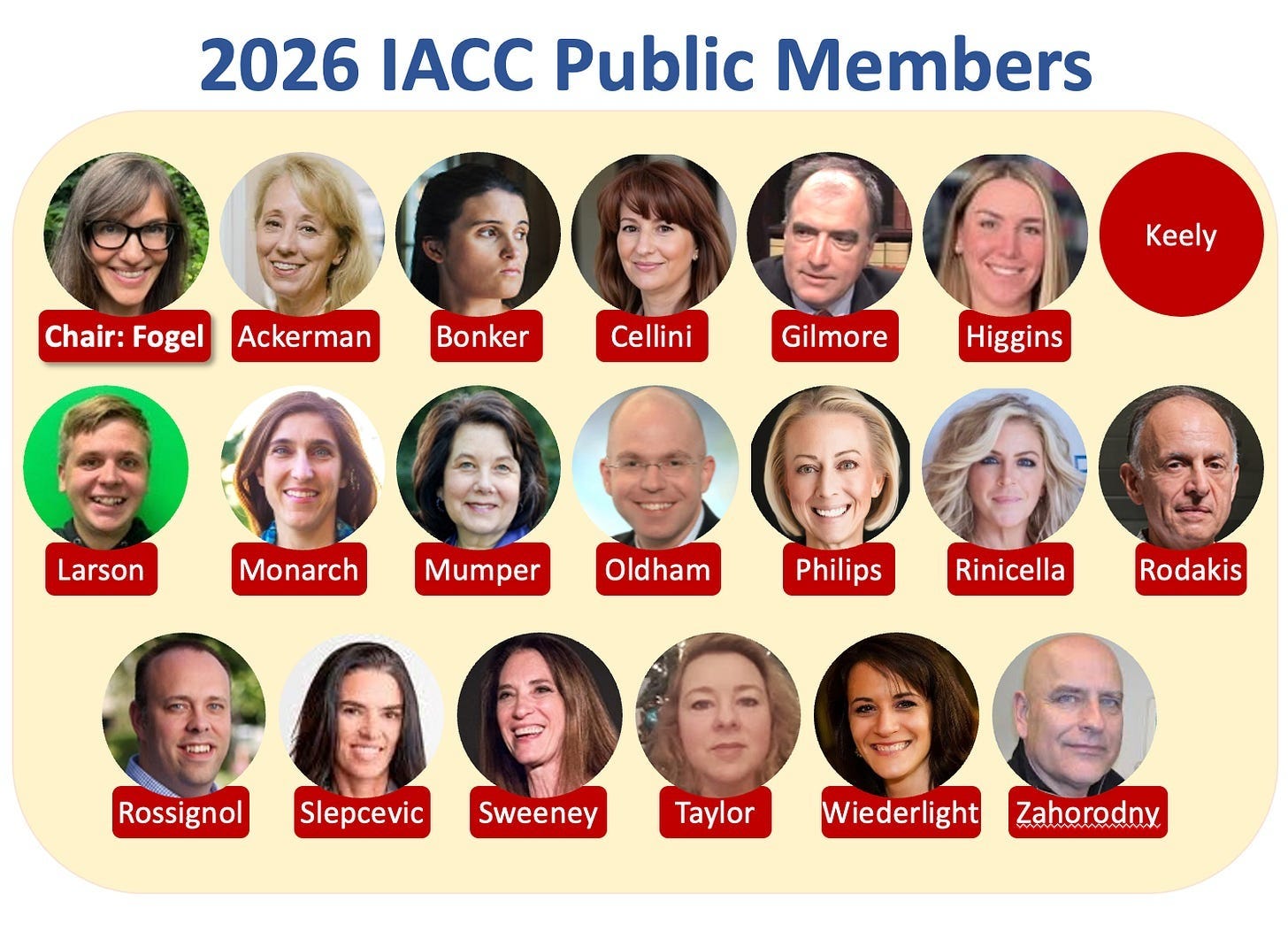
The 2026 IACC Public Members. See connection web in graphic below. Source: Anonymous NIH employee.
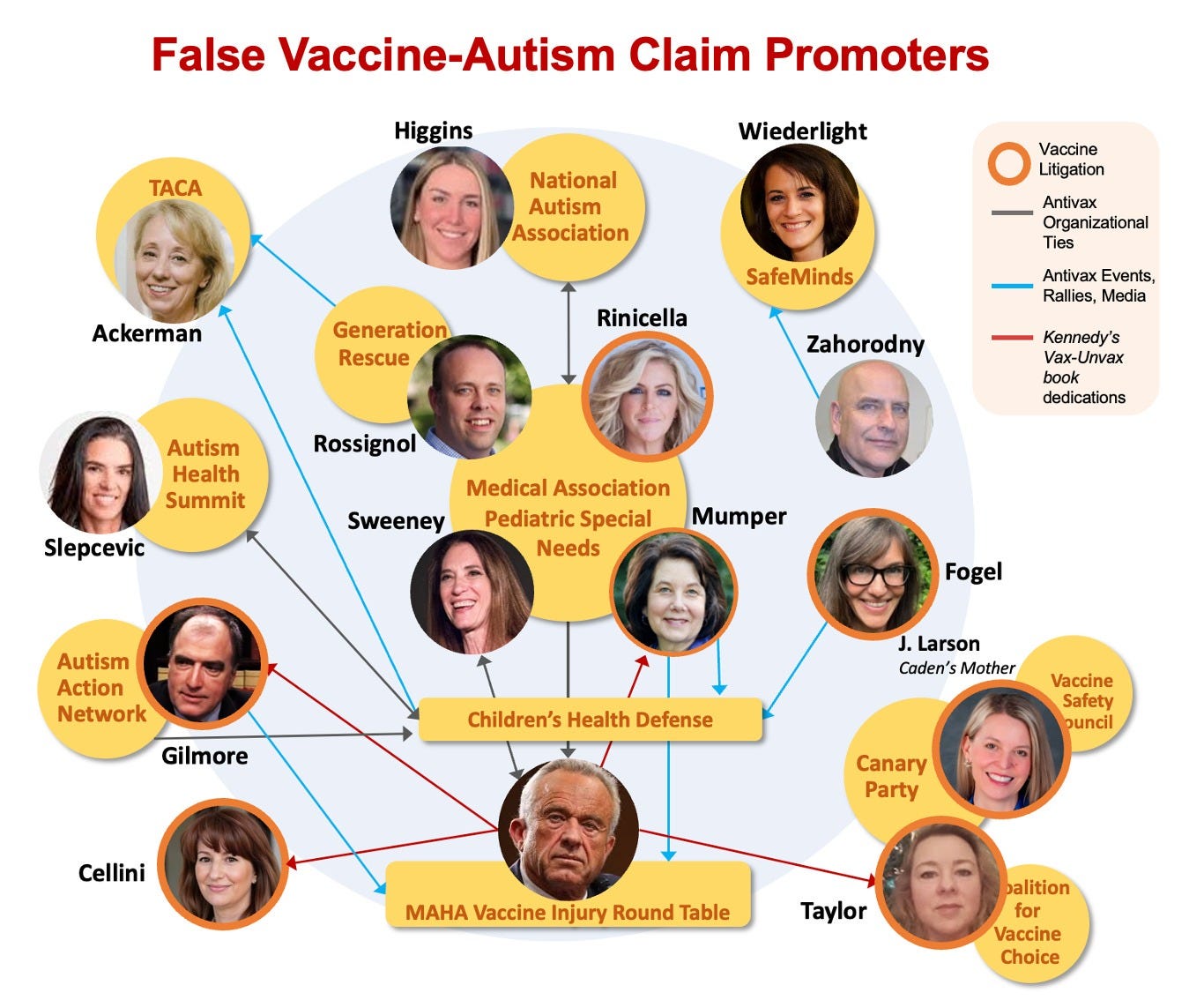
New IACC members with direct preexisting connections to RFK Jr., including antivax groups, doctors who promote unproven or dangerous interventions and people with extreme conflicts of interest. Please see the details below. Source: Anonymous NIH employee.
IACC Member Connections to RFK Jr.
Red: Personal and ideological endorsements, dedications, and praise
Vax-Unvax dedicatees:
RFK Jr. dedicated his book to Mumper, who endorsed it in a foreword.
RFK Jr.’s book, Vax-Unvax, names Taylor as a dedicatee, and lists the Secretary as a personal reference on her resume.
RFK Jr.’s book, Vax-Unvax, names Gilmore as a dedicatee.
RFK Jr.’s book, Vax-Unvax, names Cellini as a dedicatee, and agrees with his stance on Tylenol and leucovorin (i.e. treatment for perceived folate deficiency).
At the second Autism Health Summit, RFK Jr. praised Slepcevic and her husband as “dear friends” who have “given their lives in service to the autistic and their families.”
Fogel publicly supports RFK Jr.’s characterization of profound autism.
Monarch aligned with RFK Jr.’s views on diet being a root cause of illness.
Philips is a self-described “MAHA mom” who is “100% a Kennedy supporter.”
Ackerman publicly thanked RFK Jr. for his support of the Green Our Vaccine rally.
Rinicella agrees with RFK Jr.’s false statements that Tylenol increases the risk of autism and that folate is an effective treatment.
Light Blue: Events, rallies, co-participation (Shared stages, conferences, hearings, and panels)
Zahorodny appeared alongside RFK Jr. at an HHS press conference in April 2025, agreeing with the rise in autism diagnoses as an “epidemic.”
Slepcevic created the Autism Health Summit
MAHA Institute Autism Roundtable:
Slepcevic appeared on the “Clinical Needs and Research Priorities” panel at the MAHA Institute’s Autism Round Table in September 2025.
Gilmore appeared on the “Justice, Redress, and Remedy” panel at the MAHA Institute’s Autism Round Table
Rinicella appeared on the “Parents, The Front Lines of Advocacy” panel at the MAHA Institute’s Autism Round Table in September 2025, along with fellow IACC member Fogel.
Fogel participated in the “Parents, The Front Lines of Advocacy” panel at the MAHA Institute’s Autism Round Table.
In 2021, Children’s Health Defense and Executive Director Gilmore of Autism Action Network co-hosted a panel discussion, “The Covid Vaccine on Trial: If You Only Knew…” featuring RFK Jr.
Both Taylor and RFK Jr. attended a 2015 public hearing to oppose a bill that would tighten controls on vaccine exemptions.
Co-Founder Ackerman of Autism Community in Action (TACA) organized the Green Our Vaccine Rally in 2008, attended by RFK Jr.
Fogel did a January 2026 interview with an organization tied to Children’s Health Defense (moderated by a former RFK Jr. campaign coordinator)
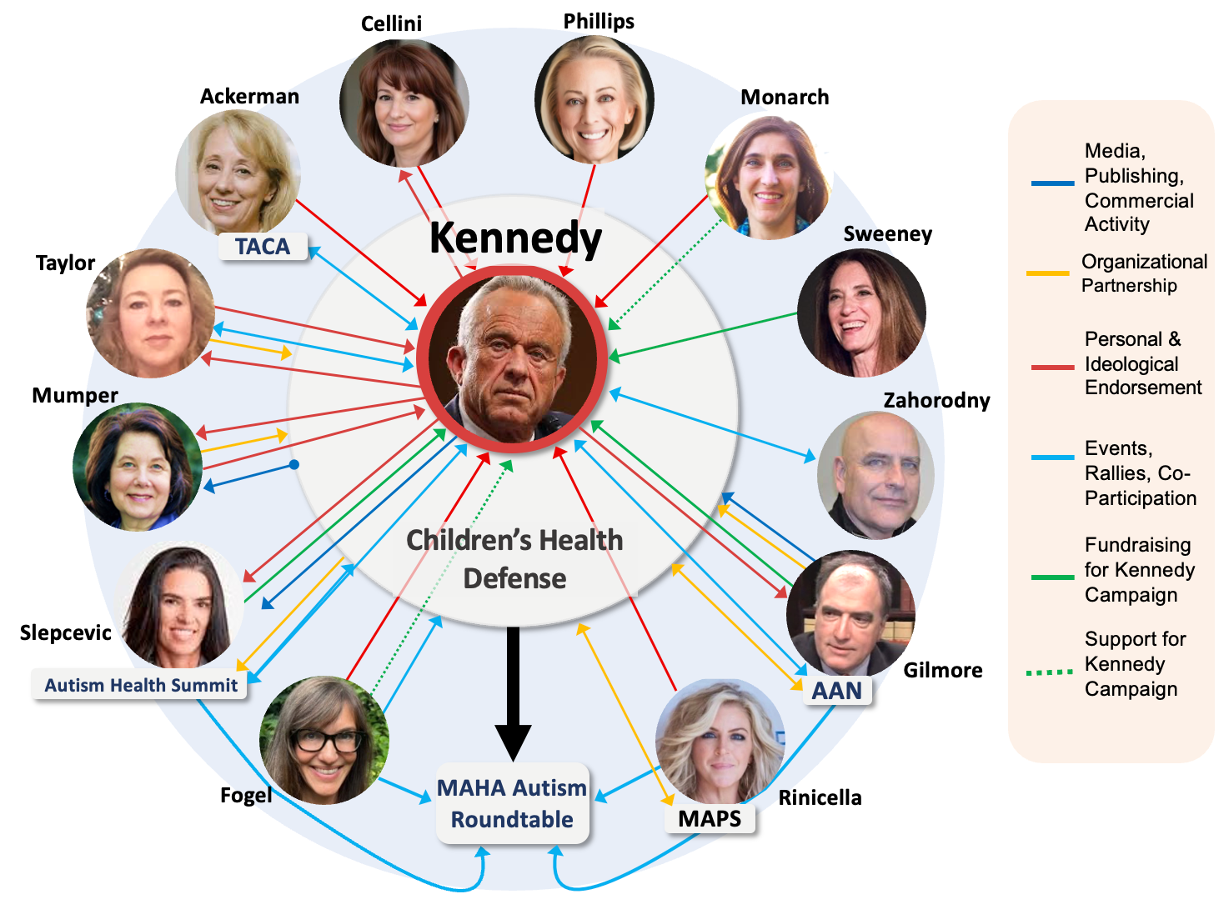
New IACC members with direct preexisting connections to RFK Jr., including antivax groups, doctors who promote unproven or dangerous interventions and people with extreme conflicts of interest. Please see the details below. Source: Anonymous NIH employee.
IACC Member Connections to RFK Jr.
Yellow: Organizational partnerships (formal roles, partnerships, governance, and advisory positions)
Mumper is a Scientific Advisory Committee Member for RFK Jr.’s Children’s Health Defense organization, which advocates against vaccination.
Taylor previously served on the “Spiritual Advisory Committee” for Children’s Health Defense and served as an advisor to RFK Jr’s working group on research in 2024.
Gilmore is listed as a partner of the Autism Action Network (AAN) according to the Children’s Health Defense’s website.
Gilmore co-founded the New York chapter of Children’s Health Defense, and partners with Autism Action Network according to the Children’s Health Defense website.
Rinicella is the Executive Director of Medical Academy of Pediatric Special Needs (MAPS), which is a corporate partner of Children’s Health Defense.
Slepcevic is the founder and President of Autism Health Inc. and the creator of the 2026 Autism Health Summit, which promotes alternative, unfounded “treatments.”
Dark Blue: Media, publishing, and commercial activity
Mumper’s own book, “Kids and Covid: Costly Mistakes That Must Never Happen Again,” is sold on the Children’s Health Defense website.
Gilmore authored a 2026 Children’s Health Defense article, on the IACC.
RFK Jr.’s campaign sold signed copies of Slepcevic’s book “Warrior Mom” for $150.
Green: Fundraising for RFK Jr.’s presidential campaign
Gilmore is the Executive Director of American Values 2024, the super-PAC dedicated to electing RFK Jr. for President, which raised $51,498,985 in the 2023-2024 election cycle. Per FEC filings, Gilmore received $157,500 in 2003 from American Values 2024 for “management consulting.”
Sweeney served as the Director of Scheduling for the American Values 2024 super-PAC
In 2024, Slepcevic and her husband, Steve, hosted a fundraiser for RFK Jr.’s Presidential campaign, with ticket prices up to $2,750.
Green dashed: Support for RFK Jr.’s Presidential campaign
Fogel attended RFK Jr.’s Presidential campaign events and supported his candidacy.
Monarch attended RFK Jr.’s Presidential campaign events and supported his candidacy.
Ethical concerns: The ethical concern is not that the plan investigates biology; it’s that it may turn a particular, still-evolving biomedical interpretation of autism and regression into a federally privileged research-to-treatment pipeline. The plan allocates dedicated funding, infrastructure, regulatory coordination, clinical implementation, and coverage implications before the evidence necessarily justifies that level of institutional commitment.
Shifts where funds for autism go: The IACC members propose to dedicate more than $200 million in taxpayer dollars to weakly supported and dangerous interventions that they themselves will profit off of due to their connections to industry.
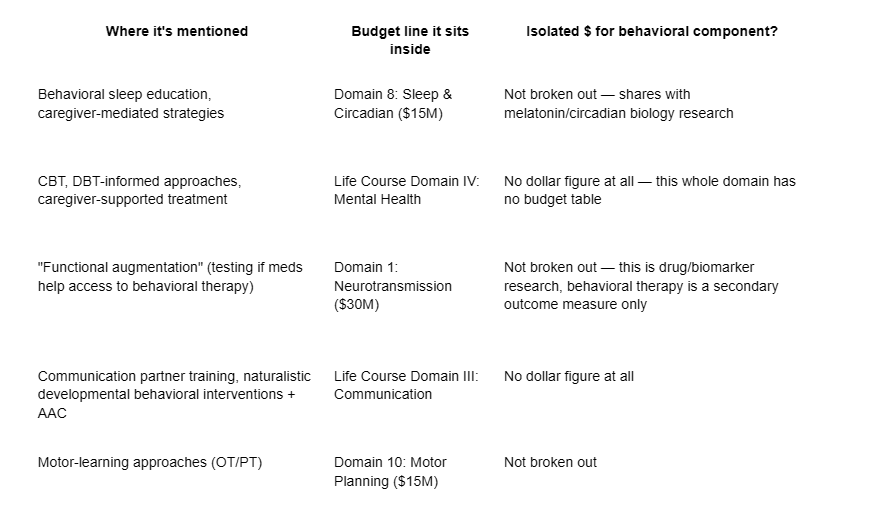
Of the $357M in new recommended funding, $0 is explicitly earmarked for behavioral intervention research or services.
The plan prioritizes funding of biomedical research claims that are weak or unsupported over evidence-based research in federal funding:
$45M to immune/autoimmune/inflammatory/microglial biology
$45M to mitochondrial/redox/metabolic/endocrine biology
$30M to GI/microbiome biology
$15M to folate/one-carbon biology (the folate chemical cycle)
$10M to regression trajectory and stabilization
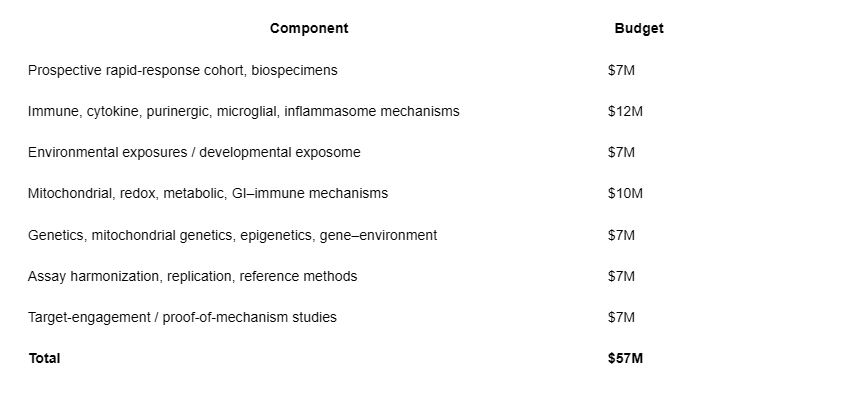
Plus a separate $57M neurodevelopmental regression Initiative.
The proposed National Autism Precision Therapeutics Initiative (NAPTI), which is a major component in the strategy plan to coordinate research infrastructure, concentrates enormous agenda-setting power.
De-prioritization of behavioral interventions that families need, while elevating non-scientific biological interventions (translation: none of this money will help your children get access to services or have a better immediate quality of life).
Adopts a standardized functional designation of profound autism for research and policy purposes.
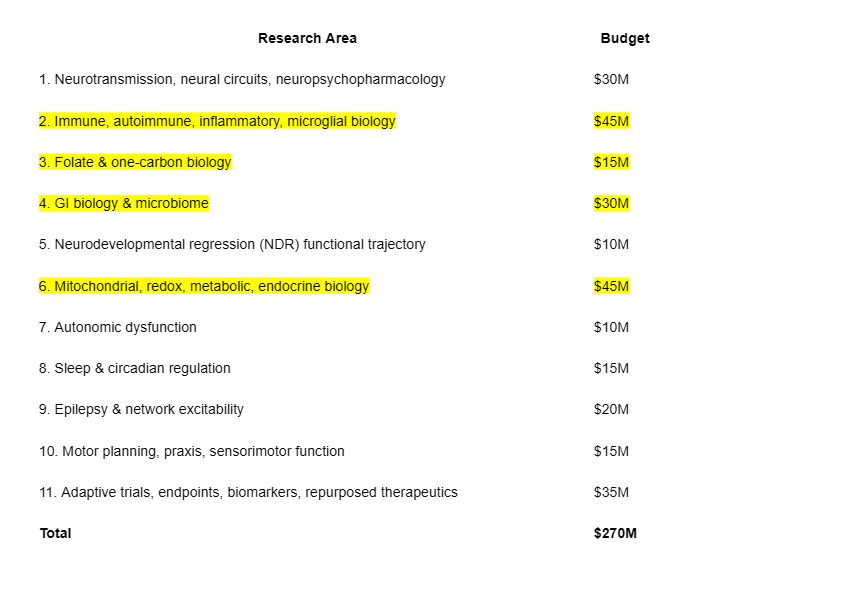
Proposed future budget line items for biomedical research on autism. The plan prioritizes funding of biomedical research claims that are weak or unsupported or that will allow members to profit (highlighted) over evidence-based research in federal funding.
Proposed future budget line items for investigating people or children with autism who lose skills based on weak or unsupported research that may allow members to profit.
Of the $357M in new recommended funding, there’s no dedicated budget line for behavioral interventions anywhere in the plan. This is significant given how central behavioral therapy has historically been to autism spending.
Behavioral approaches appear only as embedded, unquantified components within larger biologically-organized budget lines:
Before each IACC meeting, the Office of National Autism Coordination publishes a Federal Register notice and a website announcement inviting members of the community to submit comments for the IACC’s consideration at the meeting. Public comments are taken into account by the committee in its strategic planning, developing recommendations, and planning other autism-related activities.
Editor’s note: 27 UNIHTED publishes opinions and information from the perspective of our members, who all identify as part of the NIH community. Publication indicates that this piece meets our editorial and factual standards and aligns with our mission, including support of scientific integrity and health research that serves all people. Publication does not indicate endorsement by all members and views expressed are the authors’ own.
No posts
Comments
Nothing yet. Say the first thing.
Sign in to join the conversation.