
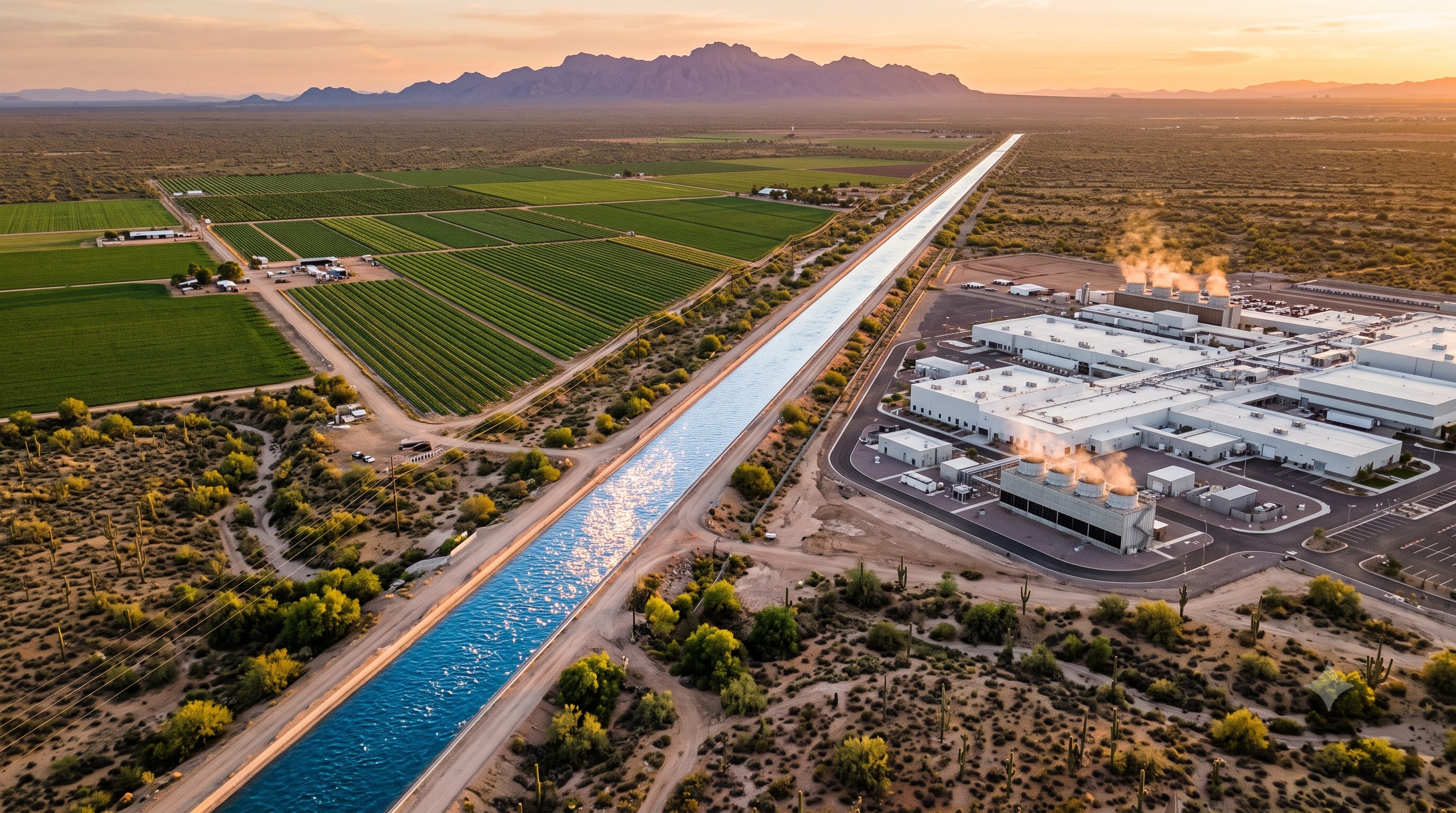
Phoenix just landed a 265 billion dollar bet on its own future, and four days later the federal government told Arizona how much water it will lose. That is the week in one sentence. Below, the reshoring reversal that quietly favors Mexico, the cartel tax riding on your avocados, the picture out of Ceuta already being turned into a midterm ad, and what the biggest betting event in American history left behind.
Here is the edition, tell me what you think.
First time reading? Join thousands of intellectually curious readers. Sign up here.
I have spent a good part of my career watching trucks roll through the Mariposa port of entry in Nogales, and the thing I keep coming back to is that geography does not renegotiate. A container leaving Guadalajara can be in Phoenix in two days. Nothing in Asia competes with that.
Which is why the current unwinding of the great supply chain exodus should have every North American manufacturer paying attention. When duties on Chinese goods spiked past 100 percent last year, companies scrambled into Vietnam, Thailand and Cambodia. Then Washington brought the rates back down. A new tariff on Chinese exports was recently set at 12.5 percent, close to what dozens of other countries now face, and the math that justified the move quietly disappeared.
The New York Times followed one Texas company, Alliance Consumer Group, that spent 18 months and millions of dollars certifying factories across Southeast Asia. Its operations chief said the company does not want to return to China, but has a business to run. Producing in Thailand ran as much as 15 percent more expensive, because the components, the equipment and the expertise still came from China anyway.
Here is what most of the coverage missed. Southeast Asia did not lose on tariffs. It lost on logistics: thin supplier networks, imported inputs, longer and costlier routes to port. Mexico is the one alternative where none of that applies. Same continent, USMCA treatment, and a truck instead of an ocean.
The companies that moved for a tariff number are already drifting back to China. The ones that moved because they never wanted a single point of failure again are staying put, and the smartest of them are looking at Mexico, where resilience does not cost you two weeks of ocean freight. That is the difference between arbitrage and strategy, and it is the conversation I am having nearly every week at Intermestic Partners.
NO. 001
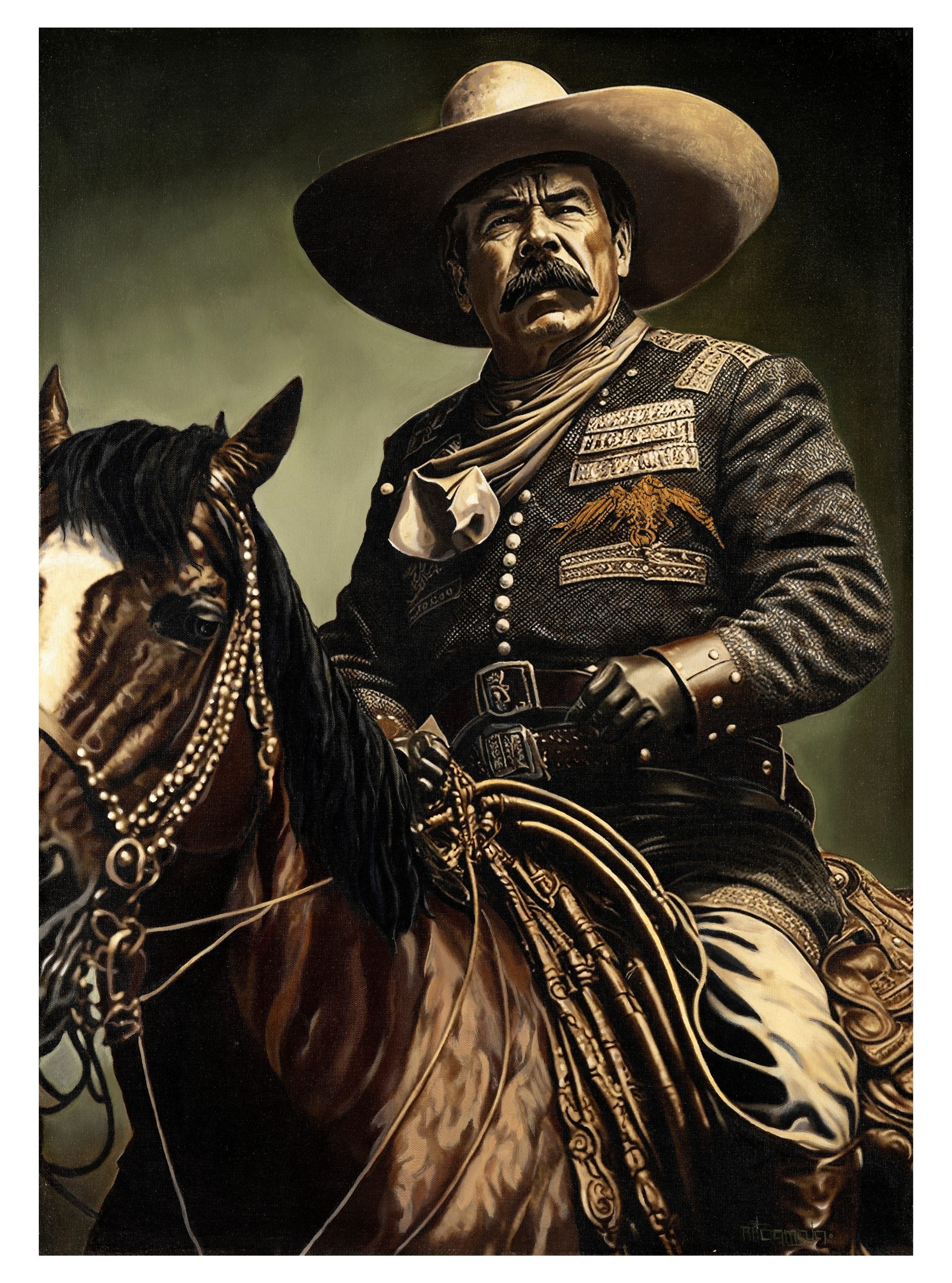
Rita Amaya painted this in July 2023, and the original now hangs in my office in Phoenix. In the years not one diplomat, executive, or official has walked through that door and asked who it is. Villa ran both sides of this line as if the line were a suggestion, which is still the most honest description of this region I know. That is why the collection starts here.
Get your poster today!
ARCHIVAL POSTER | 18 x 24 | $25 | SHIPS IN 5 TO 7 DAYSPhoenix just landed one of the largest industrial commitments in American history. TSMC raised its Phoenix investment to 265 billion dollars, with plans for as many as 10 fabs, two packaging facilities and a research campus. That is a generational win, and I want to be clear about that before I say the harder thing.
On Friday, the Bureau of Reclamation issued federal rules for the Colorado River after seven states failed to reach consensus. Officials have not formally announced the size of the cuts, but Arizona, California and Nevada are expected to absorb roughly 1.25 million acre feet per year beginning in 2027.
Most readers have never had to know what an acre foot is. It is about 326,000 gallons, roughly a year of water for three Phoenix area homes. So the expected Lower Basin reduction equals a year of household water for close to four million homes.
Now the part nobody wants to say out loud. Agriculture uses roughly 70 percent of Arizona’s water, much of it on low value forage crops, some of it exported to feed cattle overseas. A single fab supports thousands of permanent jobs and anchors an entire supply chain. An acre of alfalfa does not.
So the question Arizona has to answer is whether it is willing to pay farmers to stop farming. A structured retirement and transfer market, one that buys the lowest value irrigated acreage at a fair price and moves the water toward higher yield use, is the version of that idea worth examining. It is not confiscation. It is a purchase. And it is the conversation weak politicians in Phoenix don’t want to have out loud yet. Maybe after November?
Watch two things: whether Congress moves on the tribal settlement, and whether TSMC hits its 90 percent reclamation target by 2028.
Michoacán feeds America. Roughly 75 percent of Mexico’s avocados come out of that one state, and it is the only state fully certified to export to the United States. That is a remarkable thing for a place most Americans could not find on a map, and the growers there built it.
On Friday, the U.S. Mission in Mexico issued a security alert for Michoacán. Local forces were placed on alert over reports of roadblocks and criminal activity with the potential to escalate. The State Department advisory for the state remains Level 4, do not travel.
I want to be measured here, because there has been real progress. The Sheinbaum government reports a 46 percent drop in the daily average of intentional homicides compared to January 2025, and more than 1,300 arrests for high impact crimes since October 2024. The January capture of César Alejandro Sepúlveda, known as “El Botox” and sanctioned by Treasury for extorting citrus and avocado producers, mattered.
But homicide is not the metric that is breaking this industry. Extortion is. Producers describe payments demanded at every link: the grower, the packer, the shipper, the wholesaler, and even the final point of sale. Treasury has documented cartels taxing avocado and citrus growers and entire towns. President Sheinbaum has said eradicating extortion in Michoacán is the objective. It has not happened yet.
Here is what Americans should understand. When a family in Phoenix pays more at the register, part of that price is a criminal tax collected 1,500 miles away. Supply chain security is not an abstraction. It is somebody’s harvest.
I spent years with responsibility for the ports of entry on this border, and it taught me something campaign consultants never seem to learn. Americans are not wrong to want order. A country is entitled to know who is coming in. That is not a nativist position. It is a governing one, and my party keeps forgetting it.
Last week gave the other side its picture. Tens of thousands of migrants crossed from Morocco into Ceuta, the Spanish enclave on the North African coast. Ceuta’s president estimated roughly 60,000 arrivals in 24 hours, in a city of about 83,000. Reported deaths ranged from 41 to 67 depending on the outlet. It was chaotic, it was deadly, and it was on every screen in America within hours.
Stephen Miller said Democrats would deliver the same thing here at greater scale. The president called it “a talking point for the midterms.” He is telling you exactly what November looks like.
Two facts complicate the frame. Spanish irregular arrivals have actually fallen, from about 17,990 in the first half of 2025 to 12,138 this year. And reaching Ceuta does not put anyone in Europe. It is an enclave. Onward travel requires authorization, which is why Spain’s Interior Ministry reported more than 48,300 people already returned to Morocco.
None of that will matter. Facts do not beat footage.
What beats footage is a credible enforcement position held by people who also believe in legal immigration. Democrats have spent three cycles refusing to say the word enforcement out loud, and the vacuum got filled. It will get filled again in November unless someone fills it first.
Watching England play Mexico in the round of 16, in a stadium on this continent, was a great sporting experiences. The tournament we spent years arguing about delivered. Spain beat Argentina 1 to 0 in extra time on July 19, and Ferran Torres scored in the 106th minute of the most wagered soccer match in American history.
That is not a figure of speech. The 2026 World Cup became the largest betting event ever recorded in the U.S. regulated market. DraftKings processed roughly 650 percent more bets than it did in 2022. Caesars reported a higher bet count than the men’s and women’s NCAA tournaments combined.
Here is the part I keep thinking about. Arizona legalized sports betting in 2021, and bettors placed more than 670 million dollars in May alone. Ten days ago the Arizona Department of Gaming published a survey finding that 84 percent of Arizona adults gambled in the past year, and that nearly 20 percent now fall into a moderate to high risk category for gambling problems.
Arizona’s tribal gaming compacts built something rare: a funded structure for treatment, financed by gaming itself. That framework was designed for casinos, not for a phone in every pocket. The revenue scaled. The public health side did not.
Sports betting is not going away, and I am not arguing it should. I am arguing that a state collecting the upside owes its people a system sized to the downside. Anyone who needs help can reach Arizona’s confidential line at 1-800-NEXT-STEP.
Thanks for reading Power Courier by Marco Lopez! Subscribe for free to receive new posts and support my work.
Comments
Nothing yet. Say the first thing.
Sign in to join the conversation.