
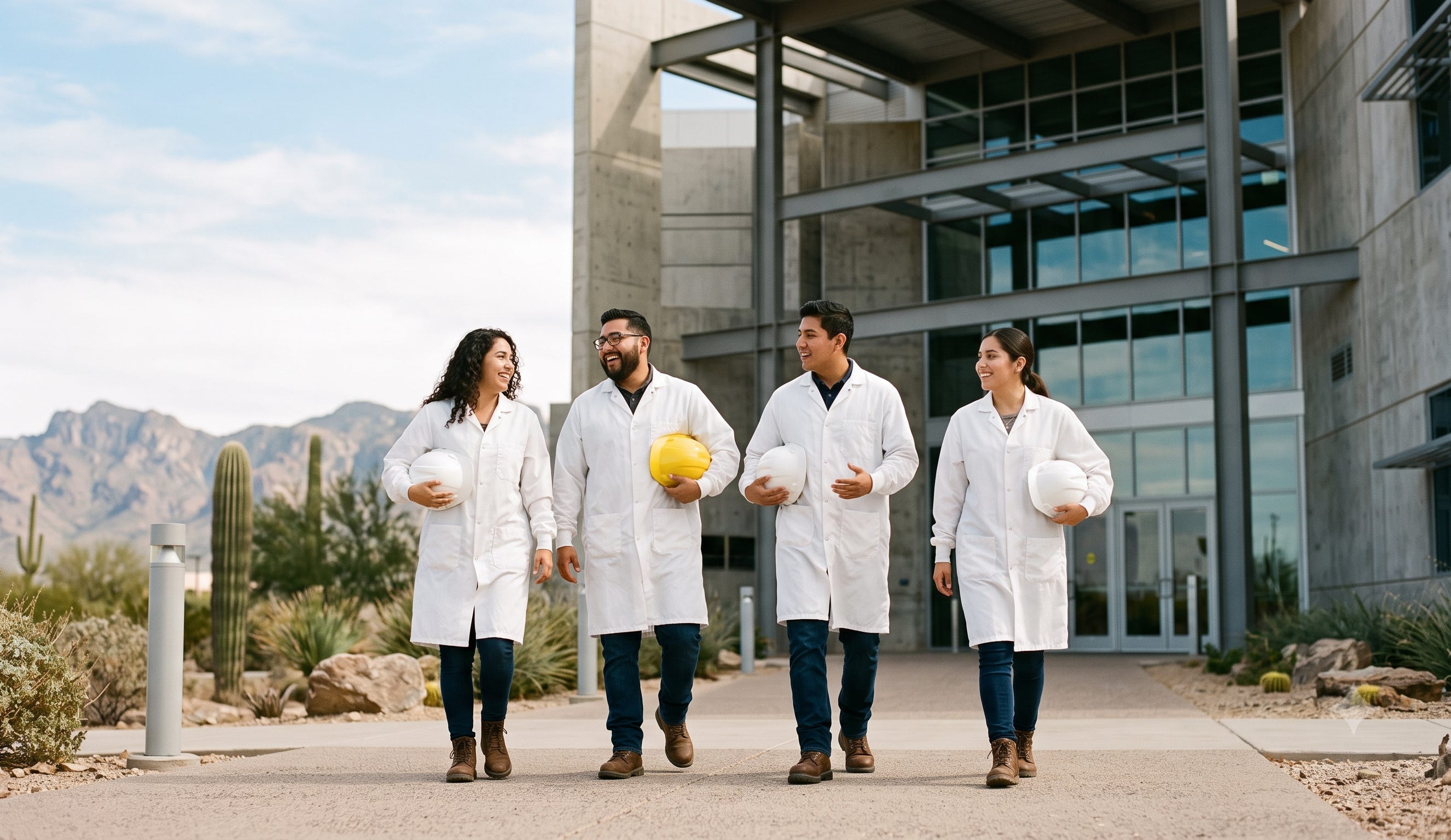
Phoenix just closed the biggest economic development year in its history. More than 109 billion dollars committed, 26,225 jobs projected, and a chip campus that will make one fifth of the world's most advanced semiconductors. Now the question nobody in Phoenix wants to ask out loud: who is going to staff it? I have an answer this week, and it is sitting inside USMCA already. Also in this edition: Mexico's largest meat exporter goes up for sale and the buyer list matters more than the price. A grower in Michoacán tells the AP he pays one peso a kilo to criminals. The rivalry comes to Glendale in October. And twenty million visitors are arriving in Mexico with almost nobody being prosecuted to protect them.
First time reading? Join thousands of intellectually curious readers. Sign up here.
Separate from the newsletter this week
The single most consequential person in your supply chain is someone you will never meet. It is the officer at the primary booth deciding how to classify your shipment, and that call can cost more than the incentive package you spent six months negotiating. That is one of seven things I wrote about this week in a separate piece on what has to be true before you build across the border. It is here.
// TRADE WINDS
The 1994 list holding back Arizona's chip boom
Phoenix won the investment fight. TSMC committed another 100 billion dollars in July, bringing planned Phoenix spending to 265 billion. The state closed its fiscal year with 26,225 projected new jobs and more than 109 billion dollars in commitments, both single year records. The harder question is who staffs it.
The answer is already sitting inside USMCA. The TN visa lets Mexican and Canadian professionals work here with no caps and minimal bureaucracy. When I ran the Arizona Department of Commerce, I watched companies fight over H1B lottery slots while this door stood open.
The problem is the list. TN eligibility covers exactly 63 occupations, unchanged since 1994. Chemical engineer is on it. Data scientist is not. Cloud architect is not. The jobs a modern fab actually needs did not exist when the list was written.
Five additions would change the math: semiconductor process technician, data scientist, cybersecurity analyst, systems and cloud architect, and automation and robotics technician.
This is not only a chip problem. Our retirement communities cannot staff certified elder care and home health roles. Our tourism economy needs hotel management and culinary categories. None of them qualify today.
So, respectfully, to our delegation: Representatives Abe Hamadeh, whose Eighth District holds the TSMC campus, Greg Stanton and Yassamin Ansari, and Senators Ruben Gallego and Mark Kelly. Negotiators meet in Washington in September for a fourth round. Put the professions list on the table. It costs nothing, and it is bipartisan by nature. At Intermestic Partners, this is the conversation I have with every company building here.
We spent 265 billion dollars on buildings. Let us not lose the people.
// FROM MY WALLS
NO. 001
They spent eleven months and never caught him
I keep coming back to how often this region produces enormous numbers attached to nothing recoverable. After Villa raided Columbus, New Mexico in March 1916, Pershing took an expedition into Chihuahua and stayed nearly a year. They came home without him. Villa died in Parral in 1923, in his car, having already made peace with the government that had hunted him. He hangs in my office in Phoenix for a reason.
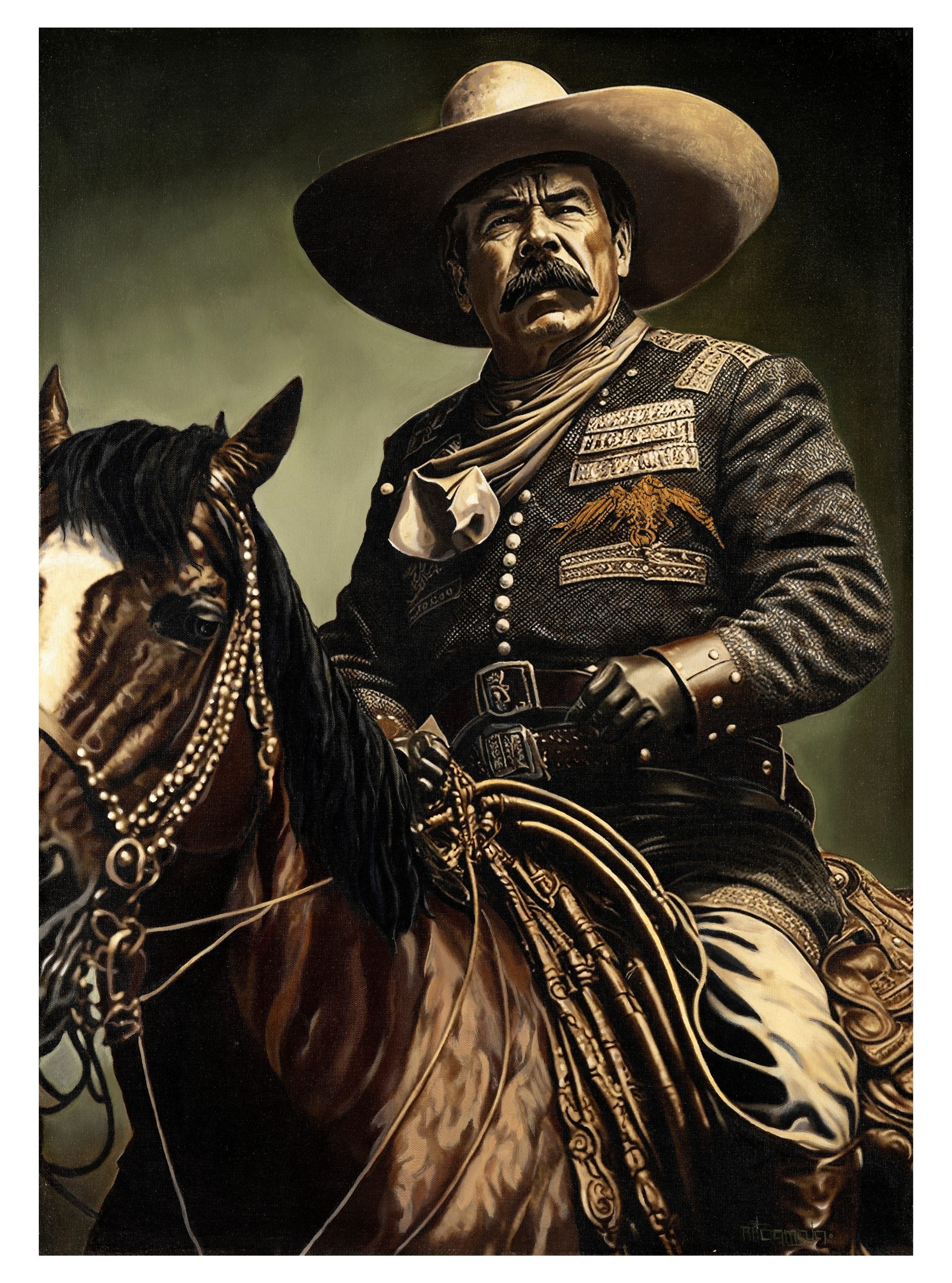
ARCHIVAL POSTER | 18 x 24 | $25 | SHIPS IN 5 TO 7 DAYS// POLITICAL ARENA
Twenty million visitors, no prosecutions reported
Mexico is having a record year. By May, 20 million tourists had arrived. That is a real achievement, and I have spent my career arguing that tourism is among the most democratic forms of economic development there is. The money lands in small hands.
But volume creates cover. On July 30, World Day Against Trafficking in Persons, UNODC pressed for tighter cross border cooperation between judiciaries and law enforcement, noting that only a fraction of cases are reported, let alone solved. Seven in ten identified survivors are female, and more than half are minors.
The State Department’s most recent assessment is blunt about where risk concentrates: tourist areas and northern border cities. That is my part of the world. It also records something harder to explain away. Mexico amended its law in 2024 to require the tourism ministry to build programs discouraging this demand, then reported no investigations or prosecutions at all of suspects traveling to commit these crimes against children.
That gap is the story. Not the absence of law. The absence of enforcement.
The recruitment has moved, too. Between 2022 and 2024, more than 45 percent of victims who called the national hotline were first approached through websites or social media, and networks increasingly launder proceeds through cryptocurrency.
So here is the ask, and it belongs to both capitals. We coordinate on fentanyl. We coordinate on cattle and on chips. We can coordinate on this. Prosecutors talking to prosecutors. Shared casework across the line. A published prosecution count every year, so the number is something a citizen can check.
Twenty million visitors is a success worth protecting. Protect it.
// POWER MOVE
Who buys Mexico's beef empire
Growing up in Nogales, AZ we had a port of entry just for cattle. Most people do not know that. It is one of five crossings in my hometown, and for generations it moved beef north.
I thought about that this week. Reuters reported on August 3 that SuKarne is exploring a sale, one that could value the company above 2 billion dollars.
If the name is unfamiliar north of the border, the scale is not. SuKarne accounts for nearly 75 percent of Mexico’s meat exports and operates on four continents. It is the world’s third largest cattle feeder and the fifth largest beef supplier in North America. It works with more than 60,000 producers and says its operations support the primary income of more than 165,000 families.
The timing is what an investor should notice. For more than a year, the U.S. banned Mexican cattle imports to keep out New World screwworm. That halt pushed American beef prices to record highs and squeezed Texas feedlots. In July, USDA began a phased reopening of the border.
So the asset goes to market at the bottom of the cycle, right as volume returns. That is not sloppy. That is disciplined.
The real question is who buys. North American protein already sits in four hands: Tyson, Cargill, JBS and National Beef. SuKarne’s operations run from cattle feeding through processing and distribution, which would hand a buyer most of Mexico’s protein supply chain at once.
There is another path, and it is the one I would argue for. Regional capital keeping a regional asset regional. At Intermestic Capital, this is precisely the kind of transaction where Latin American investors belong at the table rather than watching from outside it.
The cattle will cross at Nogales again. The question is who owns them when they do.
// BORDER BUZZ
One peso a kilo
There is a quiet piece of machinery most Americans never think about. A USDA inspector stands in a packinghouse in Michoacán, Mexico and certifies that fruit is clean. That signature is the only reason guacamole is a Super Bowl tradition. It works almost every day of the year.
This week it stopped. The U.S. suspended government operations in the region, including the avocado inspections exports require, citing a non specific threat to American interests. A day later, Mexico began moving 1,500 more troops into the state.
Look at what sits underneath. The industry employs roughly 200,000 people in Michoacán. One grower told the Associated Press he pays 1 peso per kilo in extortion on about 90 metric tons a day, more than 5,000 dollars daily, and spoke anonymously out of fear. State authorities called the suspension preventive, tied to recent extortion arrests. In 2024, two USDA employees were assaulted and briefly held.
I spent years at CBP responsible for a workforce of 60,000. Officer safety is not a bargaining chip. When American personnel cannot work, the answer is to make the ground safe, not to renegotiate who stands on it.
Which is why one detail concerns me. President Sheinbaum suggested Mexican officials could perform the inspections themselves. That swaps the inspector without touching the reason the inspector is unsafe. Sovereignty is not the issue here. Territorial control is.
The troops arrived after the suspension, not before. That sequence is the whole story. A state where a functioning multibillion dollar export industry pays a per kilo tax to criminals is not a state in control of itself.
Fix the ground. The fruit will move.
// PLAYING FIELD
Two flags, one house
Every fronterizo knows the feeling. Two flags in the same house, two anthems you can sing all the way through, and nobody in the family asking you to choose.
On October 3, that house gets loud. The United States plays Mexico at State Farm Stadium in Glendale, part of four matches over eleven days opening the new World Cup cycle, deliberately staged in cities that did not host tournament games this summer. Kickoff is 7 p.m., and tickets went to the general public on August 7.
Arizona should have gotten matches in June. We did not. This is the correction. The state has one of the country’s largest Mexican and Mexican American populations, with family on both sides of the line, and Mexico has consistently packed that stadium through Gold Cup and Copa América.
It is also our first look at Rafa Márquez on the sideline in Arizona. He took over after Javier Aguirre’s tenure ended with the round of 16 loss to England. A defender who captained his country for a decade now hands the badge to the next group.
Here is what I will be watching in the stands more than on the grass. Kids in Phoenix and Tucson who are eligible for both federations. Every cycle, more of them. Coaches in Mexico City and Chicago recruiting the same living rooms.
That is not a loyalty problem. That is what 40 million Mexican connected residents look like when they grow up with a ball at their feet. Two passports is leverage, not confusion.
Ninety minutes of rivalry. Same family on both ends of the stadium.
Never miss a beat from headlines to deep dives.
Thanks for reading Power Courier by Marco Lopez! Subscribe for free to receive new posts and support my work.
Comments
Nothing yet. Say the first thing.
Sign in to join the conversation.