
Every week writing this newsletter puts a number in front of me that everybody repeats and almost nobody interrogates. This week there were five of them. A tariff rate. A forfeiture judgment. A remittance total. A tourism figure. A polling result. Some of them describe something real and fragile. Others describe something enormous and largely imaginary. Knowing which is which is most of the work.
Here is the edition.
First time reading? Join thousands of intellectually curious readers. Sign up here.
// TRADE WINDS
If this goes bad, here is what it costs us
I will spare you another round of negotiating table commentary. Almost nobody outside the trade bar cares which chapter is open on which Tuesday. What people in Phoenix and Tucson should care about is the size of the bill if these talks fail, because Arizona is not an average state in this equation.
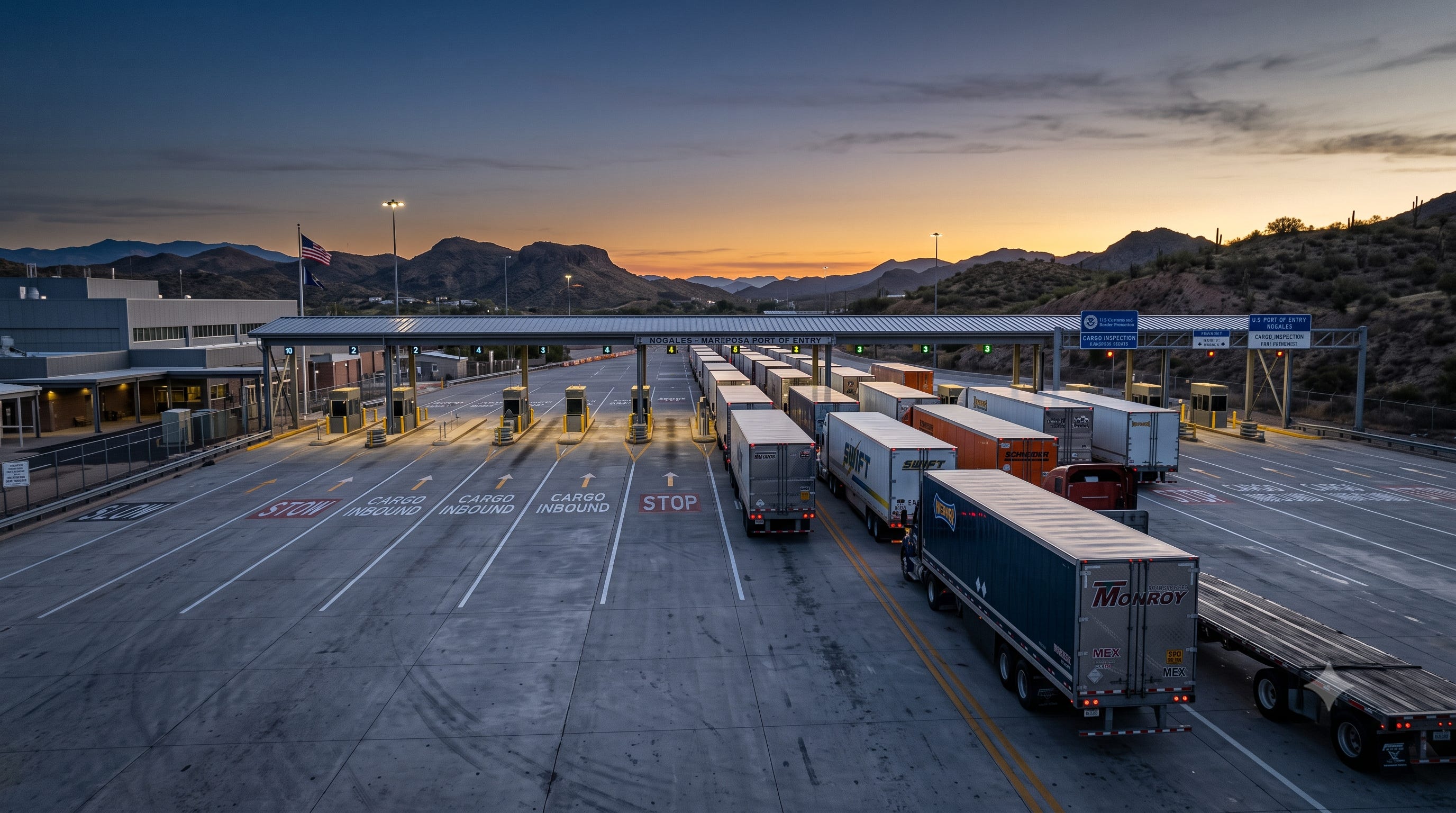
Mexico is Arizona’s largest export market by a wide margin. We sent $14.6 billion in goods across that border in 2025, a third of everything the state exports to the world, with Taiwan a distant second at $4.5 billion and Canada third at $2.8 billion. And this is not a big company story. Of the 7,478 companies that exported from Arizona locations, 86 percent were small and medium businesses with fewer than 500 employees.
It runs the other way too. Arizona imported $11.6 billion from Mexico in 2024, more than a quarter of everything we bring in, with agricultural products the single largest category and tomatoes the most valuable line item. In one quarter alone, $10.1 billion in trade moved through Arizona’s border ports and 5.9 million people crossed northbound.
Now the part that should get your attention. When 50 percent duties were imposed on Canadian goods this month, the proclamations included no USMCA carve out. Products that qualify for preferential treatment pay the full additional duty anyway.
That is the precedent. Agreement membership is no longer a shield. If a similar instrument is ever pointed south, it does not hit an abstraction. It hits produce sheds in Nogales, machine shops in Tucson, and several thousand Arizona small businesses that have built their entire customer base on a border staying open.
Ask your CFO what a 50 percent duty does to your landed cost. Then ask what your plan is. Most companies I talk to at Intermestic Partners have not run the number.
// BORDER ART COLLECTION
NO. 001
Introducing the border art collection
I have spent my entire career at the intersection of two nations. I have sat across from diplomats, negotiated trade agreements, managed the busiest land ports of entry in the world, and walked the same desert ground that millions of people have crossed in search of something better. The border is not an abstraction to me. It is home.
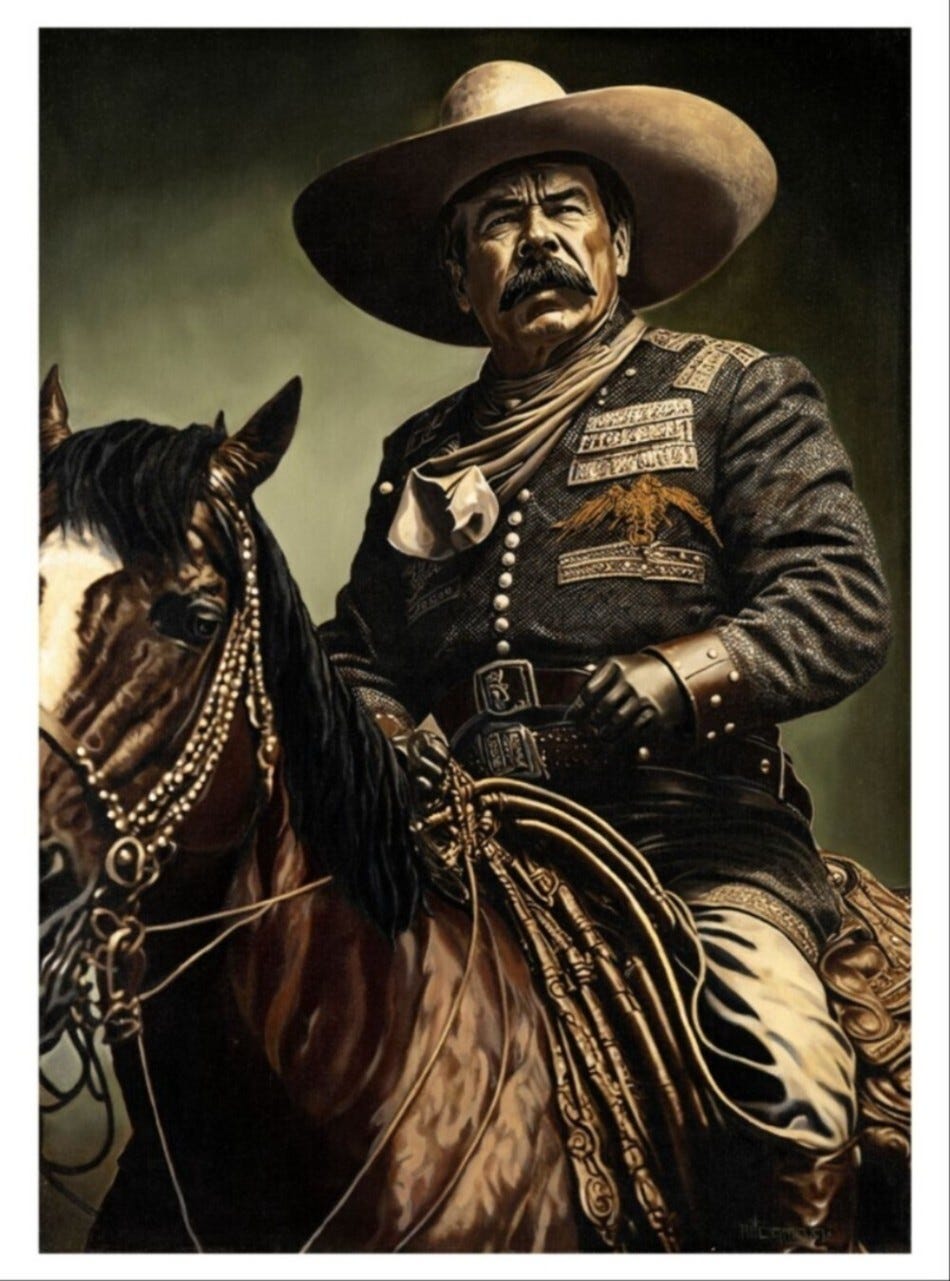
Pancho Villa - El Centauro del Norte
Born José Doroteo Arango Arámbula in Durango, Mexico, Villa commanded the largest military force of the Mexican Revolution, governed the border as if boundaries were suggestions, and remains the only Mexican commander to launch a military invasion of the United States.
Professional poster prints available now.
Shop now $25
// POLITICAL ARENA
Somebody should tell the campaigns what the country actually thinks
There is a gap right now between how immigration gets campaigned on and what Americans tell pollsters, and it is about to get tested at the ballot box.
New Gallup polling, written up this month by Acceso Latino, found that 73 percent of Americans say immigration is good for the country against 21 percent who call it negative, up from 64 percent in 2024. Asked about the number of immigrants coming in, 35 percent want the current level held, 31 percent want it increased, and 29 percent want it reduced. Two years ago, in the middle of a presidential election, 55 percent wanted a reduction, the highest Gallup had recorded in more than a decade.
That is a 26 point collapse in restrictionist sentiment in twenty four months.
On specific policies, a citizenship path for people brought here illegally as children drew 81 percent support, the strongest result of any option tested. Deporting everyone here illegally finished last at 39 percent, with 58 percent opposed. Requiring local governments to cooperate with federal immigration authorities drew 43 percent support against 54 percent opposition.
The partisan splits are real. Sixty seven percent of Republicans back mass deportation compared to 13 percent of Democrats, and 91 percent of Democrats call immigration positive against 50 percent of Republicans.
Here is my read after thirty years around this issue. Both parties are misreading the same data in opposite directions. One reads the partisan gap as license for maximalism. The other reads the topline as permission to say nothing specific and coast. Neither is what eight in ten Americans just said out loud about the Dreamers.
Districts across Arizona will decide this in November. The polling is not ambiguous. The politics is.
// POWER MOVE
The $15 billion that does not exist
On July 20, Judge Brian Cogan sentenced Ismael “El Mayo” Zambada to life without parole in Brooklyn federal court and entered a $15 billion forfeiture judgment against him, following his guilty plea last August to leading a continuing criminal enterprise and racketeering conspiracy.
Here is the line almost every headline skipped. Prosecutors acknowledged that none of the money has been recovered.
So where did it go, and how does one man generate a number like that in the first place?
The first part is arithmetic. Prosecutors described Zambada as responsible for moving at least 1.5 million kilograms of cocaine into the United States, plus vast volumes of fentanyl and methamphetamine, across nearly four decades. An assistant U.S. attorney told the court that more than a million Americans died of overdoses during his years in power. The $15 billion is not a bank balance. It is an estimate of gross proceeds accumulated since 1989, and the court’s judgment is a legal claim against assets the government still has to find.
The second part is the one that should concern us. That money never sat still. When Treasury mapped his financial network in 2007, it published a dairy company with branches in four Mexican states, a fuel station, a stable, and construction firms, each with names, addresses, and tax identifiers. One Chicago distribution cell alone was valued at $938 million over roughly three and a half years.
Dairies. Fuel. Construction. That is what $15 billion looks like once it has been converted into the legitimate economy, and it is why a judgment is easy to enter and nearly impossible to collect.
We have spent thirty years measuring this fight in kingpins captured. The financial layer keeps operating. Until we get serious about that layer on both sides of the border, we will keep winning headlines and losing money.
// BORDER BUZZ
The 40 million are sending less, and it is not because they care less
Something is shifting in the money that moves south, and the numbers deserve more attention than they are getting.
Mexico received $61.8 billion in remittances in 2025 compared to $64.7 billion in 2024, a drop of 4.6 percent. That ended an eleven year growth streak, the longest in Mexico’s modern history. A new 1 percent federal excise tax on international transfers took effect January 1, applying to cash, money orders, and cashier’s checks of $15 or more, while digital transfers funded from bank accounts stay exempt. Peso strength has compounded the squeeze, cutting the real purchasing power of what does arrive.
Now the part that matters to us. Remittances to Sonora fell in the first quarter of 2026 even as most other Mexican states rose. Meanwhile Baja California led the country in 2025 with 22.2 percent growth, driven by commuter workers who live in Mexico and work in San Diego, Imperial County, and Yuma.
Two border states, opposite directions. The difference is the shape of the workforce, not the generosity of the sender.
I say often that the roughly 40 million people in this country with Mexican roots are an economic force that neither government has learned to read properly. Here is the proof. A tax structure that penalizes cash senders, an exchange rate that erodes every dollar received, and an enforcement climate that thins the sending population are all doing more to reshape household income in Mexico than any line in the trade agreement.
That is a policy story dressed up as a family story. Both sides should be paying attention.
// PLAYING FIELD
What Jalisco understood that most host cities did not
Last week I sat down with Lorena Martinez, who heads the State of Jalisco’s Agencia Estatal de Entretenimiento. She ran much of what Jalisco put on during the World Cup, and I came away thinking she had figured out something the other host regions largely missed.
The numbers first. Jalisco reported 11.5 billion pesos in direct tourism spending and more than two million visitors between June 11 and July 5, a 30 percent jump in visitor traffic over the same period last year, with 10.685 billion of that concentrated in Guadalajara and its metro area. The average hotel rate went from 1,800 (USD$103) pesos a night to 4,800 (USD$274). Guadalajara’s airport recorded the busiest June in its history, 88,800 additional passengers, with international traffic up 11.5 percent.
Most places would take a victory lap and go back to normal. Jalisco is doing the opposite. Lorena’s team is working to keep the agency’s mission consistent and funded for years, treating major event production as a permanent economic development function rather than a one time World Cup office that gets dissolved once the trophy leaves.
That is the right read. The tournament did not create Jalisco’s capability. It revealed it. Stadium logistics, airport surge capacity, security coordination, public programming across dozens of municipalities, all of it now proven and sitting there.
We are in active conversations with them about what comes next, including international sporting events and motorsports. Different competitions, same infrastructure, same crews, same playbook. The economic impact potential is significant, and the only reason it is available at all is that somebody in Guadalajara decided the capability was worth keeping after the whistle.
AZ should be taking notes.
Never miss a beat from headlines to deep dives.
Thanks for reading Power Courier by Marco Lopez! Subscribe for free to receive new posts and support my work.
Comments
Nothing yet. Say the first thing.
Sign in to join the conversation.