
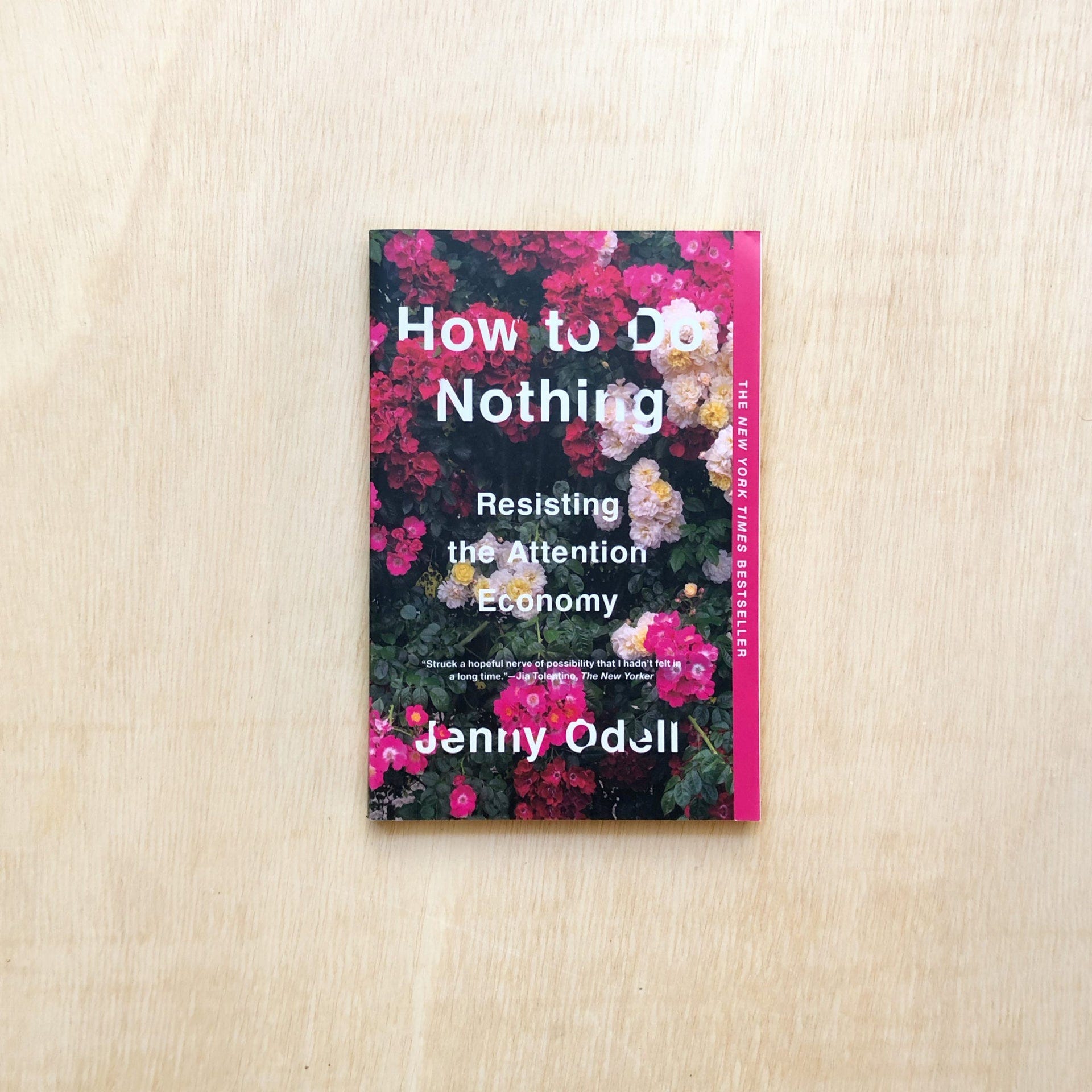
The point of doing nothing, as I define it, isn’t to return to work refreshed and ready to be more productive, but rather to question what we currently perceive as productive.
What is doing nothing to you?
If you were to pose this question to most people today, many would define “doing nothing” as anything that does not generate money.
Time without financial return is treated as a waste of time. Rest is only justified if it leads back to output. And hobbies are tolerated only when they can be optimized, branded, or monetized, which sadly has happened to me numerous times, causing me to ditch that hobby.
This is not accidental. We live in a culture where everything is framed as a hustle, where every skill must be leveraged, and every interest must eventually pay for itself.
The monetization of everything is not a side effect of late-stage capitalism; it is its logical conclusion ultimately.
The consequence of this way of thinking is not just economic. It’s psychological. It quietly rewires how we experience time. It’s also physiological; it determines how we cater to and utilize our bodies.
Moments are no longer lived. They are evaluated.
We measure ourselves constantly against a monetary ledger: was this minute profitable, useful, and efficient enough?

I feel this guilt deeply.
When I am not “on the go” constantly, when my time is spent resting, folding laundry, or tending to responsibilities that generate no income and only expenses, I feel a persistent sense of failure.
Even nourishing activities, like reading or drawing, come with a shadow of guilt looming over me if they are not leading somewhere measurable, specifically monetarily.
Money. Productivity. Time. Money. Money. Money. Money.
What’s more unsettling is that even this awareness doesn’t free me from the feeling.
Knowing that the system is flawed does not stop me from internalizing its demands.
I still rush. I still calculate. I still catch myself evaluating moments of care through the lens of usefulness and potential money. This is how deeply the logic has embedded itself.
Many people never even reach the stage of identifying their hobbies at all. Being under constant financial pressure all the time, self exploration becomes a luxury. Curiosity feels irresponsible. And self-discovery is postponed indefinitely because survival comes first.
The cost of this is not just burnout. It’s a gradual erosion of identity and of ourselves.
But this isn’t a personal failure. It’s a structural one.

Now, this isn’t a fault of yours or mine. Unfortunately, it’s the cage of this current system, and we’re all simply victims of it. We’re just trying to get by, adapt, and survive.
But also, by calling ourselves “victims,” we are only partially honest. Even as we recognize the cage, we often reinforce it by glorifying busyness, by shaming rest, and by measuring our worth through output.
We police ourselves and each other long after the external pressures have faded.
So imagine, hypothetically, that money does not exist.
Now, what is productivity?

Productivity is a measure of economic performance that compares the amount of goods and services produced (output) with the amount of inputs used to produce those goods and services.
Under this definition, entire forms and industries of labor disappear.
Care work. Emotional labor. Maintenance. Presence.
The slow, repetitive acts that sustain relationships, households, and communities are rendered invisible or useless because they do not produce something new.
They only preserve what already exists.
“Our very idea of productivity is premised on the idea of producing something new, whereas many Buddhist cultures value productivity as tending to something that already exists”.
Jenny Odell argues that productivity doesn’t have solely a monetary metric, one of producing something novel, but of something that is already there.
Our modern understanding of productivity is rooted in accumulation: if I do A, B, and C, something new will emerge, i.e, money, status, growth.
Value is measured by expansion. But tending resists expansion. It asks for attention without spectacle. It offers continuity instead of novelty.
So maybe this is why it’s so difficult to identify it as something useful and valuable.
Capitalism trains us to see worth through scarcity and exchange. If something cannot be quantified or sold, it becomes secondary.
Over time, this distorts our perception so thoroughly that we struggle to recognize value unless it resembles profit.

Essentially, we do. This in itself causes most of us mental and emotional anguish.
I find that I myself tend to rush through beautiful experiences and acts of care because I’m just trying to get to that thing, that monetary output, the production of something new.
I treat shared time as an obstacle to “real” work.
So recently, I forced myself to stop. To be quiet. To stay present while folding laundry with my daughter, cleaning and making the bed together, baking a cake for my grandmother’s knitting event.
Yes, none of these acts produced income. None of them scaled. None of them could be optimized.
Yet they produced something else entirely, which is care, connection, memory, a sense of belonging. They sustained relationships. They strengthened community.
If productivity is about sustaining life, then these moments were deeply productive.
And in hindsight, maybe that productivity is more valuable than the productivity that produces monetary gain.
Odell’s How to Do Nothing ultimately examines multiple crises at once: our relationship to screens, the hijacking of our attention, and the collapse of our understanding of productivity. Here, I am only touching one thread within it, but it matters.

Everything you do is essentially a constant ebb and flow of production. Everything you do participates in an exchange of energy: the attention you give, the patience you extend, the environments you nurture, and the lasting moments you cultivate with your loved ones.
These things shape lives, even if they never show up in a bank account.
Allow yourself to consider genuinely that productivity does not have to look the way you were taught.
If you zoom out far enough from yourself, you’ll maybe realize you weren’t unproductive at all. You are simply productive in ways that resist measurement.
The harder task is deciding whether you are willing to stop optimizing your life for a system that cannot measure what matters most, and to define productivity on your own terms, even when it offers no monetary reward.
Comments
Nothing yet. Say the first thing.
Sign in to join the conversation.