
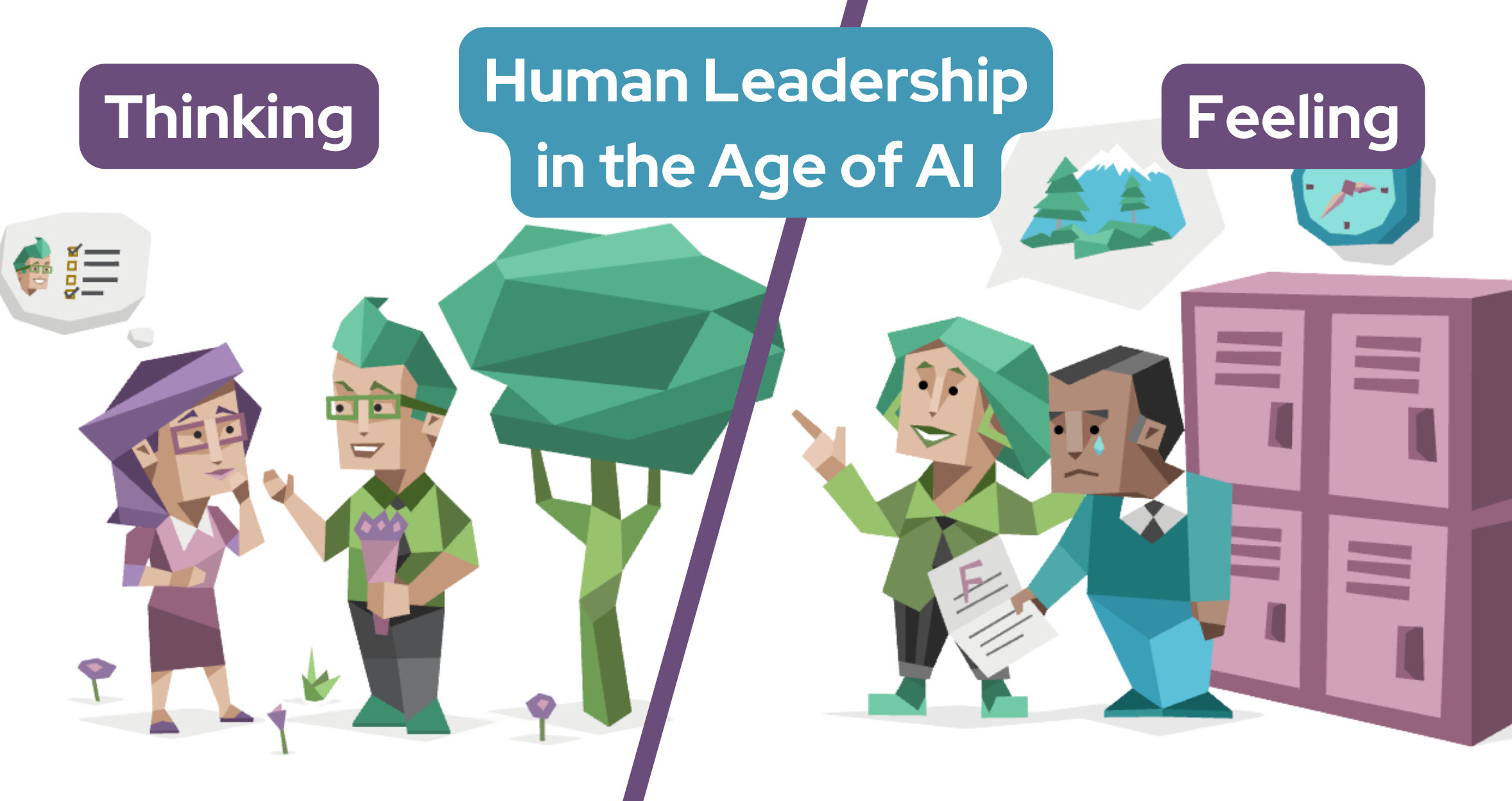
The Thinking-Feeling personality trait scale shapes what people tend to pay attention to when making a decision. Thinking personalities often begin with logic, consistency, and objective criteria. Feeling personalities are generally more attuned to values, individual circumstances, and how a decision will affect the people involved.
Of course, Thinking personalities care about people, and Feeling personalities are capable of rigorous analysis. The difference is more likely to show up in what they examine first.
With AI, a Thinking personality may ask, “Does this reasoning hold up?”
A Feeling personality may ask, “Will this work for the people involved?”
AI can appear to speak convincingly to both approaches. It can lay out a tidy argument, compare options, and deliver a recommendation with complete confidence. It can also sound warm, understanding, and remarkably sensitive to how someone might feel.
But a response that sounds logical is not necessarily accurate. And one that sounds caring does not necessarily reflect real understanding.
That tension can shape how Thinking and Feeling personalities use AI – including what they trust, what they question, and what they may be more likely to overlook.
Leadership by 16Personalities is read by over 28,000 leaders who want to understand themselves and their teams better. Subscribe to join them.
How Thinking Personalities May Interrogate AI
Thinking personalities approach AI with a degree of skepticism.
They may use it to compare competing options, identify weaknesses in a plan, challenge an assumption, or organize a complicated problem. But they’re not necessarily inclined to accept the first answer it gives them. They may be just as interested in testing the output as generating it.
According to our “Skepticism and Beliefs” survey, 91% of people with the Thinking trait say that it is better to be skeptical by default, compared to 68% of those with the Feeling trait.
With AI, that instinct may show up as a desire to question its claims, examine its logic, and look for places where the answer does not quite hold together. A Thinking personality may ask the tool to argue against itself, explain the assumptions behind its conclusion, or show what evidence would change its recommendation.
You can continue reading this article with a paid subscription to Leadership by 16Personalities. Right now, we’re running our biggest promo ever on premium subscriptions – up to 63% off if you move quickly.
Comments
Nothing yet. Say the first thing.
Sign in to join the conversation.