
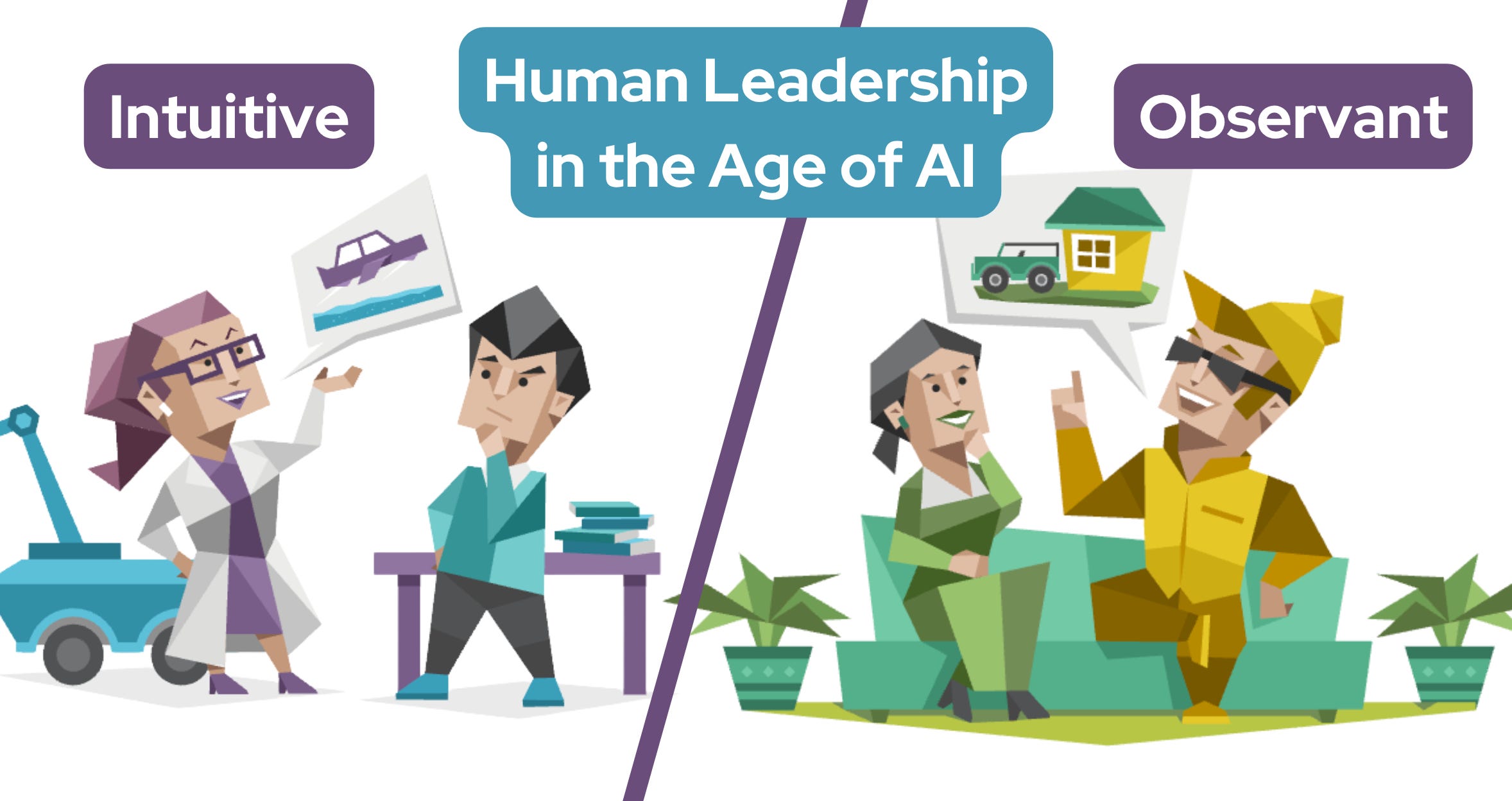
AI presents an unusual combination: it can generate possibilities almost instantly, but it can also produce answers that sound more reliable than they really are.
That makes the Intuitive-Observant personality scale especially relevant.
People with the Intuitive trait tend to be drawn to ideas, connections, and what might be possible beyond the obvious. Observant personalities are generally more focused on concrete information, direct experience, and what can be shown to work in practice.
Of course, both groups can be curious, cautious, imaginative, or practical. An Intuitive employee will still follow instructions and meet the requirements of their role. An Observant employee can absolutely come up with original uses for a new tool.
The difference is more likely to show up in where their attention naturally goes first.
With AI, an Intuitive personality may ask, “What else could we do with this?”
An Observant personality may ask, “Does this work well enough to use?”
Both questions matter.
Your team is probably using AI more often than you think they are. McKinsey found that C-suite leaders estimate only 4% of employees rely on generative AI for a meaningful chunk of their daily work. The real number is closer to 13%.
Intuitive personalities will usually use AI for the task they were given, just like anyone else. But while they are working, their minds may also start moving beyond the immediate assignment.
Ask an Intuitive team member to use AI to outline an article, for example, and they may begin wondering whether the idea could become an interactive tool, a personalized experience, or a completely different kind of resource.
They are not necessarily abandoning the original task. They may be completing it while also noticing paths that were not part of the initial brief.
Comments
Nothing yet. Say the first thing.
Sign in to join the conversation.