
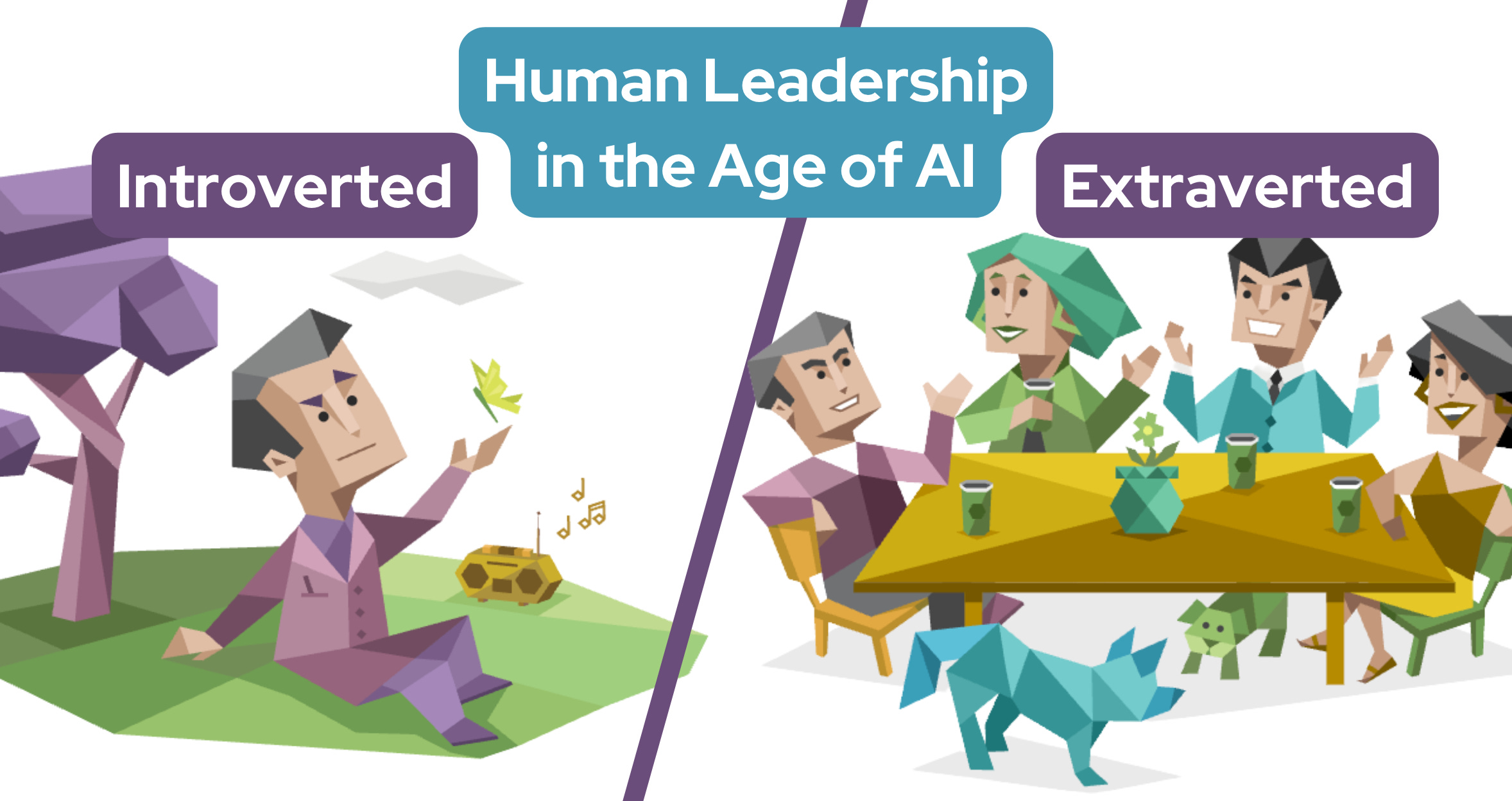
This article kicks off the personality portion of our Human Leadership in the Age of AI series. Throughout the rest of the month, we’ll explore how each of the five 16Personalities trait pairs can shape the way leaders think about, engage with, and use AI.
The Introverted-Extraverted personality trait scale shapes how people tend to process their thoughts and where they get the energy to engage with them. Introverted personalities often prefer to think things through privately before sharing, while Extraverted personalities are more likely to develop an idea through interaction.
AI can fit neatly into both styles.
For an Introverted person, it can offer a quiet space to test ideas, ask questions, and work through a thought without the social demands of a real-time conversation. There is no need to find the right moment to speak, read the room, or worry about taking up too much time.
For an Extraverted person, AI can become part of the interaction itself. It can be brought into meetings, group chats, and shared creative work to generate ideas and keep a conversation moving.
Of course, an Introvert can enjoy brainstorming with a group, and an Extravert can do careful thinking alone. The difference is more likely to show up in where they naturally begin.
With AI, an Introverted personality type may ask, “Can this help me think it through before I bring it to anyone else?”
An Extraverted personality type may ask, “Can this help us get the conversation moving?”
Both approaches can be useful.
Introverted personalities may be especially drawn to AI as a private thinking partner.
They might use it to organize their thoughts before a meeting, review a difficult email before sending it, rehearse how to explain an idea, or pressure-test a decision before opening it up to the team.
This is not an entirely new way of working. Introverts have often preferred to spend time with a problem on their own before bringing other people into the process. AI simply gives them another way to do that.
According to our data, 80% of Introverts say that time spent alone is more interesting and satisfying than time spent with other people, compared to 29% of Extraverts. For many Introverted personalities, uninterrupted time provides the space they need to think clearly and arrive at something they feel ready to share.
AI can make that preparation easier. It can offer questions, surface possible objections, or help an Introvert put a half-formed thought into words without the pressure of having another person waiting for an answer.
That can lead to stronger contributions once they do join the conversation. An Introverted employee who says relatively little during an early brainstorm may return later with a carefully considered idea, partly because they used AI to explore it privately first.
But this approach can have drawbacks too.
Comments
Nothing yet. Say the first thing.
Sign in to join the conversation.