
My classmates voted me “Most Intellectual” the year we graduated from Riverside High School in Greer, South Carolina.
That’s a confession, not a boast.
I didn’t win for deep thinking. I won for deploying a host of cheap party tricks—OK, not “party” tricks but bored-between-classes tricks—of quick and trivial recall. Among them was naming from memory the authors of all the titles listed on the back cover of CliffsNotes. I’d never read most of those books and had no intention of reading them someday and, most shameful of all, no curiosity about what made them worthy of CliffsNotes in the first place. I was captain of the county-champion quiz bowl team and I thought education meant collecting the information needed to ace multiple-choice tests and five-paragraph essays.
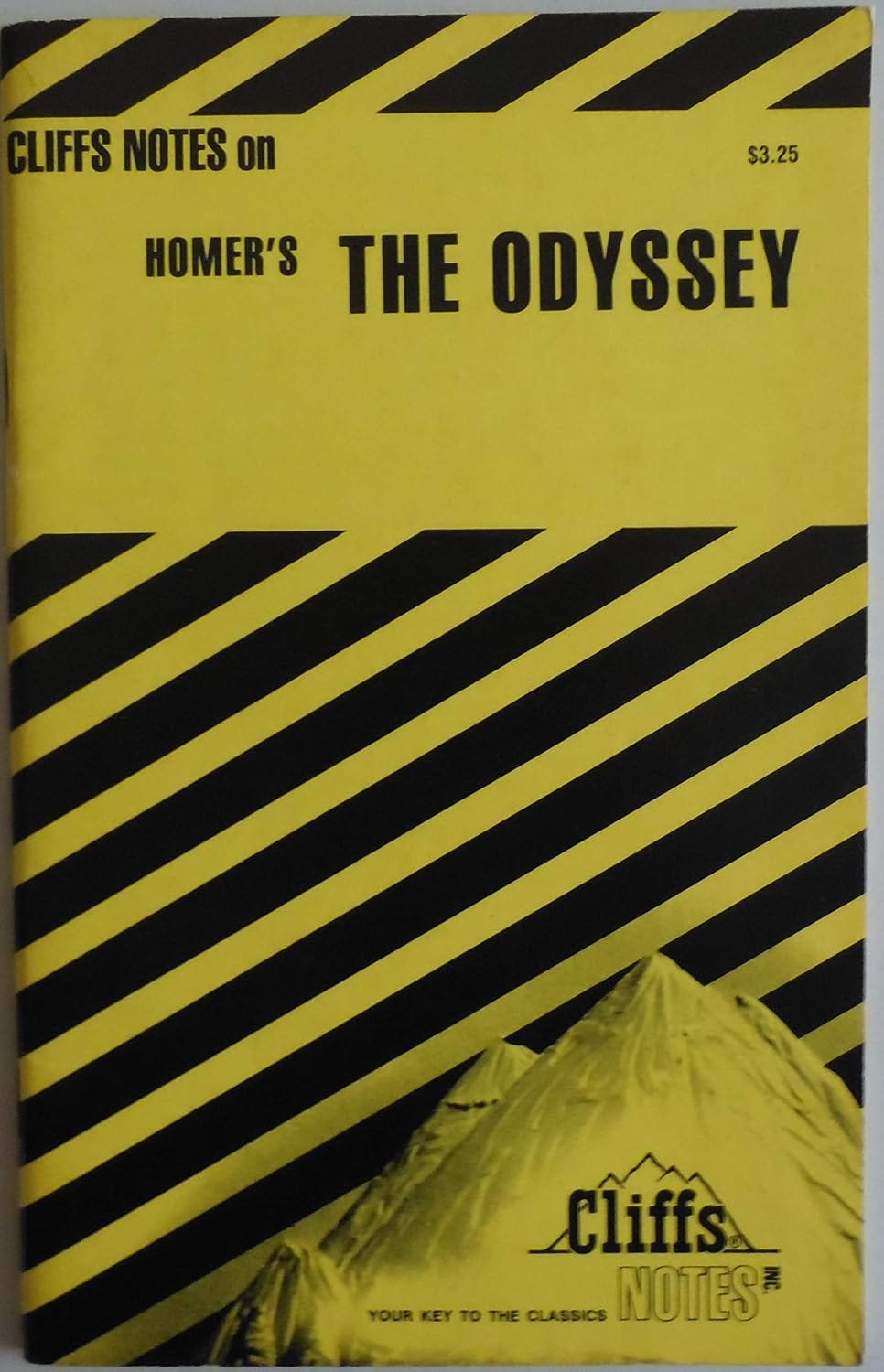
Our high school was a good school but also a “good school,” perched in the ecotone between sprawling high-achieving suburbs and the outskirts of a fraying mill town. I remember the English teachers with fondness, but in the honors-level track—the track for the kids from those suburbs, the kids once labelled “academically gifted”—they were explicit that their goal was to prepare us for the A.P. English test. They taught us Shakespeare’s major tragedies and the novels of the Western canon as grab bags of rhetorical devices (Hyperbole! Assonance! Oxymoron!) rather than as beautiful, unfathomable explorations of what it means to live as a death-destined human on this sublime and grimy Earth. They taught us that the Great Books, like life itself, were mountains to be scaled and conquered, not miracles to be contemplated with humility and awe. They were rapids to be run or seas to be charted, not rivers or oceans to swim in, their currents to be caught in, their floors too deep to reach. They taught us to find the meaning—“the” “meaning”—in any work of literary art, and not that the poem or story or novel or play is itself its own meaning entire.
They loved a kid like me.
I imagine they’d have loved a kid like Christopher Nolan.
I don’t really want to stir up more of what passes for discourse these days, now that it’s dying down, but Nolan made one of the biggest movies of the year, seen and praised by millions, and it’s not only shitty, it’s offensive; and if we as an audience can’t see or say that it is, we’re in trouble.
I’d be willing to bet a fiver at least that while Nolan would ace a multiple-choice test on the book his end credits call “Homer’s The Odyssey,” he hasn’t actually read it. His screenplay has all the rich poetry of a five-paragraph essay by an honors student who’s winging it from CliffsNotes. His dialogue is so far from the rhythms and melodies of the English language that I wonder if he has actually read any poem, ever—ever felt the meter in the lines or only counted the syllables in case of a quiz. His movie is so ponderous and ham-handed in its Great Big Scolding Point—that the Trojan Horse was such a cataclysmic breach of trust that it was the downfall not only of Troy but civilization itself, and we’re on the verge of the same downfall now—that I wonder why Nolan has so little trust in his audience. I’m willing to bet he thinks himself as clever as Odysseus, building a Trojan Horse of a summer blockbuster in which to smuggle his Great Big Scolding Point to the masses, but I wonder if he realizes that by the terms of his Big Point, his Odyssey is the wrong kind of Trojan Horse: both cause and symptom of our own culture’s collapse.
The movie’s been lucky in its critics. The trolls who claim to care about things like “cultural collapse”—themselves both symptom and cause of that collapse—set to howling long before its release, when a still of Benny Safdie’s Agamemnon in armor looked an awful lot like Batman; and when the cast included Elliot Page as a Greek soldier and Lupita Nyong’o as Helen of Troy; and when the trailer showed Tom Holland’s Telemachus tell a suitor, “My dad’s coming home!” The trolls gave Nolan some cover: Who’d want to be on their side, and why get hung up in nitpicking pedantry like those losers?
The movie was so lucky, in fact, that in this Odyssean age of wiles and disguises, when the most powerful show pagan faith in the same rumors that comfort the powerless, I find myself wondering if the studio planted or paid off the trolls. Any publicity is good publicity, and it might keep the Woke off Nolan’s back for how he flattens and neuters the Odyssey’s goddesses and queens.
Even Emily Wilson, whose 2017 translation Nolan cited as an inspiration, did the movie a favor when she wrote for the London Review of Books that she’d have been “ashamed” to have had anything to do with his screenplay. Too many people hate expertise now. Too many people identify too much with one or another online side in what passes for discourse: One side dismissed Wilson years ago for being a woman in the classics; another side saw the clickbait pull quote and dismissed her as a pedant crying faithlessness.
Neither Wilson nor the trolls kept Nolan’s Odyssey from grossing more than $700 million in its first two weeks and scoring a “Certified Fresh” 94% score on Rotten Tomatoes.
This is a problem. This is a problem not because Nolan is too Woke or not Woke enough, and I pray to you, gray-eyed Athena, let that be the last time I ever write or say or think the word “Woke.” This is a problem not because of who was cast as whom or what Agamemnon’s armor “really” looked like or what Nolan kept in or left out or moved around.
This is a problem because Nolan tried to make a great film and instead made a bad movie, and we can’t seem to tell the difference. This is a problem because the movie’s badness comes from a lack of trust in his audience: a lack of trust in our ability to make connections, to synthesize ideas, to see and appreciate real beauty instead of spectacle, to think.
It’s really a problem because he might be right.
It’s not that Nolan cast Nyong’o as Helen and Helen’s twin sister Clytemnestra: She’s as strong a candidate as any for the “most beautiful woman in the world.” It’s that he has Helen—when she tells Telemachus what her sister did to her husband Agamemnon, and the screen shows Nyong’o greeting Safdie—describe her as “my twin sister!” as if we can’t see the same actor playing the two roles nearly side-by-side. It’s fair to assume few moviegoers know the Oresteia. It’s not fair to assume they can’t put that on-screen two and two together in real time.
It’s not that Nolan has Telemachus call Odysseus “dad” instead of “father” or—taking a cue from a much better movie Odyssey—the “damn paterfamilias.” It’s that Nolan said he made that choice for its “earthiness,” when instead it makes Telemachus sound suburban and bland, a whiny teenager instead of a warrior prince. If he wanted “earthy,” then the rest of his dialogue shouldn’t sound so much like a term paper, with characters saying things like “Our civilization is the greatest the world’s ever seen,” as actual living human beings have never done ever. If he wanted “earthy,” he could have borrowed more of his costuming and set design from Uberto Pasolini’s 2024 The Return, a superior take on The Odyssey in every way but scale. If Nolan wanted “earthy” he could have had Telemachus call his parents “Mama” and “Daddy” like Ulysses Gill’s daughters in O Brother, Where Art Thou, or have the actors speak in some other accent of the margins: Appalachian twang or Australian strine or Cockney or the Southie accent Matt Damon used in Good Will Hunting and The Departed . . . or, better and braver yet, the inflections of those who today set out across the Mediterranean fleeing famine and war, seeking the safety of a home.
Nolan deserves praise for using practical shots, old-fashioned movie-making magic, instead of CGI. But his Odyssey’s much-lauded visuals ought to be taught in film schools to show future filmmakers the difference between art and spectacle. Screen it alongside The Searchers or Lawrence of Arabia and ask students which shots are richer, deeper, sturdier in the memory. Nolan displays a keen sense for the striking but none for the beautiful. His Mediterranean looks a cold and gray place, which fits with his Great Big Scolding Point but not with the Mediterranean. Many of the shots and set pieces are exceptional—longships setting sail or thrashing about in storms; the Greeks slipping out of their Horse and opening the gates of Troy; Odysseus stringing his bow—but too much of the movie is cool, or maybe rad, in a way that would have grabbed me when I was in high school like hair metal and Trans Ams did.
The problem isn’t how faithful Nolan is or isn’t to any given translation of a 2,700-year old transcription of an even older oral tradition: the idea is silly. Nolan isn’t producing a new translation, he’s making a movie. To criticize a work for unfaithfulness to its source—or, worse, “historical inaccuracy” in a story about monsters with six heads or one eye—means you have to deny yourself Antony’s funeral speech, all the power and sick glory from “Friends, Romans, countrymen” to “Cry Havoc/And let slip the dogs of war,” because elsewhere in Julius Caesar Shakespeare mentions a clock. It means you have to reject Michael Mann’s The Last of the Mohicans or Francis Ford Coppola’s The Godfather because they made smarter, better choices with their stories than the original novelists, turning pedestrian adventure tales into works of art that probe the American experiment and experience. The problem is that Nolan’s choices do the opposite, turning a work of art into a pedestrian but pretentious adventure tale.
The Odyssey deserves no more reverence than Sherlock Holmes or Frankenstein: What matters isn’t its antiquity but its liveliness, the way it still moves and pricks us after 3,000 years. Homer’s long dead and never filed for copyright anyway. Nolan has every right to take the title, the characters, and the story and do with them whatever he chooses (though given his movie’s concerns with trauma, guilt, and the aftermath of collapse, the epic he should have adapted is The Aeneid). The problem is that throughout his Odyssey Nolan makes bad choices, choices that flatten and impoverish the story.
At the movie’s end, Odysseus predicts a coming end to literacy and its eventual resurrection, telling Penelope something like “songs are what they’ll have until they learn to write again.” The fault of that line lies not in its inaccuracy but in its portentousness and pretentiousness, the way it falls on the audience like an anvil. If that’s his Trojan Horse, then he should feel the same guilt and shame as his Odysseus for playing such a trick, for violating the bonds of trust that hold—held?—civilization together. It’s not that he’s wrong in his Great Big Scolding Point but that he’s right, that any civilization worth living in, any culture worth the name, depends on some degree of trust and fellowship, and that trust starts with how we tell our stories. In that, his movie has failed. His script is not merely bad, it’s insulting, more heavy-handed than those Netflix originals that have to recap their own plots every so often because the studio execs assume viewers are checking their phones as much as they’re watching the movie. It makes the movies of the Marvel Cinematic Universe—which are, as Martin Scorcese said, thrill rides, but there’s not a damn thing wrong with a good thrill ride of a movie—seem like Raging Bull. (I half-expected a Marvel-style post-credits scene flashing back to burning Troy, Aeneas fleeing with his father on his back, setting up the next installment in the Nolan Ancient Epic Cinematic Universe.)
I don’t think Nolan’s stupid, but he seems to think we are. To decry the loss of trust between strangers while failing to trust your audience is either hypocrisy or obliviousness, but either way it’s a failure and maybe even a sin. We need to say this is bad, this is wrong, and this is why. We need to demand better as moviegoers, as human beings.
None of this would be a problem if Nolan had aimed for Independence Day, a big, loud, gleefully dumb blockbuster, but his Odyssey is anything but gleeful and his aim is higher. For our own sake, we need to say that he’s missed. Nolan is one of the few filmmakers who still can get major studio backing for original ideas and screenplays. Most viewers and critics consider him one of the best directors working today, a David Lean-like maker of smart blockbusters, elevated epics. His movies become the center of conversation across most of our atomized microcultures, a rare feat and honor anymore. Kids will grow up wanting to make movies, to tell stories, like he does.
He’s done them—and us—a disservice. He may well have betrayed us, not Homer’s Odyssey, or he may well have shown us who we are now. A culture in which millions think Nolan’s Odyssey is good storytelling is a culture that will think a serial-bankrupt reality-star grifter would make a good president.
Comments
Nothing yet. Say the first thing.
Sign in to join the conversation.