
Google DeepMind launches Gemini Robotics 2 for whole-body control
→ Vision-language-action model now controls full humanoids (feet to fingertips) vs previous upper-body table-top only
→ What same checkpoint controlling three different embodiments (Apollo 2 SharpaWave, Apollo 2 Inspire, Franka Duo Robotiq) reveals about generalization across platforms
Humanoid releases KinetIQ Ascend with real-world reinforcement learning
→ Why scaling trend suggests path to 100% reliability: robot performance improves predictably as training time added, similar to LLM compute scaling
→ Fleet learning loop: every deployed robot becomes part of continuous improvement system through supervisor interventions
Generative Bionics unveils Gene.01 with full-body tactile smart skin
→ Distributed multimodal sensing detecting touch, proximity, force, temperature enabling force-aware task teaching
→ Why physics-native AI optimizing hardware/mechanics/sensing together outperforms vision-only systems: infers physical forces for complex manipulation
Procore acquires DroneDeploy for $845M, creating construction AI
→ Combines 400M photos + 126M drawings from Procore with DroneDeploy’s 20 trillion sq ft visual data + 100K labeled safety issues
→ Why multi-modal perception (drones, ground robots, cameras) enabling autonomous action replaces manual jobsite inspections
Reimagine Robotics emerges from stealth with "learn on the job" robots
→ Google DeepMind's Scholz + colleagues launch London/Sydney startup reducing behavior prototyping from 1 day to 10 minutes
→ Why "monkey-see, monkey-do" approach (show, correct, repeat) eliminates specialist programmers vs fixed task programming
Google DeepMind has introduced Gemini Robotics 2, the intelligence layer powering the next generation of adaptable robots. The major advance unlocks intelligent whole-body control, advanced dexterity, and multi-robot collaboration. Where previous models controlled only a humanoid’s upper body for table-top tasks, Gemini Robotics 2 can now control entire humanoid robots from feet to fingertips, enabling a robot to walk, crouch, stretch, and manipulate objects to clean up a cluttered room, and even team up with other robots to finish the job faster.
The release comes as three models. Gemini Robotics 2 is the most advanced vision-language-action model (VLA), converting vision and language input into motor control, capable of controlling full humanoids and other bi-arm robots. Gemini Robotics ER 2 is the most capable embodied reasoning model—a vision language model that acts as the robot’s high-level brain, enabling robots to communicate with humans, understand the physical world, and plan multi-step tasks lasting several minutes. Gemini Robotics On-Device 2 is the most efficient VLA, optimized to run locally on robotic devices with fast adaptation to new embodiments.
Gemini Robotics 2 unlocks a new level of physical dexterity across different end effectors. The model can control the five-fingered, 22 degree-of-freedom SharpaWave hand on the Apollo 2 robot to complete delicate actions like tying knots or sealing a ziplock bag, and can also operate standard two-fingered parallel grippers on a Franka Duo platform for complex tasks like tight packing. The same model checkpoint controls three different embodiments, the Apptronik Apollo 2 with SharpaWave hands, Apollo 2 with Inspire hands, and the Franka Duo with a Robotiq gripper, though DeepMind notes multi-finger dexterous manipulation remains challenging.
Safety remains foundational to the research. DeepMind is introducing ASIMOV-Agentic, a new benchmark for agentic safety orchestration and uncertainty resolution that measures the reasoning agent’s ability to refuse unsafe tool calls and proactively request human intervention when uncertain. With enhanced embodied reasoning, Gemini Robotics ER 2 is the company’s safest robotics model to date in safety constraint following and human proximity benchmarks, better detecting when humans are nearby and bringing the robot to a safe stop if someone approaches too closely.
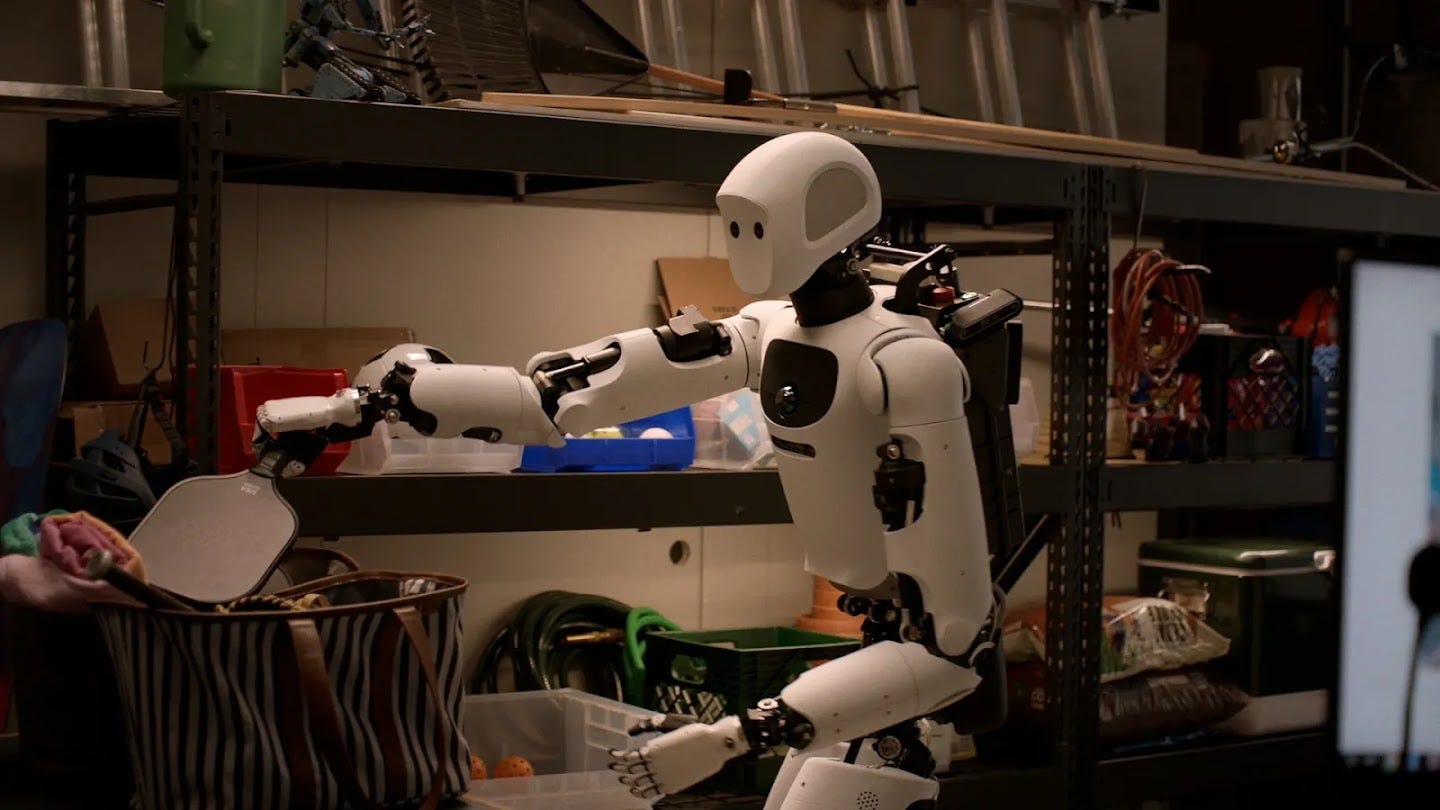
Humanoid has revealed how it uses reinforcement learning (RL) to improve its robots’ performance through experience, rather than relying solely on human demonstrations. Currently, imitation learning is the primary way to teach robots manipulation skills, an approach that works well for impressive demos but doesn’t create robots that can outperform people or operate reliably in real-world environments.
The company’s new approach, KinetIQ Ascend, extends KinetIQ, the proprietary AI framework behind its robots, with the ability to learn from trial and error. Humanoid believes this is the first published demonstration of end-to-end, vision-based RL running on production humanoid manipulation systems in real-world deployment conditions.
One of the key findings is that robot performance improves in a predictable way as more robot training time is added, similar to how large language models improve as more compute and data become available. The observed scaling trend, supported by simulation experiments, suggests the method scales all the way to 100% reliability. The results were demonstrated on several industrial tasks. In a machine-feeding application where a robot picks steel bearing rings from a bin and places them onto a conveyor, RL increased throughput by 42%, with the robot performing at 1.5x the speed of the human demos it originally learned from. In a second task picking items from a cluttered tote and handing them to a person, throughput increased by 85% and success rates improved from 80% to 98%.
The robots achieved these improvements after only a few days of learning. The company also uncovered two findings that exceeded expectations. First, improving only the most difficult part of a workflow can improve the performance of the entire task. Second, the robots appeared to generalize what they learned. After training on a single object type, performance improved on other objects the robots had never seen during training. Humanoid describes its approach as building a “capability factory,” a system designed to rapidly create, improve, and scale robot skills across industrial environments.
The long-term vision goes even further. Because the same training framework can run on deployed robots, every robot could eventually become part of the learning system, meaning fleets would continuously improve in a feedback loop: better robots generate better data, leading to even better robots over time. When a supervisor steps in to correct or assist a robot on-site, that intervention automatically becomes a training signal—turning routine operation into continuous improvement without any additional data collection effort. The humanoid race is becoming a question of scale, and Humanoid’s research suggests real-world RL may be one of the technologies that helps robots perform thousands of tasks every day with speed, reliability, and consistency.
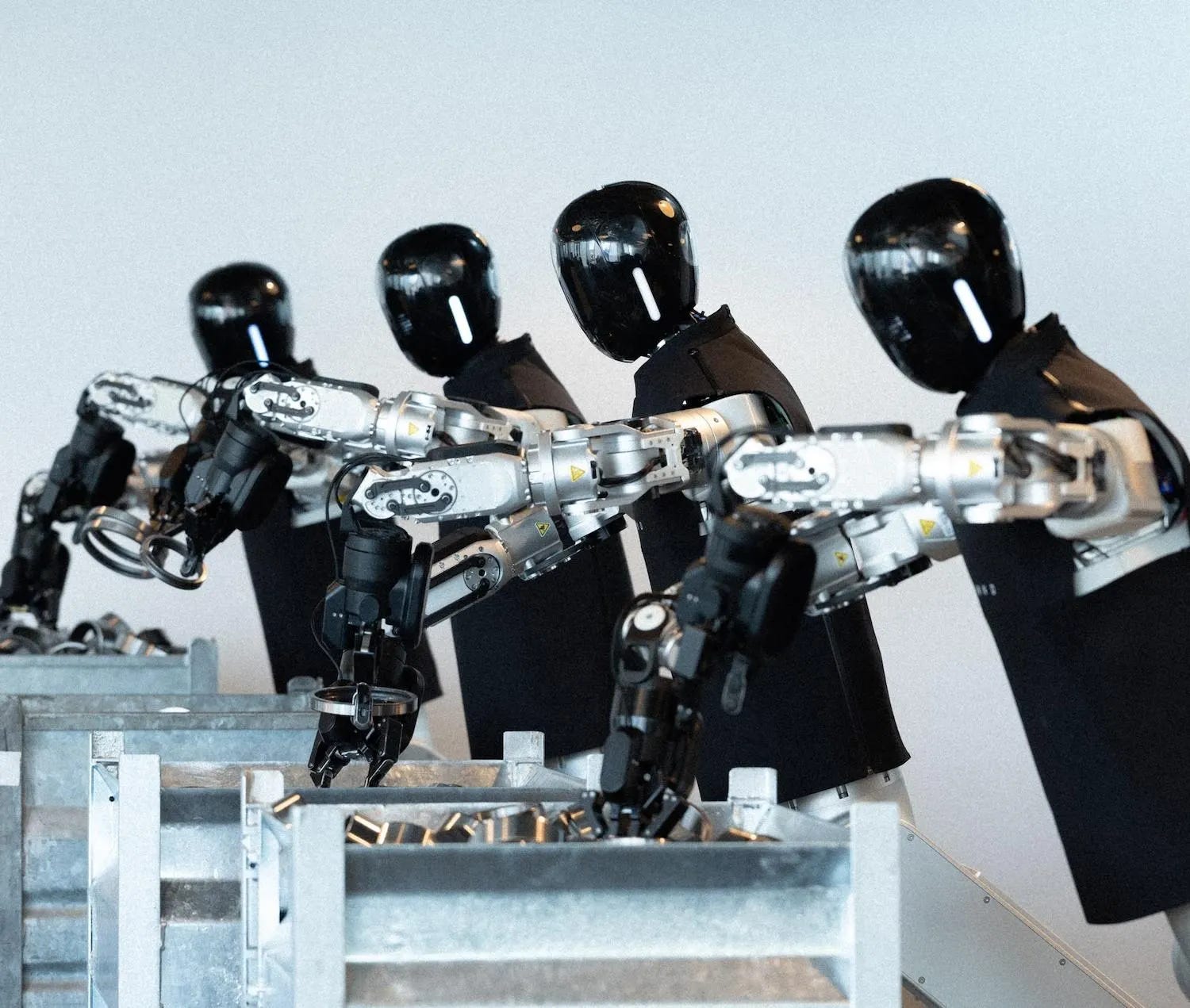
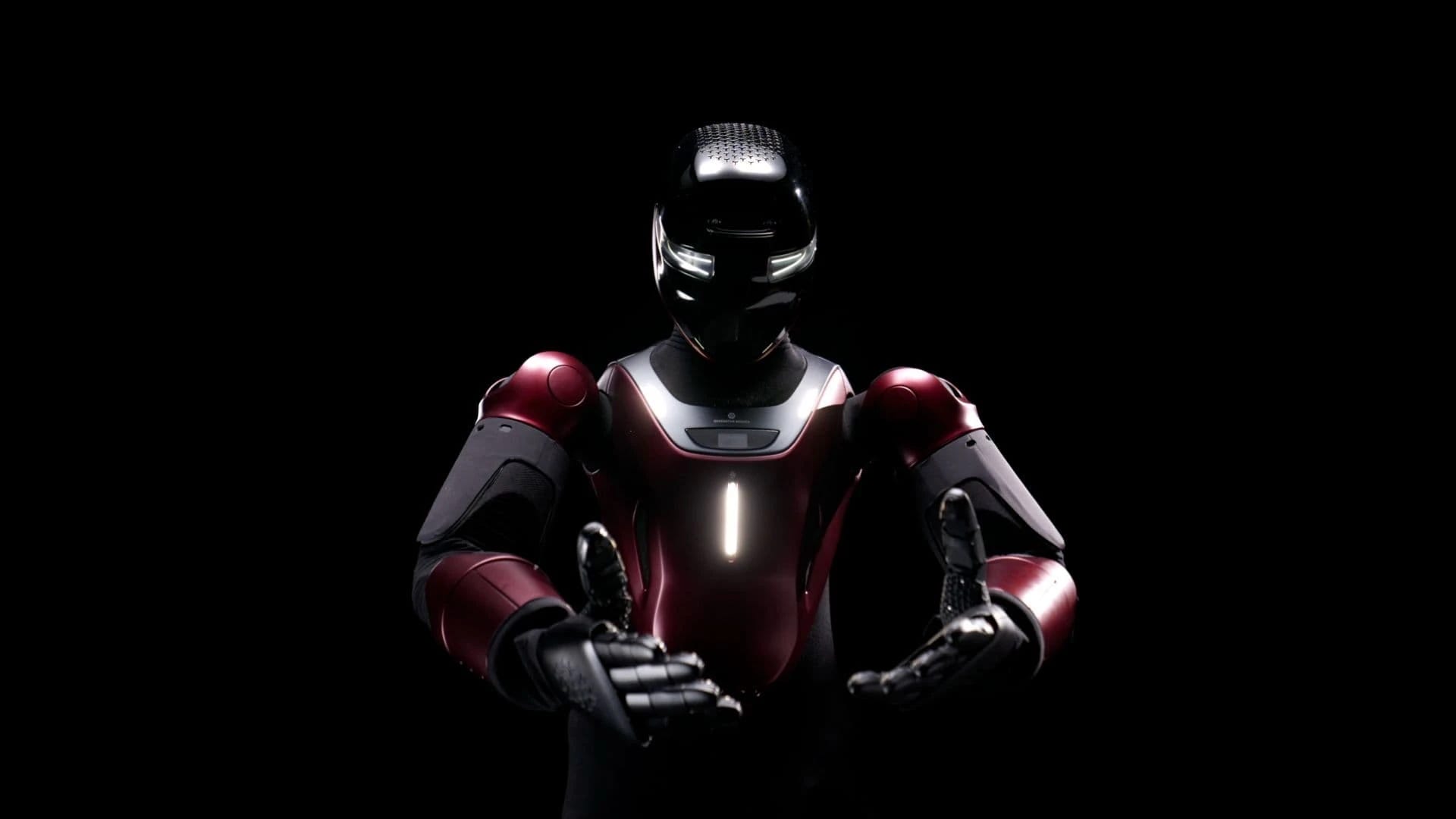
Italian deep-tech company Generative Bionics has unveiled significant updates to Gene.01, a humanoid robot designed for industrial applications. Developed in just six months, the robot combines full-body tactile sensing with a physics-native AI system that integrates its body, mechanics, and intelligence to better perceive, interpret, and respond to the physical world.
Unlike conventional humanoids that primarily rely on vision, Gene.01 features a distributed multimodal “smart skin” covering its body. The tactile system detects touch, proximity, force, and temperature, allowing the robot to sense people before and during physical contact, enabling more natural interactions while improving safety in shared workspaces. The force-sensing capability also allows workers to teach tasks by physically guiding the robot and demonstrating the required force for operations such as gripping or handling objects. This addresses limitations of vision-only learning systems, which often struggle to infer the physical forces needed for complex manipulation.
At the core of the platform is Generative Bionics’ proprietary physics-native AI, which jointly optimizes the robot’s hardware, mechanics, sensing, and motion intelligence rather than treating them as separate systems. The AI uses digital models of both the robot and its human partner to optimize movement, ergonomics, balance, and walking stability. The architecture is based on research published in Nature Machine Intelligence describing a human-aware embodied intelligence framework originally developed through the ergoCub humanoid project.
Generative Bionics is also releasing Gene.01’s digital twin as open source, making it available through standard software distribution ecosystems including PyPI, conda-forge, and the official ROS build farm, giving Physical AI developers a common foundation for simulation and testing before field deployment. Rather than marketing Gene.01 as a one-size-fits-all humanoid, the company has designed it as a scalable platform customizable for manufacturing, logistics, inspection, healthcare, and public safety. Its first industrial deployment is being developed with Italian shipbuilder Fincantieri, where Gene.01 is being adapted into a welding humanoid for shipyard operations, while a partnership with German actuator specialist Synapticon will build out a European supply chain for future production.
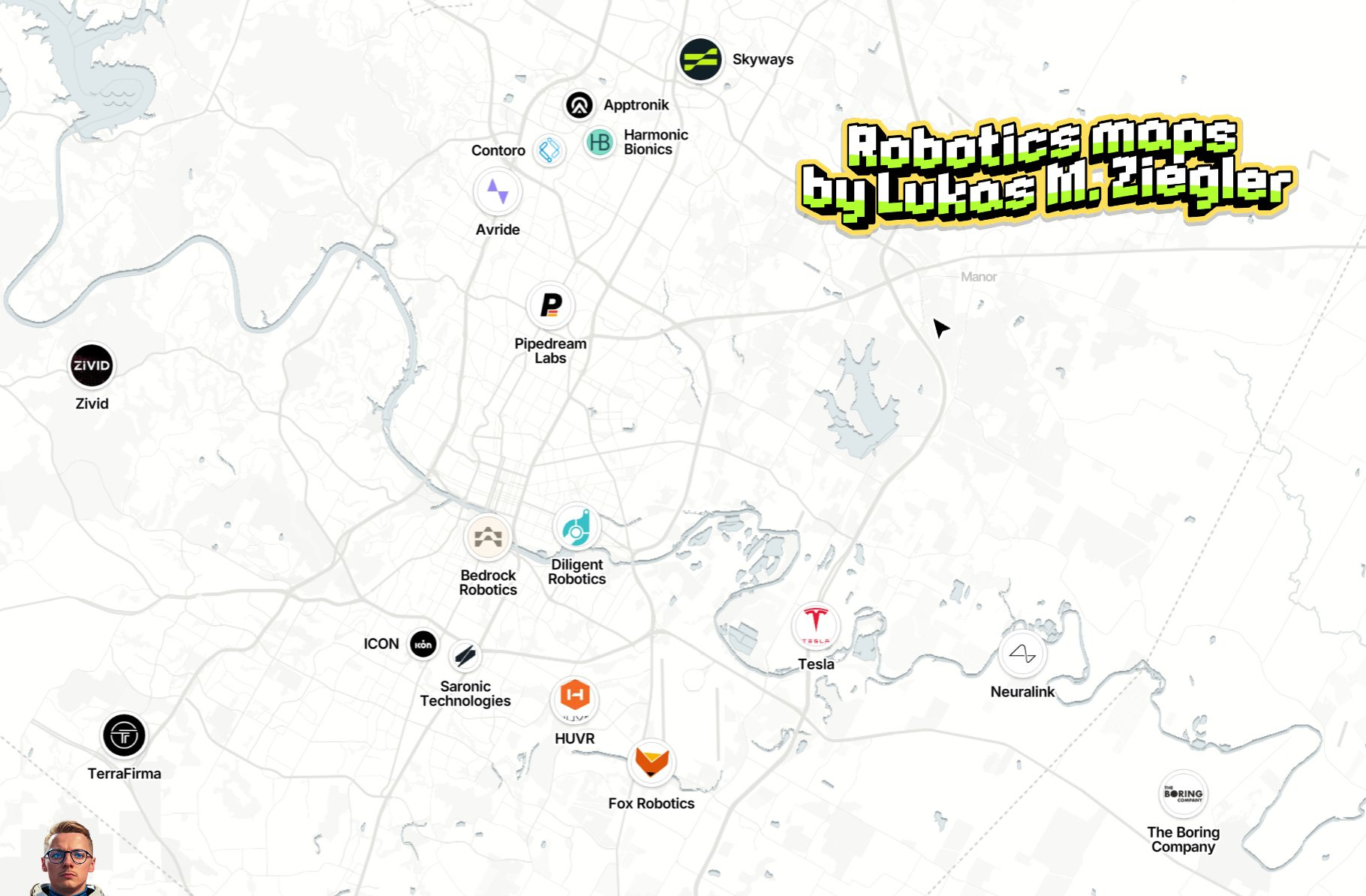
Austin has quickly become one of the fastest-growing robotics hubs in the US. Thanks to its mix of AI talent, advanced manufacturing, and a strong startup culture. The ecosystem is supported by The University of Texas at Austin, which produces top engineers in robotics, AI, and computer science. Around the university, a growing number of startups are developing autonomous systems, drones, and humanoid robots. Austin has also attracted major technology companies. Tesla operates its Gigafactory near the city and is developing the Optimus humanoid robot, creating a large pool of robotics, AI, manufacturing, and automation talent.
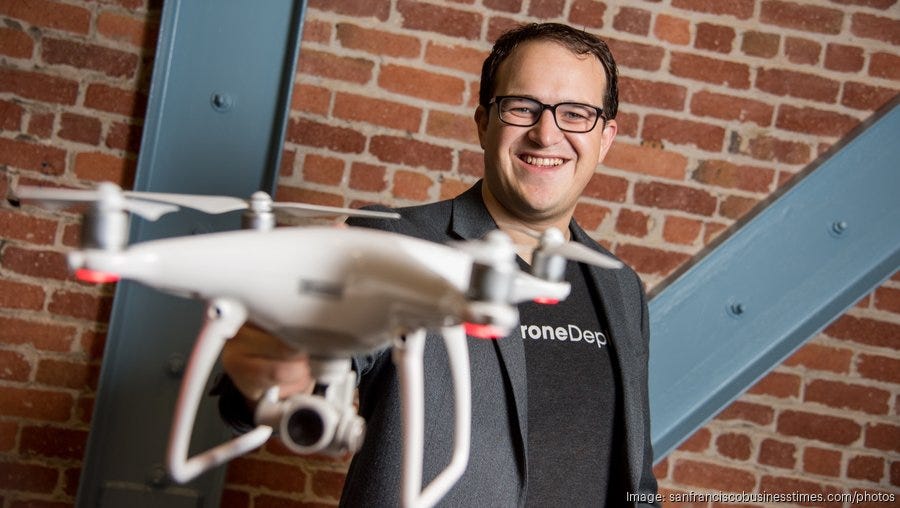
Procore Technologies, a construction management software provider, has announced it will acquire DroneDeploy for approximately $845 million in cash. DroneDeploy offers a robotics and visual intelligence platform for the built world that has been used on over 3 million job sites across more than 180 countries.
DroneDeploy’s visual intelligence technology bridges the physical world—including active construction sites and operational assets, with the digital world, providing real-time visibility into daily operations. The company provides perception through three-dimensional ground and aerial imaging, spanning drones, ground-deployed robots, and mobile, fixed, and wearable cameras. When combined with Procore AI, that captured visual data can be translated into observations that drive autonomous action within the Procore platform.
The companies said the combination of their technologies will enable users to see, understand, and act within Procore, replacing manual jobsite inspections with multi-modal perception capabilities. A range of cameras, drones, and robots can regularly evaluate construction sites and automatically initiate appropriate responses.
Once completed, the transaction will bring together two extensive, domain-specific datasets: Procore’s record of construction decision-making, encompassing nearly 400 million photos, over 126 million drawings, and over 10 million RFIs, submittals, and inspections in the past year alone—and DroneDeploy’s visual record of physical builds, spanning approximately 20 trillion square feet of visual data, tens of millions of user-generated annotations, and more than 100,000 labeled safety issues. Procore plans to integrate capabilities including real-time perception and advanced reasoning to deliver “digital co-workers” for the field and back office. The transaction is expected to close later this year, subject to customary closing conditions and regulatory approvals.
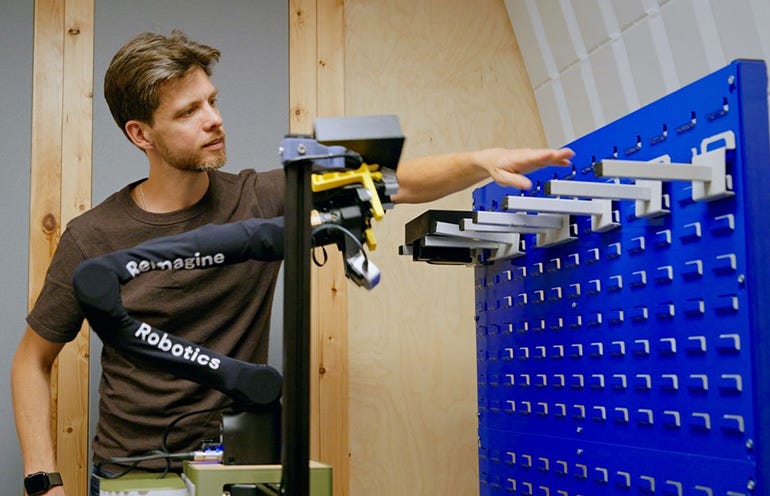
Reimagine Robotics has emerged from stealth, developing technology it says anyone can train and use, enabling robots to learn on the job. “A useful robot should be able to learn from the person doing the work,” stated Jonathan Scholz, co-founder and CEO. “They should be able to show it a task, put it right when it makes a mistake, and move on to the next problem. That is what it means for a robot to learn on the job. It’s a process we call ‘monkey-see, monkey-do.’” Scholz founded Google DeepMind’s Applied Robotics team in London and led it for seven years, later co-founding Reimagine Robotics in April 2025 alongside former colleagues Oleg Sushkov, Akhil Raju, and Misha Denil, with headquarters in London and Sydney.
Instead of requiring specialist programmers whenever a task or production process changes, Reimagine Robotics lets workers show the robot what to do, watch it attempt the task, and then correct it on the spot. “A robot should arrive with the attitude of a new colleague: ‘How can I help? What do you want me to do?’” said Scholz. People remain central to the model throughout deployments. “For us, this is not about taking people out of the process. A robot that learns on the job depends on people. The worker identifies the bottleneck, shows the robot how to help, and corrects it until it is useful. I think of it more as a tool to amplify human labor.”
The company’s first phase was funded by pre-seed financing from Fly Ventures, firstminute capital, and a number of angel investors, and it has already deployed its robots in advanced manufacturing and electronics disassembly facilities. At a made-to-order plastics business, Reimagine Robotics trained its robots to tend 3D printers overnight by removing print beds, operating latches, and pressing controls—and the customer’s own team used the platform to automate additional stages including washing, curing, and drying. In a separate deployment recovering valuable critical materials from used hard drives, the company worked with process engineers to develop a three-robot disassembly cell combining robots and people to optimize the workflow in real time.
During that project, Reimagine Robotics said it reduced the time required to prototype and test a new robot behavior from approximately one day to about 10 minutes, allowing teams to propose a new use for a robot and test their ideas almost immediately. “This last year was about building a core product and a team, and working with customers to test the platform,” said Scholz.

Comments
Nothing yet. Say the first thing.
Sign in to join the conversation.