
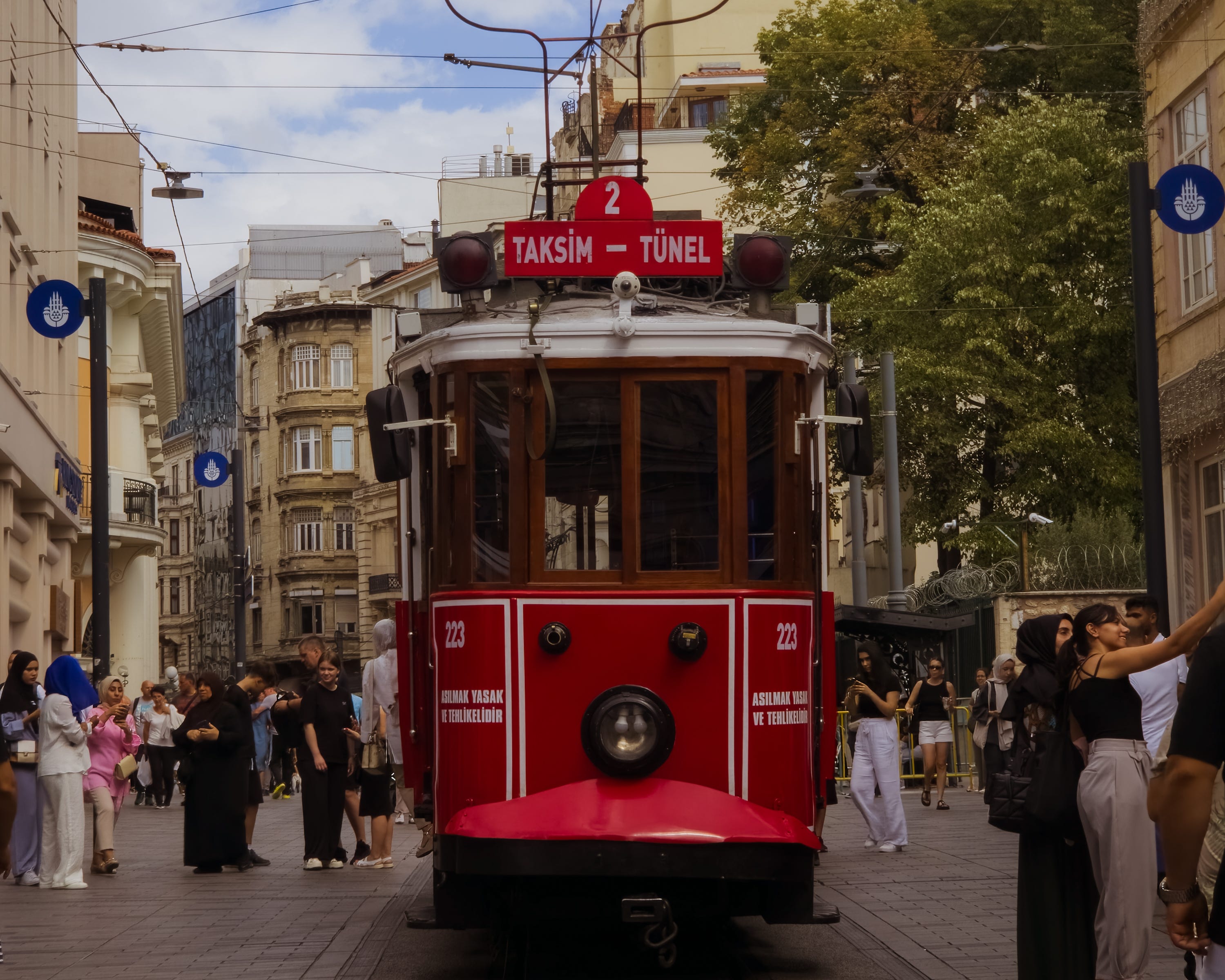
Few weeks ago, I hopped on the funicular from Karaköy up to Taksim. Only later did I realize I was riding the Tünel — world’s second-oldest underground urban railway, opened back in 1875. Older than the Paris Métro itself, and older than most subway systems in Europe. Yet, it looked remarkably clean. The tiled walls were clean, the air didn’t reek, the platforms felt looked after.
For some reason, this ride reminded me about Paris, the metro in particular. I never liked Paris, not at first anyway. But Paris is a city — that, as I like to say — has grown on me. But I can’t pretend that the metro there doesn’t often stink. Many stations are covered in graffiti, corners smell of urine, and the whole thing just feels worn down. Whenever I’ve brought that up, I always hear the same excuse: “of course it’s dirty, it’s old.”
But standing in the Tünel, I couldn’t buy that anymore. Istanbul proved to me that old didn’t have to mean filthy.
The difference, at least from where I stand, is cultural.
In the Ottoman world, cleanliness was more than a nice idea — it was built into daily life. Wudu (ritualistic washing) before prayers was part of the day, and hammams were civic spaces as much as private ones. The 17th-century traveler Evliya Çelebi wrote that Istanbul had 4,536 private hamams and 300 public ones, plus sea baths along the Bosphorus.
Paris, on the other hand, has a different history. Well into the 18th and 19th centuries, sanitation was a constant struggle. Patrick Süskind, in his book Perfume, paints it bluntly:
In the period of which we speak, there reigned in the cities a stench barely conceivable to us modern men and women. The streets stank of manure, the courtyards of urine … People stank of sweat and unwashed clothes.
Perfume became a Parisian export not only because it was luxurious, but because it covered what the city couldn’t fix. While the Ottomans built a legacy of cleanliness with baths and fountains, Paris built a culture of scent.
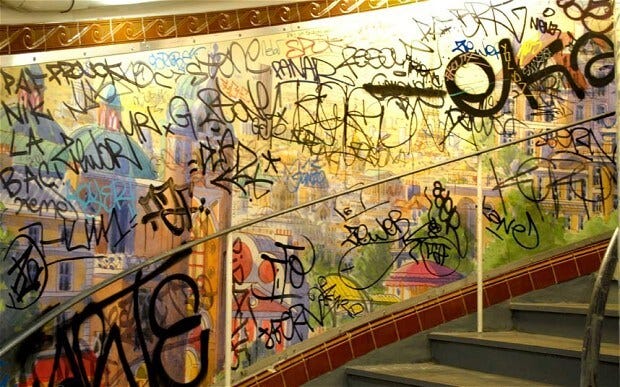
I get it. Paris has the tougher job. It’s a massive system with more than 300 stations and millions of riders every day. Keeping that clean isn’t easy.
But old shouldn't have to mean dirty. The Tünel is older than the Paris Métro and still feels cared for. Walls might be worn but are clean. Infrastructure does creak with age but still feels respected. What makes the difference is whether people — both the city and the commuters — decide it matters.
What bothers me most — I guess — is the resignation. Too many of us just accept filth as “part of the deal” when it doesn’t have to be. Age makes the work harder, sure, but it doesn’t make it impossible.
So the next time you’re in a metro and catch that sour smell on the platform, maybe don’t just shrug and say “well, it’s old.” I can’t anymore. I think back to the Tünel in Istanbul — still running after nearly 150 years — and I wonder why we tolerate filth where others insist on care.
When I step into a metro, I don’t just see trains. I see how much a society values the spaces we all share.
Comments
Nothing yet. Say the first thing.
Sign in to join the conversation.