

We’re mixing things up this week! Instead of an in-depth analysis on one question, I bring you a random assortment of four little questions and their corresponding brief answers. Hope you enjoy!
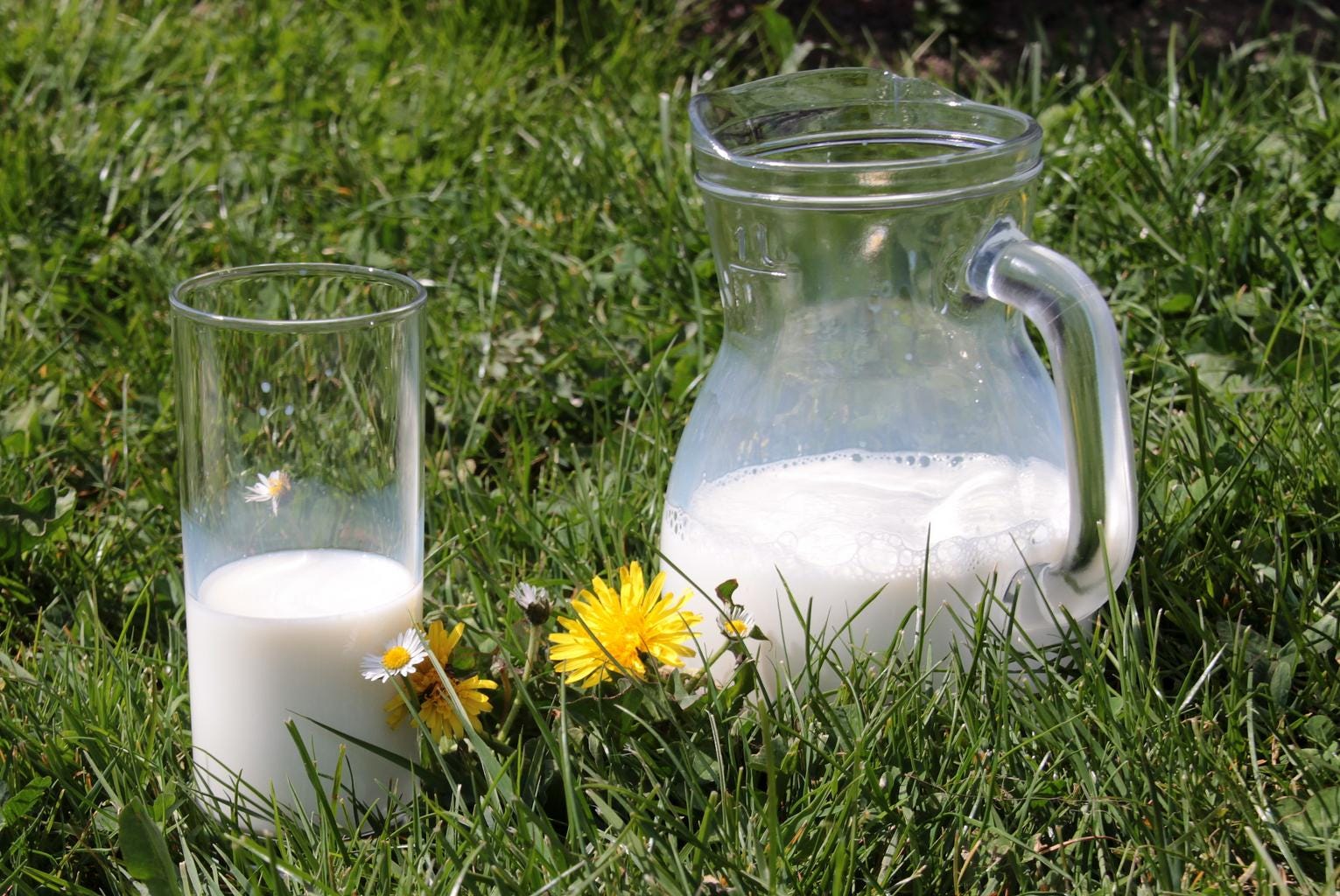
Dairy has been a major part of the human diet for thousands of years. Not only do we consume milk on its own, but it is also used to make so many other foods that we consume; yogurt, cheese, ice cream, and butter are among the favorites. This ubiquitous product was not always safe to drink, however. In fact, there was a period in which thousands of children died from exposure to pathogens (harmful bacteria, fungi, viruses, etc.) in milk every year. In the late 19th and early 20th centuries, more people were moving from rural communities to urban environments, and therefore, getting their milk from further away. With the increased time between milk production and consumption, pathogens in the milk became more harmful.
The solution? Pasteurization, a process that was invented in the 1860s, was implemented in the production of dairy in the early 1900s to combat the spread of disease through milk. Simply put, pasteurization involves heating milk to about 161˚F to kill the pathogens, and then quickly cooling it back down to around 39˚F. Thanks to this simple, yet crucial process, we don’t have to wonder whether our milk will make us violently ill when we grab it from the store.

For me, pizza is a magical food. It’s versatile, it’s easy to make, it’s great for parties, and it fills me with a sense of nostalgia every time I take a bite. I know I’m not alone in this opinion, almost everyone likes pizza. But who likes it the most? Which nation eats the most pizza per capita?
Surely, it would be the Italians. Afterall, they are the originators of this culinary masterpiece. Well, I’m sorry my Italian friends, but you are not the top pizza consumers.
Maybe the U.S. then? We Americans, with our Domino’s, Pizza Huts, Little Caesars, and Papa Johns, do consume quite a bit of pizza (I know I’m doing my part!). However, despite my best efforts, America is not on the top of the pizza podium.
The winners of the pizza eating contest are….Norwegians! Yep, you read that right, the people of Norway! Norwegians eat about 11 pizzas per person per year! No other country has a per capita pizza consumption rate that high! Gratulerer, Norge!

If you grab a bottle from your liquor cabinet, you’ll always find a percentage value somewhere on the label. This number tells you how much of the total liquid volume is alcohol. For example, most whiskeys are around 40 – 45% alcohol by volume or ABV. Next to that number, you’ll probably see another number followed by the word ‘proof’. In the United States, the proof value is always 2X the ABV value. For instance, a 45% ABV whiskey is 90 proof. But why is that value on there if I already know the alcohol percentage? Where does that term come from?
The origins of the word ‘proof’ as a measurement of alcohol content go back to 16th century England, where the government was looking to raise taxes on stronger alcohols. They devised a test for determining which liquors exceeded the alcohol strength threshold, which consisted of soaking gun powder with the liquor in question and then seeing if it would still ignite. If the gun powder ignited, it was ‘proof’ that the liquor was strong enough to warrant a higher tax. The English later devised a more accurate alcohol measuring system. Since then, the word proof has been used to distinguish higher alcohol liquors, though not every country has the same proof to ABV equation. Liquor producers in the U.S. today are not required to display the proof value as long as they show the ABV% on their labels, but the tradition lives on almost 500 years later.

Did you know that your nose is a temperature control device? As you breathe in cold dry air through your nose, the blood-filled membranes within your nasal passage quickly heat the air and produce water and mucus to humidify the air before it enters your lungs. This process, though very annoying, helps protect your airway and lungs from irritation. The extra mucus also helps keep the nasal lining from drying out.
So, the next time you’re skiing or walking home on a cold winter day and your nose starts dripping, just remember that this means your nose is doing its job!

Another tie! Only this time, neither of the tying answers are the right one. According to U.S. Social Security Agency, the average life expectancy for someone born in the U.S. in 1950 was about 68 years. We’ve added a decade to that over the past 70 years…not bad!
I want to get a sense of the types of articles you all enjoy the most now that we are testing a new format. I would really appreciate if you all could fill out this poll and help me provide you with the best possible content! Plus, everyone loves filling out feedback surveys…right?
Thank you for reading Itty Bitty Inquiries. This post is public so feel free to share it.
No posts
Comments
Nothing yet. Say the first thing.
Sign in to join the conversation.