
0:00
-13:23
My father is my hero and I miss him every single day, but a (very) small part of me is glad he’s no longer with us. Because if he were still alive today, had the congestive heart failure and dementia not killed him first, the current state of our society probably would have. And it would break my heart to watch him suffer in a world he no longer recognizes or feels he belongs to.
Dad was the unlikely combination of Norm from Cheers and Kevin’s dad from The Wonder Years. No matter the place of business he would enter—whether the local hardware store, café, or cheese factory—he was always greeted with a lively “Mr. Arnold!”, a hearty wave, and timeless quips such as:
“So ya working hard, or hardly working?!”
Given he was the K-12 principal for the entire school district in a Wisconsin dairy farming community of 412 people, it wasn’t a stretch to say that everybody in town knew my dad’s name. If you came to Mr. Arnold seeking help, he would either drop everything and bend over backwards for you (to a fault), or if he couldn’t help you…he always “knew a guy.” In return if my dad needed help (which he would seldom ask for), the entire community was always there to support him. I can think of no better example than when both he and my mother fell to dementia (at the exact same time, no less), and the local Amish community banded together to support my siblings and me as we navigated sandwich generation hell. From downsizing decades of hoarding to cleaning up 40 acres of dilapidated farm land, and then ultimately liquidating what was left of their estate at an Amish auction (for which they refused to take any commissions because of all my father had done for them), we literally wouldn’t have survived without the support of the vast support network my father had spent decades building, one human relationship at a time.
If Norm was one side of the coin, Kevin’s dad (also aptly named “Mr. Arnold”) was the much darker flip side. Outside of work, my father was the most reclusive, introverted person I’ve ever known (with my mother being a very close second). I still get chills rewatching The Wonder Years because I swear Jack’s indifferent grunt & stare was modeled directly off my father’s.
Upon arriving home in the evenings, there was nary a conversation with my dad—short of discussing my chores for the evening, of course. With the exception of family gatherings for major holidays, we never entertained guests. He never had friends over for a beer or to watch the ballgame. And the only social gatherings he attended were school-related functions where he could confidently wear the moniker of “Mr. Arnold!” rather than just showing up as “Al.” And just like me, my father preferred hot pokers through his eyeballs to enduring even five minutes of small talk.
It wasn’t until writing his eulogy that I began to reflect on this sharp dichotomy between his extroverted confidence and his introverted reclusiveness. How was it that the same man capable of inspiring an entire assembly of K-12 students eventually became an agoraphobic? In his later years, the mere thought of leaving the farm and being amongst even small crowds of people was enough to trigger crippling anxiety. He could no longer travel because he refused to be in airports or even drive in heavy traffic. Zoom calls drove him insane. And even a simple phone conversation with a customer service representative often brought this otherwise formidable, larger than life hero without a cape to tears. I once witnessed my father spend three straight hours wrestling the customer service department at AT&T (there’s a special place in hell for that company) being passed around from one person he couldn’t understand to another who couldn’t solve his problem to another simply reading from a manual of SOP’s rather than having a real conversation and listening to him. Upon hanging up, you would’ve sworn he had just ran a marathon. Slumped over the edge of the couch and staring at the ground, he lifelessly sighed to himself…
“Why can’t I just talk to a real person.”
I can only imagine how my father would react to this new world where there are more robots on the internet than humans1; where we desperately search for our soulmates by swiping left and right; where the people who “influence” us have millions of followers but zero friends2; where we hide our real names behind our online avatars; and where the business currency we covet above all else is “connections” rather than genuine relationships.
We Instacart to avoid the incompetent clerks who tell us to do their jobs for them use an app to find an item that’s one aisle over.
We DoorDash to avoid the mindless chit chat standing between us and our MSG.
We cruise our Instagram and LinkedIn feeds freely throwing ‘Likes’ and ‘Connections’ at every profile like The Wolf of Wall Street throws cocaine at his hookers.
We do everything we can to avoid real life, because every trip into the analog world reminds us just how broken we have become as a society, as communities, and as individuals in search of our tribes.
And all for the sake of…efficiency.
What terrifies me the most is not that we’re here but that we seem to be doubling down on stupid.
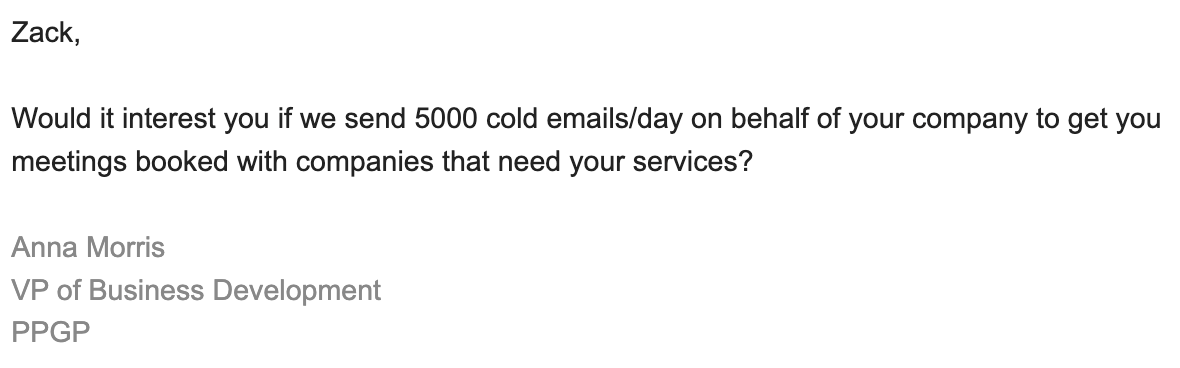
Building more efficient AI systems to facilitate even more “connections” in the digital world does not dig us out of this existential hole of loneliness and despair, the robots are the shovels. Artificial intelligence doesn’t improve systems, it only amplifies them. And if your current relationship-building strategies don’t work now, using the robots won’t make things better, it will only make your ineffective systems exponentially worse.
No matter if you’re struggling to find work, find friends, of find your soulmate, I promise you the answer is not even more connections, more followers, or more swipes. The only way out of this existential hole is reverting back to the evolutionary instincts that have allowed us to survive this long as a species—surrounding ourselves with real humans in the analog world and becoming part of a tribe.
Introverts...I see you. 👀
I feel you.
I get you.
The mere thought of “belonging” is enough to send shivers down our spines. Similar to Woody Allen in Annie Hall (and Groucho Marx before him), I too refuse to join any club that would have me as a member. But as I’ve grown older (and occasionally wiser?), I’ve discovered the problem for me was not belonging so much as never feeling like I fit in because I was trying to belong to the wrong tribes. And this is where the internet and the robots are no longer our enemies but can instead become our greatest allies.
As I argued in my previous essay, I’m not anti-AI.
With the proper rules and boundaries, I believe the machines—when combined with the best of what makes us human—have the tremendous power to not only amplify our creative process but also help facilitate connections, build genuine relationships, and expand our tribes. But only if we understand where the robots do—and DO NOT—belong in the networking and relationship-building process.
No matter if you’re seeking your tribe of peers that share the same eclectic interests as you, building your tribe of “experts” who are doing the work now that you’d like to be doing next, or surrounding yourself with a tribe of mentors who can guide you on the right path to your goals in work and life, the internet is a vast ocean of endless possibilities and interesting connections, and the robots are the navigation system.
But we must never let the robots drive.
No different than my creative process, where I draw a hard line is allowing the robots to write my words for me, and this includes my outreach. The most effective outreach is the kind that makes the recipient and their work feel seen, feel heard, and make their impact known. And the reason people reply and want to genuinely connect with you is because you made them feel something. This the robots can never do effectively.
Our path forwards is not amplifying the quantity of our connections but instead amplifying the quality of our few but incredibly valuable relationships.
My dad didn’t read blogs. He wasn’t a self-help junkie who consumed podcasts like Pez or mindlessly scrolled his news feed for the latest tips on boosting his LinkedIn connections. He just knew intrinsically what science has proven beyond the shadow of a doubt3 and what we as humans have known since the beginning of time:
The quality of our life is determined by the quality of our relationships.
Despite the sharp dichotomy between the gregarious extroversion of Norm from Cheers and the reclusive introversion of Kevin’s Dad from The Wonder Years, there is a universal theme underneath not only both of these timeless shows but also my father’s success:
Sometimes you want to go where everybody knows your name.
And we’ll get by with a little help from our friends.
P.S. This podcast conversation with my father recorded shortly before he passed is one of my most prized possessions in the world. If your father (or mother) is still around, I highly recommend this ‘20 Questions’ exercise.
If you want to make things that matter, I want to help you.
Creating awesome work is only half the battle, however; the other half is making sure the right people know you’re awesome. No matter your goals in work or life, nothing worthwhile is easy. Achieving hard things will require guidance, support, mentorship, and a little luck along the way…not to mention a little help from your friends.
If you’re tired of networking strategies that no longer work—or if you’re so allergic to the idea of “networking” that you’ve given up completely—I’d like to help you build genuine relationships with your fellow humans.
4pm PT // 7pm ET
Learn how to build genuine—and human—relationships without the robots, without social media, and without selling your soul.
I promise networking doesn’t have to suck - especially if you’re highly creative and introverted like me. In fact, introverts have distinct advantages in the networking game, they just don’t know how to leverage these advantages in the digital age. The best part is, networking can be enjoyable, rewarding, and most importantly - algorithm-free.
In this live, 90-minute masterclass (via Zoom) you will learn:
Why networking is absolutely essential to your creative survival
Where you can leverage your introversion to make networking fun and rewarding (instead of soul-sucking)
Who to target based on your goals (so you can stop wasting your time “spraying and praying”)
How to approach your ideal connections (without bothering them, insulting them, or feeling like you have to sell yourself)
What to say so people are excited to connect with you (and eager to help!)
Thank you for letting me into your inbox, your earbuds, and your heart. ❤️
References:
2 https://nypost.com/2018/10/24/social-media-stars-we-have-millions-of-followers-but-no-friends/
3 https://www.weforum.org/videos/harvard-conducted-an-85-year-study-on-happiness-here-s-what-it-found/
Comments
Nothing yet. Say the first thing.
Sign in to join the conversation.