
A friend of mine recently started playing RPGs. He has long played video games and been interested in Japanese culture, but this particular venture is new. He played a little bit of a Pokemon game, then jumped straight back to Dragon Quest (1986) and enjoyed the retro vibe. Then, at my suggestion, and before finishing Dragon Quest, he plunged into Final Fantasy VI (1994). Whether he really enjoys VI or because his children got into watching and following the story (his middle son and my godson’s favorite character is Mog, just like me!), he has stuck with it and is in the later half of the game. His first, full RPG will be one of the pinnacles of retro gaming, which I have to say is pretty cool.
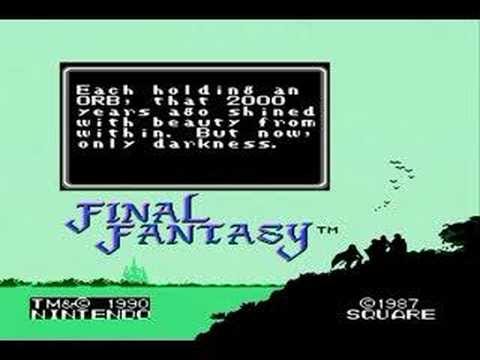
So why start with Final Fantasy VI? He’s into retro gaming and Japanese culture, like I mentioned, and he also wants to begin at the beginning, or at least as close to it as he can get (he studies early medieval history and literature, if this helps at all). I’ve been thinking about how to get into video games ever since he started, and whether it’s best to start at the “beginning” with Dragon Quest, with the high points like Final Fantasy VI or Chrono Trigger (1995), or with something modern with thicker storytelling, worlds, and characters. I’ve also been wondering how to appreciate older or retro games not as representations of the past or stepping stones to modern gaming, but on their own merits. In other words, what were these games doing, or trying to do against hardware limitations? How were they telling stories? What are their own virtues, not as games taken off the shelf of a museum that represent a certain age, but just simply as storytelling worlds and creative efforts?
As a technical note, what I’m suggested is a synchronic view of games as opposed to a diachronic one. These are originally linguistic terms that represent the study of a word in its own particular context (synchronic) versus the study of a word across time. For example, you could talk about the word “cool” in 2026, how it means “fashionable” for some age-groups, and how it is used in conversation. This is a synchronic look at the word. A diachronic look would note that this usage comes from African American groups in the 1930s and developed in the ‘40s, probably in discussions of jazz, then came into popular usage among other groups later in the century, notably in the 80s and 90s. Synchronic, diachronic. (By the way, you can find this information about words on etymonline.com (click here for the link).
Alright, so what is a synchronic look at the first three, or NES, Final Fantasy games? What is their character, what kinds of stories were they telling, what kinds of games are they? Rather simply, Final Fantasy (1987) followed the release of Dragon Quest, which had been created to make the otherwise confusing and technical RPG (or “simulation”) games more widely accessible to more than hardcore fans. What we call RPGs (but were called many things in the early to mid-eighties) tended to open-world or dungeon-crawling adventures that left the player to discover everything. This sounds pretty fun, but early RPGs also had poor balance or required players to do specific things without much guidance. They could be frustrating, with a lot of game over screens (if they had these), but hardcore gamers loved them. There was a sense of accomplishment in solving the puzzle of a game, and sharing information through magazine and before the internet connected people together as if they were on the journey together. Think of speed runners for Super Mario Bros. (1985) or the first two Mega Man games (1987 and 1988), and consider how much trial-and-error must have gone into figuring out glitches and timing and you’ll see some of the fun in these early games.
Horii Yuji and Sakaguchi Horunobu (for Dragon Quest and Final Fantasy respectively) wanted to make these kinds of games more accessible so that non-hardcore gamers could enjoy exploring worlds, fighting monsters, and gaining levels. The two founding games in these series seem pretty opaque to us nowadays with our little flashing notifications on area maps to tell us where to go next, but in the mid-eighties, these games were much, much more friendly. It’s fun to note, too, that both Horii and Sakaguchi were successful. They not only made RPGs accessible, but popular. Their shared goal was realized, to our joy today.
Both Horii and Sakaguchi had other goals, though, and this was to create imaginary worlds and tell certain kinds of stories with a certain amount of player interaction. What kind of worlds were these, and what were the stories? How were they constructed, how were they built, and what sort of stories are being told - in view of player interaction? To answer these questions, I could look to what Horii and Sakaguchi said about these games, but here I want to look at the Final Fantasy games themselves (I’m limiting myself to Final Fantasy because otherwise there would be too much to say, and because the answer for Dragon Quest is actually pretty different).
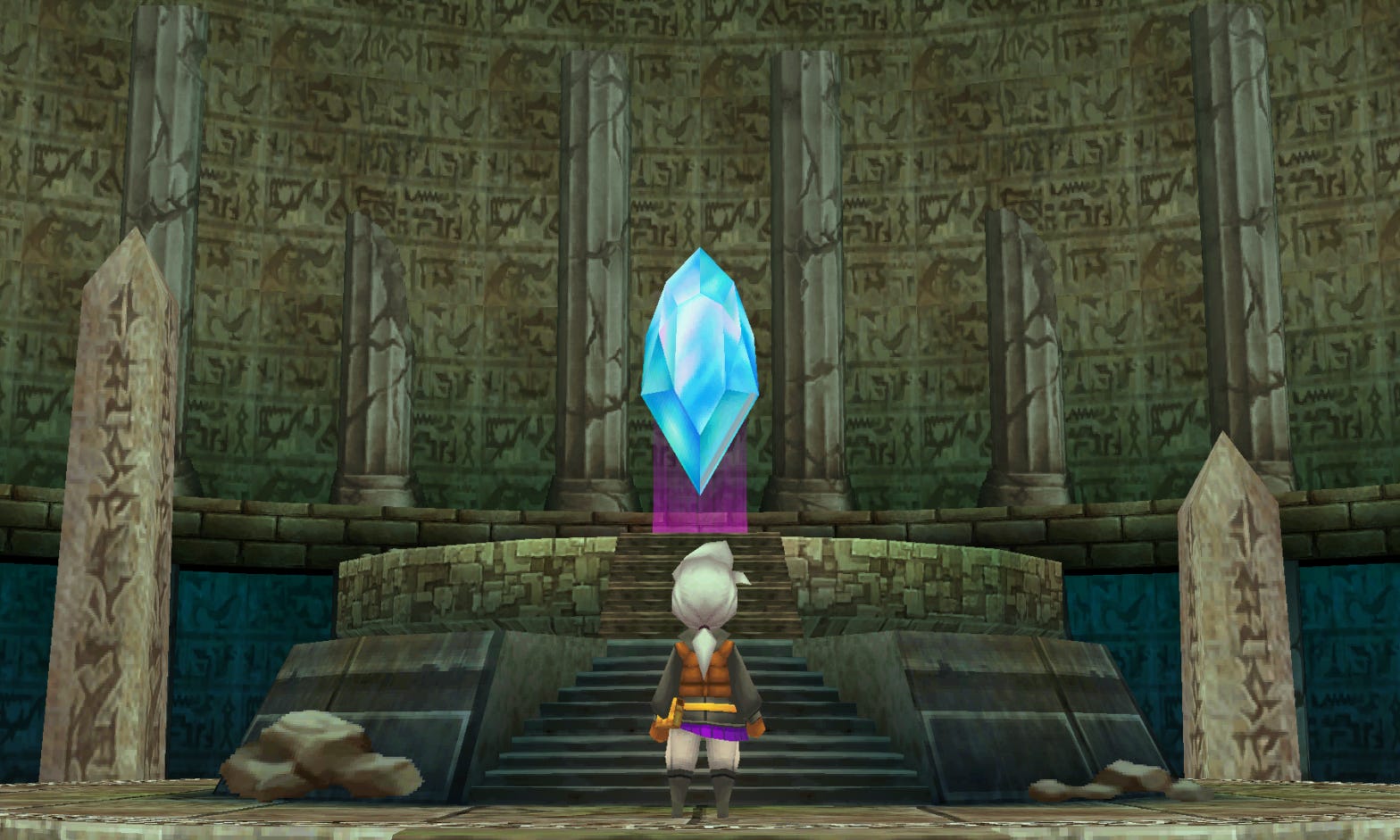
The worlds of most Final Fantasy games are built around crystals, and this storytelling element began in the first game. Four Warriors of Light set forth to bring their darkened, powerless crystals to light again. The world is sustained by the power of the crystals, which are directly connected to the physical integrity of the world itself. Without the power of the crystals, there are floods, earthquakes, and the winds die down. In later games, like the pseudo-spin-off Bravely Default (2012), this means that these physical elements literally cannot be accessed, such as ships being unable to sail on water without the power of the crystal. In games like Final Fantasy VII and XVI, a desolation comes to the land that is connected to what powers or infuses these crystals or their source, but the important thing to consider for the first and third Final Fantasy is that the health of the world is tied to four crystals. Their destruction is the means by which evil overtakes the world. In other words, the things that sustains the very world is visible and may be interacted with directly (and therefore destroyed).
This is not how our world works. There is no power plant that makes the world go round. Things like gravity or the laws of physics may be the underlying means by which the universe works, but they cannot be touched or destroyed (probably, at least). In some religious cultures, such as Christianity, a head deity may sustain the world, but that deity is not immediately accessible to physical touch, and even those Christian denominations (like Roman Catholicism or Anglicanism) which see the Eucharist as being divine matter, there is no way to affect God through the bread and wine. The laws of physics and the laws of God are immutable.
The worlds of Final Fantasy, in other words, are rather fragile. The crystals can be broken, and the literal health of the world can be ruined. No need for global warming or mountain-top removal, and these things only ruin this particular planet, not the whole of the universe and the laws by which is functions. Human beings can reach into reality, take hold of crystals, and break them. One doesn’t even need to be that powerful. They only need to be okay with a) hurting people and b) unbalancing the world. Both are mere human desires in our world but are sources of destruction in Final Fantasy. One’s will can either save the world or destroy it.
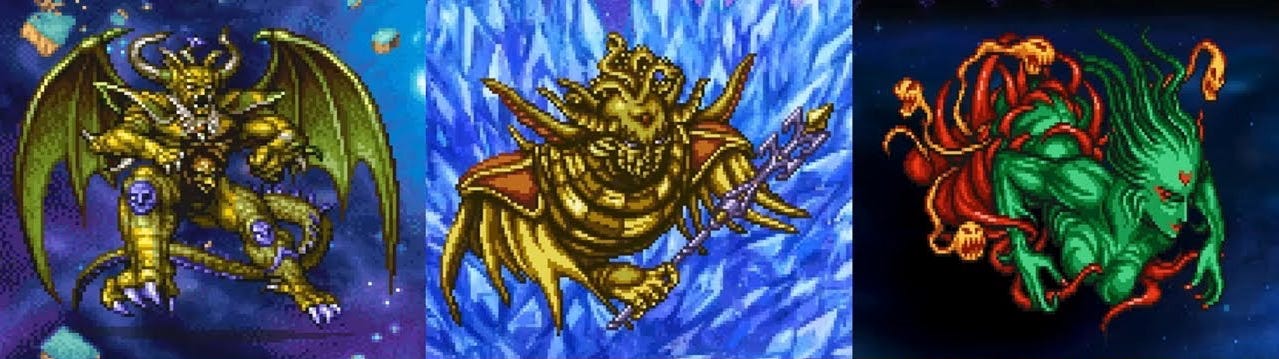
This is the case in Final Fantasy II, too, though without crystals. Here, the Emperor is able to recreate the workings of the world after he has died. There is a hell, and possibly someone is in control of it, and, importantly, the Emperor is able to gain control of this part of the afterlife. This isn’t common in many modern religions, but in classical mythology, Zeus/Jupiter is able to overthrow his father, Cronos/Saturn). Zeus is, however, already a divine being. I’m not aware of a mythology or religion where a human mortal is able to lead a supernatural dimension. Final Fantasy, and subsequently many RPGs, are worlds where the supernatural are, if not immediately, at least readily accessible.
I don’t think, here, that “supernatural” is the right word. In modern parlance, “supernatural” refers not only to a different dimension but to a “higher” one as well. In the West, a supernatural world is one where an otherwise material world finds its meaning and where the dead and, if there is one, the creating deity live. A supernatural world is one where supernatural creatures reside, and while in 2010s and 2020s, our supernatural beings tend to be rather down-to-earth (we like a democratic multiverse, after all), in most cultures the otherworld is usually dangerous but always powerful. It is no place for mere mortals.
And yet the Emperor takes it over. Firion and his companions defeat him and his guards, though he is powerful enough (or charismatic enough) to command the forces of hell. One wonders how long peace will last and how often existence needs to be saved if the workings or leadership of worlds is so open to humanity, which is so fallible and open to evil inclinations.
This is a fascinating world mythically and theologically, and it’s one that shouldn’t be just assumed as “normal.” A lot is at stake in this world, not just the enslavement of all free creatures (as in Middle Earth) or the oppression of a political or economic empire (as in Star Wars), but the literal destruction of the world. At this point in the development of gaming, the destruction of the world is a matter of course; but not all worlds in all games can be destroyed down to their constituent parts. This weakness of the world says something about these game worlds. It suggests a world that is living under constant threat, where the future is in no way secure, and if nothing is done, the world may end. Personally, I’m worried about the world my daughters will grow up to inherit, not whether there would be a world at all. In NES Final Fantasy games, this would be a constant worry.
Does a player need to think about the world mythically and theologically to enjoy an NES Final Fantasy game? Of course not. These are games, after all, and a player can ignore the world building and think only about leveling up their characters. Nor do we have to have a conscious understanding of the fragility of the world, because a lot comes through the dialogue and music that communicates this threat. I certainly didn’t think about these aspects of the world when I played them as a kid. I think, though, that considering the created world can help us appreciate the game more fully. We can see why the Warriors of Light are waited for with such anticipation, and why their coming is met with such great joy.
We can also imagine the journey of our PCs within a “thicker” world. NES games didn’t have much room for worldbuilding and dialogue. A lot needed to be assumed by the player. Many RPG fans will hold conversations among the PCs about what is going on as they journey across the world. The canvas of our imagination, however, is not blank. The games add a lot to that canvas for us to interact with, and with a “thicker” understanding of what is at stake, we can understand better the importance of these quests and, perhaps, a deeper understanding of what it means to have courage.
I realized while writing this article that I had far more than enough to say about all this, and so instead of typing up everything I had in mind, I’ll end here and write more in the upcoming week (or weeks? Who knows).
No posts
Comments
Nothing yet. Say the first thing.
Sign in to join the conversation.