
A view that has gained currency is that taxing the wealthy is a “tax on aspiration”; it penalises those who have been successful and it spells fiscal doom because those impacted will flee on the first private jet to Dubai.
As further evidence of its futility, critics cite the fact that today only five OECD countries have wealth taxes: Colombia, France, Norway, Spain and Switzerland, compared to twelve, thirty years ago.
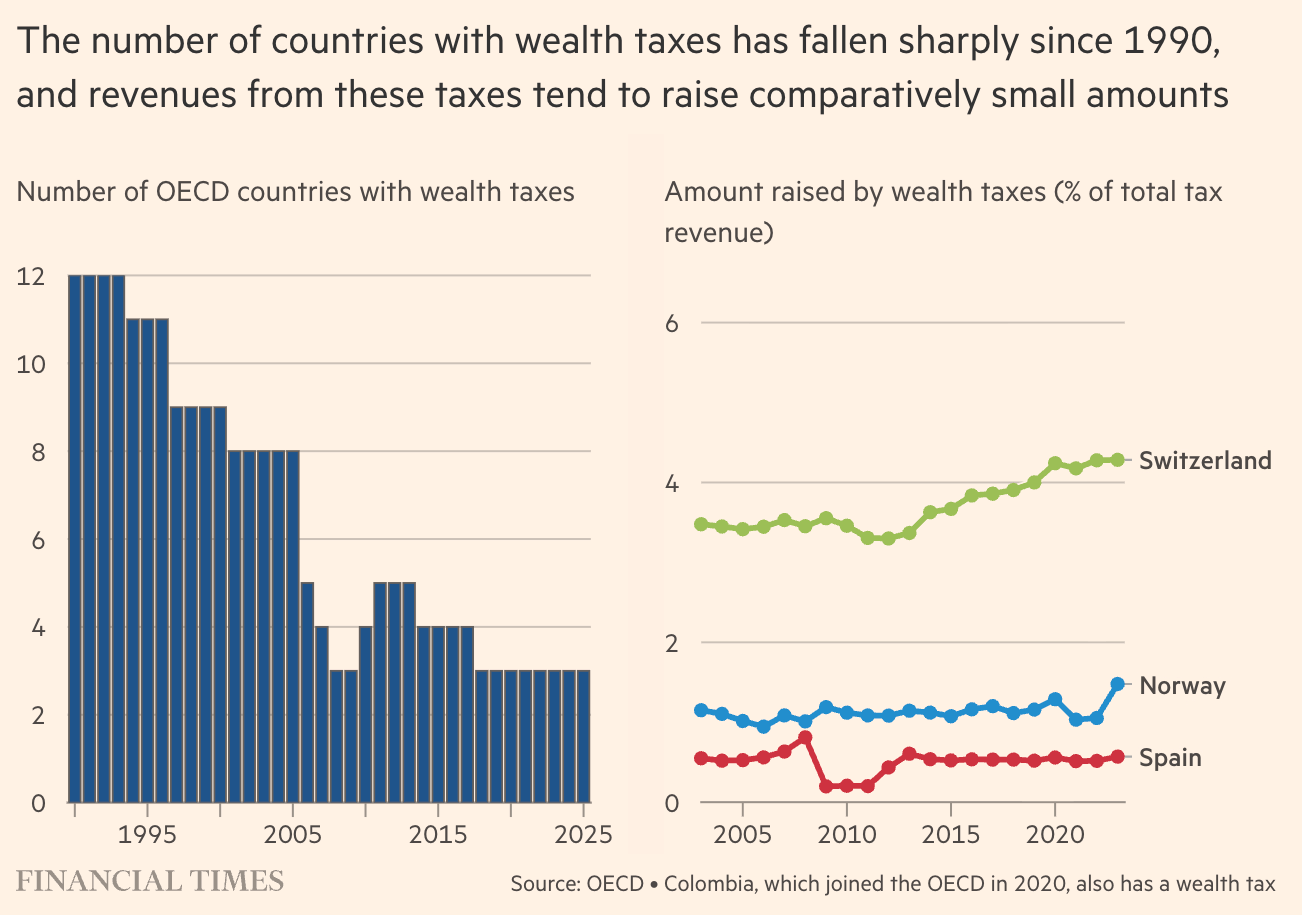
So, we should conclude that although it might sound good on paper, in the real world there are simply too many powerful people with too much wealth to preserve for this to be workable. “Trust us” the wealth defence industry says:
“it’s really not worth the effort angering these highly mobile, job-creating, tax paying, entrepreneurial demi-gods, for whatever system you design, they will be a step ahead of it. We know this is upsetting for progressives to hear, but that’s just how late stage, global capitalism works”.
Fortunately, for those of us who are concerned about rising social inequality, the dire state of public finances and the fraying of the social fabric, there are a number of problems and factual inaccuracies with this argument.
The popular characterisation of the wealthy is overly flattering. The majority of people with more than €10 million in net assets extract rent from their wealth and don’t actually create that many “well paid jobs”. Think real estate holding companies managing a portfolio of rental properties in major cities. Think heirs managing family trusts. Think of very well remunerated hedge fund managers charging 2 and 20 to underperform not just the S&P 500, but also the STOXX 600 and FTSE 100.
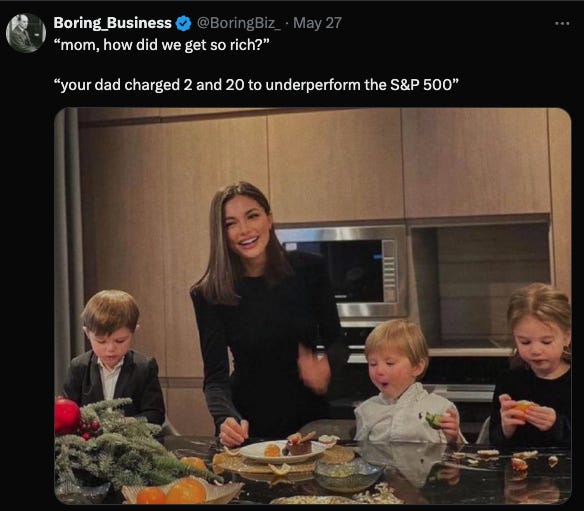
Are these individuals gaining their rewards from taking entrepreneurial risk, or are they simply getting richer thanks to asset price inflation? To those arguing that a wealth tax acts as a disincentive to people building successful businesses in the first place, I’d recommend going out and speaking to a few of them. That is a secondary consideration, if it’s a consideration at all given how rare it is for a company to scale and exit. The primary consideration, particularly in Europe, is having a defensible idea, trying to maintain a moat, overcoming a number of bureaucratic hurdles, finding the right talent and being able to access capital to fund growth. If all of that falls into place a 2% cut of your boat money shouldn’t lose you too much sleep.
High Net Worth Individuals (HNWIs) want to live in places that give them access to elite cultural, financial and economic institutions, almost none of which are in Dubai, Luxembourg or Jersey. Like everyone else they are also bound by family, community and professional networks which makes them far more immobile than they are portrayed, although you wouldn’t believe it from all the media stories about the exodus of millionaires.
Thankfully, the Tax Justice Network conducted thorough investigative work to uncover the false source behind nearly 11,000 articles in print, broadcast and online news in 2024/5. They discovered that the source of the disinformation was a report published by Henley & Partners, a firm that sells golden passports to the super-rich and advises governments on setting up such schemes.
Further evidence against the false premise of “tax flight” can be found in a working paper from the London School of Economics (2024) that builds on the work of Advani and Tarrants (2021) paper “Behavioural responses to a wealth tax” and clearly states that:
“tax-induced migration is more modest than politicians and the public commonly presume. Existing quantitative studies show that while there is sometimes significant migration within countries with internal tax competition (such as Switzerland) as a response to differences in tax rates, evidence of increases in international migration following hikes in income, capital gains or wealth taxation is much more limited”.
So, although it is true that some rich people leave and that low tax jurisdictions compete to attract them (Italy has recently joined the ranks by offering a flat tax of €200,000 on all foreign-sourced income, regardless of the amount), very few actually relocate.
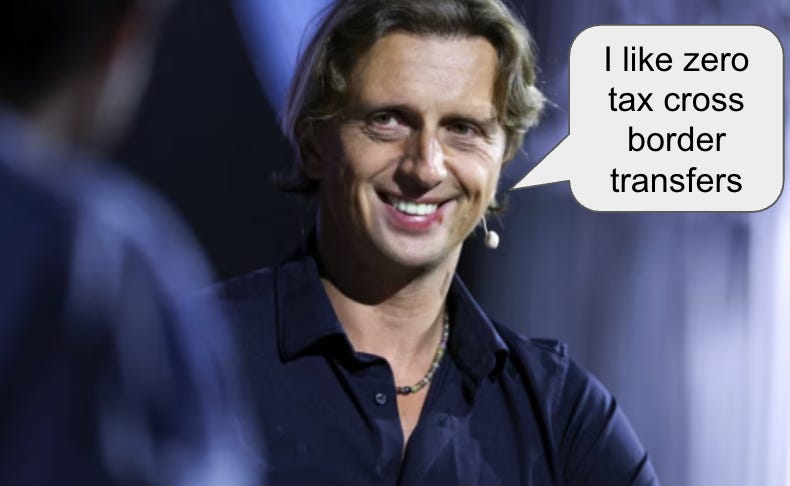
A final point on the myth of tax related relocation is that our perceptions are distorted by the media’s amplification of single, high-profile examples, such as Revolut co-founder Nik Storonsky changing his tax residency from London to Abu Dhabi to enjoy the sunshine manage his £10.6 billion (€12.4 billion) fortune more “efficiently”. Storonsky stands out because he is an important figure in European fintech who has built a dynamic, world leading company that creates a lot of high value employment, which is why despite failing to inform regulators of his move he continues to be courted by the Labour government who desperately want Revolut to IPO in London.
Here, each country is its own complicated game of tax tetris, and many of the blocks don’t fit together perfectly. However, as most OECD countries have not undertaken any meaningful, structural reform of their tax systems, the introduction of an additional wealth tax must be considered in the context of existing taxes, such as capital gains and inheritance, and how the tax burden is shared fairly among citizens. “The art of taxation”, as Jean-Baptiste Colbert, the French Minister of Finance under Louis XIV said:
“consists in so plucking the goose so as to obtain the largest amount of feathers with the least possible amount of hissing”.
The answer is patently not to squeeze the middle until the pips squeak while the wealthiest 0.1% see their plumage grow ever more magnificent. (Mixed metaphors? Guilty. But so is a tax system that treats inheritance like merit.)
For example, during the most recent UK budget, Chancellor Rachel Reeves opted for stealth taxes and freezing income tax thresholds, pushing more people into higher tax bands despite them experiencing no real increase in purchasing power. This so-called ‘fiscal drag’ places an ever-increasing tax burden on the top 20% of earners, adding a moral insult to the existing economic injury of sluggish wage growth over the past decade.

On the subject of efficient tax collection (plucking the goose), Germany’s government continues to reduce the number of tax auditors employed to check companies’ balance sheets, pore over receipts and comb through accounting records. These individuals cost around €50,000 in wages per year, but generate an average of €1 million in additional tax revenue. As a result of the government’s cost-cutting measures, the annual tax take is falling, and business owners are paying less tax than they should.
We cannot afford to continue making decisions like this, especially given that the governments of major European countries are struggling for economic growth and need to increase defence spending from 2% of GDP to 3.5% to meet the threat of a revanchist Russia.
You’ll notice I’m not making a moral case for wealth taxes. The Zeitgeist won’t permit progressive arguments built on fairness—we’re living through times where “the strong do what they can and the weak suffer what they must.” Look at Ukraine. Look at Gaza. Look at the tax arrangements of centimillionaires and billionaires.
Based on research by Dr. Arun Advani at Warwick University’s Centre for Tax Analysis an annual 2% tax on wealth above £10 million (€11.47 million) obtains a good handful of feathers, whilst keeping the hissing to a tolerable decibel.
Sidenote: This threshold is significantly lower than the €100 million wealth tax threshold proposed by Gabriel Zucman. This difference in where to set the threshold may be due to the fact that Zucman’s main policy objective is to address regressive taxation for the ultra-rich (the 99.9th percentile), who, based on his analysis of French taxpayers by the Institut des Politiques Publiques (IPP), pay the lowest effective level of tax of any cohort.
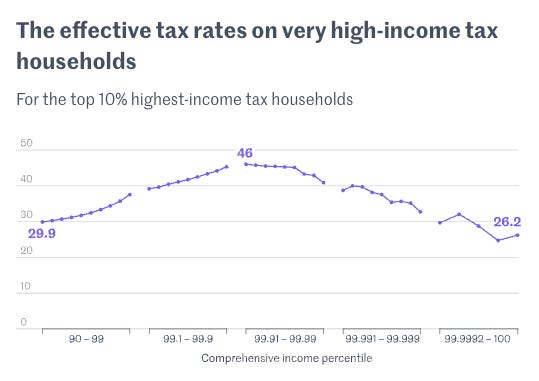
This is why I prefer Advani’s £10 million (€11.47 million) threshold. It captures not just the super-rich but the very wealthy—an estimated 165,000 people across Europe’s three largest economies.
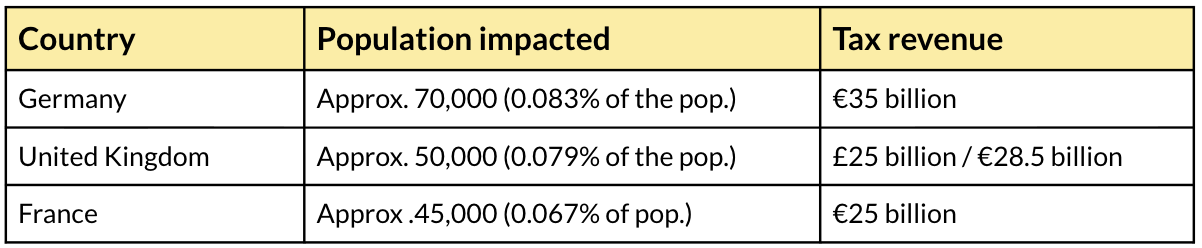
The total addressable number of individuals with €11.47 million plus in wealth across Europe is approximately 360,000 according to data from the high end real estate company, Frank Knight. This brings the total potential European tax take to an estimated €150 billion.
Look at this chart and now ask yourself ‘Is it worth trying to implement a wealth tax?’.
To put that number in context, meeting NATO’s 3.5% of GDP defence spending target, up from a meagre 2% currently, will require an additional €240 billion of Government spending annually from European member states. A European wealth tax could contribute 62.5% (€150 billion) of the rearmament bill, and avoid deeper cuts to public services, more austerity and increased debt that burdens future generations.
Unlike income tax, valuing things like private companies can be difficult says Miriam Marra, a finance expert :
“Taxing assets including savings, investments and property is harder than taxing income. It relies on very wealthy individuals self-declaring asset values and for all assets to be held under the same name”.
So yes, standing up a wealth tax requires investment; hiring experts, building registers, connecting the dots between structures, training enforcement teams and much more. Yes, valuing private businesses isn’t straightforward—”fair value” excludes intangibles like brand equity and intellectual property, and some business owners will use every trick in the book to reduce their tax burden. But well-designed valuation bands allow self-assessment with guardrails, and Germany’s example proves the return on investment: each tax enforcer generates several multiples of their salary in additional revenue.
The aim isn’t to be anti-growth or anti-business, though opponents will make this claim before any other. It’s to create a halfway realistic picture of net wealth based on reasonable assumptions, so those with the broadest shoulders actually carry their weight instead of structuring their affairs to pay a lower overall rate than most nurses, teachers and impoverished substack bloggers.
Ask yourself this - what is the viable alternative? Continue fiscal drag that pulls middle-income families into higher tax bands while billionaires pay effective rates under 30%? Commandeer Russia’s €210 billion in frozen assets and toss Ukraine a few crumbs? Sell Europe’s beauty spots to the Saudis?
By all means we should continue to pursue economic growth, but that hasn’t been working out too well recently, and there are plenty of headwinds on the horizon. Without a wealth tax, the trajectory will be familiar: austerity for the many, compound returns for the few. That’s not a sustainable social contract, that’s a countdown to social collapse.
No posts
Comments
Nothing yet. Say the first thing.
Sign in to join the conversation.