
This week, I’m reflecting on how much health infrastructure I may take for granted living in a big city. I’m also wondering about the role a TV show might be playing in driving online chatter about the rare “rabbit fever.”
This week’s piece covers pharmacy access, the reality behind the recent tularemia (aka “rabbit fever”) chatter, and updates on rising Covid-19 and the first West Nile virus case detected in NY this season.
A few weeks ago, I needed to pick up a prescription on a Friday evening before a long weekend. I walked one block to my local pharmacy, only to find it closed. While slightly annoyed, without even thinking about it, I just kept walking toward a 24-hour pharmacy about 12 blocks away. It was part of the same chain, so I knew I could transfer the prescription and still get my meds that night.
At the time, I didn’t think much of it. Looking back, I realize how much I was taking for granted. I had multiple pharmacies within walking distance of my apartment. For many rural New Yorkers, that would be a luxury.
This all became abundantly clear last month, when a fire destroyed the CVS in Pawling, NY, a small village in Dutchess County. It was their only pharmacy, and losing it wasn’t just an inconvenience. An entire community lost its local access to prescriptions, pharmacists, easy-access vaccinations, and other health services overnight.
CVS directed patients to other locations in nearby cities and waived home-delivery fees for eligible prescriptions while working on a longer-term solution. But those alternatives assume you can travel to another pharmacy or are tech-savvy enough to navigate online ordering via an app, things that aren’t equally accessible to everyone.
A temporary mobile CVS eventually opened up in the parking lot of the former store, but not for at least two weeks after the fire. Pawling is just one example of a much bigger access issue. When a community depends on a single pharmacy, losing that one location can suddenly make routine health care much harder for many.
When a pharmacy closes, communities lose more than just a place to pick up medication. For many people, pharmacists are among the easiest health care professionals to reach. Pharmacies are also major vaccination sites—CDC data show that pharmacies and drug stores are the most common settings where U.S. adults receive flu, updated Covid-19, and RSV vaccines.
This Pawling pharmacy closing was because of a fire, but pharmacy closures, especially in rural communities, are a growing issue nationally. After Rite Aid filed for bankruptcy again in 2025, more than 175 of its pharmacies across New York were slated to close or be sold. CVS and Walgreens have also been shrinking their store footprints nationally. Across the country, an estimated 15.8 million Americans live in pharmacy deserts, which means they face significant geographic barriers to reaching a pharmacy. Rural communities are particularly vulnerable, and pharmacies are closing at higher rates than in urban areas.
Pharmacy access is a major part of the health care infrastructure. In cities like NYC, a pharmacy closing might mean walking a couple extra blocks. In a rural community like Pawling, it might mean needing to figure out transportation, delivery, transferring prescriptions, or trying to get basic health care services somewhere much farther away.
If you’re in Pawling, the temporary mobile CVS is at 26 East Main Street, and is offering prescriptions, over-the-counter medications, and vaccinations while CVS works toward a new permanent location.
For everyone else, it might be a good idea to think about a backup pharmacy.
And if your community is at risk of losing a pharmacy, this could be a great opportunity to talk with your local elected officials. Being able to depend on local pharmacy access and getting the medication and care you need, close to home, is a health equity issue.
Last week, “rabbit fever” was suddenly all over my phone.
First, several posts about tularemia (aka “rabbit fever”) popped up in my Instagram feed. Then local New York news stations started covering cases on Long Island. My first thought was “Did I miss an outbreak?” So I pulled up the data and the answer was: not exactly.
Suffolk County has seen a few more cases recently, but tularemia is still an extremely rare disease in New York. When I was talking through this with our amazing copy editor, Andrea, she shared another insight. She had just seen an episode of Best Medicine on Netflix where basically an entire town gets diagnosed with tularemia. It got us wondering if the show could be feeding some of the sudden “rabbit fever” chatter online. It’s hard to know for sure, but the timing and repetitiveness was enough to warrant a quick check in on the topic.
For this, I’m going to share the bottom line up front: Tularemia is present in some parts of New York, and Suffolk County has seen a small recent increase. But for New Yorkers, this is not something I would especially be concerned about. It remains very rare, most infections can be treated successfully with antibiotics, and there are straightforward ways to reduce your risk.
Tularemia is a potentially serious bacterial infection caused by Francisella tularensis. People can become infected in several ways:
Tick or deer fly bites
Skin contact with infected animals, especially rabbits and rodents
Drinking contaminated water
Inhaling contaminated dust or aerosols during farming or landscaping
In the Northeast, lone star ticks and American dog ticks are the main tick species that can transmit tularemia.
That last exposure route, contaminated dust or aerosols, is less common but it can happen. This is a little graphic, but lawn mowers or other machinery can kick bacteria into the air if they run over an infected animal or carcass. This scenario could be what the Best Medicine episode was getting at with the construction-site exposure.
Suffolk County has confirmed four cases so far in 2026, following six reported cases in 2025, four in 2024, and three in 2023. So there seems to be a slight increase in Suffolk, but still very low numbers overall.
A recent study led by the New York state health department also found that of 30 cases reported in New York, outside NYC, from 1993–2023, half occurred on Long Island and 43% were in Suffolk County. So there does seem to be a local signal in Suffolk County worth monitoring.
In NYC, it’s even rarer. Only 10 human cases have been reported since 2000, including some acquired during travel. The two most recent were in 2024, and NYC Health says the bacteria that causes tularemia has never been detected in ticks collected in the city.
Symptoms depend on how someone was exposed, but can include:
Fever
Skin ulcer at the bite/exposure site
Swollen lymph nodes
Sometimes gastrointestinal or pneumonia-like illness.
The good news is that tularemia is treatable with common antibiotics.
While tularemia is much rarer than the other tick-borne diseases I’ve covered this summer, the takeaway is the same: try to avoid ticks as much as you can.
Cover up, use insect repellent, check yourself and kids for ticks, and avoid handling sick or dead wildlife with bare hands. Before mowing, it could be a good idea to check your lawn for animal carcasses and wildlife nests, and consider wearing a mask.
And if you develop a fever, swollen lymph nodes, or an unusual skin ulcer after a tick bite or possible wildlife exposure, tell your clinician about that exposure.
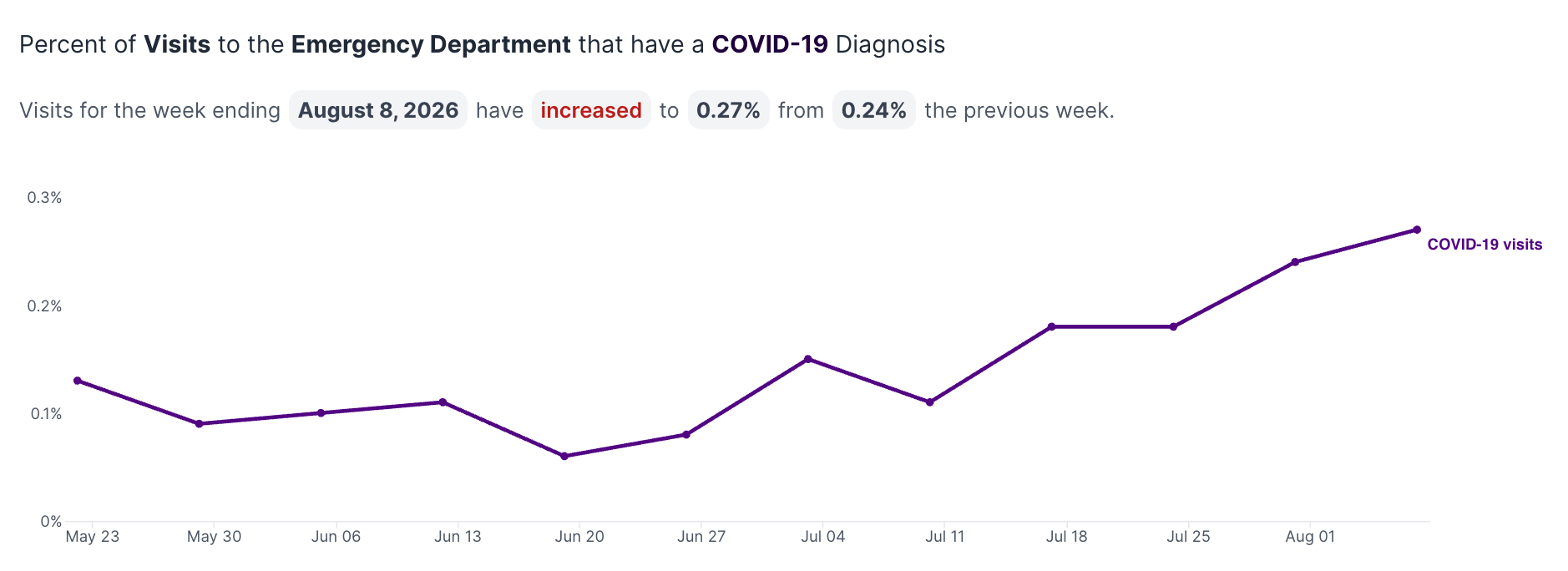
Covid-19 continues to increase in New York state and NYC. Emergency department visits in NYC are increasing.
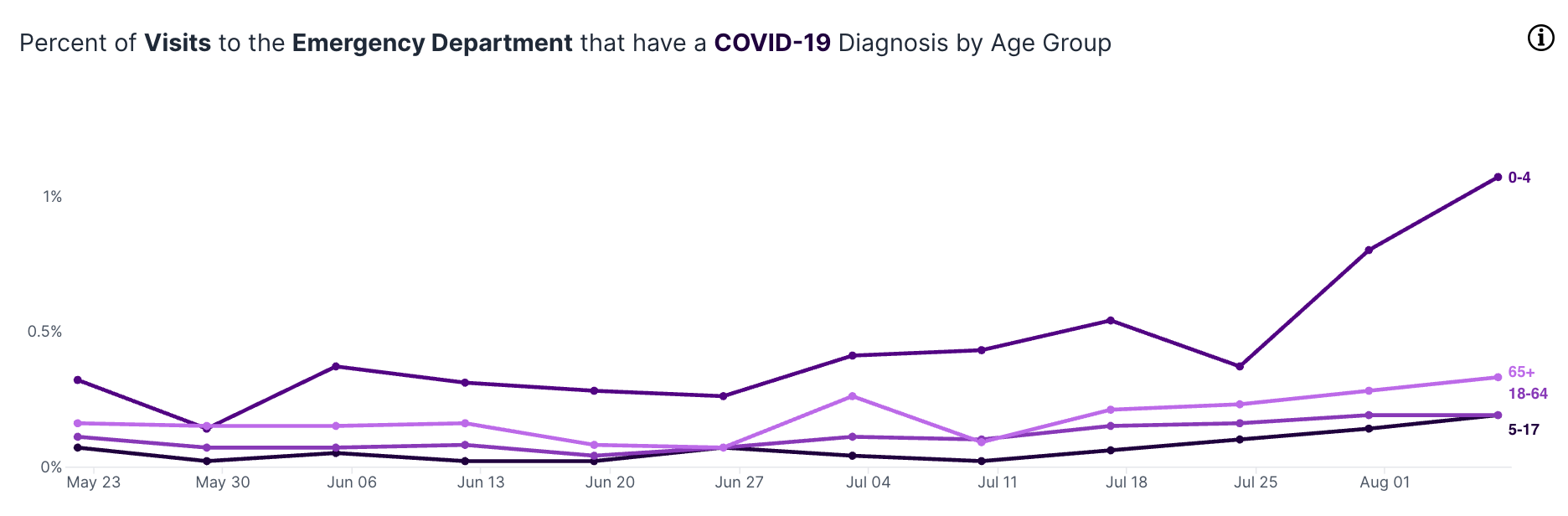
Young kids are visiting the ER and getting hospitalized for Covid most out of all age groups right now.
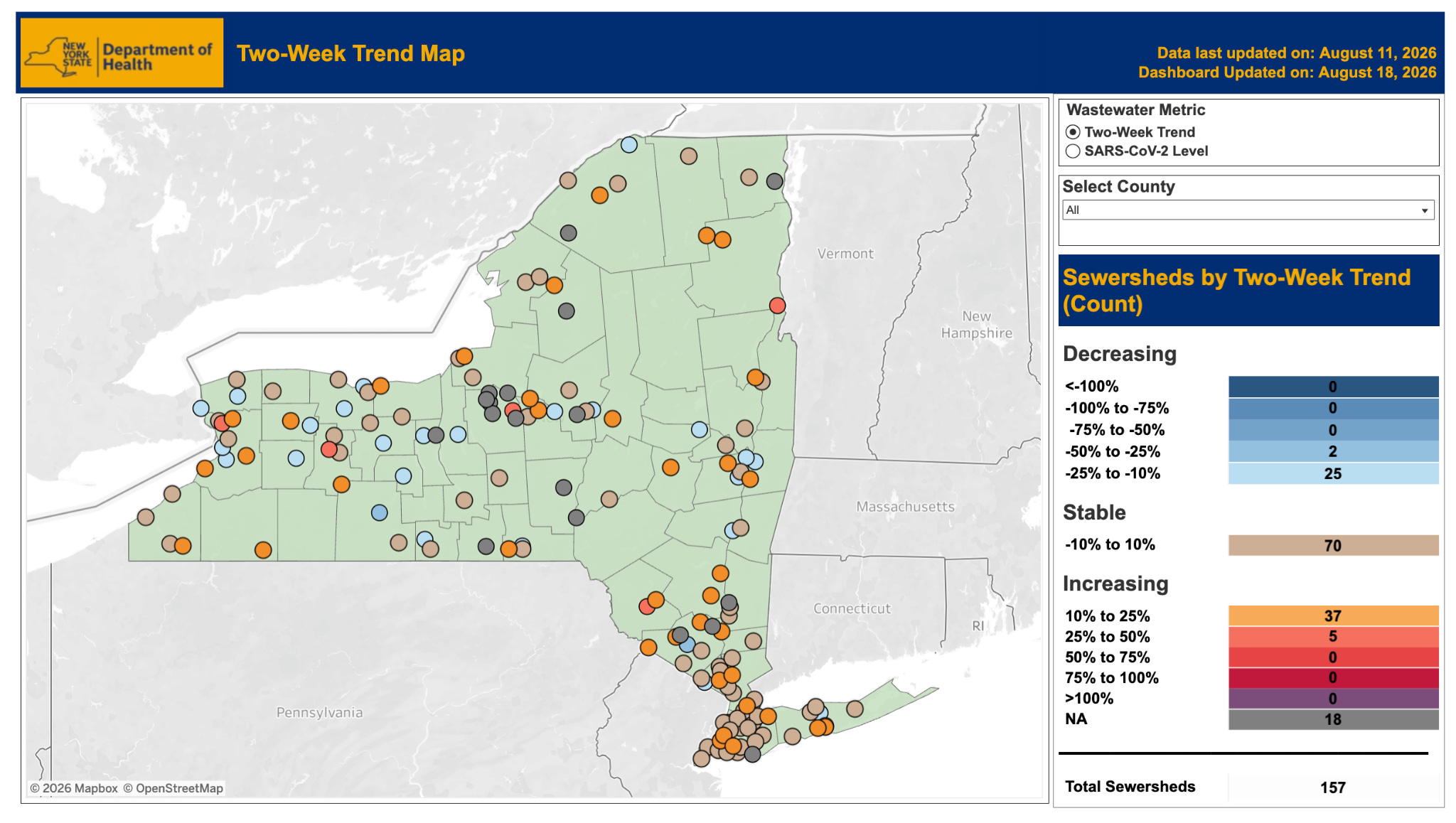
And we are seeing increasing trends across the state. Most New York communities are seeing some level of increase in Covid activity (marked by orange dots on the map below).
I’m definitely starting to hear more people cough in and around NYC. It’s probably not all Covid—there are several other viruses that are known to cause the common cold circulating—but it has made me wish I’d brought a mask on a few subway rides.
Now is a good time to pay a little more attention to local Covid-19 activity, especially if you’re pregnant, immunocompromised, older, or have an underlying condition that increases your risk of severe illness. The same applies if you’re planning to spend time with someone at higher risk.
As for the updated fall Covid vaccine, it should be available early September. Katelyn at YLE National will do a deep dive on it next week, so keep an eye out! She also just covered the new flu mRNA vaccine and who will likely be able to get it this fall.
Just yesterday, the NYC health department announced the first human case of West Nile virus in the city this season. And last week, mosquitoes tested positive for the virus in all five boroughs.
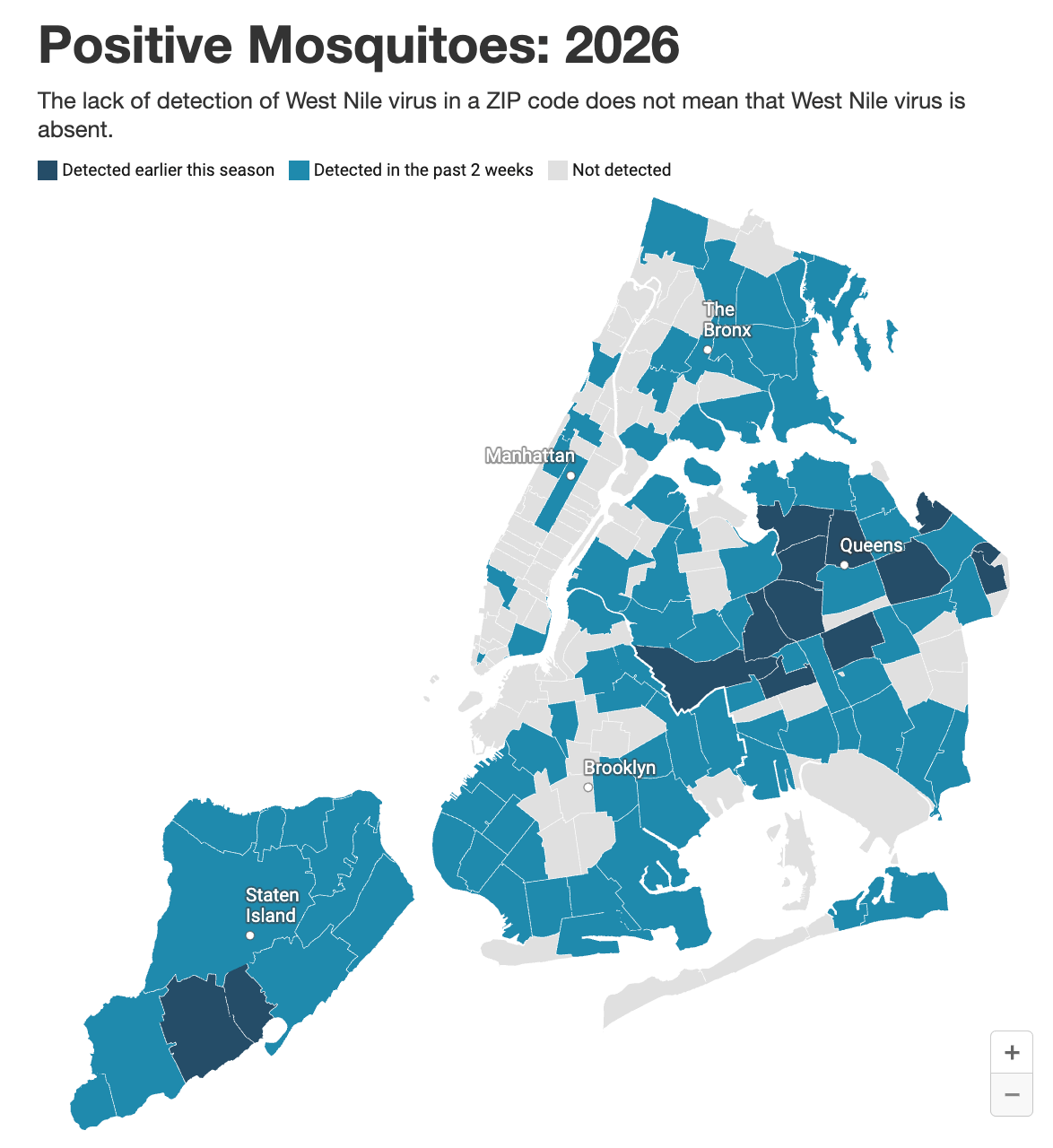
West Nile virus detections in mosquitoes are also increasing across several New York communities outside of NYC.
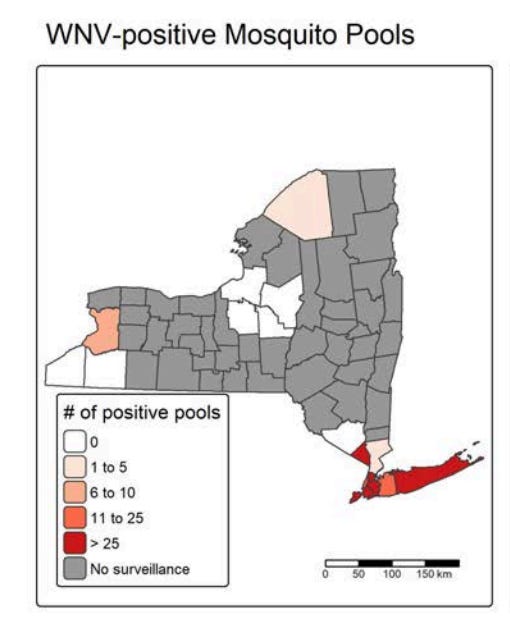
In the past week, outside of NYC, West Nile virus was detected in mosquitoes in Erie, Nassau, Rockland, and Suffolk counties.
A blood donation also tested positive for West Nile Virus in New York last week. This likely means that someone donated blood who didn’t know they were positive, likely because they were asymptomatic. This was identified during the blood screening, so the donation would have been discarded.
What this means for you: The best thing is to avoid mosquitoes. Use insect repellent, wear long sleeves and pants when practical, and take extra precautions around dawn and dusk, when many mosquitoes are most active. And empty standing water from buckets, planters, and other containers around your home to reduce mosquito habitats.
You’re all caught up on NY public health news! I’ll see you next week.
Love,
Your NY Epi
Dr. Marisa Donnelly, PhD, is an epidemiologist, science communicator, and public health expert. This newsletter exists to translate complex public health data into actionable insights, empowering New Yorkers to make informed and evidence-based health decisions.
No posts
Comments
Nothing yet. Say the first thing.
Sign in to join the conversation.