
This edition is a guest post from our appointed expert on summer fun to answer some pressing questions from you, our California community.
This spring, we launched The Pulse, a weekly survey sent to people across the state to hear what health questions, concerns, and priorities are on your minds. We’ve been learning a lot.
In today’s edition, Hannah Totte, who runs the survey, recaps three important takeaways from summer. Take it away, Hannah!
Summer’s winding down, but all season long, we’ve gotten questions on sunscreen, bug spray, and protein. So we dug into the research and pulled together answers for you.
There’s still plenty of warm weather left to put this to use—and the takeaways carry well past Labor Day, too.
Sunscreen had a big moment this summer when the FDA approved a new sunscreen ingredient for the first time in 25 years. Bemotrizinol, or BEMT, has been used in other countries across Asia and Europe since the late 1990s.
We asked YLE subscribers and The Pulse respondents about sunscreen in June. We heard questions about how ingredients compare and confusion about why U.S. products differ from those in other countries.
Let’s review how BEMT changes the landscape.
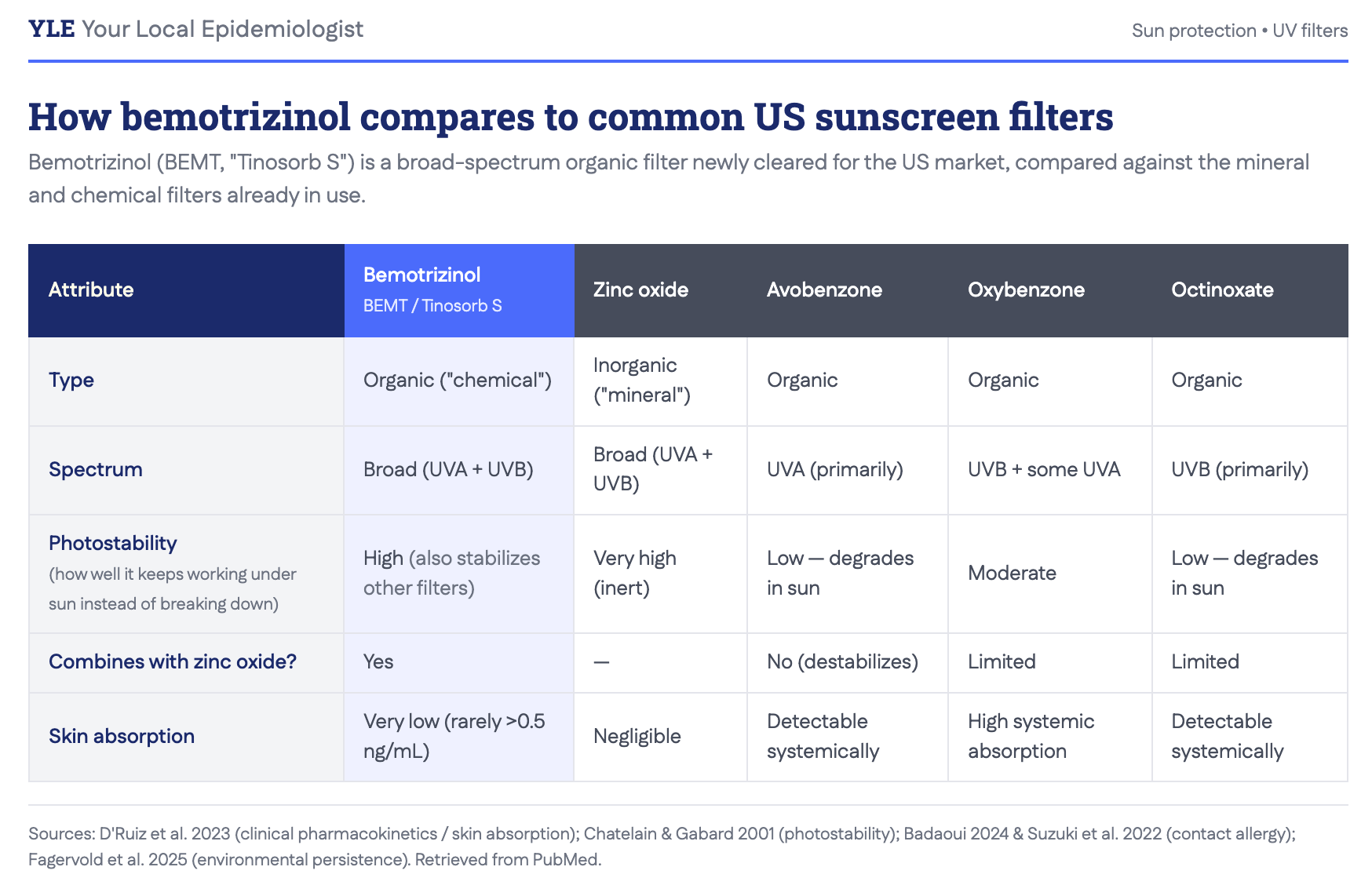
Sunlight carries two main types of ultraviolet (UV) radiation that can damage our skin—UVA and UVB. Not all sunscreens cover both. BEMT absorbs UVA and UVB rays, like zinc oxide. Unlike zinc oxide, it does not leave a white cast on the skin, which might encourage people to apply enough of it. People frequently under-apply zinc sunscreens because of the white cast.
Many sunscreen products combine ingredients to cover both UVA and UVB radiation. Avobenzone absorbs primarily UVA rays, octinoxate primarily UVB, and oxybenzone blocks UVB plus some UVA. Over a few hours of use, the compounds start to break down, and manufacturers often add a third ingredient to stabilize them to extend protection.
While zinc oxide has the highest stability after sun exposure, BEMT is more stable than the other three common sunscreen chemicals. This means that, like zinc, BEMT can absorb UV rays at full strength for longer before degrading and losing efficacy when exposed to sunlight. But note: you still need to reapply it every two hours.
It’s possible due to a legislative change in November 2025. Sunscreen ingredients had been backlogged in the FDA approval process, which also required them to undergo the same rigorous clinical trials and pharmaceutical-style testing as any other drug. (By contrast, sunscreen ingredients are classified as cosmetics in Europe.)
In November 2025, the bipartisan SAFE Sunscreen Standards Act was passed. This law allows for real-world data review, which helped BEMT overcome hurdles to approval. There are other ingredients used in Europe and Asia that might make it to the U.S., such as bisoctrizole and drometrizole.
But sunscreen’s not all we’re putting on our skin this summer. Next up: bug spray.
We at YLE have written plenty about diseases that mosquitoes or ticks can carry, and most of it focuses on preventing bites. We’ve gotten good questions about bug spray. We wrote about
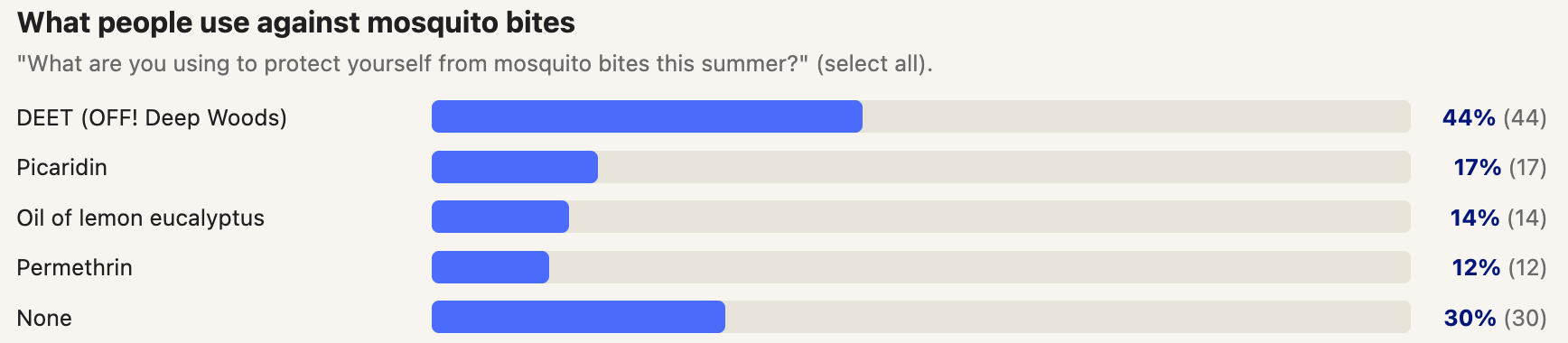
Bug spray acts as a repellent by creating a barrier on the skin that prevents your scent from attracting mosquitoes (and other bugs). Picaridin and DEET actually act on the mosquito’s protein receptor that binds smells. Oil of eucalyptus masks your scent by offering another, more intense one. All basically interfere with the mosquito’s ability to detect you.
DEET has been successfully used as an insect repellent for over 50 years by billions of people. Mosquitoes detect humans mostly through the CO2 and lactic acid we produce, and DEET is thought to work by interfering with their ability to detect it. Despite its extensive use, there isn’t any convincing evidence of toxicity in humans or animals when it is used as directed.
There have been reports that people with a rare enzyme deficiency (ornithine transcarbamylase deficiency) can develop high levels of ammonia in their body with DEET exposure, but this still requires significantly higher doses than are recommended. DEET can cause some discomfort if inhaled or sprayed into the eyes, but otherwise there are no significant safety risks with appropriate use. (Note: DEET has nothing to do with DDT, which was an unsafe insecticide banned in the U.S. in 1972.)
When deciding whether to use repellents like DEET, remember — especially as we see upward trends in West Nile virus and other mosquito-borne diseases — the risks of mosquito bites are preventable.
Protein—a summer picnic must-have. Beyond cold cuts and hot dogs, protein has been getting a lot of attention lately, as a macronutrients that we can’t seem to get enough of. The Pulse respondents asked some excellent questions that we relayed to Megan, our nutrition expert. Take it away, Megan!
A little bit of both. Some of the protein hype is undoubtedly marketing, but some of it also reflects an evolving science. Most Americans already meet the current Recommended Dietary Allowance (RDA) for protein (0.8 g/kg/day, or ~55 grams per day for someone who weighs 150 pounds). However, the RDA was designed to prevent deficiency, not necessarily to optimize health.
A growing body of research shows that some groups—older adults, physically active people, and those trying to preserve muscle during weight loss—may benefit from higher protein intakes (1.2-1.6 g/kg/day) to support health, function, and healthy aging. For a 150-pound person, that may look more like ~80–110 grams per day. So, there is some validity to the shifting conversation from “How much is enough?” to “How much best supports health and quality of life?”
But more protein is not necessarily better. Once protein needs are met, any excess is used for energy or stored as fat. While higher-protein diets increase the amount of work the kidneys do, research suggests they don’t harm kidney function in most healthy people.
Yes. Protein quality varies by food source and is influenced by its amino acid composition and digestibility.
While food companies are increasingly adding protein to surprising products like pastries, chips, sodas, and even alcoholic beverages, I wouldn’t rely on those products to meet protein needs.
The bigger nutrition gap for most Americans isn’t protein quality… It’s overall diet quality. This means focusing on incorporating a variety of nutritious protein sources throughout the day, including plant-based options such as beans, lentils, tofu, nuts, or seeds.
Yes. Most deli meats are considered processed meats, and processed meat is classified by the International Agency for Research on Cancer (IARC) as a Group 1 carcinogen, meaning there is “sufficient evidence” that it can cause cancer in humans, particularly colorectal cancer. The evidence comes from more than 800 epidemiological studies that IARC’s working group reviewed. Large studies tracked people’s diets and cancer outcomes over years, and consistently found that the more processed meat people eat, the higher their risk of colorectal cancer.
Importantly, “Group 1” status reflects the strength of the evidence, not the size of the risk. We don’t yet know exactly why processed meats increase cancer risk, but potential contributors include:
Smoking and high-temperature processing methods
Compounds such as heme iron in red meat
“Uncured” meats preserved with celery powder are not necessarily safer, as celery naturally contains nitrates that can form similar compounds.
If deli meat is an occasional convenience in an otherwise balanced diet, I wouldn’t panic. If it’s a daily staple or if you have a personal or family history of colorectal cancer, it may be worth rotating in options like sliced chicken or turkey, tuna, or hummus.
From a big-picture perspective, factors like overall diet quality, fiber intake, physical activity, alcohol and smoking, and disease screening have a much greater impact on long-term health than any single food.
Summer is in full swing, and so are questions about those beach bag essentials. We’re grateful to our Pulse respondents, who guide our messaging and ensure we’re answering the questions that matter most to you. We hope this helps you stay safe and informed through the remaining days of summer and beyond.
Love, Hannah
Hannah Totte, MPH, is an epidemiologist and YLE Community Manager. She lives in Los Angeles and runs The Pulse. Megan Maisano, MS, RDN, is a registered dietitian nutritionist. During the day, Megan works at National Dairy Council, a non-profit dairy nutrition research and education organization. (She does not write about the dairy industry for YLE.)
Comments
Nothing yet. Say the first thing.
Sign in to join the conversation.