
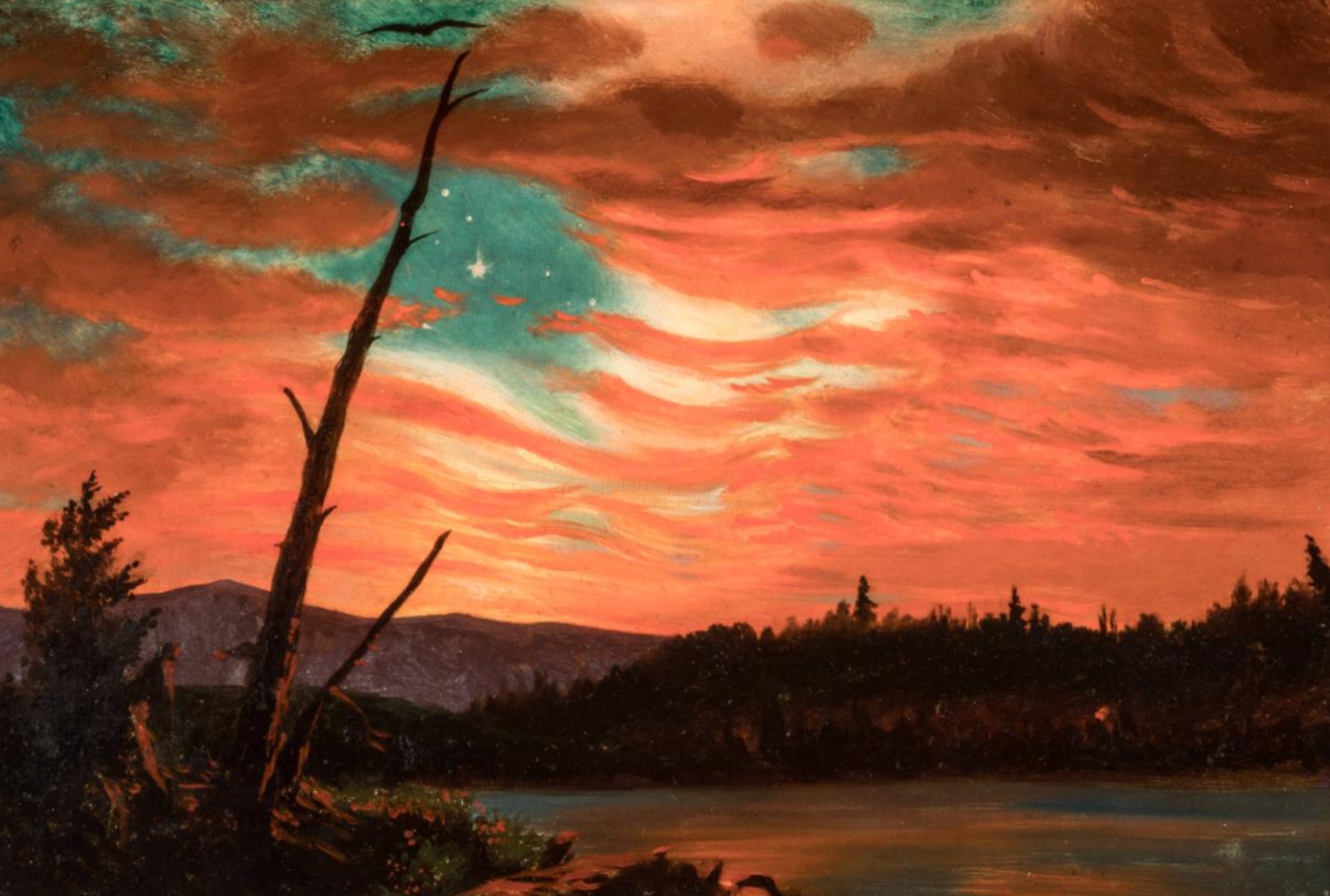
I became an American in 2016.
I chose it.
Most people inherit citizenship the way a child is born into a family: no consent asked, the bond already load-bearing before it can be named. I came to it as an adult, with a signature and an oath.
The United States was in my life long before it became my country.
I was born in Colombia and grew up across Colombia, Ecuador, Spain, and Uruguay. The United States was never distant. Its elections, myths, wars, music, and markets reached the countries I lived in. So did its power.
Even the name, America, was part of that power: a continent narrowed into a country, a geography turned into a claim.
It arrived sometimes as possibility, sometimes as pressure, and sometimes as damage.
It also arrived as an ideal. The Declaration of Independence never stayed inside the country that wrote it. It traveled as language, provocation, promise: proof that a nation could put an idea at its center and then be judged by the distance between the idea and the reality.
Years later, while working in a refugee camp in Kenya, I met a Sudanese teenager who dreamed of the United States. He told me something I have never forgotten.
In America, he said, there was no dirt.
He was standing in sand, in heat, in a refugee camp built entirely out of waiting. But when he spoke of America, his eyes lit up. The idea of it reached him as image, atmosphere, sensation. He believed it was a place where the ground itself might be different.
I knew the force of that America before I became American. When I finally raised my hand and took the oath, I was not attaching to the fantasy itself. I had lived inside its force field for decades. I had carried other passports, crossed other borders, and worked inside the wreckage its power leaves behind. I knew the wound was braided into the wonder.
I did not need the ground to be clean. I needed the country to remain capable of telling the truth about what was buried in it.
In November 2016, I cast my first American vote. It was an act of belonging. It was also when the ground gave way.
The United States has always been freedom and exclusion. Reinvention and domination. A republic speaking liberty through systems that rationed it.
What broke in me that year was not innocence. There was no innocent America to lose.
What broke was something closer to a secure base. Not a belief that the United States was good. A belief that it could still be held accountable to what it claimed to be.
I felt it in my own body. It arrived as vigilance. As the compulsion to check the news before my feet touched the floor. As tightening before language. As threat becoming atmosphere.
I had chosen this country, and now its ugliest impulses were performing themselves in public. Cruelty that had lived at the edges moved to the center and began speaking in the voice of the country itself. It had a podium, a flag, a crowd.
To watch this happen was heartbreak for a country I love.
In attachment theory, a secure base is not a perfect parent. It is a relationship reliable enough to let a child leave, explore, return, disagree, and still belong. It does not eliminate danger. It makes danger something other than the only organizing fact. It offers capacity, not comfort.
The human nervous system does not care about political categories. It organizes around signals: predictability, threat, care, abandonment. The same body that braces under an unpredictable parent braces under an unpredictable state.
Every child learns the weather of the adults around them.
A steady adult does not make the world painless. But steadiness gives a child somewhere to return, somewhere to find their footing again, somewhere to feel that conflict does not mean abandonment.
An unpredictable adult teaches something else. The child learns to scan. To manage moods. To disappear, perform, comply, explode, or become useful. The child’s body adapts before the child has language for what is happening.
Children build their first sense of the world inside the nervous systems of those with power over them.
Hierarchy has a nervous system too. The person at the top does not merely express dysregulation. He spreads it. His fear becomes weather. His cruelty becomes permission. His chaos becomes the room everyone else has to breathe inside.
When the highest office broadcasts threat, it enters bodies. It teaches some to dominate and others to disappear. It turns vigilance into civic life.
But this is where the metaphor has to break.
A child does not build the adult.
A citizen builds the state.
In childhood, power comes from above. The child depends on the adult’s steadiness because the child cannot author the conditions of care.
Politics is different. The state may tower over us, police us, frighten us, abandon us. But it is not outside us. It is made through us, against us, over us, and by us. What one generation authorizes, another can revoke.
The dysregulation comes down.
The authorization goes up.
That is why regulation is not retreat. It is preparation for power.
We steady one another not as a substitute for power, but as preparation for acting on it. A flooded body cannot revoke anything. A frozen body does not organize. A fawning body mistakes surrender for peace.
We are each other’s regulation.
And then, steadied, we act.
I love the United States.
It has given me much of my life. Its institutions opened doors. Its laws let me stay. Here I met my wife. Here our son was born. I feel this as debt, gratitude, and responsibility.
That is why the rupture matters. Because the country that made room for my life is narrowing the doorway for others.
The dirt was never the threat.
The denial is.
I am attached to the country with dirt in it. The country of graves and inventions, exclusions and openings, violence dressed as virtue, and possibility that keeps surviving.
The promise is real.
So is the dirt.
Related Essays
Comments
Nothing yet. Say the first thing.
Sign in to join the conversation.