
(…continued from Part 2…)
Kherson
Ukraine says Russia has 2,500 troops on the Kinburn peninsula that are short of water, food and ammo because Ukraine has fire control over the sector. The Russians brought in eight vehicles and tried to hide them but Ukraine destroyed them all.
Russians on the islands in the Dnieper river are being starved because of Ukrainian drones and some have died of starvation. Still, Russian drone teams on the islands continue to attack and are being prosecuted by Ukrainian drone attacks.
Odesa
A MiG-29 shoots down a jet-powered drone soon after it crosses the beach.
Unknown Location
A Russian drone sitting behind a wall in a courtyard, lying in ambush and waiting for the sounds of a vehicle.
Occupied Territories
A duel between a drone and a mobile gun team is unresolved. Those machine gun bullets have to land somewhere and the road is straight.
Ukraine posts numbers about how many trucks are destroyed each day, and others post numbers of destroyed vehicles confirmed with video, but no one discusses how many mid-strike drones are used to attack the trucks. Serhii ‘Flash’ Beskrestnov says Russia set up radars, patrolling interceptor drones, mobile gun teams and electronic warfare systems to disrupt Starlinks along the logistical routes. Because of this, unsuccessful attacks have increased.
The 422nd Regiment shows their successful attacks on Russian trucks. With the exception of a single last-second change of targets, the AI impacted the trailers of the trucks instead of the trucks themselves.
9 August: An oil tanker, two cargo ships, and 5 air defense components. 14 August: 27 substations, a thermal power plant and a gas distribution station.
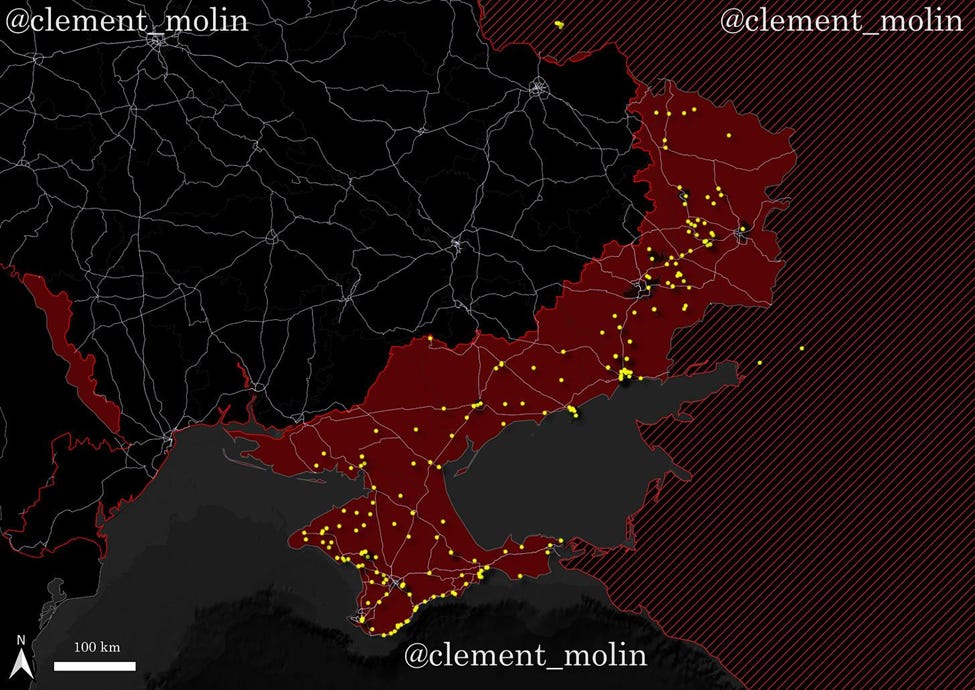
Russia hit four times the number of gas stations that Ukraine has hit, but Ukraine hit more than 100 fuel trucks which deprived some Russian gas stations of fuel for weeks.
Magyar: “Crimea must become uninteresting and unusable for Putin as a military staging ground. If you analyze at least the last five massive missile attacks on Ukraine, then from the peninsula there were only isolated missile launches during simultaneous missile salvos.”
Russia
Instead of Euro-5 gasoline, Russian refineries will produce Euro-2, -3 and -4 standard fuels until 1 July 2027. The lower quality fuels will degrade engine performance, particularly modern engines, but Russia will adjust.
13 regions eliminated restrictions on fuel purchases, indicating that distribution has been adjusted and more attacks are needed on refineries. Ukraine is already trying to be more precise in their attacks, targeting specific pieces of equipment to cause the maximum amount of damage. The additional attacks on 11 of the 34 major refineries in August forced some oblasts to reintroduce restrictions. Russia is now importing gasoline from India, Kazakhstan, Belarus and Morocco. Russian petroleum products (lubricants, asphalt, petrochemical feedstock for plastics) exports by sea fell by 54.7% in July.
The Orsk refinery was attacked and all four AVT’s were hit. The Atmospheric-Vacuum Distillation unit heats and separates the oil by heavier liquids and lighter gases to create different products, such as bitumen, diesel, jet fuel and gasoline. The Orenburg oblast governor said that the refinery is out for six months because key equipment was imported and it will take time due to sanctions. The oblast now has fuel restrictions of how much can be bought, no canisters are allowed, and there is an odd/even license plate schedule.
The Salavat, Tyumen and Nizhnekamsk refineries were attacked. The Komsomolsk-on-Amur refinery, 250 km from the Pacific Ocean, caught fire all by itself. The Ust-Luga gas condensate and hydrocracking units, which refines natural gas, were destroyed.
Three new Pantsir towers were built around the Ryazan refinery and they are constructing Pantsir positions at the Yaroslavl and Kstovo refineries.
The naval base at Novorossiysk was hit by Palyanytsia, Peklo, Bars and Long Neptune alongside MICH, FirePoint, Ramsay, Sichen, Trust, Khariok, Bober, Liutyi and Dovbush drones, plus Sargan and Mamai unmanned surface vessels. Three grain terminals and an S-300 radar were hit. The four warships Project 11356 frigates Admiral Makarov and Admiral Essen, a Project 21631 Buyan-M small missile ship, and Project 22160 patrol ship Vasily Bykov were damaged to varying degrees. Some satellite images of the damage.
A cargo ship was sunk on 7 August. A Russian ship that was damaged on 3 August made it to a Turkish port.
The MiG-31 base at Savasleyka airfield was attacked with damage unknown.
Ukraine deep strikes with Flamingos had a string of failures, but they conducted a successful shorter strike 930 km away, hitting the Progress Space Center in Samara with two of their five missiles launched. The second strike is visible in the first part of the video. One missile was intercepted near Voronezh and two were intercepted near Saratov
Russia is producing a satellite communications network similar to Starlink that will allow them to pilot all their Shahed drones for more precise attacks. The satellites are launched in Soyuz rockets which are built in Samara. Ukraine was twice unable to attack the launch site in Arkangelsk but this is the only production site.
In June 2023, Russia launched three experimental prototypes for the Rassvet system. Three upgraded prototypes were launched in May 2024. After Russia was cut off from Starlink in February 2026, they launched their first set of 16 functioning satellites in March. 16 more satellites were launched in July that are not yet functional. The partial network currently only covers part of Ukraine during part of a day, but the area and time of coverage will increase as additional Rassvet satellites become functional. Counting the prototypes, there are 37 functional satellites. (One malfunctioned). 200-250 satellites are needed to provide continuous and stable data transmission. The plan is to deploy 730 satellites by 2030 and 900 by 2035.
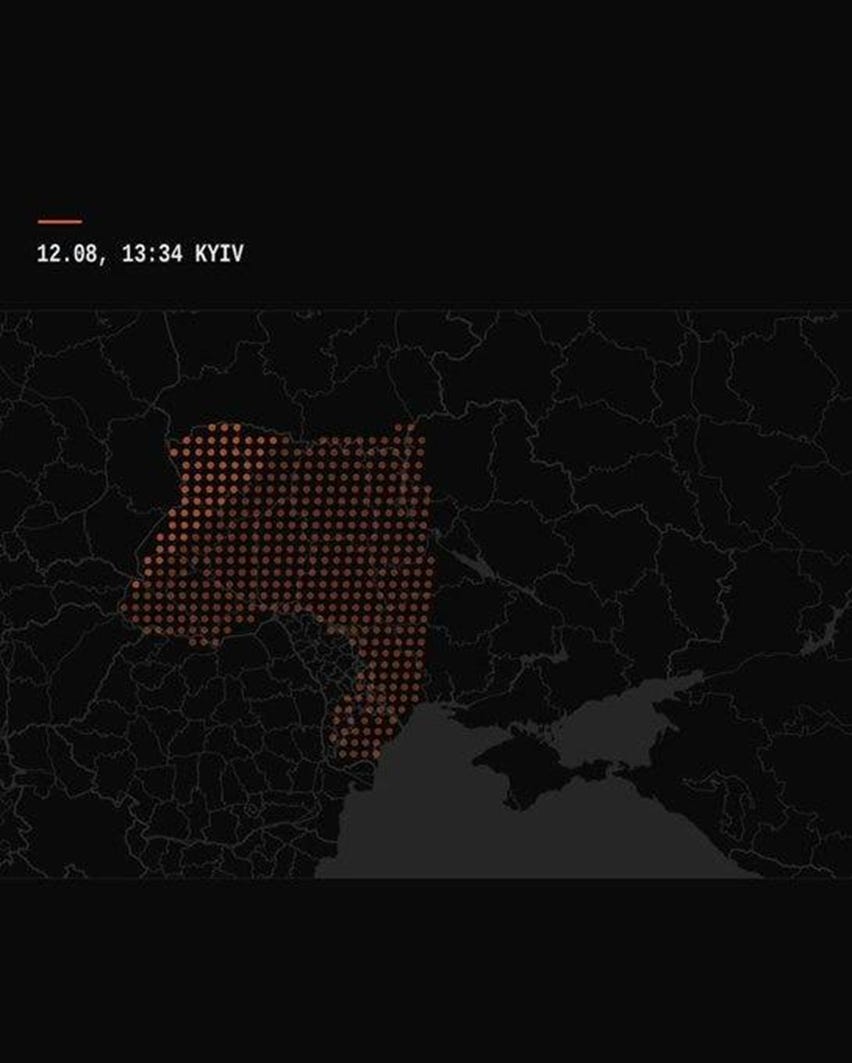
The recent failure of the Flamingo attacks were largely because of Russia’s A-50 planes that use its airborne radar to look down and see targets that ground radars cannot see because they are blocked by terrain. Crucially, there were no A-50 planes in the air at the time when the missiles were launched. With just four A-50 planes, Russia cannot keep one in the sky at all times and the timing of the attack suggests Ukraine anticipated the down time during a regular patrol schedule or has the means to observe whether an A-50 is flying or not in real time and was ready to launch the missiles on short notice. Once on site, it takes 20-40 minutes to launch a Flamingo and it takes them a little more than an hour to fly 1000 km. It followed the Volga river for the last part of its flight to avoid ground radar detection. In that hour of flight, there is a report that all four A-50’s were launched to detect and intercept the Flamingo missiles.
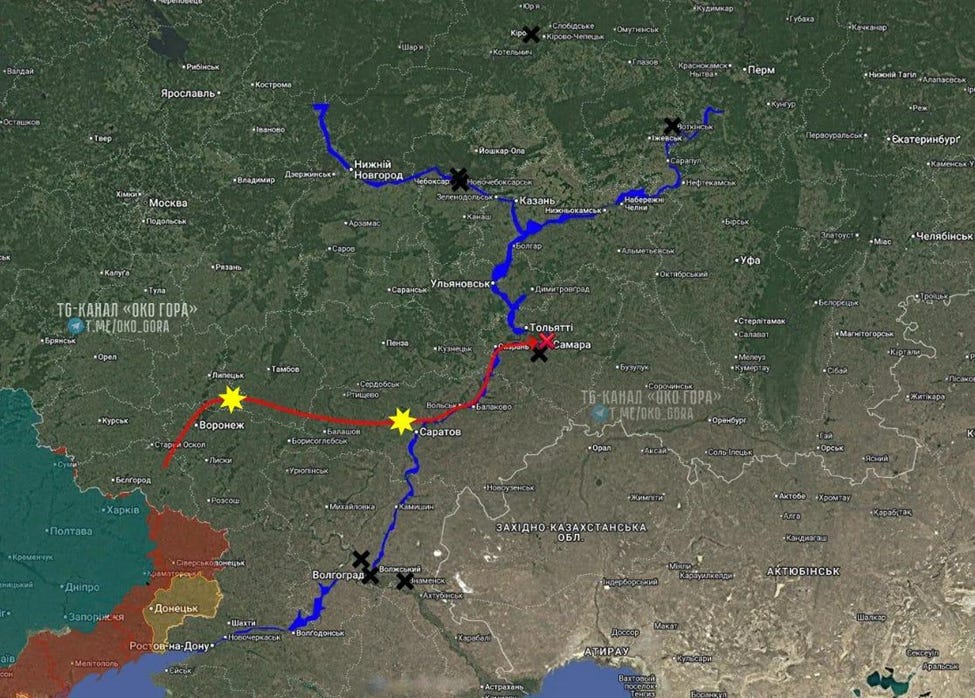
A Russian analysis of events.
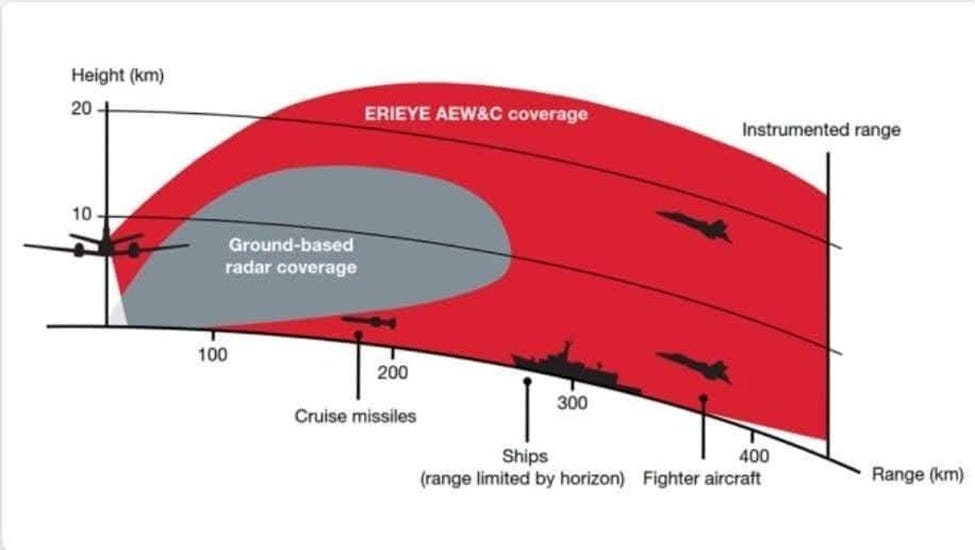
Flamingos try to fly low even when not over a river in the hopes that terrain will block the radio waves of ground radars. A Flamingo ran into a pole once before, so it’s possible that they could have run into other terrain, as well. (Ukrainian drones have run into construction cranes, also).
(…to be continued…)
No posts
Comments
Nothing yet. Say the first thing.
Sign in to join the conversation.