
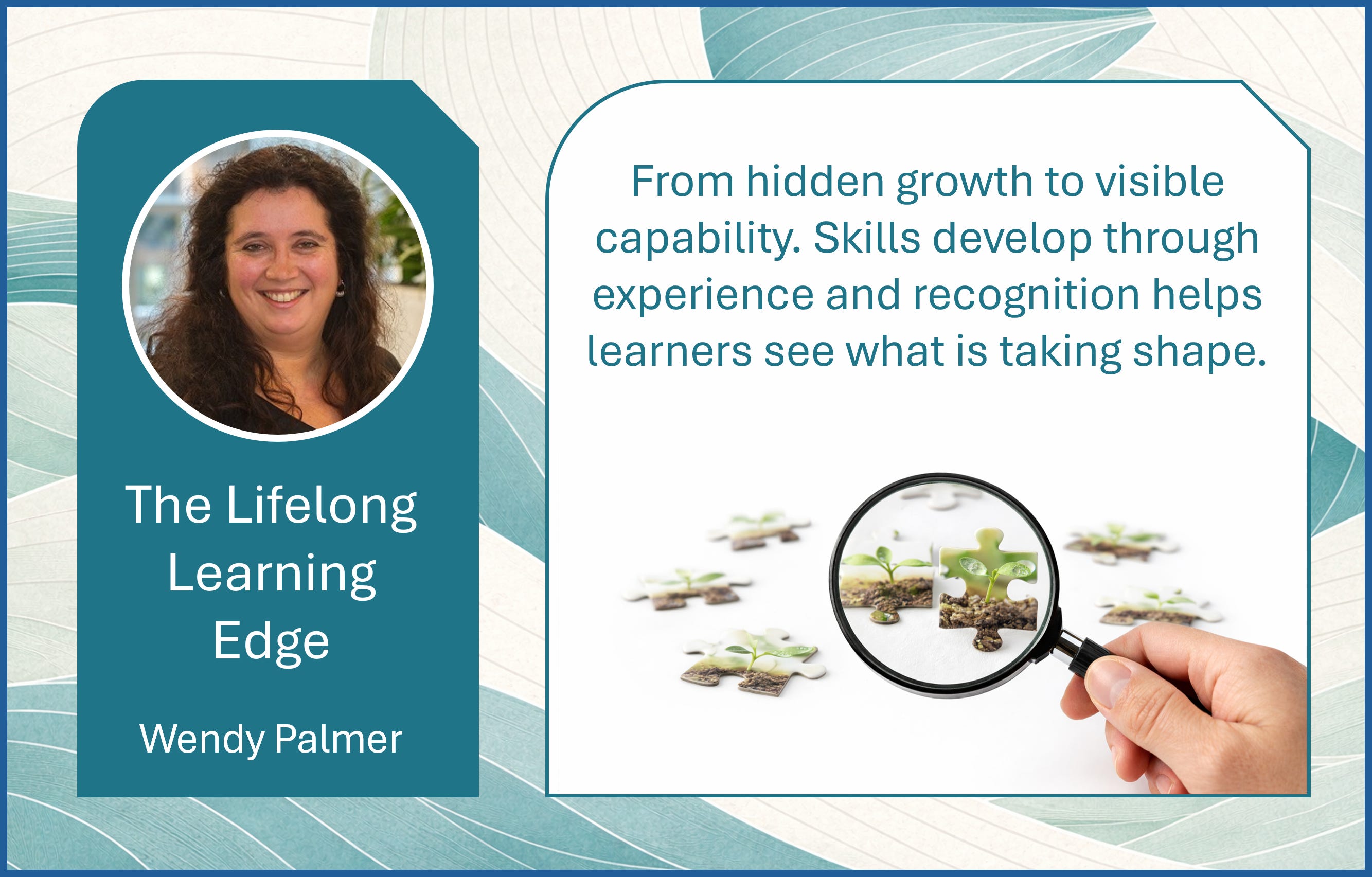
It has been one of those weeks where separate pieces of work have started to make sense together, like a jigsaw revealing the picture underneath.
My second FutureLearn course has just launched. This one focuses on lifelong learning and skills literacy in higher education, and it builds on many of the ideas I have been exploring over the past few months: how learners recognise their capabilities, how educators make skills more visible, and how we help people move between learning, work and life with a stronger sense of what they can do.
At the same time, the first course, Lifelong Learning: Recognise and Articulate School Skills, has started to generate the kind of discussion that reminds me why this is so important. It is great to see educators taking the ideas into their own settings and testing them against the reality of classrooms, subjects, students, language, culture and workload.
One educator reflected that what stood out was not a single moment, but a gradual recognition that they were already doing much of this work, just not always naming it consistently. That struck a chord, because so much of the work of skills literacy begins there, with the simple act of noticing what is already happening.
A student is not just completing a robotics task. They may be problem-solving, persisting, testing, communicating, adapting and making decisions. A group of students is not just working on a group assignment. They may be collaborating, interpreting, listening, organising and making meaning together. A PE activity is not only a game. It may be a moment where students practise strategy, coordination, teamwork, judgement and reflection.
The challenge is that these capabilities are often hidden inside the activity. They are sometimes visible to the teacher or an observer, but they are not always visible to the learner. And if they are not visible to the learner, they are difficult to carry forward.
One of the course comments captured this beautifully. The focus was on what type of feedback do we give and the educator reflected on the common habit of saying “good job” or “well done” when students complete a task. Those words are encouraging, and encouragement matters, but they do not always help students understand what they actually did well.
Was it leadership, problem-solving, communication or persistence? Was it the way they listened to others, adjusted their approach, took turns, explained their thinking or helped the group move forward?
When we only say “well done”, students may know they have pleased the teacher or completed the task well, but is not clear what they did well. They may not know what capability they have developed. It is a small distinction but it’s really import because recognition isn’t just about signals for others, it needs to include helping learners see their skills and capability for themselves.
So much of the conversation around microcredentials, digital badges and recognition is understandably focused on trust and quality assurance. We talk about standards, evidence, metadata, issuer credibility, verification, governance and interoperability. Without these, credentials can become noisy, confusing or disconnected from real value.
But there is another side to trust that I think we need to talk about more. We are building systems so institutions and employers can understand credentials but we also need systems that help learners to understand themselves, make choices, tell better stories about their learning, and move across contexts with more confidence.
That confidence does not appear at the moment a credential is issued. It is built through repeated opportunities to notice, name, practise, evidence and reflect on capability. This is what I mean by skills literacy. It is not simply knowing the words for skills, or being able to repeat a list of graduate attributes or employability skills. It is the ability to recognise capability in action, connect it across contexts, describe it in plain language and point to evidence of it.
In the course discussions, I can see educators beginning to explore this in very practical ways. They are asking how to translate skills into student-friendly language. They are thinking about how skills show up in PE, project-based learning, bilingual classrooms and local cultural contexts. They are wrestling with which skills are easy to make visible and which are more abstract. Communication and collaboration often feel easier. Adaptability and critical thinking can be harder because they are less visible and need more explanation.
This is exactly the kind of conversation I hoped the course would open up, not because there is one perfect way to describe a skill, but because the act of naming skills forces us to ask better questions.
What are students actually doing here?
What decisions are they making?
What are they practising?
What could they use again in another context?
What evidence could they point to?
There was also a useful caution in the discussion. One educator noted the risk of mistaking the label for the skill. I think this is critical. Naming matters, but the label is not the learning. A better phrase does not automatically make capability visible and a badge title does not automatically create trust.
The real work is in the practice around it. It is in the design of tasks, the feedback, the reflection, the evidence, the conversations and the repeated opportunities to connect the dots. It is in helping learners see that what they are doing is not a single isolated assignment or project, but a set of skills and capabilities they can take into other situations.
Recognition can too easily become something that is done to learners or for learners. We assess them, award them, badge them, certify them and verify them. But the more powerful version is when recognition helps learners become active participants in understanding and communicating their own capability.
That does not mean leaving learners to do it alone. In fact, it requires thoughtful scaffolding. Learners need language, examples, feedback and evidence. They need opportunities to practise articulating what they can do. They need systems that are clear enough to support them, but flexible enough to reflect the different places learning happens.
This is also where skills confidence fits. I have started to hear more people use that phrase, and I think it captures something important. Skills confidence is not the same as skills literacy, but it is one of the outcomes we should be aiming for. When learners can recognise and describe their capabilities, they are better placed to make decisions about study, work, pathways and future learning. They are also better placed to participate in conversations about their own development.
That matters in schools, higher education, workplaces and community learning. It matters for people moving between countries, sectors, careers and life stages. And it matters in the broader recognition ecosystem.
Next week I will be heading to Badge Summit in Boulder, where many of these questions will be very much alive. The program is full of sessions on skills visibility, learner mobility, trust, evidence, interoperability, employer confidence, open recognition and the future of digital credentials. I will also be running a session called Good Badge, Bad Badge, which is a hands-on badge design lab.
On the surface, badge design can sound like a fairly practical topic. What should the badge say? What criteria should it include? What evidence should sit behind it? How should it be presented?
But underneath those design questions are bigger questions about recognition. What changes because this badge exists? Who is it for? What does it help the learner understand? What does it help others trust? Does it open up opportunity, or does it simply decorate completion?
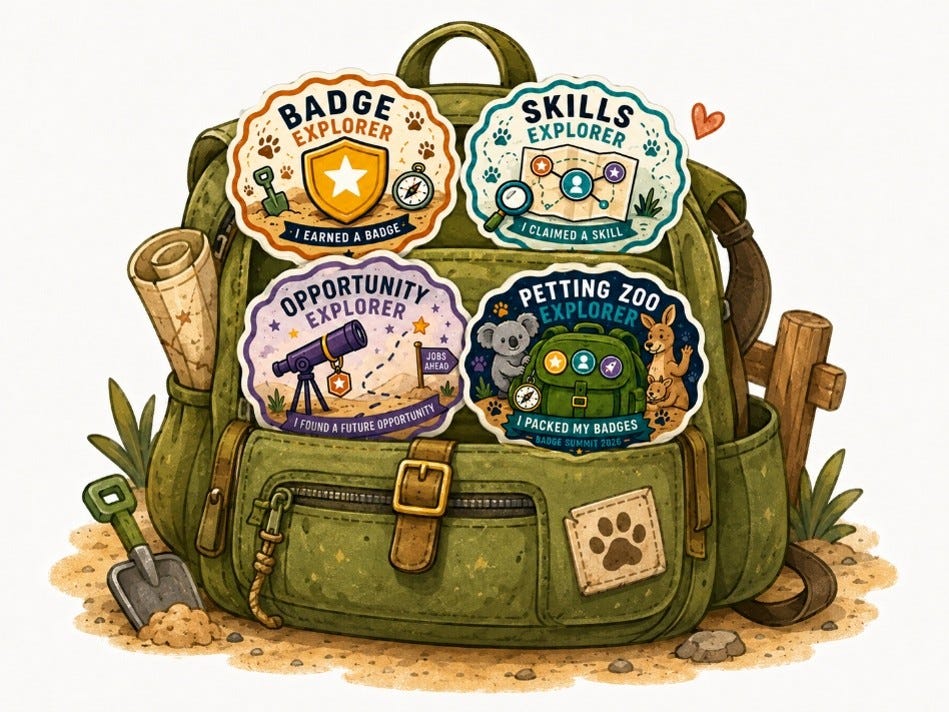
Those questions are also behind the relaunch of the Badge Sandpit and the Pack Your Badges activity we have created for Badge Summit. The Sandpit has always been about playful exploration, but the play has a purpose. It gives people a chance to earn, claim, store, inspect and share badges before they have to make decisions about them. It helps people build confidence with the tools, language and possibilities of digital recognition.
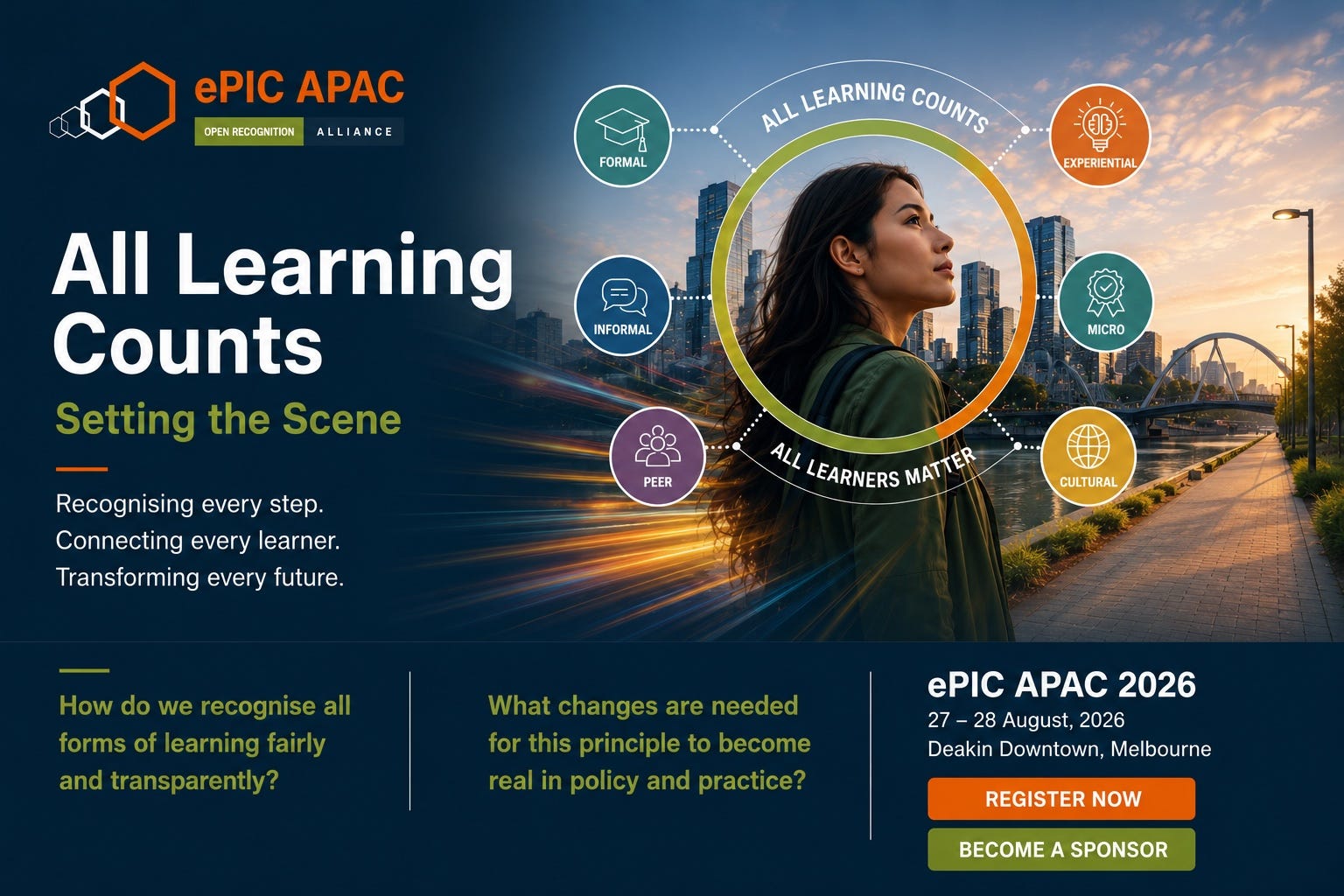
The same thread is running through ePIC APAC, which we are hosting in Melbourne in late August. That event is creating a much-needed regional conversation about recognition, lifelong learning, policy, equity, skills, digital credentials and the structures that either enable or limit mobility. At the heart of it is the premise that “All Learning Counts” with the learner at the centre: the person trying to understand what they know and can do, move from one context to another, make their learning count, and tell a clearer story about their capability.
This week I was also announced as the newest member of the World Alliance for Microcredentials Foundation Advisory Board. It is a lovely personal milestone, but it also feels connected to this broader moment. Across the different projects I am involved in, I can see the same questions surfacing in different forms.
How do we make skills and capability visible as they are developing?
How do we build trust that supports systems and people?
How do we support quality without losing flexibility and agility?
How do we design credentials that are useful to institutions and employers, and meaningful to learners?
So I think this is worth repeating, whilst we are building systems so institutions and employers can understand credentials, we also need to make sure these systems help learners understand themselves, make choices, tell better stories about their learning, and move across contexts with more confidence.
That is the part of recognition I do not want us to lose. The future of microcredentials, badges and skills-based learning will not be judged by how many credentials we issue, how many platforms we connect, or how many frameworks we build. It will be judged by whether people can use them. Whether learners can see themselves more clearly and can recognise the value of what they have learned. Whether they can carry that learning into new settings, where they can speak about their capability with confidence.
Comments
Nothing yet. Say the first thing.
Sign in to join the conversation.