
$10, nobody turned away for lack of funds
Recording available for registrants
Watching people flood the streets for No Kings Day is thrilling. After decades of falling into the belief that democracy will naturally perpetuate itself, we’re learning in real time that it must be actively defended. That’s beautiful.
But also …
Why must there always a but?
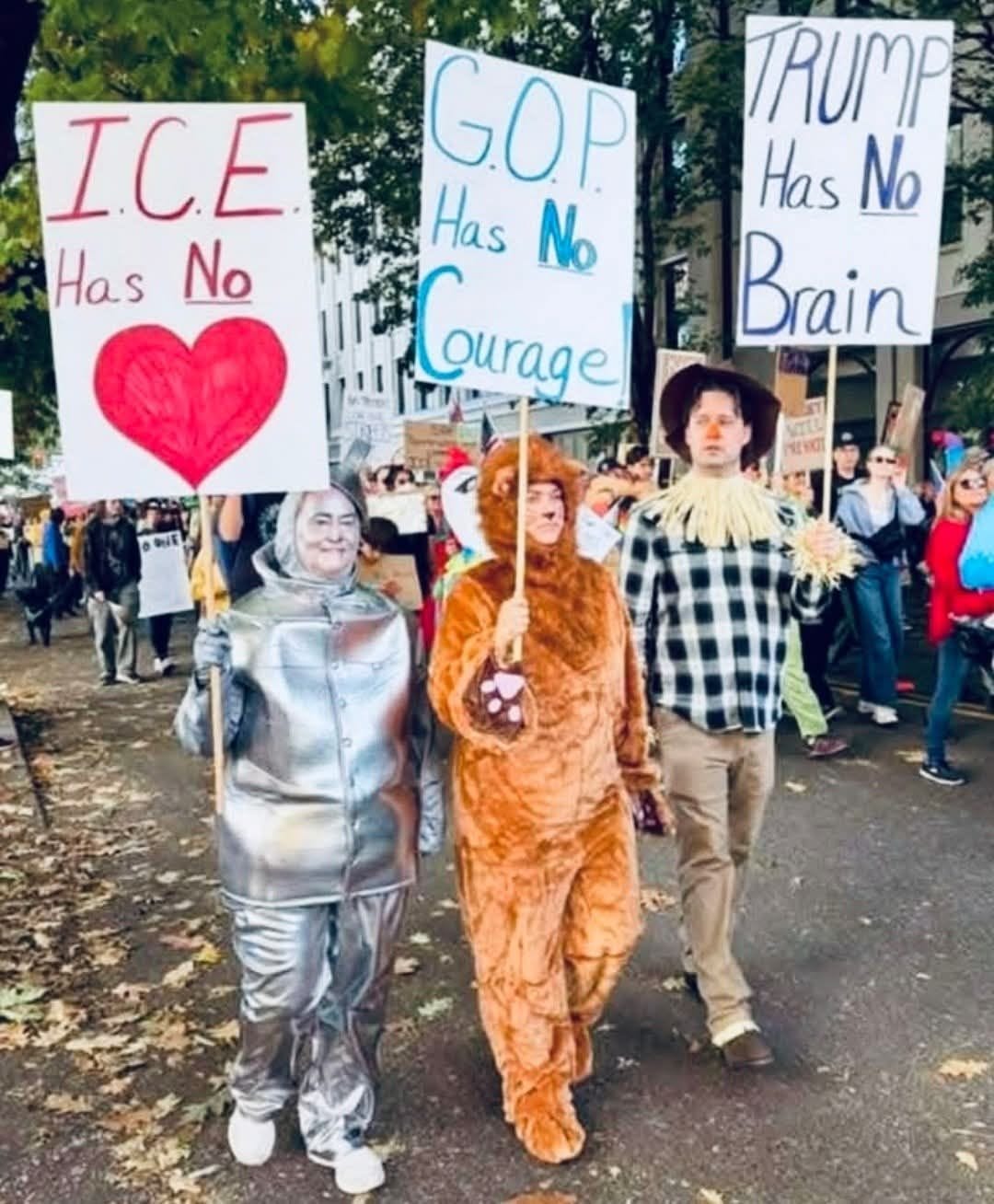
Thankfully we have entered a moment where “speaking truth to power” is being praised.
But it has its limits (release the Epstein files) and one of those limits is when the power is someone we know.
When it costs us something more than an afternoon walking with friends down a city street with clever signs and funny costumes.
When it means disrupting your social circle.
Will you march out of that person’s living room?
Because if you can’t stand against the lords and viscounts at home (yes, I just started watching Bridgerton) standing against the king is kind of (god I hate this word) performative.
Back in 2018, when I was in the midst of my sexual healing journey, I was very active in the Sex Positive Portland group. I met a man who was high up in the pecking order — for all the reasons you might expect. He was white, wealthy, a good talker, and (most importantly) had a huge home where he frequently hosted events.
He took an interest in me (I would later find out he took an interest in many of the women who were new to the group). He presented himself to me as a teacher, a guide, a mentor. He offered his services as a “sexual healer.”
Yes, I hear exactly how that sounds now. At the time I was excited that someone so prominent had taken an interest in me.
There’s no need for details here except to say that I started that session as a client and by the end, he’d tried to convert me to a lover. Without asking. No negotiation, no consent. It wasn’t dramatic or violent, but it was deeply, deeply not okay.
This was the man who was meant to be teaching consent within the community and he violated mine.
I left that day feeling vaguely icky, and I did my best to avoid being alone with him. But I never felt like he had taken anything from me or harmed me in any long-lasting way. It was an uncomfortable experience that taught me to be more careful.
The true harm didn’t happen until five years later when another community member called that man out for belittling and bullying behavior. She was getting absolutely roasted by the community for being a trouble maker. I hadn’t planned to tell my story at that moment, but I couldn’t stand by and watch her being tormented when I could confirm a pattern of bad behavior.
I came forward and it created a firestorm. Not of support.
The two of us, along with one other woman who came forward publicly, were harassed so badly that we ended up having to leave the community.
In a community that is built on the concept of consent, I was punished for naming a violation.
I was told that I was making shit up.
Making something out of nothing.
Villainizing a man who had been so good to me.
I was chastised for comparing him to Harvey Weinstein (which I never did.)
Men started saying they were scared to take part in any future parties because who knows what accusations might come next? Because obviously, men are the victims in all of this.
It has now been three years since I had to walk away from the community that meant everything to me. Telling the truth meant losing the first place I’d ever felt like I truly belonged.
The people who held me as I experienced pleasure for the first time; who held me as a grieved all the time I had lost; who celebrated with me when I found my true path in life.
They were my world, and they turned their back on me when I dared to speak the truth.
Because it meant there would be fewer parties. The big, comfortable house would no longer be the center of activities if the owner was held to account. It would require them to stop pretending everything was fine — even when there was a whisper network among the women so they’d know it wasn’t.
It’s easy to stand up when the wannabe king is far away and isn’t touching your day-to-day life.
But what about the lords and viscounts who sit in your drawing room and host you for tea? Would you be willing to stand up for the person at the margins if it were at the expense of your invitation to the next ball?
I hope you’ll ask yourself: what if the person being held to account isn’t a far-off president, but a friend. Someone is an equal to you in social standing and who has been good to you personally — but who has power over others, even if you didn’t realize it.
When someone stands up, do you say “Tell me more”?
Or do you say, “They’ve always been good to me and I’ve never seen anything, so it must not be true.”
If we believe in dismantling harmful power structures, that belief has to start at home. It has to show up in the messy, deeply uncomfortable moments where there is no crowd to back you up.
We have to be willing to ask “Is it possible that harm is happening in spaces I believed were safe?”
The stakes are real and and they’re painful.
This isn’t easy. It asks more of us than we usually want to give.
Please understand that I am absolutely in support of the No Kings Day protests. Marching in the streets matters.
It shifts culture. It builds momentum. It reminds people they’re not alone.
But culture is also happening in our living rooms and our groups chats. You are creating culture every time you decide who to listen to, and who to speak up for.

I told a more complete version of this whole story on the podcast:
When the man teaching consent is the one violating you
Comments
Nothing yet. Say the first thing.
Sign in to join the conversation.