
$10, nobody turned away for lack of funds
Recording available for registrants
Registration opens next week
After a brief interlude last week, we’re back to Heated Rivalry. 😁
On Threads, I may have finally cracked the code for the kind of character analysis I’ve been trying to do for popular media. It only took ::checks watch:: seven years.
If you enjoy this format, please hit the heart or leave a comment so I know if you want me to post these on Substack as well.
Let’s dive in!
Literally from the first frame of the show, we’re seeing the effects of childhood trauma on Ilya. He views Shane as a threat. And it’s not a hockey thing, or a sex thing, or anything like that. Ilya views EVERYONE in the world as a threat because that’s what he learned as a child.
When our childhood homes are chaotic and dangerous, we learn that the way to stay safe is to always be on alert — hypervigilant. Our nervous system never calms down because it’s constantly on the look out for the next bomb that is going to explode.
So when Shane — the person he’s been primed to see as the enemy — approaches him, his Spidey senses are going to be telling him that this interaction is likely to threaten his safety.
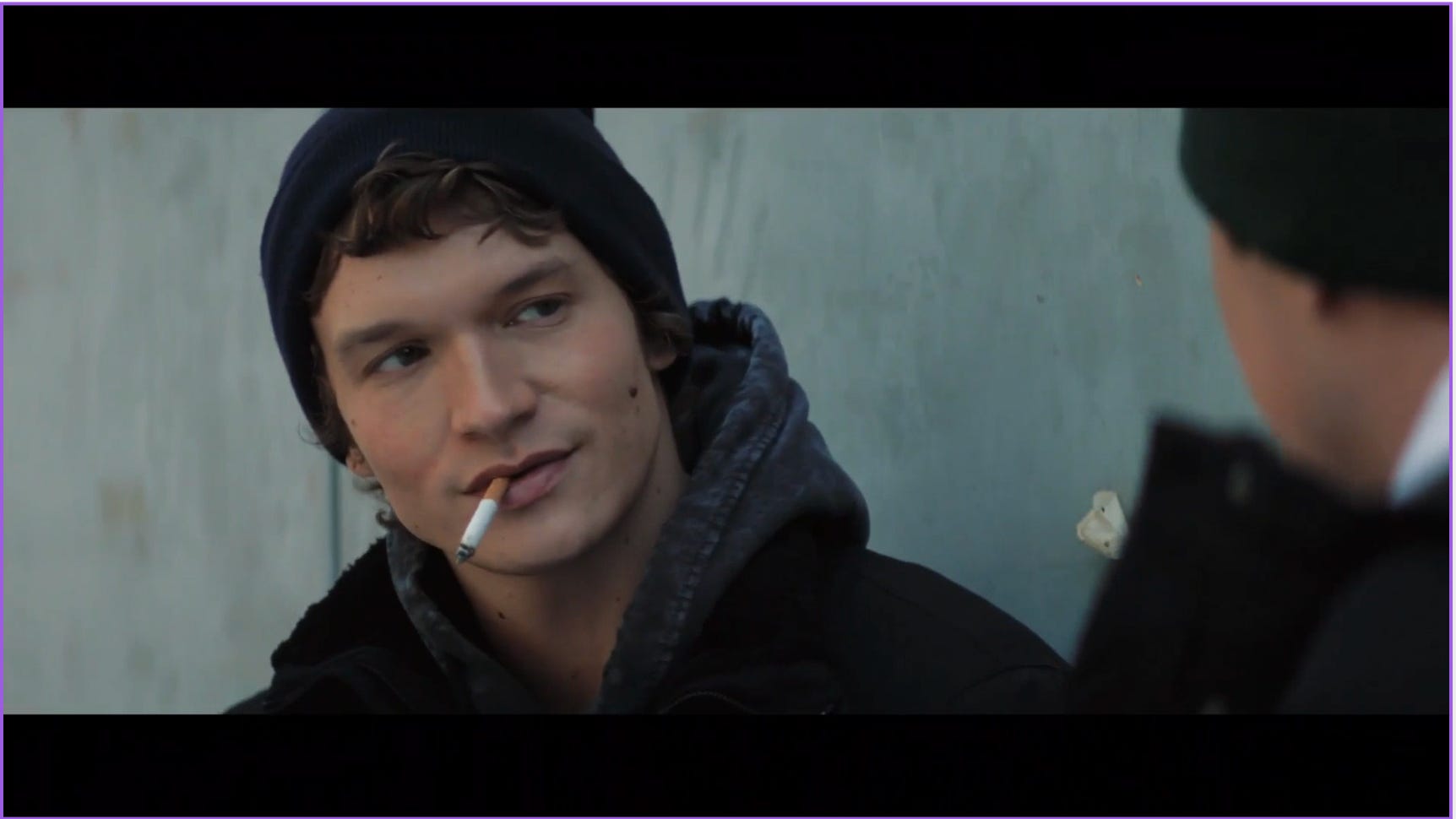
You see when Shane first says his name, his head snaps up and he’s got a slight deer in the headlights look in his eyes. He sucks on his cigarette like his life depends on it. This is hypervigilance personified.
When Shane offers his hand, Ilya still looks suspicious as all hell. Because even though Shane has so far been perfectly pleasant, when we grow up in chaos and unpredictability, we learn to expect that people will change on a dime. That they might go from hugging us and saying they love us in one moment, to screaming and cursing us in the next.
Our nervous system has learned that when someone is kind it can actually be the MOST dangerous response, so we stay suspicious and never allow ourselves to relax. We don’t let our walls down. It is entirely logical and sensible that we assume every person is a threat. This is not an “innocent until proven guilty” situation.
For example — I’ve been doing the nervous system healing work for close to a decade now. I’ve been with my partner for eight years and I feel as safe with him as I ever have with anybody. And I still freak the fuck out at the weirdest, most inconsequential things. If he loads the dishwasher and wipes down the counters, I assume he’s cursing me out under his breath and has decided that I’m lazy and useless. And this is after EIGHT YEARS of him proving to me that that’s not what he’s thinking.
This shit gets lodged in our brain chemistry and our nervous systems (things that will come up over and over again - let me know if you want me to go into deeper dives on how our brain chemistry and nervous system are altered by childhood trauma)
I know that Ilya’s “yes” appears arrogant to some, but I see it as another manifestation of the same hypervigilance.
Ilya has learned that his job is to be THE BEST. Even when he IS the best his father will find ways to punish him, but that is still a hell of a lot better than when he fails to be the best (raise your hand if you grew up like this 🙋♀️)
That can cause a slingshot effect that feels really confusing from the inside. Inwardly, we see ourselves through the eyes of our abuser — as useless and worthless. But on the outside we’re performing excellence to the rest of the world, because we believe that’s the only thing that is acceptable. It’s another layer of protection that we build around ourselves and we don’t let people see beyond that veneer of excellence. As the show goes on, we will learn that underneath Ilya’s extremely hard shell is the heart of a squishy teddy bear wrapped in a warm blanket, but it takes YEARS for Shane to see it.
Specifically, seven years until the Tampa Bay All Stars.
Many people have identified the second handshake as the moment that turns Ilya from suspicious to curious. I agree.It doesn’t pull down his walls, but there is something disarming for Ilya about how Shane approaches for a second handshake. Shane has demonstrated a series of behaviors that Ilya isn’t familiar with:
Demonstrating respect without any barbs
Offering correction (about the cigarette) without shaming him
Putting himself into Ilya’s physical space twice without any sign of aggression or hostility
That is enough to turn Shane into an object of curiosity. Not someone Ilya trusts, but Shane has set himself apart from the usual interactions Ilya has had. And that makes him a curiosity for Ilya.
“You will not be so nice when we beat you” is a hockey chirp for sure. But it’s also a statement about the world Ilya inhabits — one where disappointment turns into aggression & fear turns into violence. Where even when he’s the first pick at the draft, his father says he’s lazy. When his father makes him a drink (after the Olympics loss) and hands it to him, he then gets scolded for drinking it. It’s what he expects. Where he’s expected to be the golden goose for the entire family who live off his wealth and constantly demand more.
Ilya expects the world to turn against him, especially when he has good fortune. It’s the trap of growing up in this type of home: you have to be successful, but even when you are it comes with a hefty price. Sometimes it’s easier to fail because then nothing can be taken away from you.
The fact that Shane responds to Ilya’s chirp with good humor and no hint of aggression is probably pretty unique in Ilya’s life.
In fact this whole interaction is probably unlike anything Ilya has experienced — respect, admiration, and good will from someone who is his equal in every way. And it sets him on a collision course with everything terrifying that lives within him.
When we look at Ilya through the lens of what he learned as he grew up, it makes sense why he behaves the way he does. We can even have empathy for the level of hypervigilance and fear he lives with.
I like to lay things out this way because it’s usually a hell of a lot harder to give ourselves that same grace. We have an idea of who we “should” be in our heads, and when we don’t live up to that we assume it’s because we’re a failure, a useless waste of space. None of that is true: we are behaving in ways that make complete sense when we understand how our nervous system was trained to respond to our environment.
I’d love to hear your thoughts and I’m happy to answer questions.
More soon!
Comments
Nothing yet. Say the first thing.
Sign in to join the conversation.