
Written by: Andrew B. Raupp / @stemceo
Author’s Note: I learned the language of land before I learned the language of power. Years ago, as a student field ecologist at the University of Michigan-Dearborn, I was tasked with hectaring the grounds of the Henry Ford Estate for the U.S. Geological Survey. I went deep into those woods with field gear, mud on my boots, and the quiet seriousness that comes from knowing the earth keeps records longer than men keep promises. I took core samples of sand, silt, and clay, carried them back to the laboratory, and used an antique hydrometer to record the soil data with the kind of patience only real fieldwork can teach. There was no glamour in it, no corporate slogan, no polished campaign promising salvation through technology. There was only land, measurement, observation, and respect for the living systems that were there before us and would remain after us.

Available for iOS and Android
That work taught me something that cannot be learned from a press release: nature is not a toy chest for powerful institutions. Every wetland, woodland, drainage ditch, and backyard belongs to a larger order that reckless men too often pretend they can master. I spent my time in the field studying what already existed, not forcing experimental designs onto communities that never asked to become part of someone else’s data set. Never in my wildest imagination did I believe I would one day look at Big Tech companies and wonder whether insect vectors released into the wild could become a threat to personal health, public consent, and the sovereignty of ordinary people over their own bodies and communities.
That is what makes this moment so chilling. It is not only the mosquito. It is the permission structure being built around the mosquito. It is the idea that corporate laboratories, federal agencies, and private interests can make decisions that enter our neighborhoods, hover over our homes, and implicate our health while the people most affected are left to discover the details after the machinery is already moving. A free people do not find out through a buried notice that their environment may be altered. They are told plainly, asked directly, and given the power to refuse without being mocked, managed, or steamrolled.
I have held the soil in my hands. I have seen how carefully one must move when studying a living landscape. So I reject the arrogance of any institution that treats the public as a passive surface to be tested, conditioned, or corrected. Science without consent is not public service; it is power wearing a lab coat. Health policy without local control is not protection; it is occupation by paperwork. Innovation without accountability is not progress; it is trespass with funding.
Let every official who signed, reviewed, approved, promoted, funded, or concealed any part of these programs be brought into the open and made to answer. Let the permits be read aloud in county meetings. Let the release maps be published before a single container is opened. Let the contracts, liability shields, data agreements, ecological reviews, and risk assessments be dragged from behind the polished doors and placed before the people whose homes, yards, children, pets, gardens, and bodies are being placed inside the experiment’s reach. Let every community ask the oldest and most American question of all: by what authority?
And if that authority cannot withstand public scrutiny, then it deserves no obedience. If the plan is righteous, it can face the people. If the science is sound, it can survive cross-examination. If the program is safe, it can endure local consent. But if the whole thing depends on silence, confusion, technical jargon, and the public looking the other way, then it should be stopped cold. This is not a plea for panic. It is a demand for self-rule. The air above our homes is not corporate property. Our neighborhoods are not experimental acreage. Our bodies are not implied-consent zones. Let subpoenas fly before the mosquitoes do.
With Eternal Vigilance,
Andrew B. Raupp ✍️
Citizens Rule Book: A Palladium of Liberty (Download) #Infowars 🇺🇸
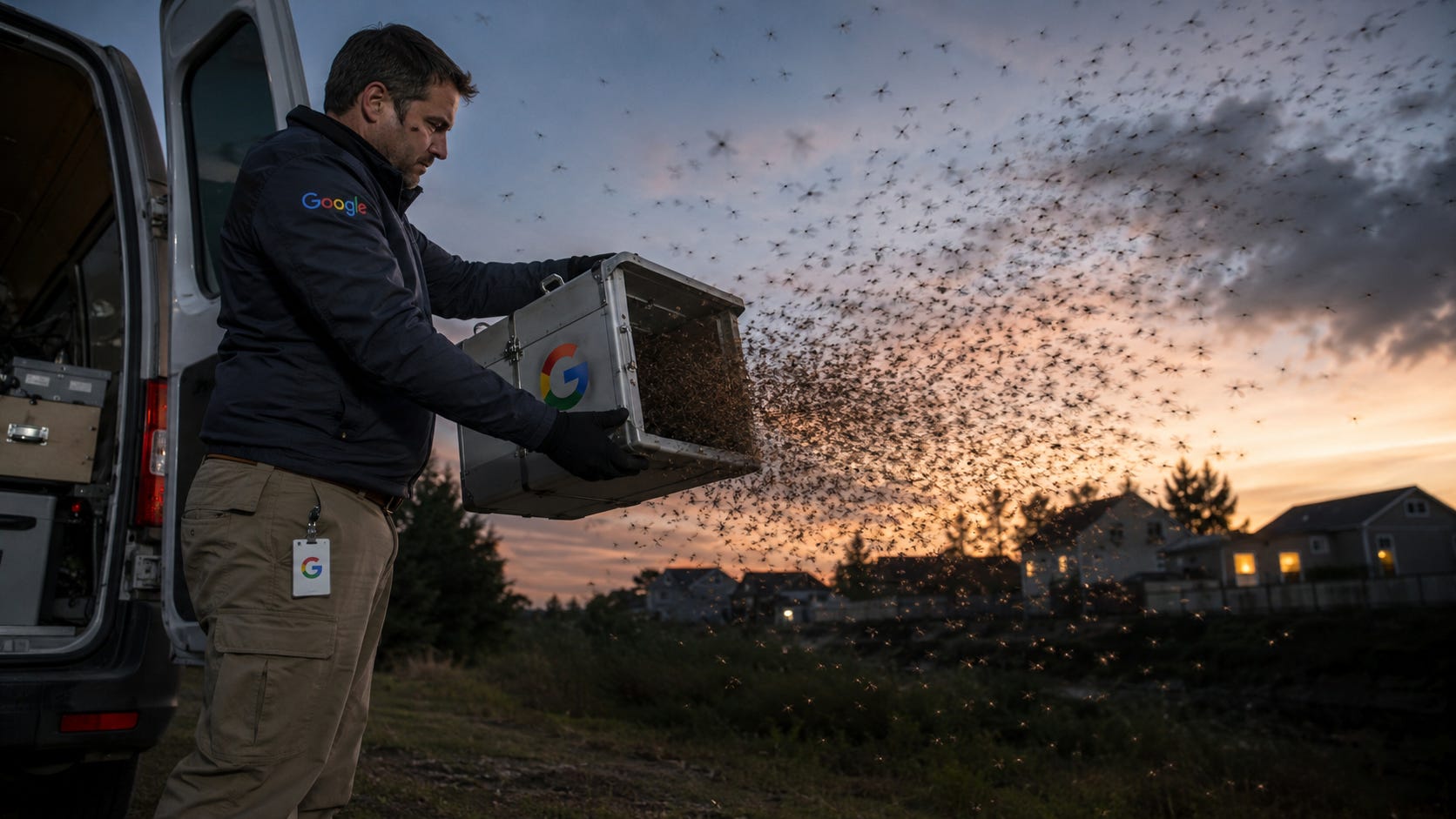
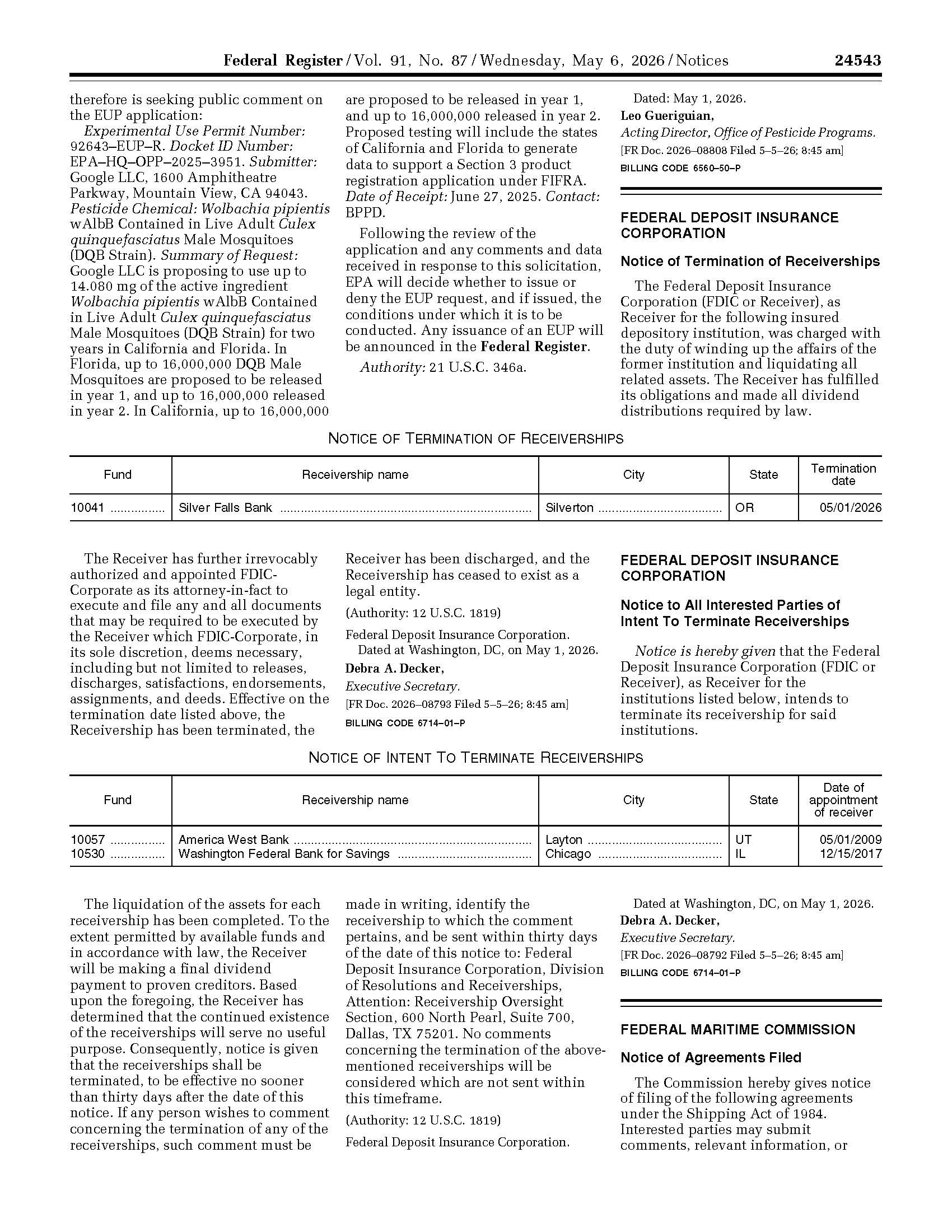
There are documents that arrive dressed in beige, polite enough to pass through a government inbox without raising a pulse, and then there are documents that should make every parent, renter, homeowner, county commissioner, school board member, farmer, and backyard gardener sit upright and ask who decided that their neighborhood could become a biological proving ground. On May 6, 2026, the Federal Register published notice that Google LLC had asked the Environmental Protection Agency for an experimental use permit involving Wolbachia pipientis contained in live adult male Culex quinquefasciatus mosquitoes, a request the EPA itself said “may be of regional and national significance.” The paperwork was not hidden in a cave, but it was not exactly shouted through a bullhorn at the edge of every cul-de-sac either, and that is where the real story begins.
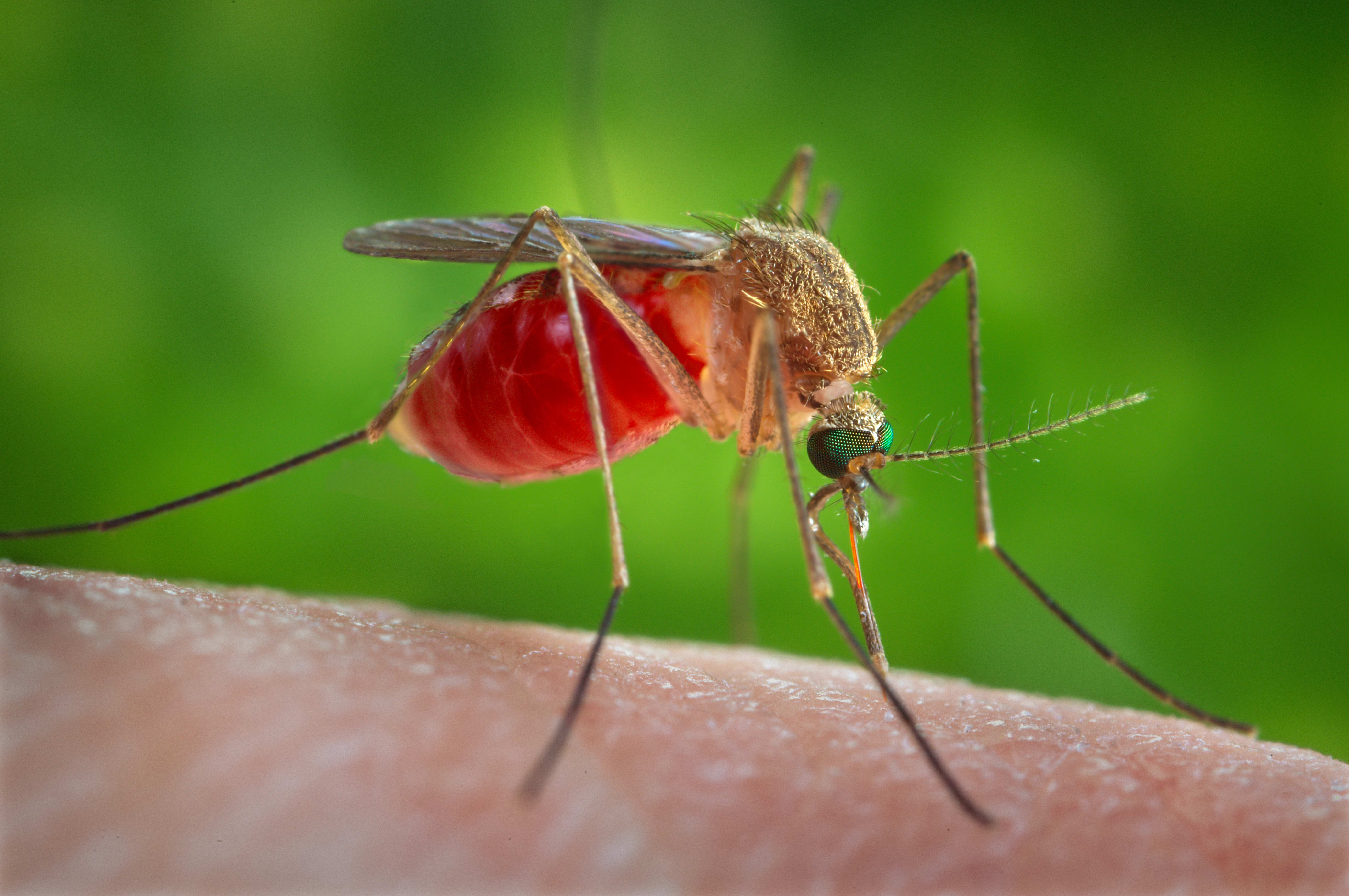
The number is not rumor, not fever dream, not something whispered in an encrypted chat. Google’s request, as described by the New York Post, proposes up to 16 million DQB male mosquitoes in Florida in year one, 16 million in Florida in year two, 16 million in California in year one, and 16 million in California in year two. That is 64 million lab-reared, bacteria-carrying male mosquitoes released across two states under a permit designed to generate data supporting a future product-registration application under federal pesticide law. The EPA notice says the agency would decide whether to issue or deny the permit only after reviewing the application and public comments, which means that as of that notice, this was not an accomplished fact; it was a request to conduct a large experimental field test.
Let the defenders of the program explain the science, because they deserve to be heard and then cross-examined. The official pitch is that these are male mosquitoes, that male mosquitoes do not bite, and that Wolbachia can interfere with reproduction so eggs do not hatch when infected males mate with certain wild females. The CDC says mosquitoes with Wolbachia are not genetically modified, that only males are released after sorting, and that Wolbachia bacteria cannot make people or animals sick. Google’s Debug project says its “good bugs” are male mosquitoes carrying naturally occurring Wolbachia, released to reduce populations of “bad” disease-carrying mosquitoes over time, and the project says the technique uses no chemicals, no toxins, and no genetic modification.
That is the sales brochure; here is the civic question. Since when does a corporate laboratory get to turn neighborhoods into product-development terrain with nothing more than a federal comment window and a promise that the bugs are friendly? The Federal Register page shows the public comment period for this Google docket closed June 5, 2026, and by June 8 it listed 2,609 comments received (click “Public Comments” on the left), which proves that some citizens found the paper trail and spoke up. It does not prove that affected communities gave meaningful informed consent, that residents knew where releases might occur, that renters were reached, that non-English-speaking households received understandable notice, that parents had a practical way to object, or that local communities were given the power to say no before the trucks rolled.
Alex Jones Live framed the proposal as Google releasing “64 million genetically-modified mosquitoes” and warned of “flying vaccines,” language that collides with the CDC’s statement that Wolbachia mosquitoes are not genetically modified and with the EPA record describing a mosquito-suppression experiment rather than a human vaccination program. Yet the public anger underneath that wording should not be dismissed, because “trust us” has become the laziest sentence in American institutional life. People are not wrong to recoil when a tech giant, a health-tech pipeline, biological pest control, artificial intelligence, public health agencies, and experimental permits all appear in the same notice.
Note: Prior to releasing mosquitoes with Wolbachia into an area, EPA must grant an Experimental Use Permit (EUP). Releasing these mosquitoes requires approval from the EPA and local authorities.
See EPA-HQ-OPP-2015-0374 on Regulations.gov. The EPA has issued, amended, and/or extended other experimental use permits (EUP) using this same technology in another mosquito species, Aedes polynesiensis or Aedes albopictus in 2012, 2013, and 2014.
Information on those EUPs is available in Docket EPA-HQ-OPP-2012-0181 and Docket EPA-HQ-OPP-2013-0254 at Regulations.gov.
The “flying vaccine” phrase did not fall from the sky without history. Separate research has explored vaccine-carrying mosquitoes for wildlife, including efforts described in 2026 to use mosquitoes to deliver vaccines to bats against diseases such as rabies and Nipah, and a Gates Foundation-linked Grand Challenges page from 2008 describes a proposal to create a transgenic mosquito that could produce and secrete a malaria vaccine protein through saliva into a host’s skin. Those projects are not the same as Google’s EPA mosquito-suppression application, but they explain why citizens hear the phrase and demand hard boundaries, plain language, and legal assurances before any official asks them to accept biological interventions in their airspace, yards, alleys, drainage ditches, and school zones.
Now comes the sentence that should be printed on every hearing-room wall before this discussion goes another inch: “The voluntary consent of the human subject is absolutely essential.” That is the first principle of the Nuremberg Code, and it says consent requires legal capacity, free power of choice, freedom from force, fraud, deceit, duress, overreach, or coercion, and enough knowledge and comprehension to make an enlightened decision. The Code also says subjects should be told the nature, duration, and purpose of the experiment, the methods and means, the expected hazards, and the possible effects upon health or person.
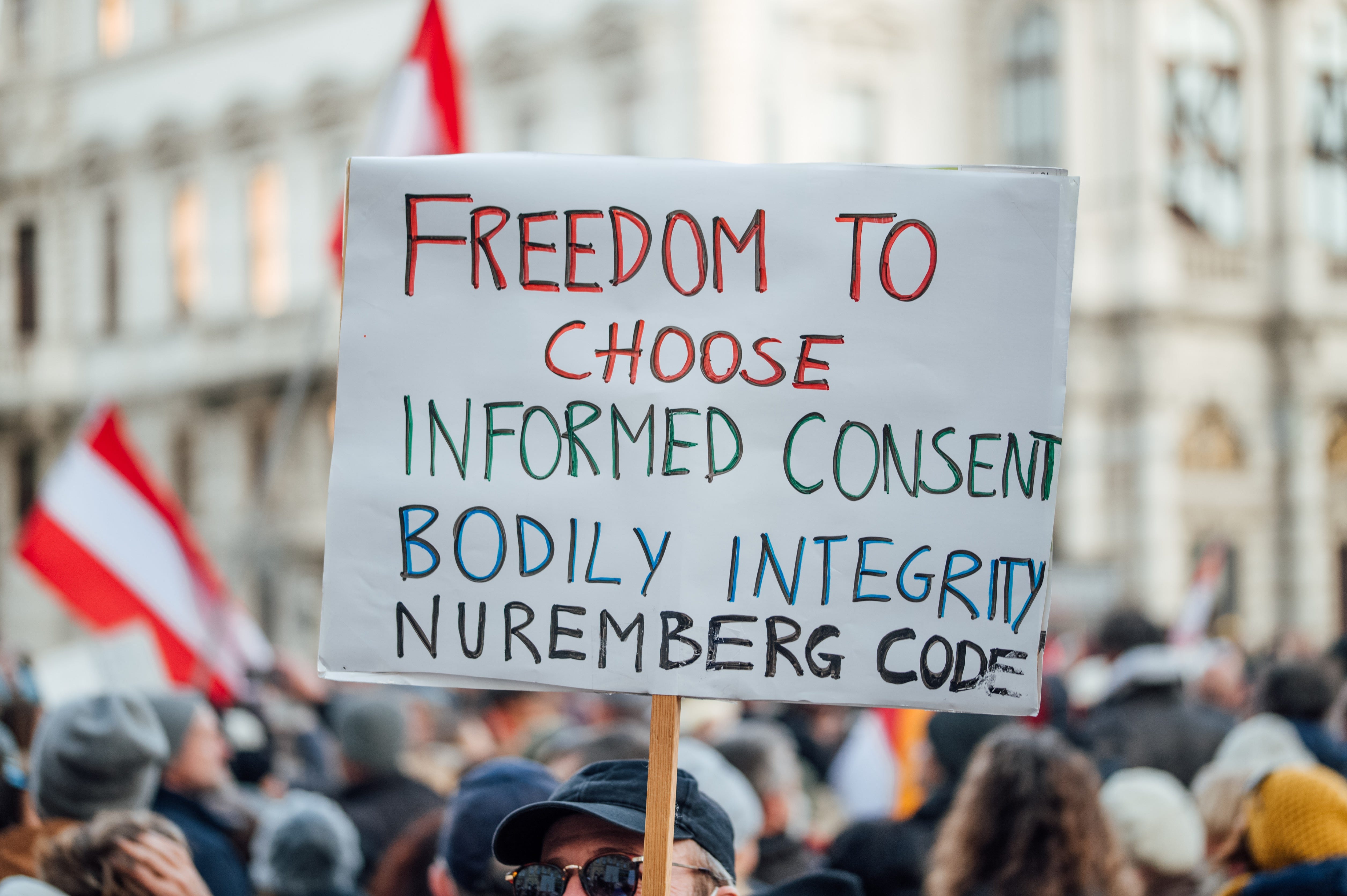
Is Google, by filing this permit request, legally violating the Nuremberg Code? A careful answer cannot pretend that a courtroom has already ruled on that question, and the United States Holocaust Memorial Museum notes that the Code’s legal force has not always been well established, even though it remains a landmark of medical ethics. Modern federal human-subject rules define a human subject as a living individual about whom an investigator obtains information or biospecimens through intervention or interaction, or obtains identifiable private information or biospecimens; those rules also define intervention to include manipulations of a subject’s environment performed for research purposes. A mosquito field test may be regulated primarily under pesticide law rather than human-subject medical experimentation rules, but the ethical question is still blisteringly fair: when a company seeks to manipulate a community environment to generate efficacy data, what level of community consent is morally required before residents are conscripted into the conditions of the experiment?
The consent offenders will insist that no one is being injected, and they will hide behind the narrow technicality that the released insects are described as male mosquitoes, and male mosquitoes do not bite. The program’s architects will recite that Wolbachia is common, that federal agencies have reviewed similar mosquito-control methods, and that the stated mission is to reduce diseases such as West Nile, Dengue, Zika, Chikungunya, and other mosquito-borne threats. The institutional apologists will add that conventional pesticides carry risks of their own, and that targeted biological controls may reduce chemical spraying. But none of those rehearsed assurances answers the central charge: a population cannot be brushed into the margins of an experiment simply because the people running it believe their intentions are noble. The issue is not whether the sales pitch sounds sanitary. The issue is whether the public was truly informed, truly heard, and truly empowered to refuse. That is the daylight citizens are demanding, and it is precisely the daylight these programs seem least eager to face.
The public should not have to choose between panic and passivity. It should not have to choose between swallowing corporate assurances whole or being smeared as anti-science for asking who is liable if sorting fails, who audits release numbers, who monitors ecological effects, who records adverse events, who defines success, who can pause the project, who gets paid, who owns the resulting data, who has access to release maps, and who decided that a federal docket could stand in for a face-to-face democratic process. A people worthy of self-government does not burn laboratories or threaten scientists; it drags every experiment that touches public space into public view and makes power answer in complete sentences.
“The consent issue is bigger than mosquitoes. It is about whether Americans are being trained to accept a new civic arrangement in which bodies, neighborhoods, speech, medical choices, food systems, digital identities, and local environments are managed by distant institutions that speak in benevolent abstractions while ordinary people are handed a comment box and told that participation equals permission. A comment period is a legal mechanism; consent is a moral act. Notice is not the same as permission, and silence from a neighborhood that was never meaningfully informed should never be laundered into approval.”
So the question should be put plainly to Google, the EPA, state officials, county mosquito-control districts, and every local authority whose signature may be required before release. Will affected residents receive direct notice before any deployment? Will release maps be public before the release, not after? Will independent scientists chosen by the community have access to the data? Will local governments hold live hearings at accessible hours? Will there be multilingual notices, school-board briefings, homeowner and renter outreach, and a clear stop rule if unexpected outcomes appear? Will communities have the power to reject participation, or are they expected to serve as scenery in a private-sector field trial dressed up as public health?
This is the line that must not move: no experimental environmental release in populated communities should proceed on paperwork alone. If the science is strong, it can survive questions. If the safety case is solid, it can survive disclosure. If the public-health case is righteous, it can survive a vote. If the program is truly for the people, then the people must not be treated as obstacles to be managed, but as the sovereign authority from whom permission must be sought.
The call now is lawful, local, and relentless. Demand county-level hearings before any release. Demand release maps and permit conditions. Demand independent monitoring, public dashboards, and liability agreements. Demand that state and local approvals be posted where ordinary families will actually see them. Demand that no neighborhood becomes a test site because bureaucrats decided a Federal Register notice was good enough for people too busy working, raising children, caring for elders, and trying to keep the porch light from drawing real mosquitoes at dusk.
The mosquito is small enough to slip through a screen, but the principle is large enough to hold a republic. A free people do not outsource consent. They do not let a company, however rich or credentialed, transform the shared environment first and answer questions later. They stand at the meeting, file the records request, call the county commissioner, organize the block, read the permit, challenge the assumptions, and say with calm force what should never need to be said in a country that still remembers the meaning of liberty: our communities are not your lab bench, our children are not your data points, and consent is not a box you check after the plan is already in motion.
Citizens Rule Book: A Palladium of Liberty (Hardcopies) 🇺🇸
Comments
Nothing yet. Say the first thing.
Sign in to join the conversation.