
by Ru Johnson
Amateurs talk tactics; professionals talk logistics. In the desert, that maxim isn’t theory—it’s the law.
There is a lazy myth in Western military history that the Italian soldier was useless, just looking for an excuse to throw up his hands. In the North African desert, that is complete nonsense. The men of the Regio Esercito were tough, fairly well-trained, and defended their positions with a stubborn, desperate courage.
They didn’t stop in the Egyptian desert because they lost their nerve. They stopped because that was always the plan: consolidate their gains, dig in, and hold the ground they had taken.
Mussolini was the man who ordered a grand invasion of Egypt, and Marshal Rodolfo Graziani was the poor bastard who had to carry it out. The Italian 10th Army advanced roughly 100 kilometres past the Libyan border, shoving the British screen back and flying the Tricolore over Egyptian soil. This was a major victory over a great power.
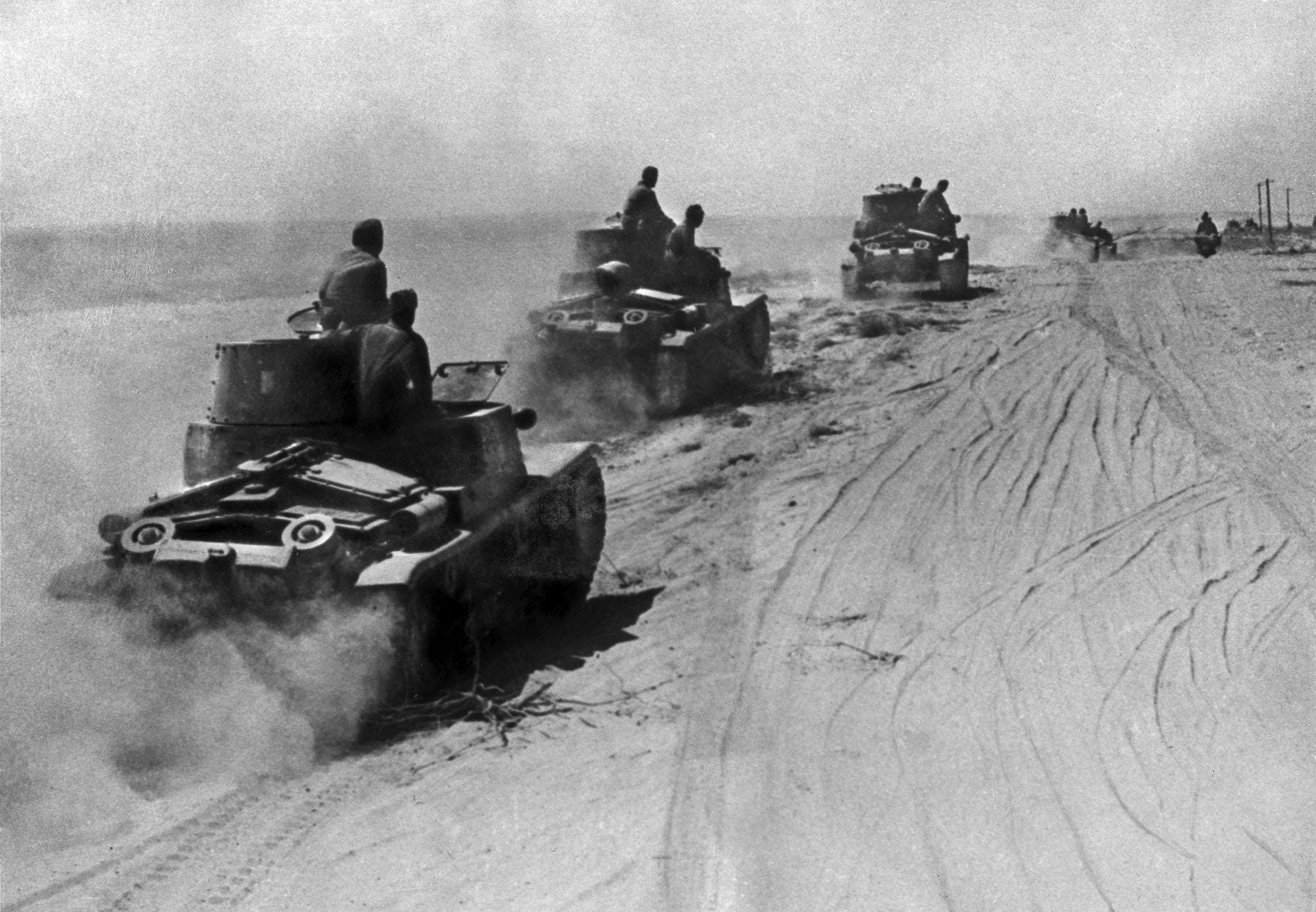
And then, they hit a brick wall, not of British troops, but of logistics.
The overland supply artery fueling the advance was a nightmare and running at full capacity. Most supplies arrived at the major deep-water ports of Tripoli or Benghazi, 1100 km from the frontline. From there, every crate had to be carried east along the single paved coastal road—the Via Balbia—through smaller staging ports like Tobruk and Bardia, before finally being hauled over rough, unpaved dirt tracks into the forward camps around Sidi Barrani. Achieving this was an impressive feat of Italian operational planning, but it wasn’t enough for Mussolini’s lofty goals. At the end of that 1,000-kilometre umbilical cord, the Italian supply system could no longer sustain any advance.
In North Africa, the desert is an absolute tyrant; it is the unbadged combatant that always has a say. North Africa's geography shaped this campaign for all sides. An Army cannot live off the land like in Europe; there are limited wells to drink from, no farms to requisition, no roads to speed along. Every bullet, every tin of ration, every crate of artillery shells, and every single gallon of drinking water had to be hauled overland from those distant coastal ports.
Italy did not have the motor transport fleet to keep an Army moving beyond Sidi Barrani. No matter what Mussolini wanted, real obstacles remained. Soft-skinned lorries chewed through their tyres on the razor-sharp desert limestone; fine sand pulverised engine cylinders; and truck drivers were forced to use half their payload capacity to carry the fuel required for the return trip.
Graziani had advanced as far into Egypt as physically possible. He couldn’t go forward. He couldn’t retreat without admitting total political failure to Rome.
So, he did the only thing he could do: he ordered his men to dig in and wait.
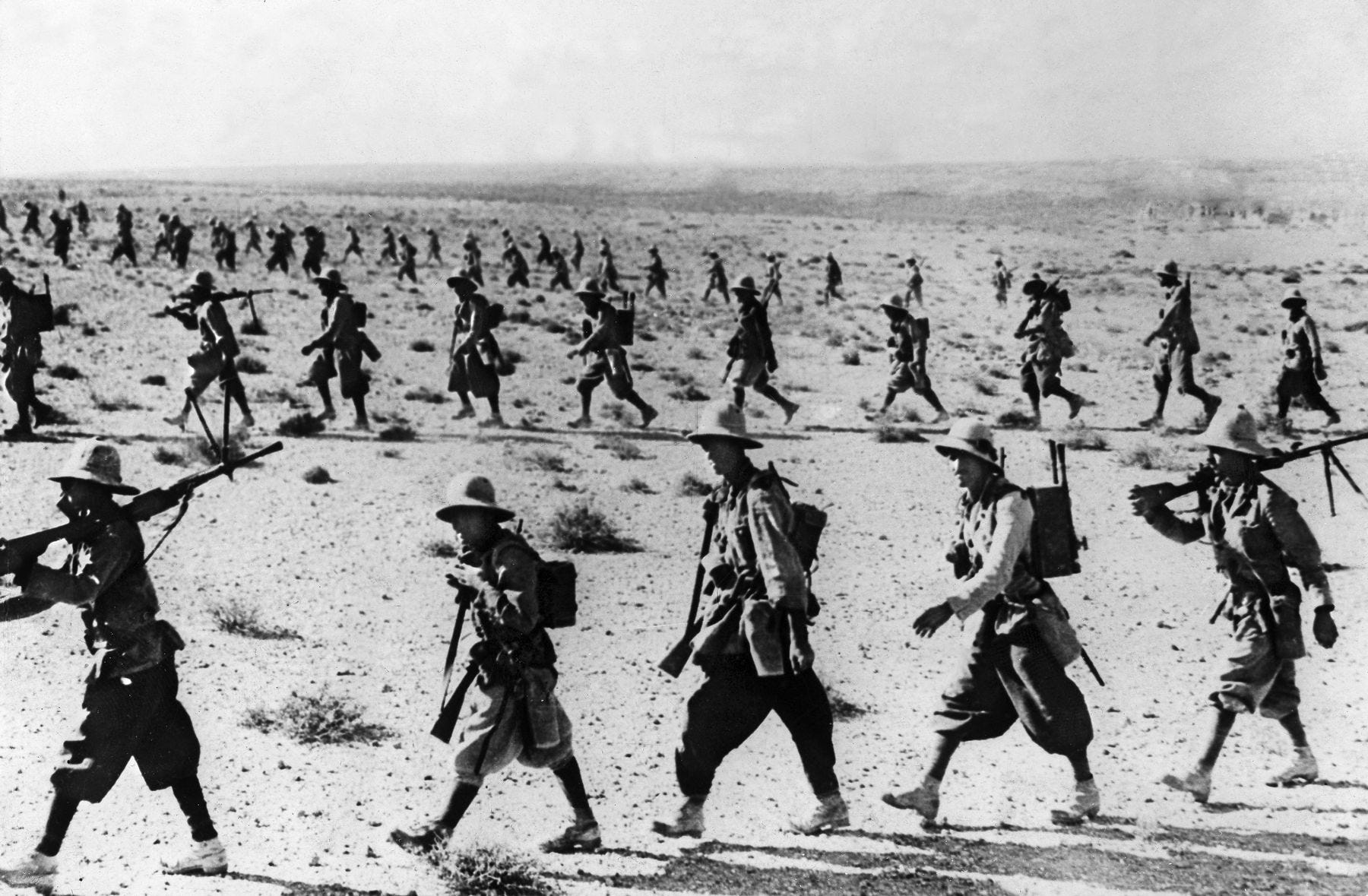
To hold this advanced position, the Italians constructed a network of impressive, fortified camps across the plateau around Sidi Barrani.
These weren’t flimsy tent cities. They were solid installations built and carved directly into the desert rock:
Anti-Tank Ditches & Wire: Hand-dug anti-tank trenches encircled the perimeters, backed by dense coils of concertina wire and thousands of anti-personnel landmines.
Fire Trench Systems: Interlocking networks of machine-gun pits and infantry sangars constructed from dry-stacked stone and sandbags.
Heavy Firepower: Each camp was a fortress bristling with arms—75mm and 105mm field artillery, heavy 47mm anti-tank guns, and banks of Fiat-Revelli heavy machine guns.
The Troops: Inside lay some of the Italian Army’s more capable formations. Camp Nibeiwa, for instance, was held by Gruppo Maletti—an all-arms, motorised force of Italian officers, Libyan colonial infantry, artillery, engineers, and M11/39 tanks under General Pietro Maletti. It was a relatively well-trained formation with recent operational experience.
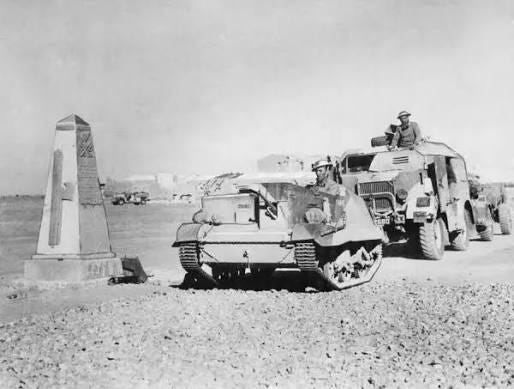
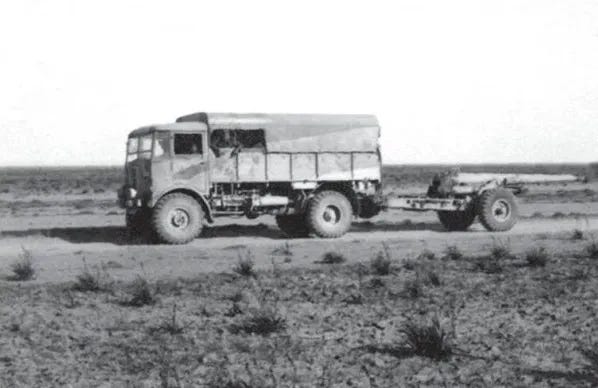
British guns and equipment passing through Sidi Barrani. Italians erected the monument. 29 December 1940
These camps provided a formidable foe to any attackers, but like any defence, they were not invulnerable. Crucially, their design suffered from a fatal flaw born of defensive arrogance and the belief that they had the initiative.
The Italian command laid out these strongpoints in an arc running from the coast down into the desert interior. Anchored on the sea was Maktila, followed by Tummar West and Tummar East, with Nibeiwa sitting to the south, and Rabia and Sofafi further inland.
Crucially, these positions were separated by gaps of 15 to 20 kilometres of open desert. Not massive distances, but far enough to make communication and reinforcement mightily difficult. Importantly, because of these distances, the camps could not provide mutual artillery support. If one fort was attacked, its neighbouring camps were too far away to bring their guns to bear in time for a united defence.
The wide, unmonitored space between Nibeiwa and the Tummars—known as the Enba Gap—left an entire corridor of empty sand wide open. The Italians assumed the inhospitable trackless desert between the camps was its own defence, believing no major force could navigate those empty corridors undetected. So they built a series of formidable steel cages but left the spaces between them completely unguarded.
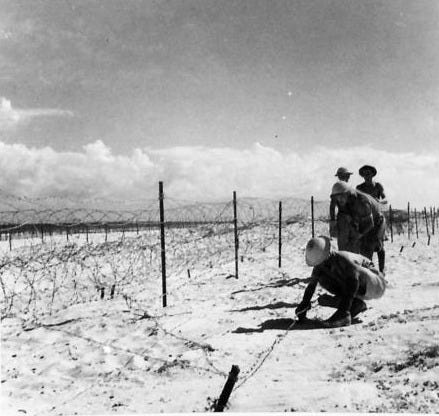
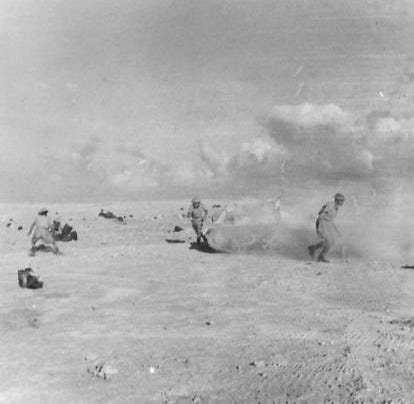
Lieutenant-General Richard O’Connor didn’t try to crash through the front door. He knew the entire operation was a gamble hinged on secrecy, speed and violence:
“I was acutely aware that if the Italians discovered our approach before dawn, their overwhelming superiority in artillery and numbers could pin us in the open desert. My plan depended entirely on hitting Nibeiwa from the rear before they knew a British tank was within twenty miles. It was a raid, not a conquest—speed was our only real armor.”
— General Richard O’Connor
On the night of 8 December 1940, under cover of total darkness and radio silence, the striking arm of Operation Compass—the 4th Indian Infantry Division and the heavy armour of the 7th Royal Tank Regiment (7 RTR)— motored away from their staging areas at Mersa Matruh, 30 kms away from the Italian camps.
Instead of marching head-on, the British column made a long swooping night march to the south, slipped quietly through the unguarded Enba Gap, and looped around to the west of Camp Nibeiwa. They were coming straight from the rear—the one direction the Italians foolishly assumed was entirely safe.
And they knew exactly where to strike. Thanks to repeated RAF reconnaissance, they had identified the single gap in Nibeiwa’s minefield: a northwest entrance left open by the Italians as a crucial supply gateway so their own trucks could move in and out of the camp.
At 07:15 on 9 December, British artillery opened a diversionary bombardment from the east to draw Italian eyes toward the front gate where they would most reasonably expect an attack.
Fifteen minutes later, 48 heavy Matilda II tanks of 7 RTR surged out of the morning haze, driving directly through that unmined northwest gateway into the rear of the camp.
Chaos ensued.
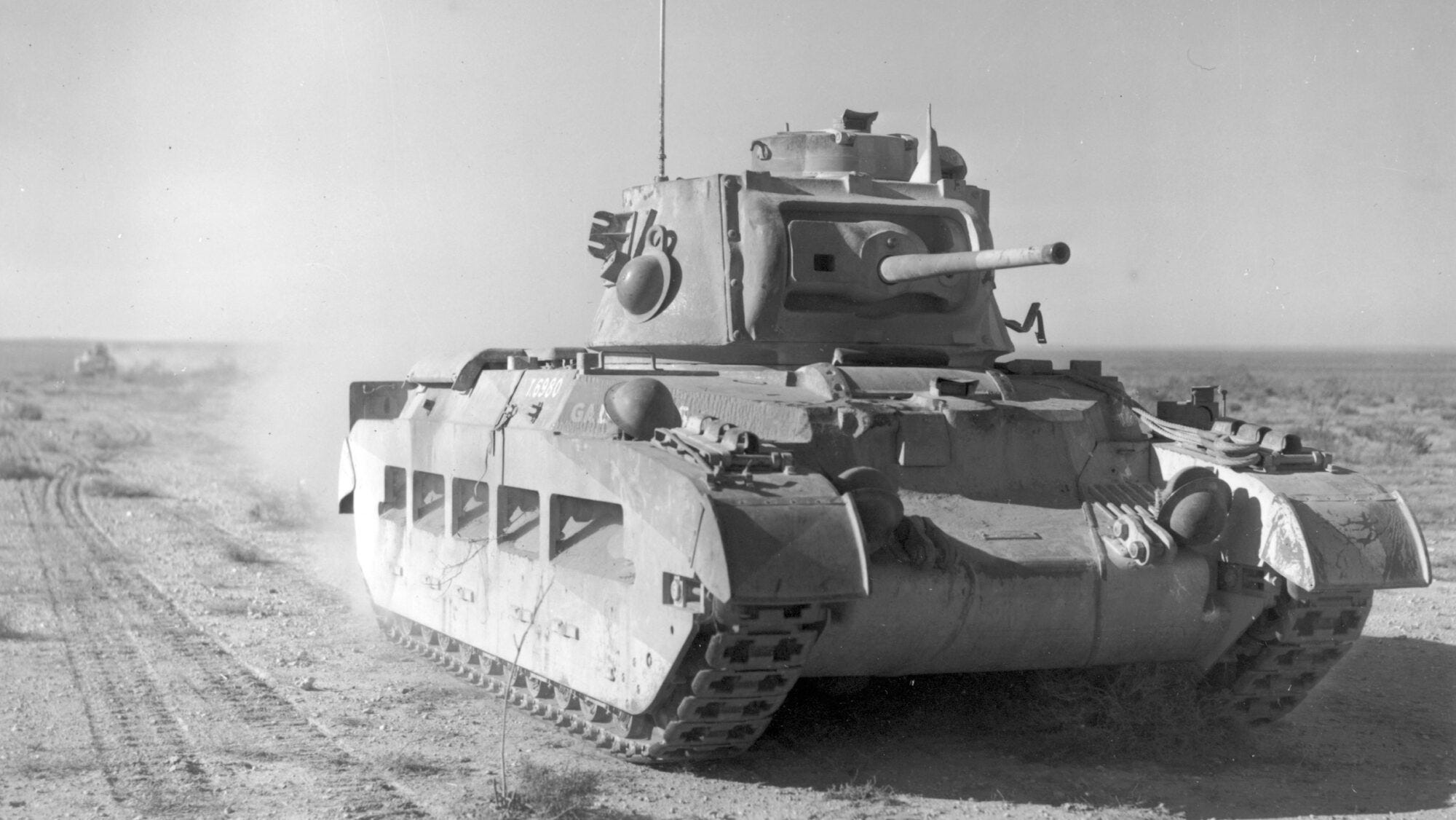
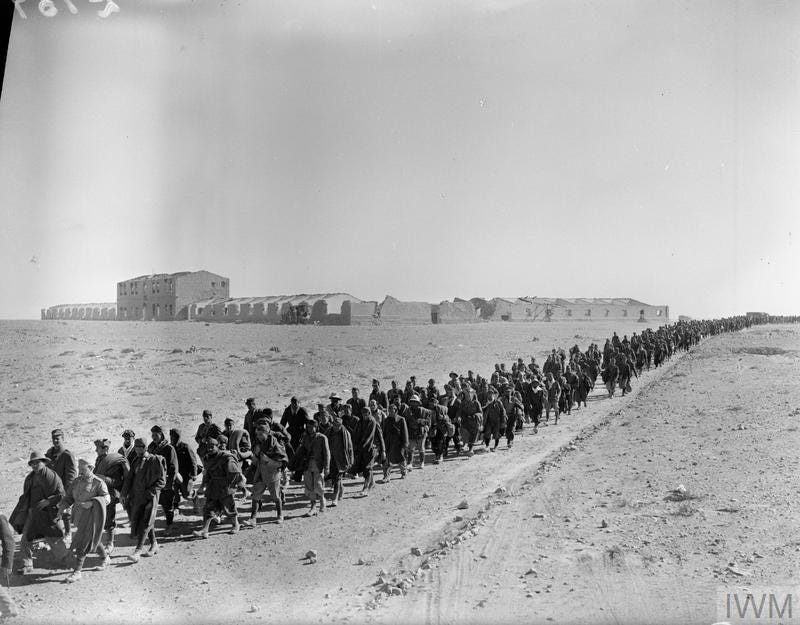
Inside Nibeiwa, the attack started with a thunderclap.
Italian tank crews of Gruppo Maletti were caught napping, despite the artillery warning. Before they could manoeuvre or understand what the hell was happening, the Matildas blew them to hell.
General Pietro Maletti burst out of his command dugout in his pyjamas, holding an automatic rifle to direct the defence. Before he could think, he was cut down by machine-gun fire on the steps of his own bunker.
What followed inside the camp perimeter was brutal, point-blank combat. Italian and Libyan gunners didn’t flee; where would they even go? They gallantly stood by their field guns, wheeling their 47mm anti-tank pieces around to meet the unexpected threat from the rear. They fired at zero elevation and close range as the 25-ton Matildas crushed their barricades, guns and comrades.
Captain Anthony “Peter” Cowie of 7 RTR recalled the terrifying reality of the British tanks inside the perimeter:
“The Matildas moved in at eight miles an hour, ignoring the Italian artillery completely. The Italian gunners fired point-blank, but the 47mm shells simply ricocheted off the 78mm front plate with a metallic ringing sound like heavy hammer-blows. Inside, the crews barely felt the impacts. It was not a battle; it was a mechanical execution.”
— Captain Peter Cowie, 7th Royal Tank Regiment
Behind the armour came the infantry: the Highland troops of the 2nd Battalion, Queen’s Own Cameron Highlanders and the Indian soldiers of the 1/6th Rajputana Rifles. They dismounted from their lorries 700 yards out and charged directly into the disorganised trench networks with fixed bayonets and grim determination.
The official war diary of the 4th Indian Infantry Division captured the fierce combat inside the redoubts:
“The 1/6th Rajputana Rifles entered the trenches at 0745 under heavy small-arms fire. Hand-to-hand fighting ensued in the dugouts where the enemy officers fought to the last with pistols.”
For two hours, hand-to-hand fighting raged through the dugouts. Italian officers fired their sidearms until emptied; artillerymen were killed with hand grenades and bullets while desperately reloading their guns. But isolated, surrounded from the rear, and facing impenetrable armour, the position was doomed.
By 10:40 AM, Nibeiwa camp was silent. 819 Italian and Libyan soldiers lay dead on the hot, bloodied ground. The initial two-hour artillery barrage combined with 7 RTR’s direct fire into the crowded camp tentage caused massive initial casualties. 1,338 men were wounded, with the rest sensibly surrendering after being overrun by the Matildas and infantry. Any remaining garrison troops fled on foot into the open desert towards the two Tummar camps.
British casualties were remarkably light: just 56 men, eight officers and 48 other ranks.
A resounding victory by any metric.
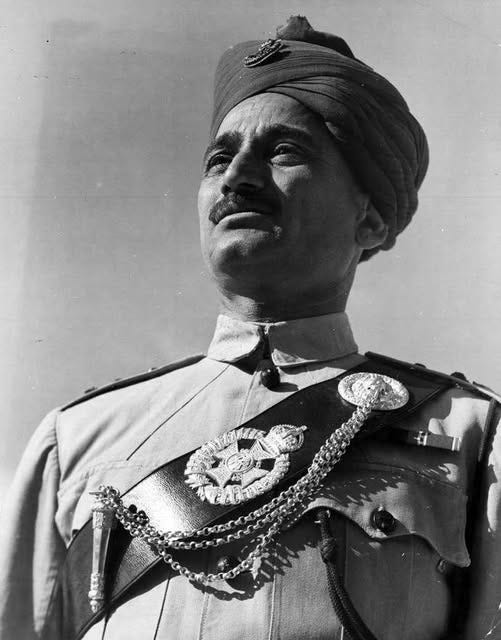
Nibeiwa was the linchpin. It was the destructive proof of concept for O’Connor’s operational plan. The moment it cracked, the entire architecture of Graziani’s “basket” would begin to crumble back into the sand.
In his official dispatch to Benito Mussolini immediately after the fall of the camp, Marshal Graziani admitted his complete shock at the sudden appearance of impenetrable armour, so expertly manoeuvred in his rear:
“The attack on Nibeiwa was carried out by heavy, heavily-armored vehicles against which our 47mm anti-tank guns were entirely powerless. The enemy penetrated our fortified perimeter from the rear through an unmined passage... Our artillerymen died at their guns, but no courage can overcome armor that our shells cannot pierce.”
— Marshal Rodolfo Graziani
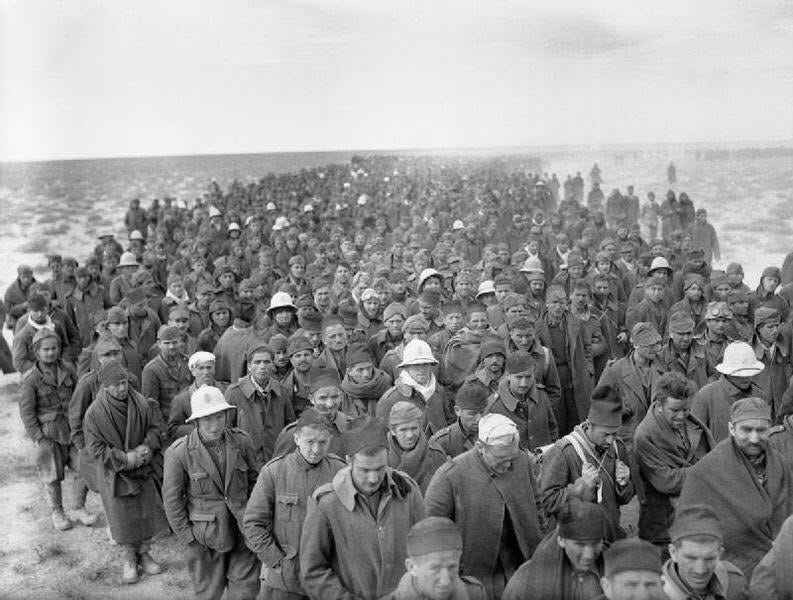
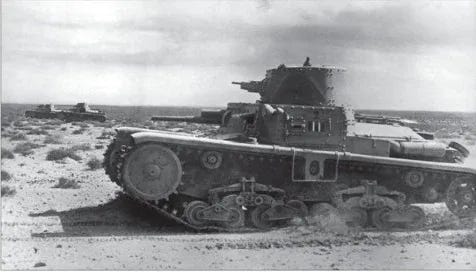
There was no victory lap. There was no time to accurately count prisoners or celebrate properly with bottles of liberated wine. O’Connor knew that if the Italian 10th Army recovered from the initial shock of Nibeiwa, they still could mass their armoured reserves from Sidi Barrani and crush his exposed flanks in the open sand. Momentum was now the only thing that truly mattered.
At 11:00 AM—barely twenty minutes after Nibeiwa surrendered—Brigadier Reginald Savoury ordered the column north toward Tummar West, eight miles away.
The march north was not easy; like the geography, the weather always gets a vote, too. By noon, a blinding sandstorm (khamsin) tore across the plateau, turning churned limestone and fine red dust into a wall of zero visibility. Supply lorries, gun tractors, and heavy tanks crept purposely through the blinding storm, navigators steering by hand-held compass and hope. Rear lights vanished and appeared suddenly, fraying nerves after an already busy morning.
Inside Tummar West, the 2nd Libyan Division under General Vincenzo Pesatori was waiting. Unlike Nibeiwa, the element of surprise was gone; Pesatori’s men had watched black smoke plumes rise from Nibeiwa all morning. They had trained every 75mm field gun, 47mm anti-tank cannon, and heavy Fiat machine gun towards the southern and western perimeters.
At 1:50 PM, through the howling dust storm, the steel hulls of 7 RTR Matildas struck the first elements of the barbed wire.
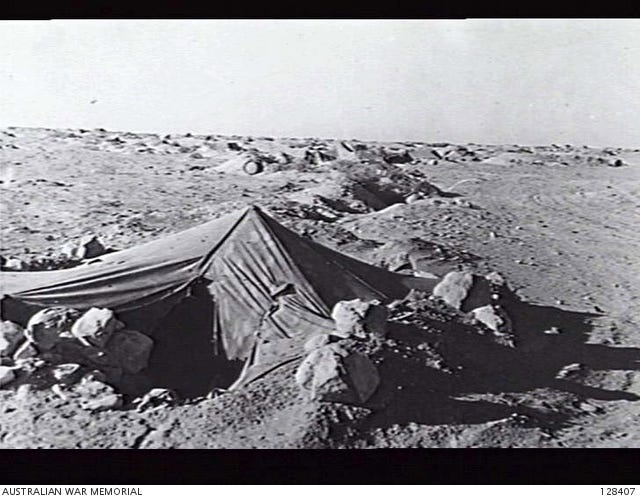
Because of the blinding khamsin, 7 RTR couldn’t scout an unmined gateway as they had at Nibeiwa. Lieutenant-Colonel Jerram, commanding 7 RTR, didn’t hesitate; he didn’t have the luxury. He ordered his Matildas straight through the minefield and over the ineffective anti-tank ditches.
Landmines detonated under heavy tracks, blowing the running gear off several Matildas and leaving them stranded in the kill zone. But the survivors rumbled onwards straight into the camp’s artillery parks.
The Libyan and Italian gunners fought back ferociously. Standing exposed in open firing pits, they fired point-blank into the dust-covered monsters. 75mm shells scored dozens of direct hits on the British armour, but again the 78mm cast steel plate absorbed the impacts, leaving nothing but gouged metal and wistful tank crews.
Behind the tanks, the infantry of the 1st Battalion, Royal Sussex Regiment and the 4/7th Rajput Regiment dismounted from their lorries right on the edge of the minefield, charging into the dust under heavy machine-gun fire.
“The dust was so thick you could hardly breathe, let alone see who you were fighting. You’d drop into a trench and come face-to-face with a section of Italian infantry. It was point-blank submachine gun fire, grenades thrown down bunker stairs, and bayonets.”
— Private, 1st Battalion, Royal Sussex Regiment (Source: Regimental War Diary)
The combat degenerated literally into the fog of war, a brutal, claustrophobic melee inside the dugouts and trench networks. By 4:00 PM, the western half of Tummar West was cleared, and General Pesatori was unceremoniously pulled from his command bunker as a prisoner. Isolated pockets of Italian troops in the eastern trenches held out stubbornly until nightfall, firing into the swirling, choking dust to keep British infantry at bay.
While the Royal Sussex were still fighting hand-to-hand inside Tummar West, O’Connor refused to let the tempo drop.
He detached a squadron of fast Cruiser tanks from the 4th Armoured Brigade along with the 2nd Battalion, 5th Mahratta Light Infantry. He ordered them two miles further east, bypassing Tummar West entirely to envelop Tummar East.
By 4:30 PM, as the sun began to dip below the horizon, 25-pounder guns of the 4th Royal Horse Artillery opened fire on Tummar East, pounding the fortifications with concentrated high explosives. The Cruiser tanks swept successfully around the camp’s northern flanks, cutting the escape roads leading back to Sidi Barrani.
Before the garrison at Tummar East had even traded shots with British infantry, they were encircled, cut off from supply, and blinded in the complete dark.
In less than ten hours, O’Connor’s combined-arms machine had shattered two of Graziani’s primary southern fortresses, trapped a third in a ring of steel, and taken over 6,000 total prisoners. The Italian defenders fought with desperate courage at every redoubt, but they were being systematically isolated and smashed one by one by a superior force they couldn’t see coming and couldn’t stop.
What had started as a limited five-day raid was rapidly turning into the destruction of the Italian 10th Army’s forward positions.
Thanks for reading; if you are currently reading this, a big pat on the back- you make my time worth it!
Enjoying the series?
Hit the like button and leave a comment with whatever you fancy; I will reply!
If you want to support my work, become a Subscriber (25% off yearly above) to get the latest articles straight into your inbox.
You can also drop a tip over at Buy Me a Coffee if you are feeling particularly generous or don’t want to pay a monthly subscription.
Cheers, until next time
Ru
No posts
Comments
Nothing yet. Say the first thing.
Sign in to join the conversation.