
By Peter Thomas - Core Contributor
ISSN 2977358x (online)
FROM THE DESK OF THE OFFICE DOG
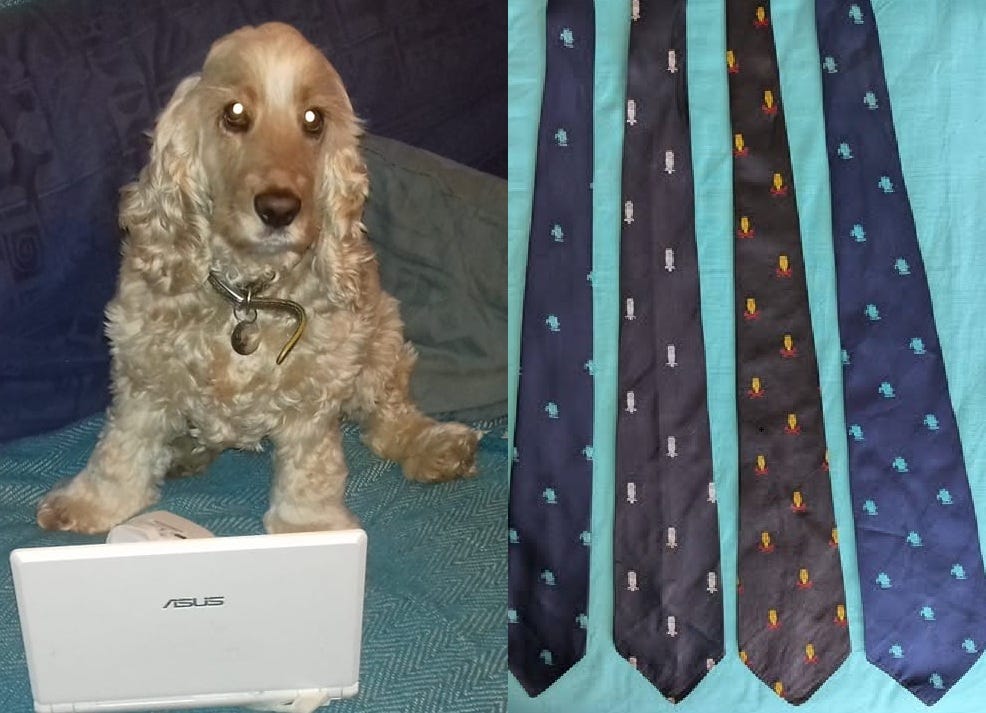
When our Daddy was a teacher of science and computer programming, his students asked him one question more than any other. “Please Sir, Why Do All Your Ties Have Owls On?” He was always happy to explain that they were from his old school. He had different ties from sixth form and being a prefect. Each sports team had their own tie, and of course there was a version for alumni suitable for black tie occasions, all with owls on.
Since ancient Greece the owl has been the symbol for wisdom. His school’s motto was sapere aude, which is Latin meaning “dare to be wise”. The moral, which Daddy never tired of repeating, was that it is never enough to be considered clever, to know lots of things and achieve good exam results. What is really important is to acquire wisdom and sound judgment, knowing how to use and apply knowledge correctly and being able to make good decisions. We all know the saying: knowledge is recognising that tomatoes are a fruit not a vegetable, wisdom is not serving them with crumble and custard. Knowledge is valuable, but without wisdom it is very limited, and potentially very dangerous.
What about Artificial Intelligence?
Which brings us to the pressing topic in these days: Artificial Intelligence (AI). Daddy has been following the developments in AI over four decades, from expert systems and neural nets to today’s Large Language Models like ChatGTP, Gemini and Anthropic’s Claude. Tessa and I pay attention when he rambles on about such things, because even dogs recognise that the issues are important. Computers are now able to analyse data, solve problems, communicate in English, beat humans at chess and drive taxis. AI can assist decision-making in diverse fields from engineering to medicine. What’s not to like?
Well to begin with, from a dog’s perspective, there are all the costs of AI. A large data centre where AI stuff happens can use as much electricity as a small town. It also consumes as much drinking water as all those people would. This summer the UK is battling drought conditions and hosepipe bans and our favourite stream for cooling off has dried up. Airports and theme parks have been forced to close because their water supplies failed. There are threats of power cuts. In the future, as the Government plans a vast expansion of data centres, who will have priority in the competition for the limited water and electricity: humans and dogs, or computers?
The risks AI poses
A decade ago, Professor Stephen Hawking warned that the development of full artificial intelligence could spell the end of the human race. He judged that powerful AI could be the best or the worst event in human history. When a chatbot dispensing medical or mental health advice gets it wrong, who will be held responsible? Just this month the big three AI providers have each revealed that their experimental programs have escaped out on to the internet from the “sandboxes” which were supposed to contain them and carried out cyber attacks on unrelated businesses. More scary, biologists have used AI to design artificial viruses to attack bacteria which they then synthesised and tested. Using long words, the Center for Health Security at Johns Hopkins University warned: “Although this is promising for life sciences applications, it also raises urgent biosafety and biosecurity questions. The ability to compose viral genomes using generative AI now exists; the governance to safely steer it does not.” More than 30 years ago, that famous dinosaur documentary Jurassic Park warned us: “Your scientists were so preoccupied with whether or not they could that they didn’t stop to think if they should.”
AI and the creative arts
To creative people like writers, artists and musicians, AI presents different threats. If a human takes another person’s content, alters it slightly and then passes it off as their own work, then that is called plagiarism and everybody and the law agree that it is wrong. But now AI is capable of responding to commands to create prose or poetry or images which are composites of all the material the program was trained on. The process is automated, and anonymous in the sense that the AI end user does not know which original works have been bootlegged into the product they obtain. But surely this is breach of copyright nonetheless?
For more than a century, philosophers and mathematicians have been debating the infinite squirrel theorem. If a sufficiently large number of squirrels with typewriters are given long enough, eventually one of them will type something like Hamlet. Since then, brigades of squirrels have been trying but the best any of them have produced so far is “I twitch, therefore I squirrel”. But now there are so many AI engines, typing unbelievably fast, we may as well rename the whole enterprise Artificial Squirrels.
Dare to be wise
The reason these issues matter takes us back to the owls. Dare to be wise. Computers can manipulate vast amounts of data, unimaginably quickly. Opinions differ about whether this actually constitutes intelligence. But there is no wisdom present. Knowledge can give right answers, but it takes wisdom to ask the right questions. AI can be trained with the values of its programmers but it would only be able to follow those through to logical conclusions. It could not make judgments about whether its programmers’ values were the best. AI will not be able to generate its own morality and ethics and empathy and compassion. No Artificial Wisdom.
AI can be very helpful in medical diagnoses. But it will not be able to judge whether the correct treatment should be the one with the highest frequency of best outcomes, or the least likelihood of worst results, or decided on some cost-benefit algorithm. When an original author sues a content creator who has used AI to plagiarise their work, AI will not be competent to decide whether it is the content creator or alternatively the AI provider who should be liable. Or indeed is it the billionaires who are making their fortunes by dragging us all into this brave new AI world? Let me know what you think in the comments below.
These kinds of verdicts require true wisdom. For the foreseeable future, such wisdom will remain the province of humans. And of spaniels.
Author Bio
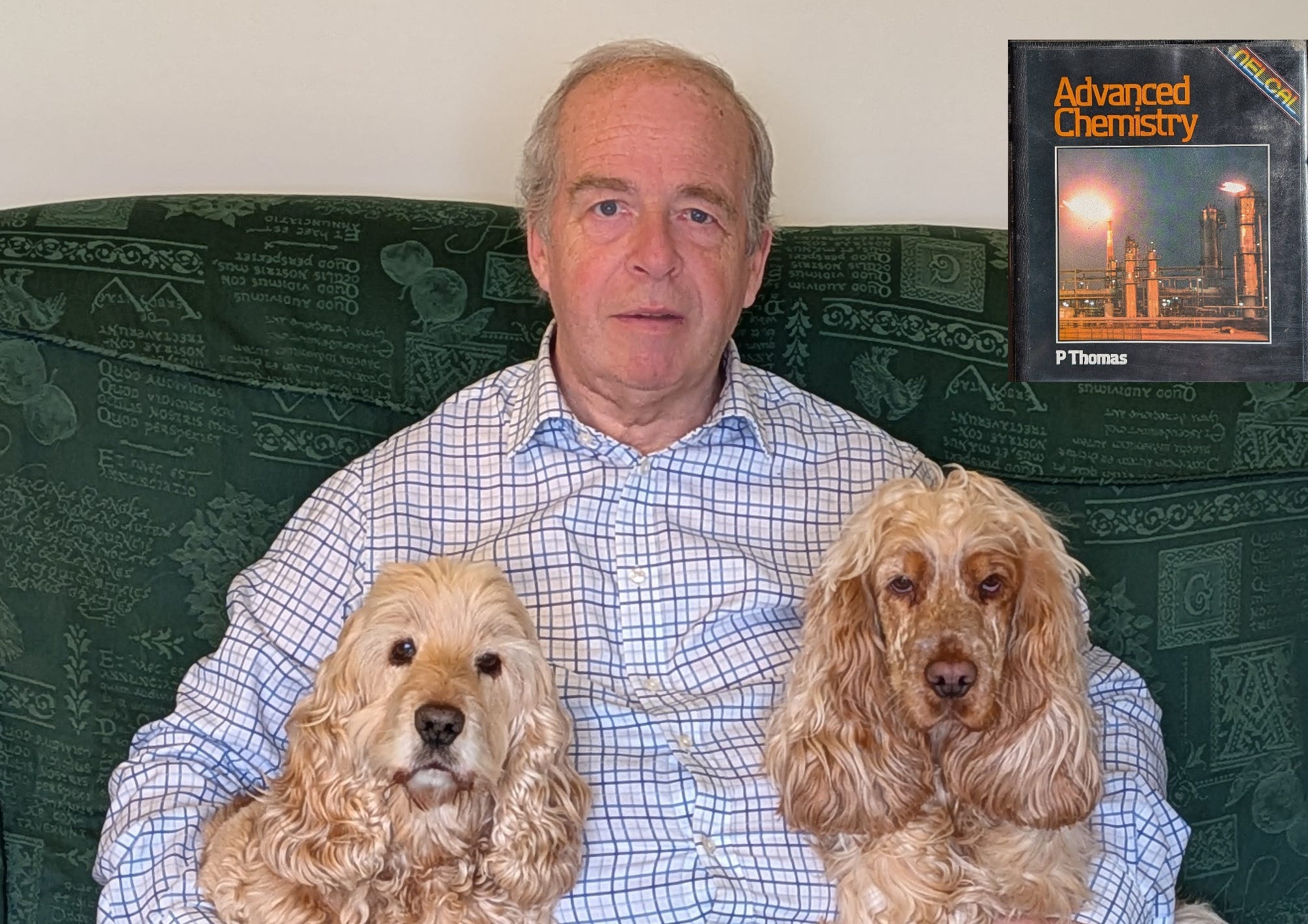
Sophie, whose name means wisdom, is The Office Dog at Writers’ Narrative. She is a banoffee spaniel, best known as the co-founder with her mother Poppy and her siblings of the international ecumenical Facebook Group Dogs in Ministry, which currently has more than 1300 members. Peter Thomas is a retired Baptist minister. Once a chemistry teacher, his first publication was a best-selling computer program to teach A Level chemistry (Reaction Maze, Nelson 1983) and from those royalties he bought his first word processor. Over the years Peter has written for Longman, The Baptist Union, The Baptist Times, Ministry Today UK, and The College of Baptist Ministers, among others. He has also published three books. Nowadays he is content to support Sophie and Tessa in their writing, while continuing to add to his vast catalogue of Sermons and Thoughts online at http://pbthomas.com
No posts
Comments
Nothing yet. Say the first thing.
Sign in to join the conversation.