
My dog died around the end of January. My first dog, Tally, a black tri Australian Shepherd with the biggest, brownest eyes you’ve ever seen and breath like low tide. You probably think you have or had the best looking dog in the world, but I’ll ask you to believe, at least for a moment, that she was the prettiest dog the world has ever seen. You’ve seen some beautiful dogs, I’m sure, but you have to understand that Tally was exceptional. I mentioned the eyes, but only mentioned them. Think of eyes like a harbor seal’s, that big and that dark, eyes that could look so gentle and sincere you’d believe she loved you more than anything as long as they were turned on you. And she would turn them on you, because unlike most dogs, Tally very much liked maintaining eye contact. Believe, if you will, that she had the softest little ears you can imagine, and the most beautiful round Spaniel-like slope to her head, and the most elegant rabbity paws. Believe, because it’s true, that because she had no tail, she wiggled her hips better than Shakira ever could, and that despite that awful breath of hers the rest of her had the most wonderful, earthy smell unlike any other dog in the world. You would believe it, if you met her, when she flicked back her ears at you like a girl tossing her hair, and stamped those little paws on the ground like she couldn’t bear sitting still instead of running over to you, and wriggled, and flopped on her back to show you her belly. But of course you can’t meet her now, and more’s the pity, so you’ll just have to believe me for a little while. Believe all of that, and I can begin to tell you about her properly.
You’ll notice that I said Tally was the prettiest dog, but I never said she was the best dog. That’s because she wasn’t. She wasn’t even a very good dog. Part of that’s on me, and not training her properly, and on all of us for spoiling her a little, but Tally remains the only dog I’ve ever met who was truly and fundamentally selfish. She was very hard not to spoil, to be as fair to us I can. You might’ve struggled not to spoil her yourself.
The point is, I think a lot of us have this idea that we love dogs because they’re good. Because they’re brave, and selfless, and virtuous in their simple animal way that teaches us to be better people. When we talk about lessons we learn from dogs, it always seems to be stuff along those lines. And I guess that’s true for some dogs, even most dogs, but not for mine. My dog was a bad dog, and the best dog, and she taught me things that only a bad dog could.
I was thirteen when I got her, and I had just moved from a townhouse to a real house with a yard, and it felt like my whole life was changing.
She liked my dad best (she was his first dog, too), or whoever was touching her at the moment. She was how I learned to give, if I do say so myself, some of the best bum scratches a dog can get (though not the best, as that solidly goes to my mom). Her first priority in life was pleasure-seeking, voluptuary that she was, and convincing the rest of the world that the path to their happiness was ensuring her own. She refused to sleep on a dog bed, any dog bed, but would sleep on a rug or a folded-up comforter.
Her intelligence had an inverse relationship with her virtue, and so she was never more clever than when she was misbehaving. She was stubborn, and shrewd, and tough as nails, but she was a coward when it counted. When coyotes showed up in the night, in the woods beyond our fence, and Sebastian (my second dog, with the heart of a lion and the anxiety of a Chihuahua) went after them in a great baying blur of red and white fur, and my dad grabbed a big flashlight and followed him, Tally ran back to the house and barked in half-hearted encouragement. If ever there had been a burglar in our house, she would have either run or rolled over, and we all knew it.
She caught Lyme disease twice, and this is when I get to tell you about one of her genuine and enduring virtues: as naughty as she could be, as aggressively as she had played as a puppy, and as much as she bullied Sebastian when he was a puppy (stealing treats from right under his little nose, for one thing), she’d never dream of hurting anybody. When she was stiff and exhausted and in so much pain she’d yelp—and remember, she was tough, and she’d always shaken off pain if she processed it at all—she never snapped at us, never even growled. A lot of dogs will at least mouth you as a warning should you touch them when they’re in pain, and I don’t blame them, but she never would. Maybe she understood that we meant well. Maybe the thought of threatening one of us was simply that alien to her. Maybe it’s just that, for all her flaws, there was no anger in her, and there was a great deal of love.
She was a pretty little princess, and she was an unrepentant goblin. While she was teething, she developed a taste for literature and actually ate part of my homework. I remember her diving for a flattened, dried-up frog on the side of the road when she was a puppy. She ate rabbit and chicken and cat poop, and her favorite real treats were malodorous bundles of dried fish skins. Once, over the course of a week or so, she had gas so hideous, so very nearly lethal, that we started to fear for her. That was until my dad discovered her munching on a decaying, half-eaten chicken corpse in the woods out back. While I was away for my freshman year at college, and the door to my room was left open, she peed on my bed, and not once. She had enough herding instinct to terrorize the chickens, and a pair of wild ducklings I rescued, and not quite enough to ever be all that interested in actually helping us with them.
She was sweeter than you can imagine, and she only ever showed her teeth in a submissive little grin, and she liked to walk past you and lick your leg, or your elbow if you were sitting, before you could tell her not to. She liked to be held and cuddled in ways that most dogs—at least, most dogs that aren’t specifically bred to be held and cuddled—can’t stand for more than ten seconds. She liked scratches under her back legs, and kisses on the dome of her head, and head massages with the heel of my hand on the base of her snout. Anything, really, that made her feel loved.
When she started going deaf, we didn’t notice, because she never really listened to us in the first place. We did notice her getting stiff, and one of her back legs—that, once, could propel her from the floor to your face in an eyeblink—growing weak and trembly. We noticed her eyesight getting a little worse, and we noticed her mind starting to go. And then—well, you remember what I said about how tough she was. So it took a while. But my mother went to the vet to see about doing something for Tally’s stiffness, and was given some pain medication for her that she hated taking, and it was only once she was on that medication that it became clear just how much pain she had been in, and for how long.
I don’t believe in letting dogs suffer. They can’t understand why they’re suffering, and they can’t understand enduring intensive medicines and treatments and visits to the vet that will only drag out the ends of their lives, and nothing more, for the sake of being alive. A person can understand all of that, but a dog can’t. A dog only understands that it’s suffering, and how much. I’ve seen a lot of people force dogs to live on and suffer past the point when they should have died naturally, and at a certain point it stops being about the dog and starts being about the person who can’t let go. Part of loving dogs is fulfilling your duties to them when you can: a good life, and a peaceful death. That is what you owe them, for all the joy and peace and comfort they give you. When the time comes, you have to see them suffer, and realize that you can only barely take the edge off their suffering, and love them enough to suffer instead of them.
My mom called me to tell me it was time, and I agreed, and when my husband found out he left work early to come home and be with me, and he brought me a pint of ice cream and held me while I cried. She was a good age for a dog her size to die. She was thirteen. I had just moved from a house to an apartment with my incredible new husband, and felt like my whole life was changing, and she was thirteen. I searched for poetry in that and I found it. It’s a good age for a girl to believe all her dreams are coming true, and stroke little velvet ears and marvel at something so small, so fierce and keen and joyful, so thoroughly alive. It’s a good age to stroke those same velvet ears and marvel at something so frail, so stiff and slow and tired, so obviously at the end of her life. I searched for poetry in it because I imagined it would change something, mend something, make it a beautiful tragedy, make it a symbol or a metaphor instead of a dead dog who would be ash in a box.
So this is what I learned from Tally, from my bad dog:
I learned that all the poetry in the world won’t make it beautiful. All the symbols and metaphors won’t keep it from being real. You can’t express your way out of feeling; you can’t write out the mourning of a thirteen-year-old girl for her thirteen-year-old puppy and expect it to leave you and go into the words. You can’t ever say, or write, or cry out quite how much you love her. There’s no cheat, no escape, just the plain old facts that you always knew: it was always going to be too soon, and it was always going to hurt this much.
I learned that bad dogs make for good stories, because a bad dog is an interesting dog, and that’s got to be as good as a hero, most days. Most dogs never even get the chance to be heroes, so it never really mattered that she never would have been one. I learned some of the best places and ways to pet a dog, and to keep books out of range of a teething puppy, and that sometimes you should quit looking for toys that your dog can’t destroy, because the destruction is part of the fun for her. I learned the most obnoxious, jump-in-your-face dog in the world can have a soft spot for little kids and somehow understand that they’re much too small and delicate to jump at, and that she will crawl to them on her belly to make sure they know they don’t have to be even a little scared of her.
I learned again what I already knew, what everyone has to learn after their first dog dies: that someday you’re going to get another dog, knowing it will die in some cruel brevity and leave you heartbroken and wondering at the unfairness of it all, and you will regret nothing. You will look into innocent young eyes knowing you will see them grow cloudy and confused, and you will choose to bring inevitable loss into your life, and you will know that to feel that loss is a gift. It’s only the ordinary, everyday love you have for your dog, and it remains.
I learned that we don’t love dogs because they’re good. We love dogs because they give us no other choice, because they see no choice in loving us. We love dogs with a simple, helpless, involuntary love, because even a bad dog like mine was good in her own way. I love Tally because when I went upstairs to say goodbye to her she licked my fingers knowing I don’t like to be licked (and probably knowing, somewhere in the back of her small and fading mind, that right then she could get away with anything she wanted) and leaned her head into my hand when I scratched it. And because, tired as she was, as only an animal coming to the end of its life can be, she stood up, turned her back on me, and lay down, and I could believe for a moment it was because she knew I would never stop saying goodbye unless she herself said it. I love her more than thirteen years could ever hold.
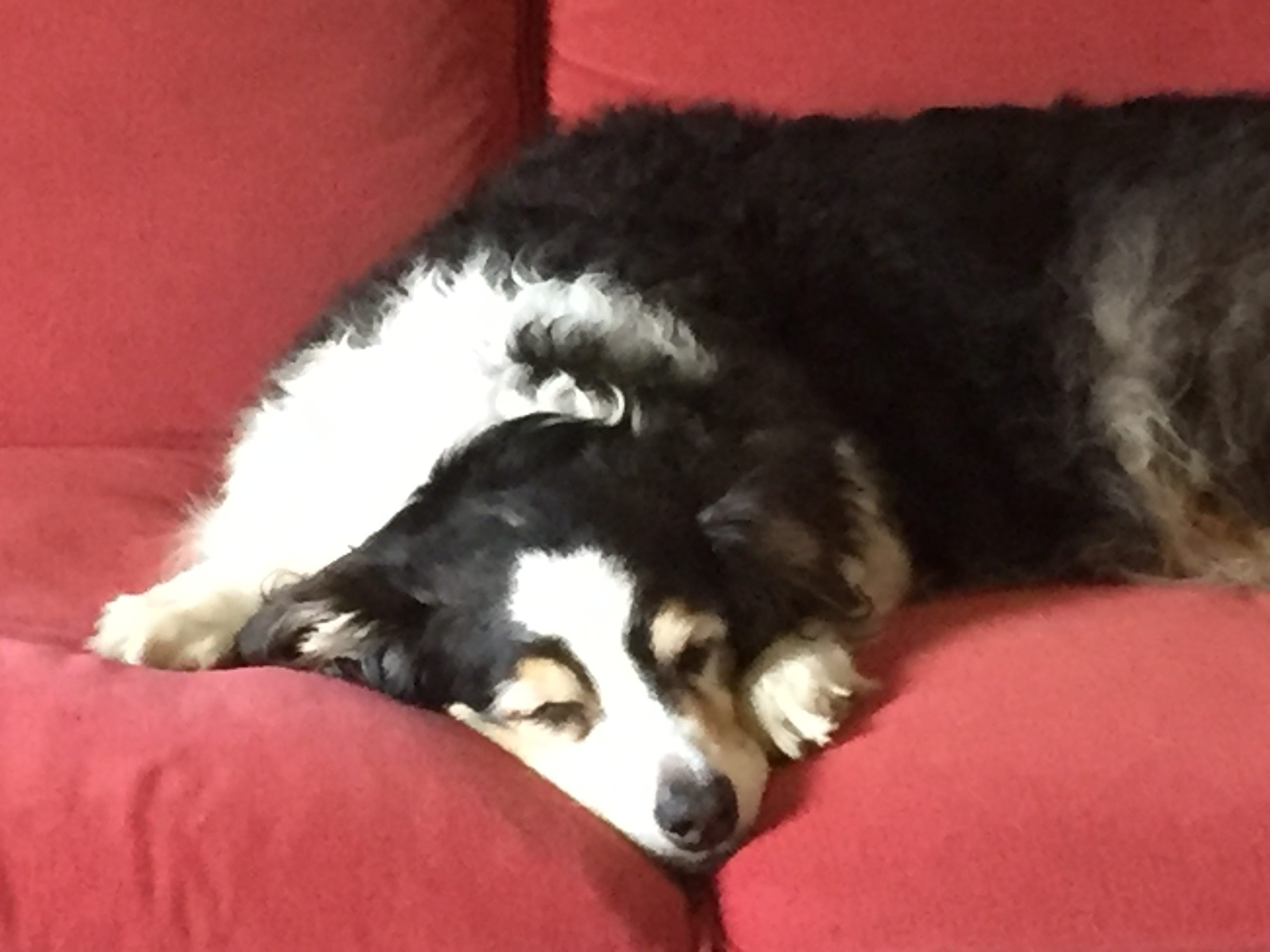
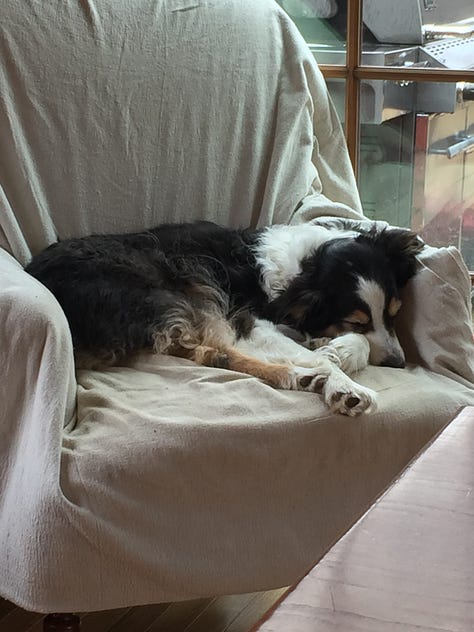
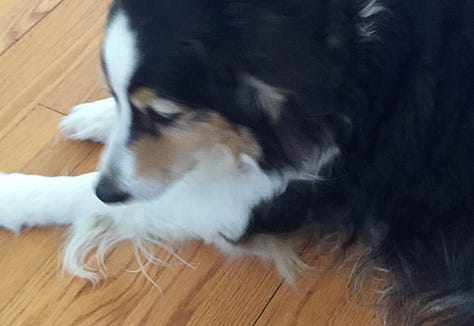
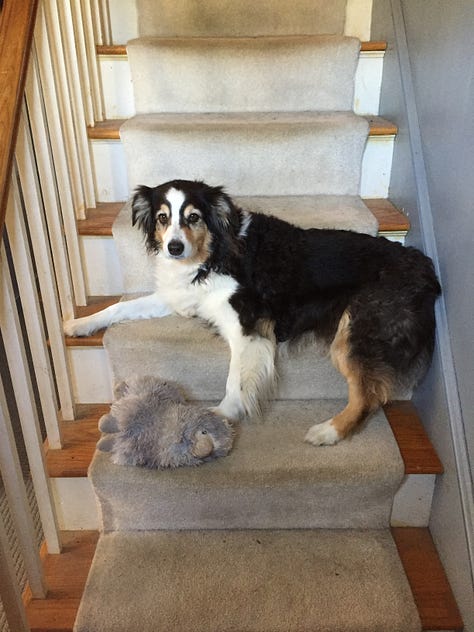


I debated for a while whether I ever wanted to publish this. I like my privacy in these matters, and I worried about the idea of turning my dog’s death and my own grief into content. So I put it on ice for a while, long enough not to do this when the wound was fresh. But the fact of the matter is, I think Tally would like this. She always was an attention hog. I think she’d like to be publicly memorialized, and she wouldn’t mind at all being called bad, as long as I also told you how pretty she was.
Give your dog a scratch for me, please.
Comments
Nothing yet. Say the first thing.
Sign in to join the conversation.