
Welcome to the latest edition of Woy Magazine’s biweekly newsletter, providing you with must-know news and commentary on Haiti and our Diaspora.
We can’t do this work without you. We have introduced a paid subscription option for our newsletter. Consider switching your free subscription to a paid one to support our work! Click the button below.
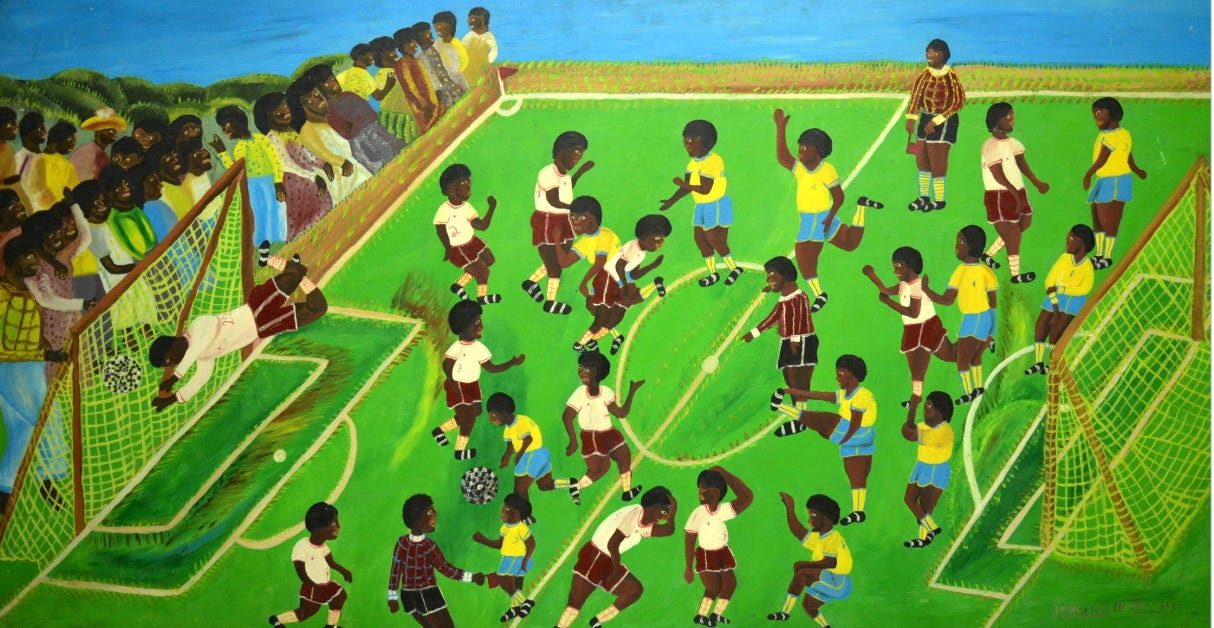
Text within this block will maintain its original spacing when published
Tout moun se moun
Every person is a person
CHAY LA | Main Story
A day after Haiti’s valiant effort against Morocco and its exit from the World Cup stage, the US Supreme Court published its ruling, clearing the way for the Trump administration to terminate Temporary Protected Status for 350,000 Haitians and 6,000 Syrians. The high court’s decision hands the Secretary of Homeland Security absolute authority to revoke TPS, effectively eliminating any judicial oversight.
The litigation centered on two core arguments: that the Trump administration targeted these protections out of racial bias, and that it failed to follow TPS protocol, which requires a review of country conditions before renewal decisions are made. The Supreme Court dismissed the racial animus argument, citing insufficient evidence, and voted to allow the administration to rescind TPS for any group without judicial interference.
The ruling has significantly limited the capacity of immigration advocates and district judges to protect Haitians. District judges do retain the authority to rule on whether the Trump administration acted unconstitutionally in rescinding TPS, giving the plaintiffs' legal team a limited but real opportunity to bring a new case with stronger evidence of racial animus. The fight is not over, although it has experienced a major blow, and many people will lose the ability to work and possibly face deportation in the process. In the meantime, District Judge Reyes is still expected to issue a ruling on this TPS case, and until that happens, Haitians under TPS remain technically protected and permitted to work.
An end to the TPS designation is expected to trigger wide-ranging consequences for families who have planted roots across the country. Haitian organizers and lawyers have been holding webinars, meeting in person, and communicating on social media to provide the Haitian public with reliable information. Organizers held a National TPS Rally on July 9 with activations in Georgia, Pennsylvania, New York, Massachusetts, Washington DC, Florida, California, and Connecticut. Organizations active in Haiti are coordinating to provide information and resources to people who return to Haiti. For example, Ayiti Community Trust has developed a returnee guide to help people navigate being back in Haiti. Lakou Tanama has been providing emotional support to Haitians in the diaspora since late 2025 through culturally relevant healing circles.
In a press release, Haitian Women for Haitian Refugees declared the following,
We know this day is a very challenging one, but we have been preparing for this possibility, and we will continue to fight. People power and community power are the only things that will protect us. We must mobilize to protect each other and apply pressure for our communities to remain here with the rights and protections they deserve.
We will use every tool at our disposal to keep our people here. We will create true sanctuaries in practice, not just in theory, to protect us from harm. Our power lies in our collective strength. Source: Haitian Women for Haitian Refugees
Many business sectors where thousands of Haitians work will be interrupted by a sudden loss of workers. This includes nursing homes and healthcare facilities, manufacturing plants, and municipalities — particularly communities like Springfield, Ohio, where Haitian immigrants now account for one in four residents. Without TPS status, Haitians will be pushed to work under the table, exposing them to exploitation in the workplace.
The Trump administration has already dismantled TPS protections for 10 nations, a move impacting upward of one million people. Designations remain for only four countries — Lebanon, El Salvador, Sudan, and Ukraine — all of which are scheduled to elapse later this year.
A vast majority of TPS recipients have been living in the United States for decades. Should the Trump administration move forward as planned, all beneficiaries would lose legal residency and work authorization, directly exposing them to the Trump administration’s expanded federal deportation enforcement targeting undocumented immigrants.
POLITIK POLEMIK
Over the past several weeks, Prime Minister Fils Aimé, the provisional electoral council (CEP), and political parties had been in gridlock over the planning and rollout of the promised national elections. During the month of May, Fils Aimé changed the electoral decree and established a director role on top of the CEP to report directly to him. This power-grabbing move was initially met with protests from the CEP members and political parties, because, under the Haitian constitution, the CEP is supposed to remain independent. Fils Aimé ultimately succeeded in installing the new director general. Following this move, the Prime Minister negotiated with the CEP and some political parties to revise certain articles of the existing electoral decree. Instead of publishing a new electoral decree in the official newspaper, le Moniteur, only the revised articles were made public, a choice that many have criticized for its deviation from the norm. Among the changes, the revised articles extended the registration period for political parties. Voter registration was also announced to start Monday, July 20, for 90 days, set to take place around the country except in the West Department, where gangs hold most control.
KILTIRÈL
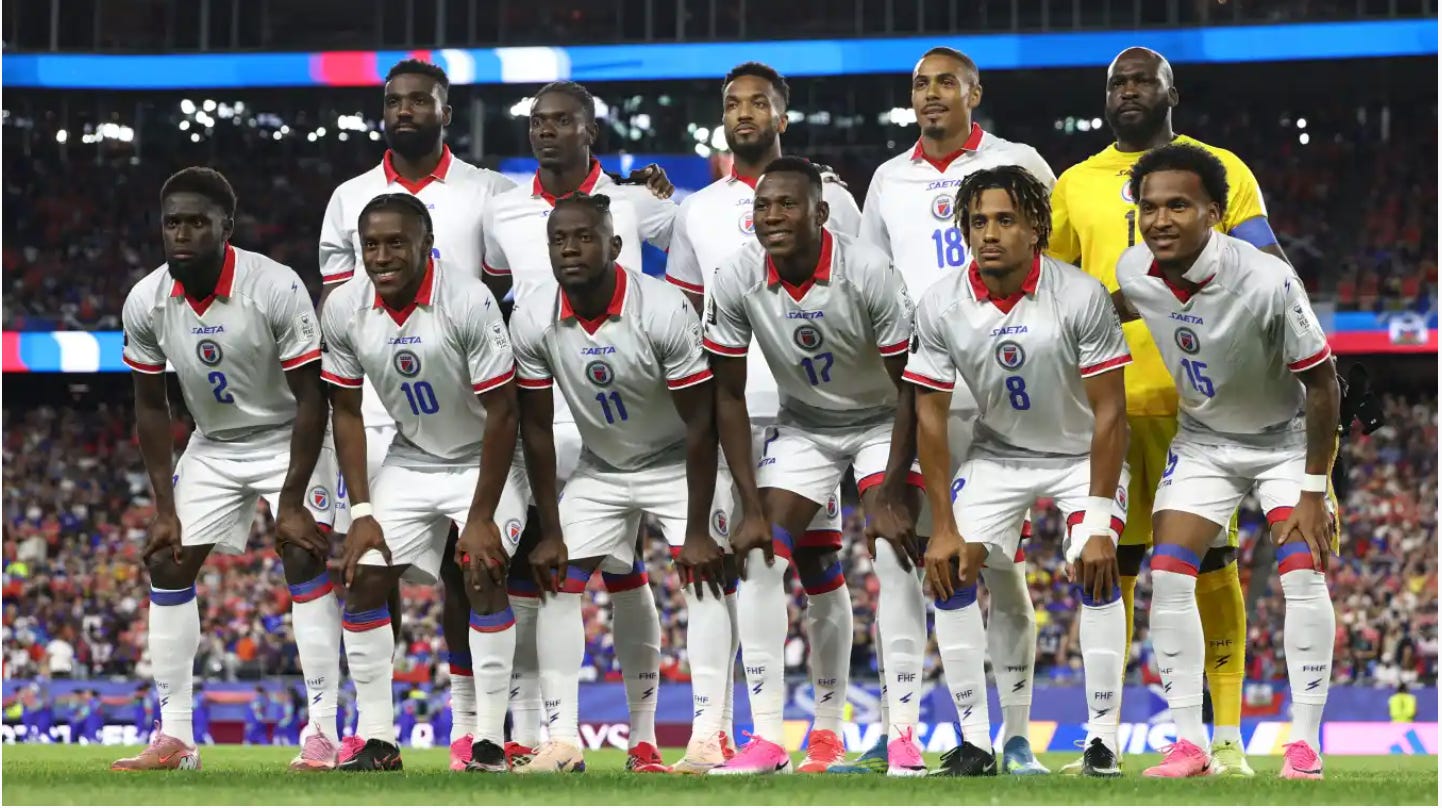
Haiti’s historic participation in the 2026 World Cup has brought Haitians together in a remarkable way. It has driven us to refresh our collective memory on Haiti and football and declare on the world’s stage what it means to be Haitian. As an older nation compared to others from the global south, we might not grasp the important role spaces like the World Cup played in nation-building for countries that gained their independence in the 20th century. But Haiti’s return to the World Cup after 52 years and the opportunity to rally around a group of Haitian men, many of whom were not born in Haiti, has been an exercise in Haitian idea formation for many. A handful of Haiti’s football players have returned to Haiti, where the public has warmly expressed their love, joy, and gratitude for representing us on football’s biggest stage.
As with all the international institutions led by politicians and elites, we have engaged with the World Cup knowing full well that it is a tool for propaganda and corruption. And yet, we have come away feeling heartened and proud. Author Mawon Anndi Èzli examines these conflicting dynamics in an article published in collaboration with Africa Is A Country, titled "Dancing in the Shadows of Empire." In the piece, Mawon interrogates the current political landscape:
“Currently, the Donald Trump administration is pursuing a racist policy in which Haitians are being hunted, humiliated, and imprisoned. Given the evident collusion between the interests of FIFA and Donald Trump on one hand, and the inhumane treatment of Haitians in the United States on the other, it is more urgent than ever to pay attention to critiques of the World Cup. How can one celebrate in this imperialist, colonial, and racist context? We qualified without a national championship, without infrastructure, in a country ruled by armed groups and facing an alarming socio-economic crisis. But we will be there, in the United States of America, to defend the Haitian bicolore.”
To read the full article, click here.
Woy’s coverage of the 2026 World Cup also features two articles by Ian Rolf. In“Defying Expectations Is a Haitian Specialty”, Rolf reflects on Haiti’s historic World Cup run, diving into the team’s politics and accomplishments on the field.
Rolf also took to the pen to offer his take on the complicated relationship Haitians share with soccer, examining how a deep love for the game persists amid severe social, economic, and political collapse in “How Do You Enjoy the Beautiful Game When You Can’t Have Nice Things?”
Read both full pieces now on our website.
DEGI | Recommendations before you go
No posts
Comments
Nothing yet. Say the first thing.
Sign in to join the conversation.