
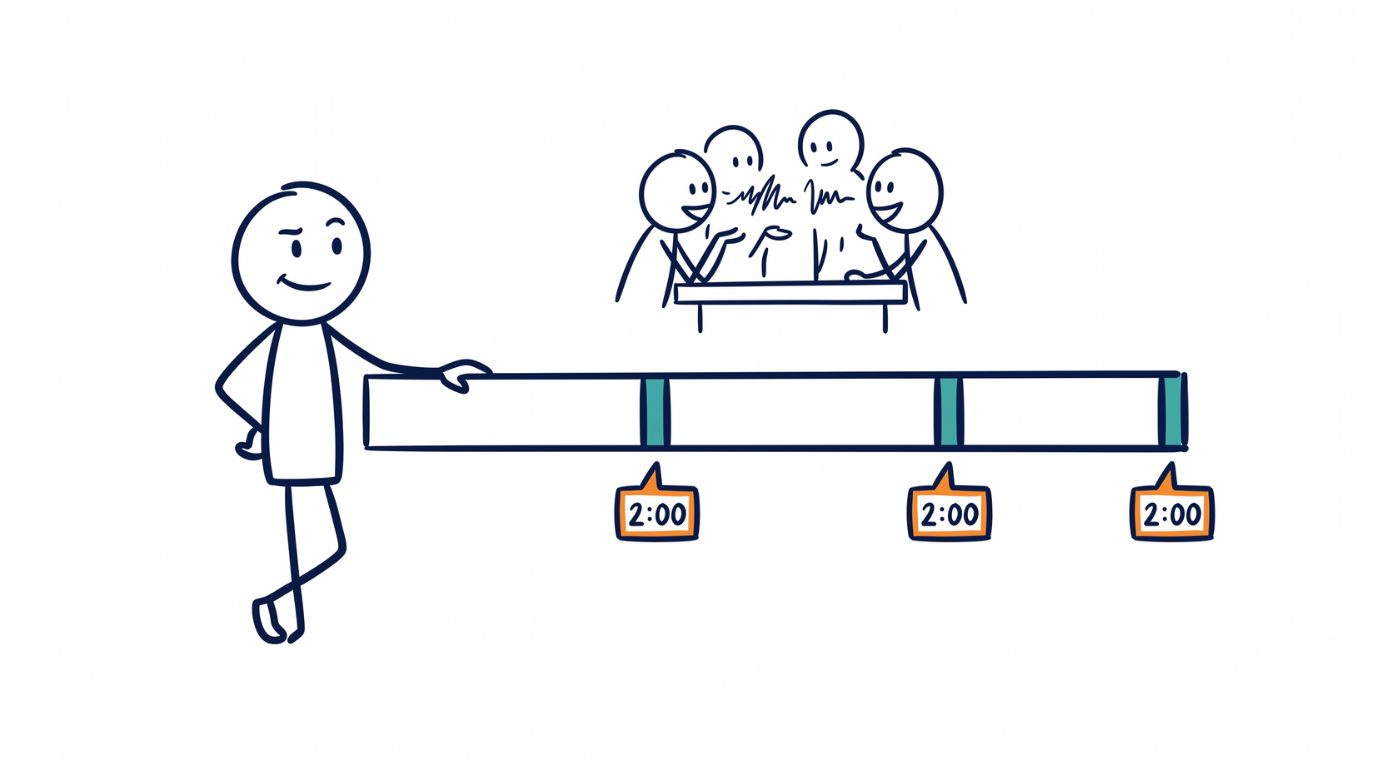
You designed a 20-minute activity. It ran for 35.
Your workshop is in full flow. The room is buzzing. People are deep in conversation. The discussion is passionate.
And you make the decision every facilitator has made at least once: you let it run.
Fifteen minutes later, your agenda is in trouble. You shave 5 minutes off the next activity. The debrief after that gets compressed into a rushed “any key takeaways?”
The closing, the part where participants are supposed to leave with specific commitments, becomes “sorry, we ran out of time, but let’s all keep this momentum going.”
Nobody keeps the momentum going.
You know exactly when it went wrong. You can trace it back to that moment at minute 20 when you decided to give the group “just five more minutes.”
Five became ten. Ten became fifteen. And by the time you looked up, the rest of your session was a compression exercise.
What gets lost in overruns is rarely just time. It’s the reflection and commitment that should follow the activity. The parts where the learning actually sticks.
One activity overran. But the cost wasn’t 15 minutes. It was the entire second half of your session.
Most facilitators treat overruns as a discipline problem. They think the fix is getting better at watching the clock and braver about cutting people off mid-sentence.
That’s wrong.
Overruns are a design problem. And design problems get solved before you walk into the room. Not while you’re standing in it staring at the time.
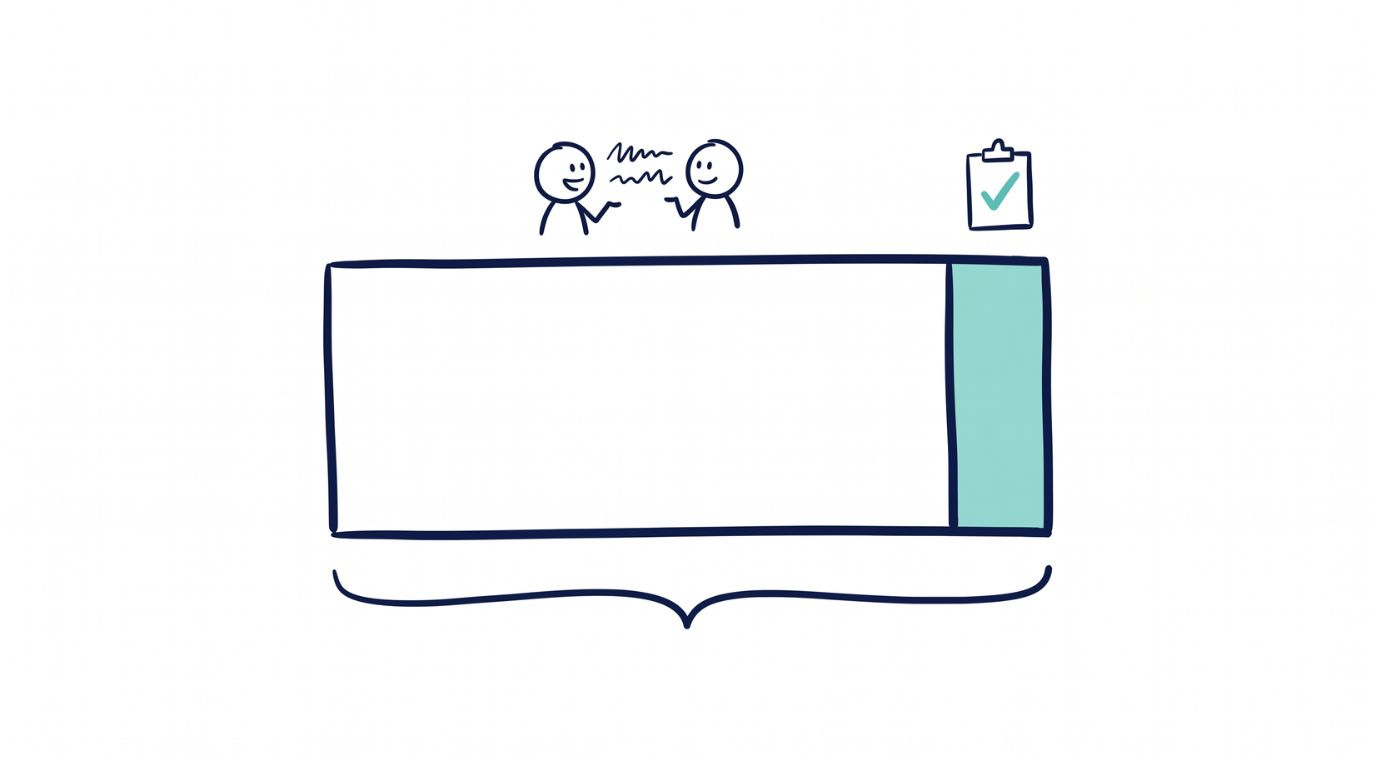
Set a 2-minute timer before every activity ends. When it goes off, you start wrapping.
But the part that makes this work isn’t the timer. It’s how you build the buffer into your design from the start.
If you have a 20-minute activity, you don’t design 20 minutes and then try to remember to check the clock at minute 18.
You design an 18-minute activity with a 2-minute wrap built into the structure.
18 + 2. That’s how it goes into your facilitator notes.
40-minute working session? 38 + 2.
60-minute deep dive? 58 + 2.
The wrap isn’t extra time bolted on at the end. It’s part of the activity.
You know what happens in it. The nudge language is written in your notes before participants arrive.
When the buffer is designed in, endings stop being something you manage under pressure. The ending already exists. You just run it.
When I used to design a 20-minute activity as a full 20 minutes, I spent the last 3 minutes in a panic.
Should I stop them? They’re still going.
Is the conversation good enough to justify running over?
How much time can I steal from the next section?
That internal negotiation was happening while I was supposed to be reading the room.
With 18 + 2, the negotiation disappears. I know exactly when the wrap starts. I know what I’m going to say. The decision was made at my desk, not in the middle of a session.
What this looks like in your facilitator notes:
The activity runs from 0 to 18 minutes.
At minute 18, you deliver the nudge.
At 20, the bridge.
By 21, you’re into the next section.
Every timing, every phrase, written down before you arrive. When you’re running a full-day session with eight activities and your brain is already tracking group dynamics, energy levels, and a stakeholder who won’t stop checking their phone, you want that transition language ready to go.
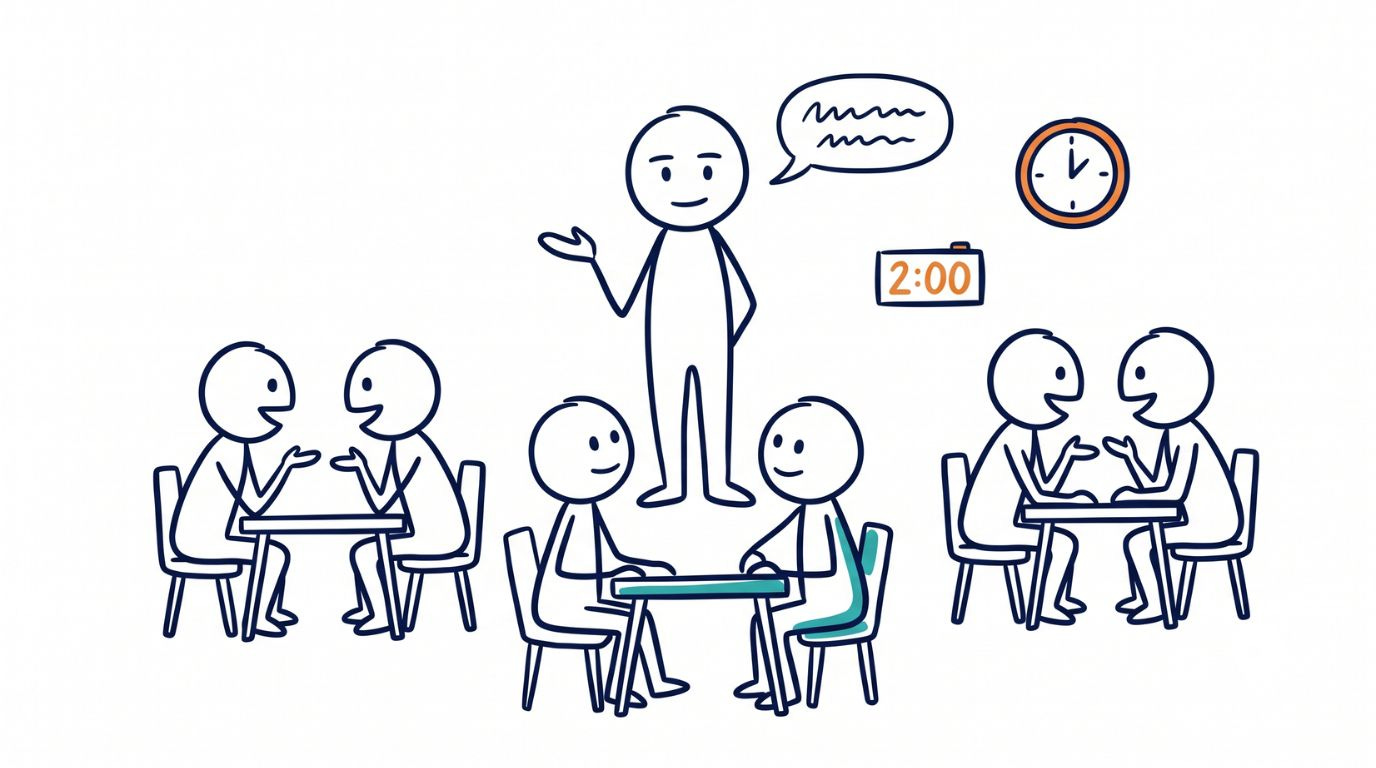
“You’ve got 2 minutes left. Start finishing your final point.”
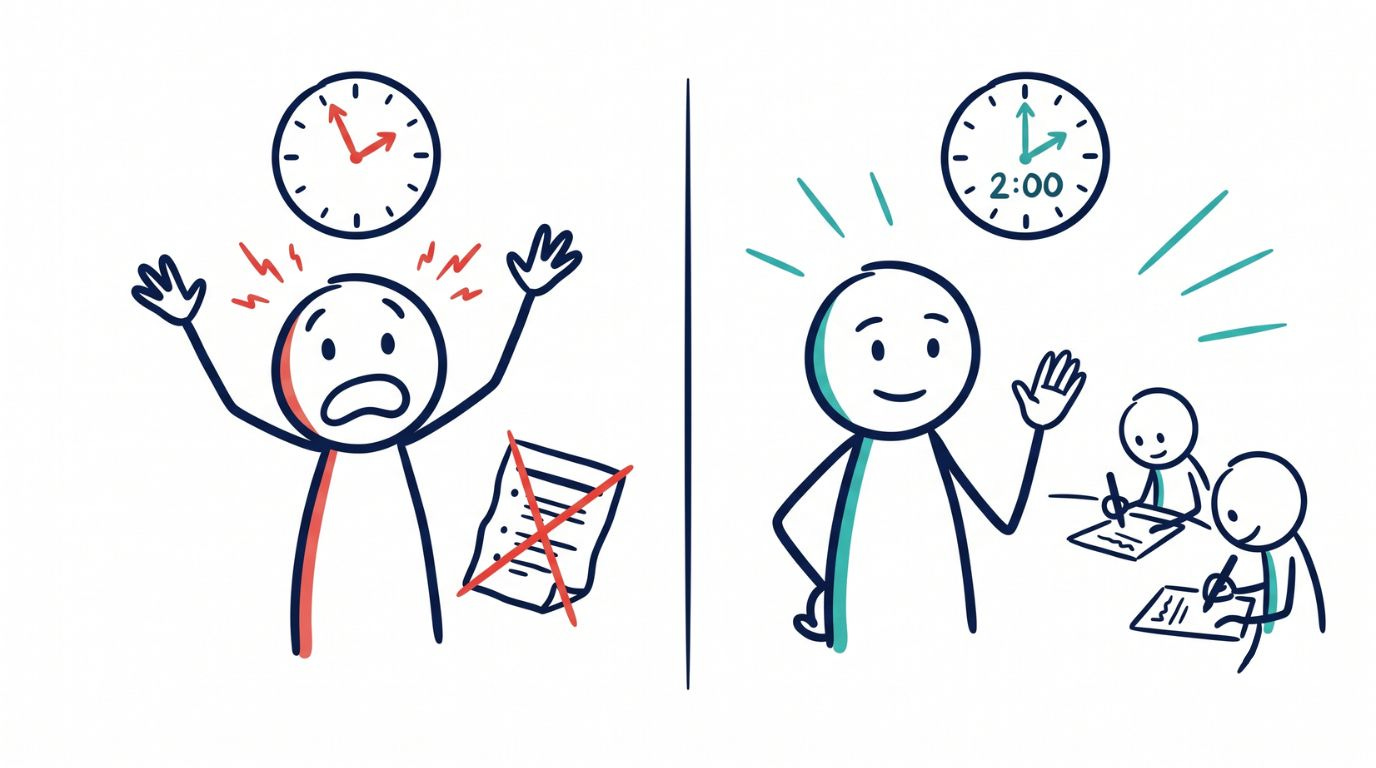
Two things happen when you say this. You show the participants you’re keeping time, which builds trust in the process.
And it creates a productive kind of urgency. People stop circling their point. The quality of conversation goes up in that final minute because the constraint sharpens thinking.
The nudge also trains the room. After two or three activities where you give a consistent 2-minute warning, something changes. Participants start self-managing.
They begin wrapping their own conversations before you say anything. You’ll see someone glance at the clock, nod at their partner, and start summarising without being prompted.
They’ve learned the rhythm of the session.
You can extend this principle with visible timers, hourglasses for sub-teams, and colour-coded countdowns on a projector screen.
The principle is the same: make time visible and people manage themselves.
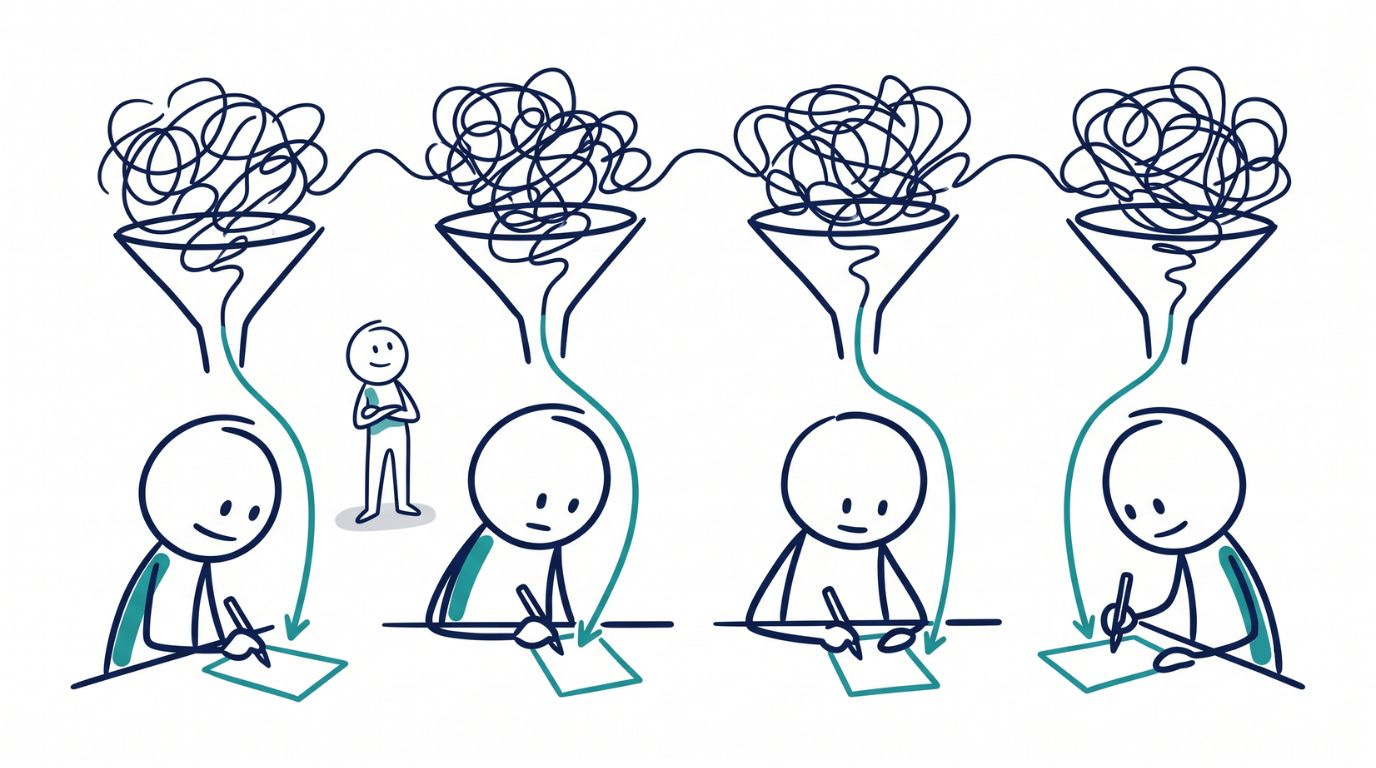
“Time’s up. Before we move on, capture your top takeaway in one sentence on your sheet.”
This turns the transition into a micro-debrief. Instead of the activity trailing off into nothing, every participant distils their thinking into one clear point.
It takes 30 seconds. And it means the learning from that activity doesn’t evaporate the moment you start the next section.
Participants finish strong. The group moves forward with clarity instead of trailing threads.
But can you really capture 20 minutes of work in one sentence?
You can’t, and you’re not trying to. You’re asking participants to commit to the one thing that matters most to them right now.
That act of choosing is where the synthesis happens.
The facilitator who lets an activity run long almost always believes they’re making the right call. The energy is good. People are engaged. Cutting it feels wrong.
But what actually happens is you protect one activity and sacrifice everything downstream.
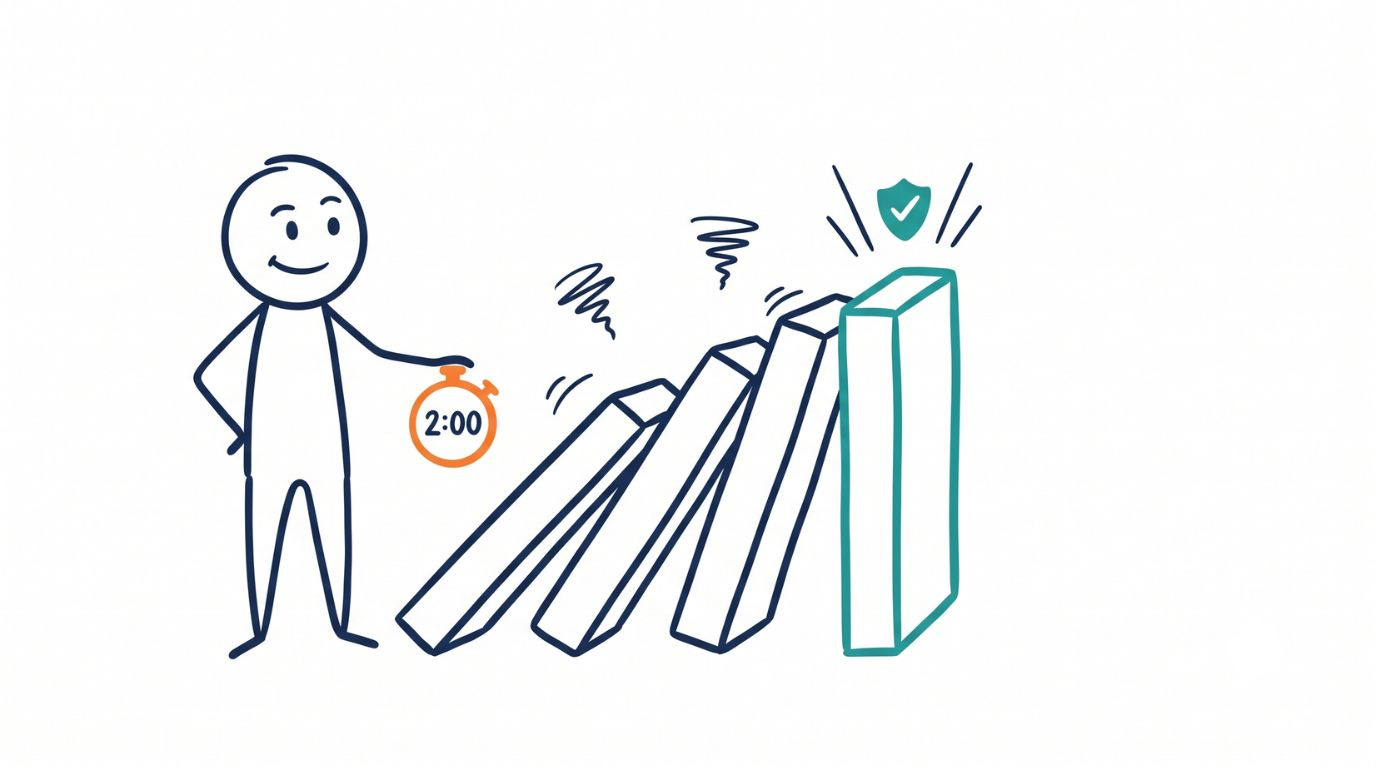
The debrief after the next activity gets skipped because you’re already behind.
The closing gets compressed into a “let’s wrap up quickly” that produces zero commitments.
The follow-through structure you designed, the part that was supposed to make the workshop matter next week, never happens.
And once you skip one debrief, you’ve set a precedent for yourself. The next one gets easier to cut.
By the afternoon, you’re running a session with no reflection points at all. Just activities back-to-back with rushed transitions between them.
One reason clients hire a facilitator is to be a guardian of their time and result. They hired you to interrupt and redirect when the purpose of the session requires it.
Protecting one good conversation at the expense of the whole session is a trade you didn’t mean to make.
I get ahead of this by setting up permission early. In the first 2 minutes of every session, I ask the sponsor in front of the room: “Is it going to be okay if I move us on when I spot us overrunning?”
They always say yes, because it’s the start of the day and everything feels flexible.
But that agreement, made publicly before anything gets heated, makes it far easier to move things along later when an activity is running hot and every instinct says to let it ride.
The pushback I hear most often on the 2-minute rule comes from experienced facilitators: facilitation requires flexibility.
A facilitator needs to make judgments on the run and experienced facilitators are always rejigging the agenda, dropping activities, inserting new ones based on what surfaces in the room. That’s true. That’s the craft.
The facilitator’s job is to read the room and decide in real time whether the next activity serves the goal better than staying in the current one.
I agree.
The 2-minute rule is a design habit. It is not a cage.
Nothing about building a buffer into every activity stops you from making a judgment call when the moment demands it.
If the conversation in front of you is surfacing the real issue, the one the client needs solved, you don’t kill it because your timer went off. You let it run. You cut something else later. That’s facilitation.
But here’s what I’ve seen happen without the structure underneath: facilitators who “go with the flow” consistently lose their closings.
They skip debriefs. They end with “we’ll follow up on that” instead of specific commitments.
I’ve watched facilitators run brilliant 90-minute morning sessions, let two activities overrun by 10 minutes each, and then have to cut the afternoon closing to 5 minutes.
The closing was supposed to be 25 minutes. It was the whole point of the day.
In a smaller workshop where you control every piece, you can flex freely.
But add complexity (more people, tighter timelines, multiple speakers, accessibility requirements) and structural discipline becomes the thing that keeps everything from collapsing.
The facilitators I admire most do both. They design with structure and facilitate with flexibility.
The 2-minute rule gives you the structure. Your experience gives you the flexibility. Without the structure underneath, there’s nothing to flex from.
Most time management advice for facilitators is reactive. How to interrupt gracefully. How to speed up a slow group. How to rescue an agenda that’s already wrecked.
The 2-minute rule is a design principle. When you write 18 + 2 into your facilitator notes for every activity, endings stop being something you perform under pressure.
The ending exists on paper. The nudge is scripted. The bridge prompt is ready. You designed the landing before you built the runway.
Transitions stop being the weakest point in your workshop and start becoming one of the strongest.
And it compounds.
Participants start trusting the process because they see you keeping time without rushing them.
Energy carries forward because the bridge captures their thinking instead of letting it dissolve.
And you spend less mental energy on the clock and more on reading the room, adjusting, and doing the work that requires real facilitation judgment.
The facilitators who build the most structure into their design are the ones who look the most flexible in the room.
The logistics are handled so they’re free to do the actual work of facilitation.
Paid subscribers get two tools below to put this into practice this week:
The 2-minute rule activity template
A copy-paste planning block for any activity, any length. Nudge timing, a menu of bridge prompts, and facilitator notes built in. Paste it into your planning doc, fill in the brackets, and your next activity has a designed ending before you walk into the room.
Scripts for when it gets hard
Word-for-word language for four friction moments the free post doesn’t cover: the group that ignores your 2-minute warning, the virtual session where you can’t walk the room, the senior leader who talks through the nudge, and the activity that genuinely needs more time (how to flex without losing the room’s trust in your timekeeping).
Comments
Nothing yet. Say the first thing.
Sign in to join the conversation.