
You are reading Wooden City, a fortnightly newsletter about London. Most pieces are paywalled, but today’s issue is free to read.
If you want to support the kind of writing I publish here, please consider a paid subscription if you don’t have one already.
This will also give you access to the entire archive, covering hundreds of pubs, shops, restaurants, public spaces and more.
In December 2024 I started spending loads of time in Lewisham, the area within the borough of the same name. I’d lived nearby in Brockley for a while, and had a few favourite SE13 spots, but I didn’t know this busier, more diverse neighbourhood well.
After weeks of eating, drinking and hanging out in Lewisham, I decided to write about 23 community spaces there that struck me as valuable. I published a two-part guide in January 2025, covering everything from Lewisham’s outdoor market to its pre-Victorian churchyard, its Tamil and Ghanaian restaurants, its record shop, its Irish pub.
Back then, property company Landsec’s plans to redevelop Lewisham Shopping Centre were still up for review. But the scheme, which intends to demolish the existing centre to build things like 1744 homes, a new shopping mall and a green space on top, was approved by the council in October 2025.
Almost 11,000 Lewisham households are currently on social housing waiting lists, but this development only includes 98 homes for social rent. Over 4,000 people have signed a petition demanding more affordable housing from the scheme. At the time of writing, The Filigree, another controversial development in Lewisham, remains largely empty after flooding meant that over 400 new residents had to move out.
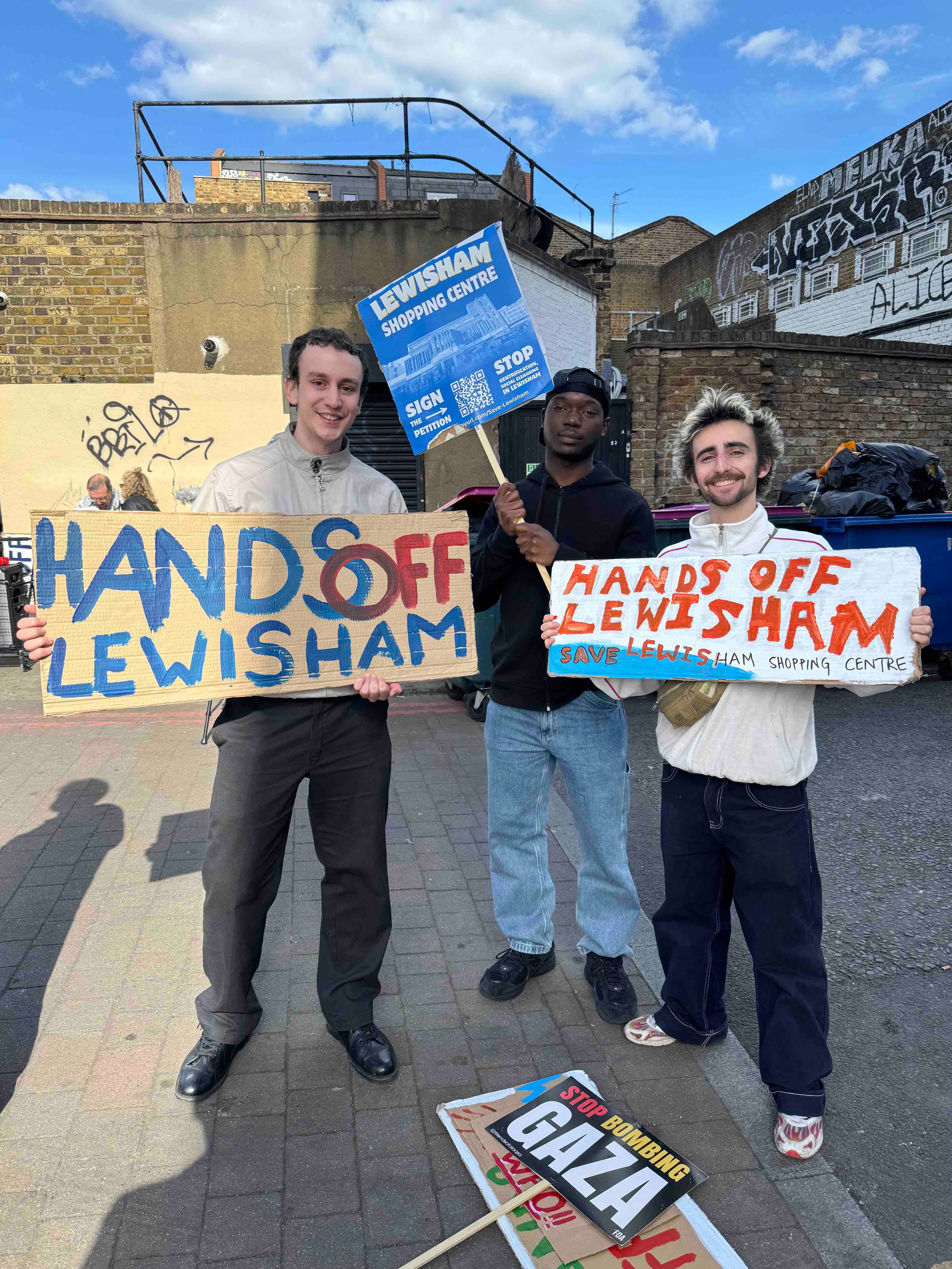
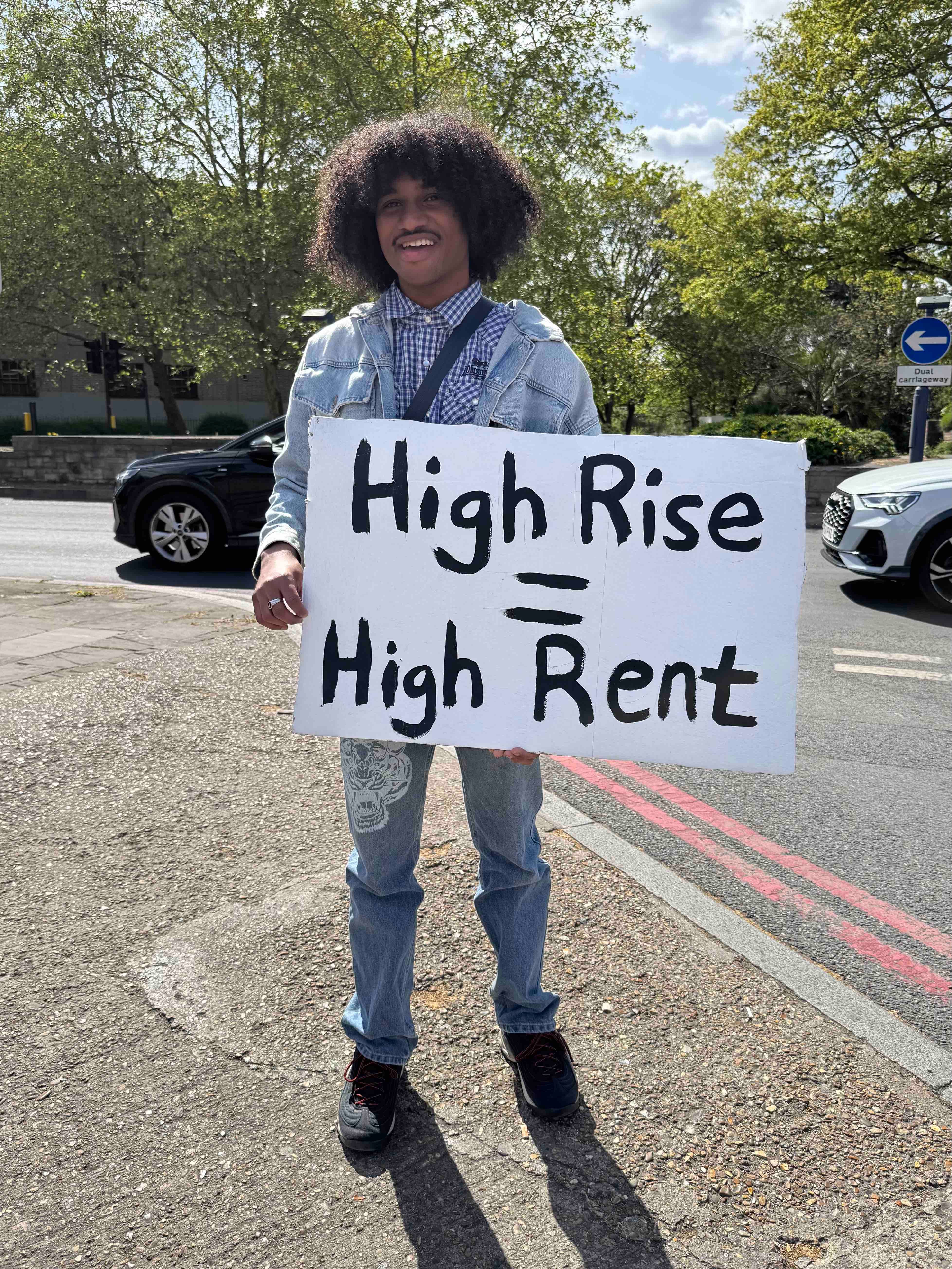
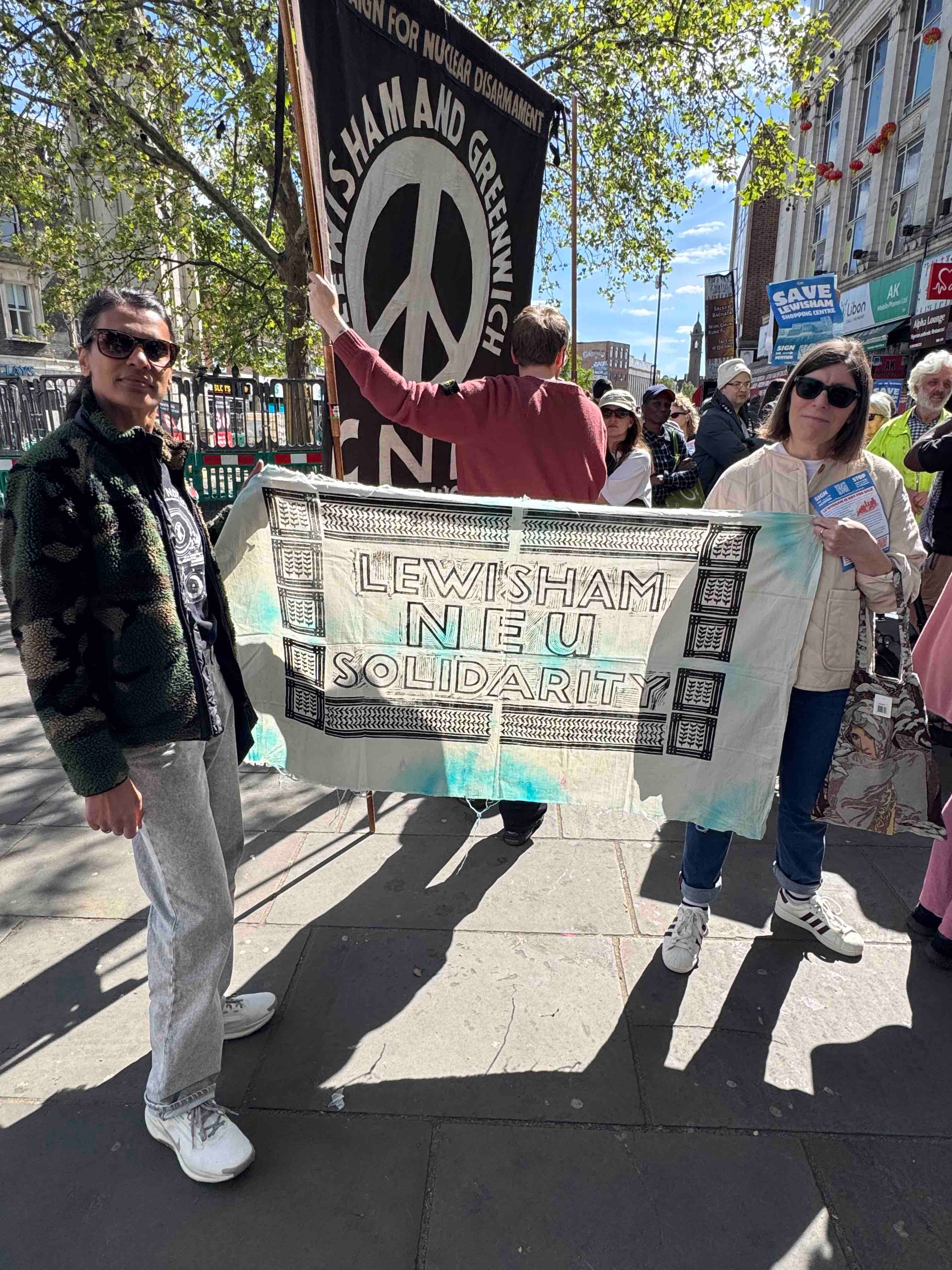
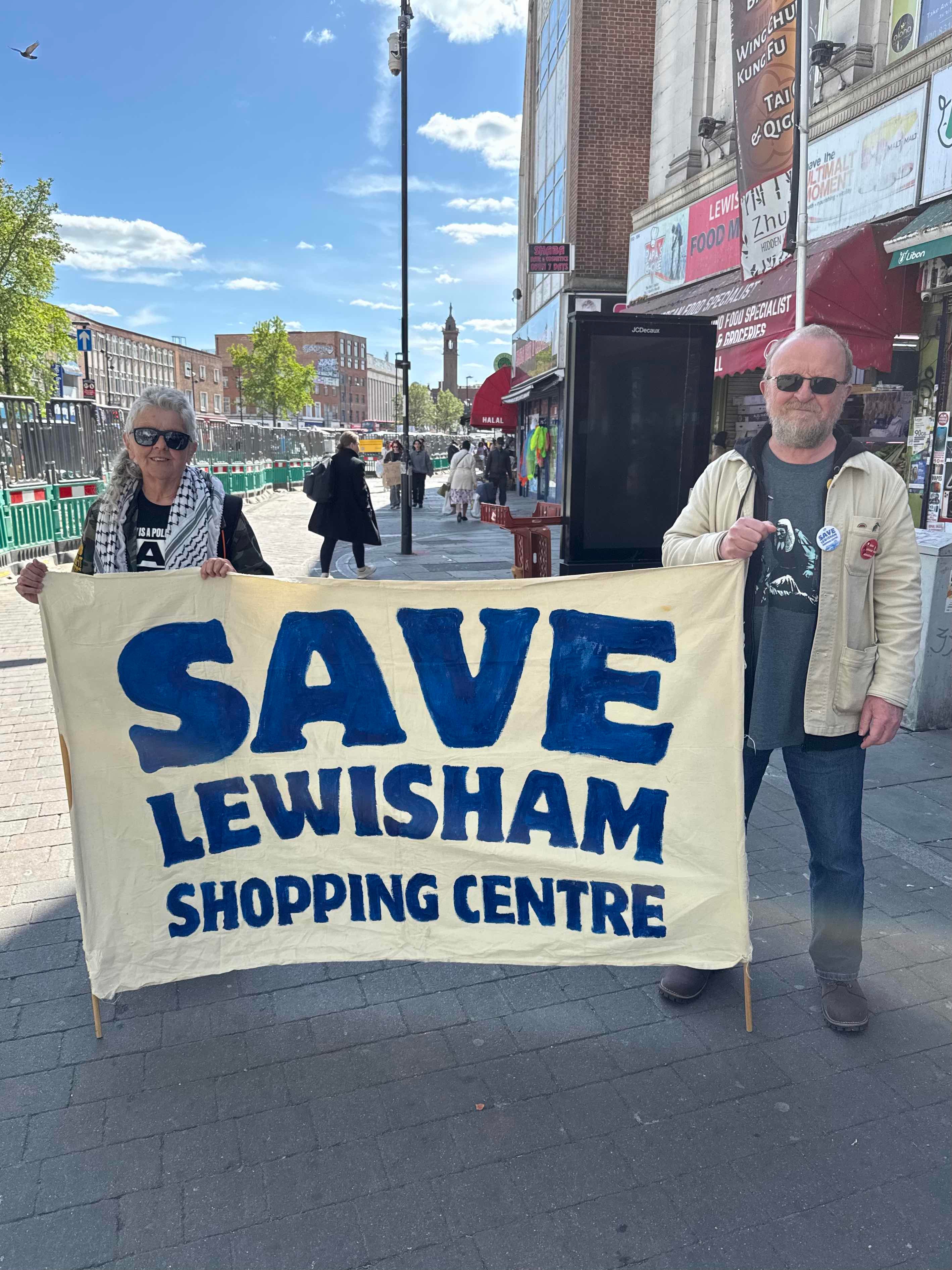
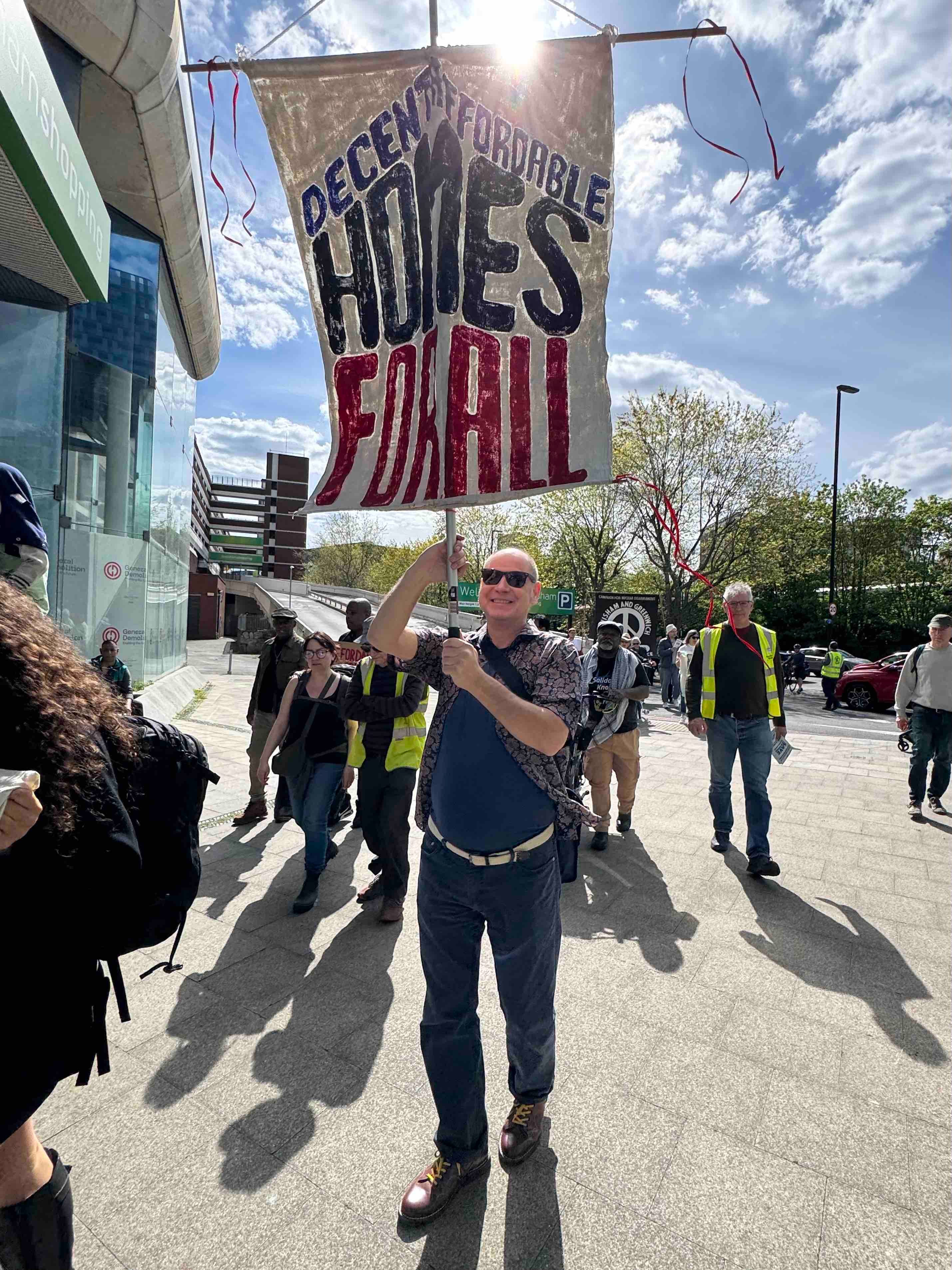
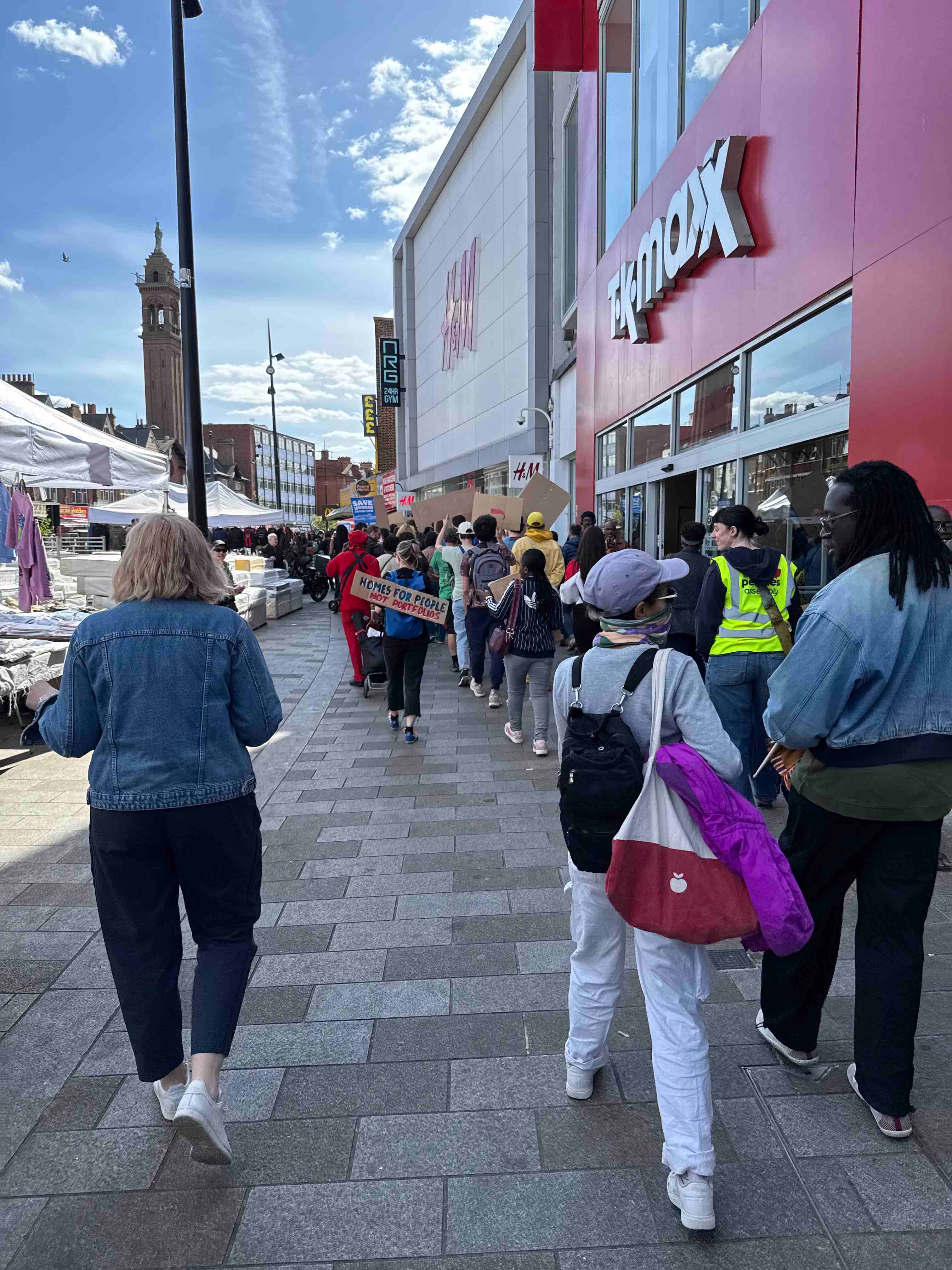
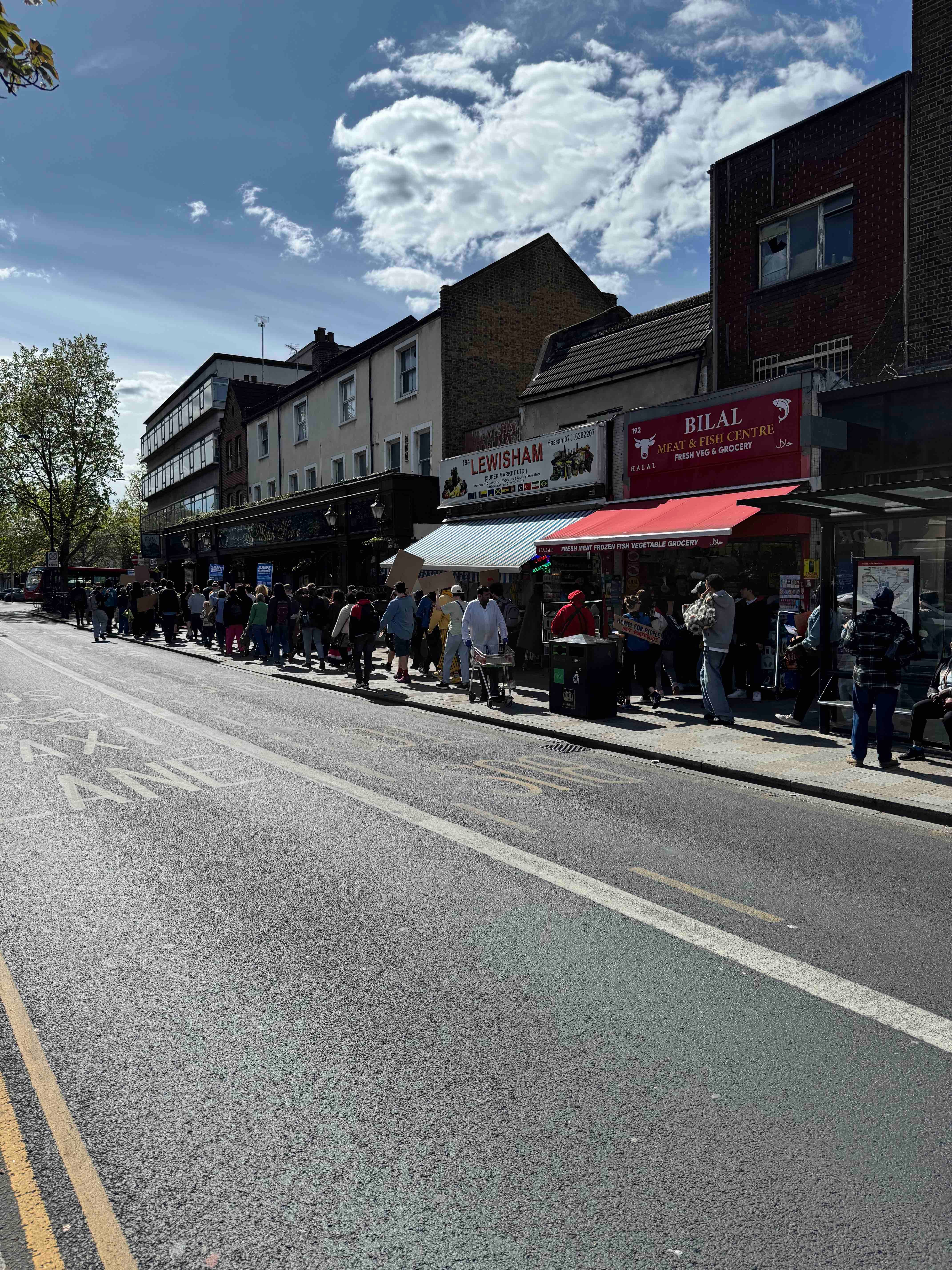
I learned some of this information by attending events put on by Lewisham Peoples Assembly, a group fighting against the plans. Last month I sat down with Faris Luke, chair of the assembly and organiser of the Save Lewisham Shopping Centre campaign. The conversation below is from March and the photos are from a rally I attended in April.
What struck me about Faris’s outlook is that he isn’t against change; his main demand is community-focused development. In the end, we ended up speaking about Lewisham and London more generally as much as urban change. This is an interview with a housing activist, but it’s also a conversation with a local person about the area they’re from.
Isaac Rangaswami: What’s the Save Lewisham Shopping Centre campaign about?
Faris Luke: It’s about trying to stop gentrification in Lewisham borough and guaranteeing affordable housing for new developments. People have different opinions about the building itself. Some people say it’s old and that we need to get rid of it. Some people really hold it true to themselves. For me, I’m somewhere in the middle, where I have a lot of nostalgia for the shopping centre and visit it almost every day, but it’s been declining as the years have gone by. There’s lots of shops that have closed down, and they aren’t in use at the moment. Regardless of our differing opinions, most people are against redeveloping the centre into luxury flats, which is the current plan. We either want the council to make sure all developments have at least 50% affordable housing or stop this one.
Isaac: There aren’t many independents in the shopping centre either.
Faris: Most of it is chains, yeah. It’s like the Model Market, or as it was called back in the day, Black Market, where they had suitcase shops, lots of different fresh food for cheap as well as locksmiths and other independent businesses, but they all closed down. I believe that with the shopping centre, the actual space is fine. We have had all these redevelopments all over Lewisham. A lot of them have proven that they aren’t for the people. They’re just for making a profit. They claim they aren’t demolishing the shopping centre. But in practice, they’re demolishing the majority of the centre, stage by stage.
Isaac: Until there’ll be nothing left of what it was.
Faris: Exactly. You could retrofit the car park to fulfil some other need. You have the big Citibank tower, which has been in disuse for a very long time. That could be reimagined. There’s lots of uses that you could do with the existing space, rather than demolishing it.
Isaac: What made you start the campaign?
Faris: I grew up here. And growing up in Lewisham Central, it has just been redevelopment after redevelopment. Change isn’t inherently a bad thing, but these things have mainly been expensive. As the years have gone by, it’s gone from mixed use to unaffordable. And I just looked at the plans. And I was like, out of 1744 homes, 20% is just not enough affordable housing. Lewisham is my home. I want people to enjoy my home the same way that I did growing up, and not providing enough affordable homes jeopardises that.
Isaac: That’s such an honest reason to do the campaign.
Faris: Another reason is that I did a module on housing at university in Leeds. And I wanted to apply what I learned to something meaningful. When I was younger, I remember all these students coming into Lewisham and I was like, “why are all the students here? They’re gentrifying Lewisham.” Fast-forward four years later, and I was the gentrifier in Leeds. And you know, I just felt guilty about it. I knew the position of what I was to the city – part of this bigger change making housing unaffordable in Leeds for locals. I wanted to act on it.
Isaac: Your campaign focuses more on developers and the council that’s facilitating them than individuals. Do you really blame students for gentrification?
Faris: No, but there is something I realised in Leeds. I was walking to the 24-hour Sainsbury’s in Hyde Park and I overheard these lads say, “why are these families complaining that we’re partying? This is a student area. You live here, if you don’t like it you should leave.” I just thought that was really a self-centred opinion. Not everyone that moves into Lewisham, into Leeds, as a student, has those opinions. But I think across the board, people that move to Lewisham, or move anywhere really, could do a better job with learning and adapting to a local area rather than forming a detached bubble. I don’t blame students, but I do think it’s definitely valid to say that gentrifiers could do a lot better to try to learn and live in the local area. But I think focusing too much effort on that is kind of missing the point.
Isaac: I think you have a responsibility to be a good guest when you’re a newcomer, because there’s existing people in those spaces. But the more I’ve studied these topics, the more I’ve felt like it’s a drop in the ocean compared to the sheer scale of change that developers can bring about. Sometimes it feels like telling people to recycle while corporations are drilling for oil.
Faris: It creates community conflict too. It’s similar to the arguments used by groups like Reform UK – like white working-class people being encouraged to turn against Asian and Black British working-class people or asylum seekers. Instead of it being that, it’s locals being encouraged to turn on middle-class gentrifiers and hipsters or whatever. But I think that’s quite reductive. I’m middle class, and I don’t like gentrification.
Isaac: If you got rid of trendy coffee shops, it wouldn’t stop gentrification.
Faris: It’s a tendency we have in this country to go after each other, rather than go after power. People move all the time. Places change all the time. That’s human history. You can’t escape that. What I think people should do is, if you move to an area, get to know the local people, go to local shops. Obviously, there may be new, hip places you can visit as well. But just check the old places out. Say hello, pop your head in, explore your neighbourhood, because, they may not be your ends, but it will become your ends after a while. Make this place that isn’t your home into your home. Then show solidarity with the locals who are more immediately affected by displacement.
Isaac: What is it about Lewisham that you want to protect?
Faris: Great question. All across London, we’ve been having similar scenes. Obviously, I’m biased, but Lewisham feels quite unique and has a spirit of London that has been slowly eroding over the years – words don’t do it justice but visiting does. It’s not like places in Southwark or Lambeth or Wandsworth or Hackney. It’s insane how much those places have changed. Lewisham, although there’s lots of new builds, it’s not as far into the process as other places. Lewisham still feels like Lewisham and I want to keep that spirit, rather than see it die like it has in so many other places in London.
Isaac: How have you seen it change?
Faris: Lots of students, the new builds. There’s been lots of shops that have closed, but it still feels very mixed, friendly and relatively easy-going for London standards
Isaac: Who do you think is responsible for the changes that have happened?
Faris: The council, mainly, by just allowing property developers to do what they want and not standing up to them. I mean, the property developers are the ones that are building, but the council’s the one that green lights it and says, “yeah, you can do this or no, you can’t do it.” They should be more ambitious in getting concessions out of developers if they want the public-private partnership model to really succeed.
Isaac: Is that who you blame for gentrification?
Faris: It kind of comes from everywhere. I do think the primary reason is just property developers and big finance wanting to make a profit. Landsec is 10% owned by BlackRock.
Isaac: I read that Landsec owns the Piccadilly Lights.
Faris: They own the Piccadilly Lights. They own Media City in Salford. They own Brighton Marina. They own the Trinity Centre in Leeds.
Isaac: What types of change do you think Lewisham would benefit from?
Faris: I think Lewisham would benefit from changes that were led by the people. In the short term, we just need more affordable housing. And if for whatever reason, it’s not viable, the developer shouldn’t try and seek to pursue it. I just think lots of councils are just too unwilling to try and contest developer power. In the long-term, I think it’d be good to expand cooperatives and community land trusts, and make it a noticeable part of the property market, akin to how social housing and the private rental sector housing are recognised. I think that would be a great way to do alternatives to development. I think retrofitting is cool, converting something from an old space into something entirely new. I think Lewisham could do a lot more retrofitting.
Isaac: What do you think of the modifications that the council is doing currently to the high street and the library?
Faris: I like it. It seems alright to me. I’m not against change. The library was quite old. I’d go there to study for my A-Levels. It’s just a very dated building, so I think revamping the library is not a bad thing. To make the high street look nice is a good thing. If it’s a benefit to the community, I’m for it. The community also needs to want it as well. Through official channels, there’s 600 people that support the shopping centre redevelopment. But through our petition, we have 4000 people that support us. The fact is that there’s lots of people that don’t want this redevelopment. They want change, but if you mention that there’s no affordable housing, then they agree that it shouldn’t happen. They either don’t want it to go, or they want change, but this is not the sort of change they want.
Isaac: What kind of places do you like that exist in Lewisham already?
Faris: Great question. So I really liked going to the library, but obviously it’s not open right now. There’s this Turkish restaurant called Levante – I have a lot of memories of going there. I really enjoy going down Lee High Road too. There’s the record shop – I love chatting to Aiden. Nearby, there’s a Lebanese takeout. It’s kind of new – everyone there’s just speaking Arabic which is nice. I didn’t know anyone, but they see me come in more and more. I haven’t been there in a minute, actually. But by a minute, I mean, like, a week. I have a bit of a love-hate relationship with the Joiners Arms.
Isaac: I love the Joiners Arms. I was really impressed by how diverse its customer base is in terms of both age and background. You see people in their twenties, their sixties, people in their work uniforms. It seems like a very valuable community space.
Faris: I don’t really like it at the moment because my friend stopped working there. But I had lots of nights out, lots of memories going when my friend did work there, going into lock-ins. There’s a 24-hour Turkish shop at the end of this road. I go there all the time to get bureks, or just do a bit of shopping.
Isaac: So you’re supporting the independents?
Faris: I do go to Sainsbury’s though.
Isaac: You can’t avoid it. When I wrote about 23 different spaces in Lewisham, only two of them were actually in the shopping centre, and one has since moved out. I think what I love about Lewisham is outside of the shopping centre, and what I’m worried about with the development is probably the halo effect. What do you think of the shopping centre more generally? Do you think it is a valuable thing?
Faris: Of course, but I think it is decaying a bit.
Isaac: Is that a managed decline?
Faris: I believe it’s a managed decline.
Isaac: I read that the M&S is leaving, which is always a bad sign.
Faris: It’s a red flag that a business as large as M&S is leaving regardless of how you feel about the shop itself. I do think the disruption that construction would cause was a big factor. I think the shopping centre’s important and the loss of M&S illustrates it perfectly, because it’s the centre. It’s part of the centre – the high street, the homes around it, the shopping centre, are all one thing. You change one thing, and it will impact the rest of it. Because of how huge the shopping centre is, changing that will impact the surrounding areas quite a lot, actually. The other places, I think may not survive. The Polish deli, will that survive? What about the Italian deli? The record shop? Or the little Jamaican takeouts?
Isaac: Do you see parallels between Lewisham and other areas?
Faris: Definitely. You know, everyone says about Elephant and Castle. If you were a developer, or a property owner, you succeeded from that. But if you’re an ordinary person, or a Black British person, or a Latin American person, you’ve lost out from that, and all the demolitions that happened.
Isaac: Do you spend much time in other parts of London? What other areas do you like?
Faris: Well, if we count Lewisham as here, then Brockley, Ladywell, Deptford, New Cross. I also really like going to Peckham and Stockwell, and have family up in Highgate/Archway.
Isaac: Do you ever go to west London?
Faris: No (laughs). I’ve been north-west probably only like 10 times. I don’t go often. It’s just so far away. Maybe I’m getting old, I don’t know.
Isaac: I love asking native Londoners questions like this, because they so often answer like this. You mentioned Wandsworth earlier? I thought that was interesting. Do you have a connection with the area?
Faris: No, I’ve just been there. Tower Hamlets is spiritually my second borough.
Isaac: What’s the reason for that?
Faris: I’m half Pakistani, so because of all the Bengalis living around those ways, there is loads of great fresh South Asian food to eat.
Isaac: I’m half-Indian!
Faris: Haha I wasn’t sure if you were Sri Lankan, because of your last name.
Isaac: Yeah my dad’s Tamil. That’s one reason why I like Lewisham.
Faris: Yeah there’s loads of Tamil people here.
Isaac: Yeah I moderated a panel last year that was catered by Everest Curry King.
Faris: Lewisham classic, that is.
Isaac: What parts of Tower Hamlets do you go to?
Faris: Well, obviously most of the Pakistanis you’ll meet are in Tooting or in Ilford. I like Whitechapel, Aldgate East, Bethnal Green, Shadwell – that’s a Bengali area. Gulab jamun is my favourite thing. It’s one of my favourite foods. I don’t know Sri Lankan street shops, but I know Bengali sweet shops. I just hop on the DLR. So I’ve hung out in Shadwell, Whitechapel, Aldgate East, Bethnal Green.
Isaac: Yeah sometimes I see Lewisham as so close to east London. All you need to do is just travel north for a few minutes, over the river.
Faris: If I was gonna live anywhere in London, if it wasn’t here, I’d move to Tower Hamlets.
Isaac: How do you think people from Lewisham compare to people from other areas? Is there a certain type of personality here that is different from other areas?
Faris: Good question, because this is a huge debate. North versus south. But then it’s like, how different are we actually? It’s great you brought that up. I think Lewisham has two different identities.
Isaac: Lewisham town or Lewisham borough?
Faris: Lewisham borough. Lewisham town is too small to really have its own cultural identity, beyond the different ethnic identities. Lewisham north – which is Brockley, Catford, Deptford etc – is more aligned with Southwark and Lambeth and is definitely the cleavage I come from. Social, outgoing and proud. On the other hand you have Lee, Downham, Grove Park and Bellingham which are more aligned with outer southeast London areas like Kidbrooke and Mottingham.
Isaac: What are those areas like?
Faris: I’m someone that has grown up in Lewisham. I’ve been to every part of Lewisham and I hang out in every part of Lewisham fairly regularly, except for Grove Park, Bellingham and Downham. I do not go to these places often, if I’m being totally honest. Basically most of my friends who lived in these parts of Lewisham have moved out.
Isaac: What is it about these areas that means you don’t end up in them naturally?
Faris: It’s just, well, it doesn’t help that the south is very disconnected public transport-wise. I’m connected to the DLR and close-ish to the Windrush line, so they naturally become my periphery, my zone that I hang out in. Catford is kind of the exception, because Catford Bridge is just literally just down the road. You can just walk there, but Downham and Grove Park are a lot more of a trek to get to.
Isaac: How would you feel if the shopping centre plans go ahead as they are?
Faris: I’d be very upset, because right now, they’ve approved phase 1A. And you know, phase 1A, luckily isn’t the majority of the development. There will be 117 market-rate homes, no affordable housing, and that kind of sucks, because that’s the only guaranteed thing. But in a way, it’s kind of a good thing, oddly, because it means they haven’t done phase two and three. They haven’t fulfilled any of the affordable housing promises already. Really with local elections around the corner, any future administrations should put their foot down and halt furthering the development plans i.e. phase 1B if they can’t secure at least 50% affordable housing. If it goes as it is, I would be very disappointed.
Isaac: What do you think that would mean for the area?
Faris: I believe that it will mean young people will be locked out of housing, because the development is built around an 8% increase in property values for the next 10 years. That’s the only way it’ll be financially viable and they’ll be able to turn a profit, if local rents rise by 8% every year. So it’s gonna displace a lot of people. It’s gonna really affect young people, Black British people and other minority groups as well.
Isaac: How has running this campaign been for you personally?
Faris: I’ve enjoyed it a lot. Every day is not the same. You know, today, I give an interview, I’m gonna film a video, and then tomorrow I’m gonna prepare for a film screening. We’re doing different things all the time. There’s loads of different work. Lots of my peers are working either in a hospitality job that they don’t care about, or they’ve started their career in some firm that they don’t really care about. I’m very fortunate to be spending my time doing something I care about. It’s been a bit of a personal sacrifice, however, in the sense that I’ve had to take a bit of time out from hanging out with my mates, made less money than others, while pursuing hobbies that I have intended to learn.
Isaac: What does community mean to you?
Faris: Community, for me, means that people are living in the same space as one another. They may not like each other, they may disagree with each other, they may come from different backgrounds. But the community always exists, even if it’s not a cohesive community, because community is just simply individuals that inhabit the same spot. Everyone that lives here is part of the same community. I believe it’s the responsibility of members of a community to protect it and grow it, and make sure that any changes that happen to it benefit everyone.
Thanks for reading! This newsletter was written by Isaac Rangaswami, with editing from James Hansen.
Wooden City is published on a fortnightly basis and the next issue will be out w/c 11 May. If you enjoyed today’s piece, please feel free to share it.
No posts
Comments
Nothing yet. Say the first thing.
Sign in to join the conversation.