
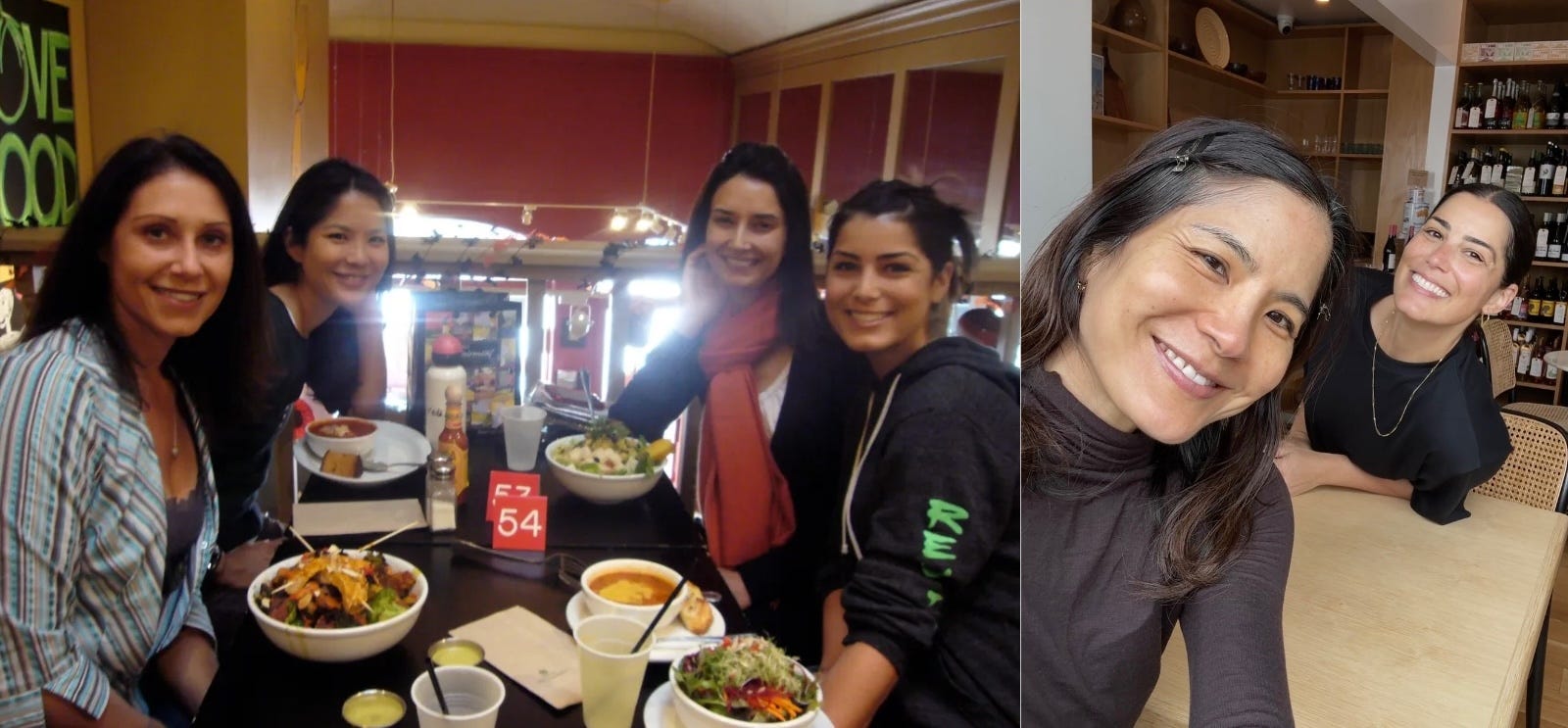
Earlier this week, I met up with one of my closest longtime friends, Lynn Chen. I can’t speak for Lynn, but when people ask how we know each other, I always feel like I’m talking about a bygone snowglobe of an era, similar to if I were to say that we met in our local Girl Scouts troop or singing together in high school choir. A formative, unique time that only the people who were there would really understand the nuances of.
Lynn and I met back in the 2008-09 era of blogging. Specifically, we met in the corner of the internet called “Healthy Living Bloggers” — or HLBs for short.
I found my way into the blogging universe because I was looking for answers to how I could develop a positive relationship with food, fitness, my body, and my self. After a harsh wake-up call from my college voice teacher — who told me to get my act together because I’d lost so much strength it was affecting my singing (I write all about it in WANT YOUR SELF) — I was determined to get myself healthy again.
The problem was, I didn’t fit the bill for what someone “struggling” with an eating disorder was supposed to look, sound, or act like.
Back then, our language around this stuff was limited. If you didn’t fit a specific criteria for EDs, you were often dimissed as just being “crazy around food.” This, of course, was a grossly oversimplified and dismissive description of what millions of people struggled with. I knew something wasn’t right, but all my excessive Ask-Jeevesing could provide me with were less than a handful of off-the-grid websites, and random message board posts here and there that basically said: you’re struggling, good luck!
No matter how many people try to write about body image standards in the early 2000s, it’s really really hard to accurately explain to anyone who wasn’t there just how bad it all was. What we now call “diet culture” was just the culture.
Tabloid culture, public weight shaming, harmful character tropes (don’t get me started on “Fat Monica”), and early reality TV toxicity shaped the way people talked about women’s bodies — and the way women learned to talk about ourselves. I don’t know that anyone came out of that era fully unscathed. I certainly didn’t.
I was acutely aware of how much diet culture and casual negativity affected me. I knew that if I wanted to develop a positive relationship with my body, I had to find people who wanted nothing to do with those conversations.
Thankfully, I had a place to go searching: the internet.
This seems kind of vapid and unoriginal to say today, but in the early 2000s, it was a revelation.
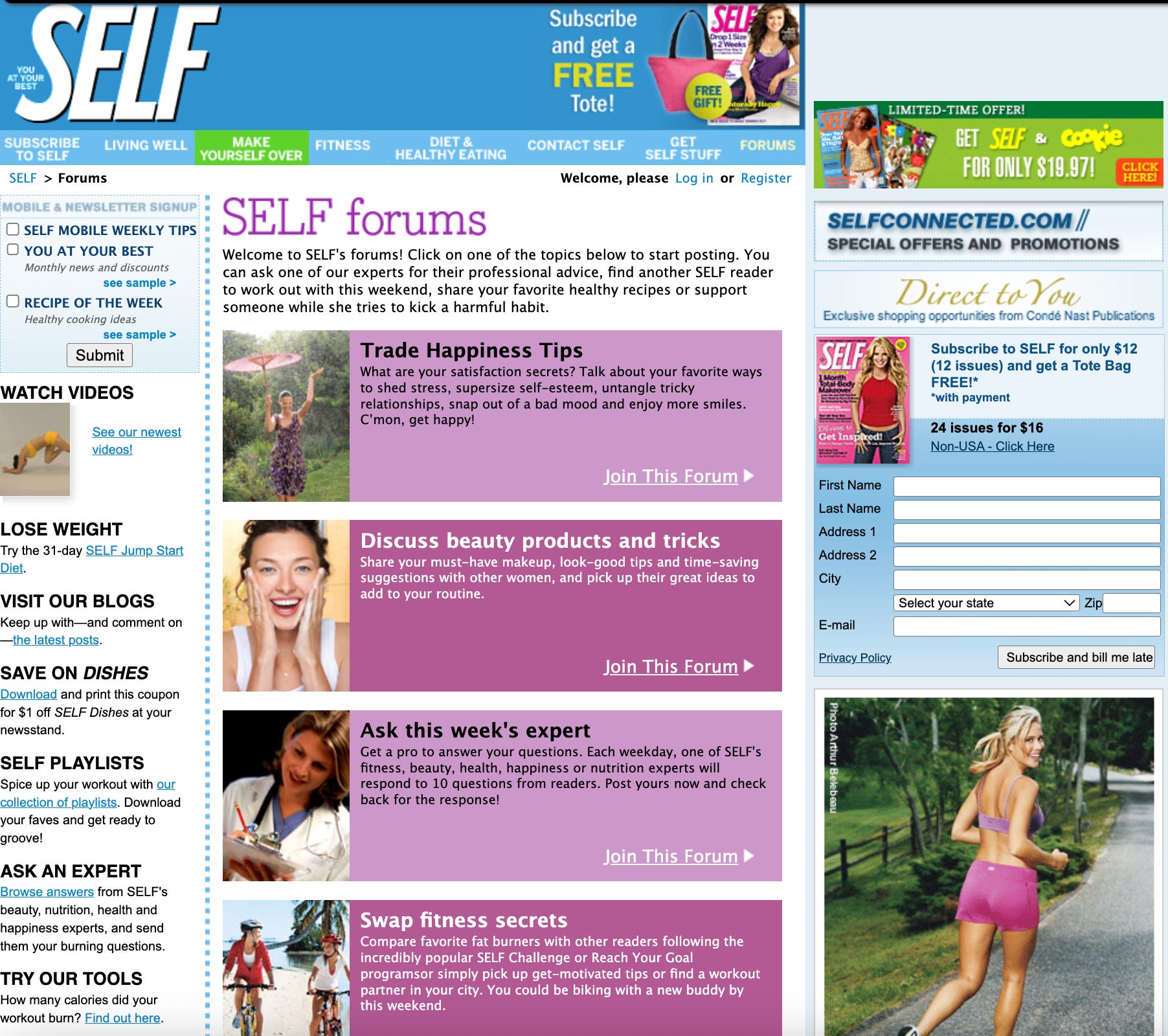
If my memory serves me correctly, I found myself on the Self Magazine message boards, which I found not by scouring a search engine but by hand-typing a URL I saw in the magazine itself (probably after a header that was like “Come join us on the World Wide Web!”). Sifting through the message boards was a mixed bag, trying to find women who were prioritizing strength and happiness over skinniness and restriction. There were many of the latter, but enough of the former to give me hope.
Going down internet “rabbit holes” was an up-and-coming pastime, and these message boards were a goldmine of secret doorways into brand new universes and communities of people all over the world who cared about living a big beautiful life free of rigidity. One click led to another, and another, and somehow I found myself a part of the Healthy Living Blogger universe.
I lurked, I commented, and then I finally started my own blog: A Joy In Class.1
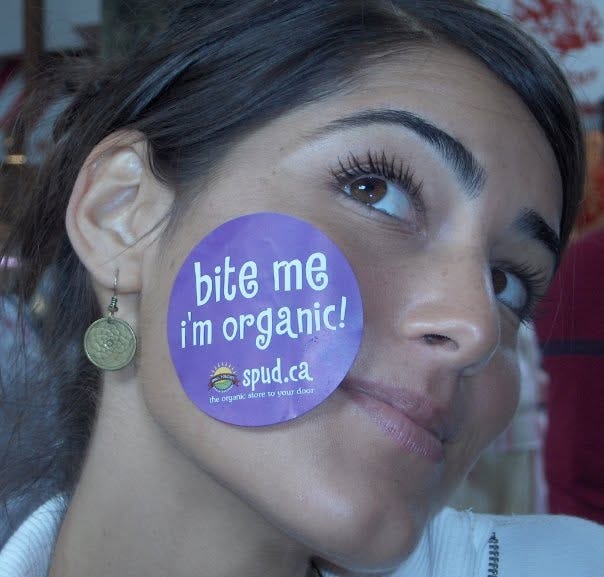
I blogged regularly on A Joy In Class for about three years. What was my “goal”? Well, I can tell you for certain, it wasn’t about building a platform, securing brand partnerships, gaining visibility, or locking down any sort of media deal. None of those things were on my radar — or even in my vocabulary.
Being a blogger wasn’t zeitgeisty. We weren’t influencers (another nonexistent word). We were misfits2. We were all people looking for somewhere uplifting to go, where we could be exactly who we were, around a group of people who’d accept us exactly as we were.
The reason I started my blog was simple: I wanted a place to be myself, and people to be myself with.
The caveat to this wholesome reasoning is that while yes, I did want these things, it also stemmed from not feeling like I had a surplus of either of them in my offline life. I’d found a wonderful group of friends post-college who’d helped me remember that life is for living not for looking (shout out to Liz Moody for that one), but as everyone started to go their separate ways — as friend groups naturally do as adulthood takes shape — I felt, once again, like I was looking for my people.
A Joy In Class was a secret kept from anyone I knew in my “real” life, because I was afraid of how anyone in my “real” life would react. I felt protective of this community I was a part of, and moreover, protective of the version of myself I was within it. There, I was exactly who I wanted to be, and was able to be her freely and easily — while the version of myself that I was out in the world was still catching up. Out there in the world, I was a fractured self. I felt like I needed to fill specific roles and specific times, and labor to bridge those roles should they intersect. In the HLB community, I was just ME. So when we’d take our relationships offline and into the world via blogger meetups, there was a shorthand that already existed. We didn’t need to explain ourselves, or reveal hidden parts we hadn’t already shared. There was no perception gap, so there was no bridge that needed to be built.
On my blog, I wrote about my life, my thoughts, and my dreams — and a lot of that had to do with being in process. I was a twenty-two year old girl with cavernous feelings. I had a complicated relationship with body image and food that I was actively trying to heal. I was trying my darndest to be seen as “successful” in my career, while also questioning if it was the career I wanted in the first place. And I was trying to figure out what exactly I wanted to build, who I wanted to become, and how to responsibly do the work on myself so that I could eventually help others do that work, too. I talked about all this on my blog, in detail, with zero hesitation or self-consciousness.
Being myself became something that felt irresistible. Something I wanted more of in all parts of my life.
I recently went into my own internet archives to see if I could find A Joy In Class.
Lo and behold, almost twenty years later, it’s all still there.
Every entry, every photo, every link.
Is it endearing? Yes.
Is it enjoyable? Sure.
Is it cringe?
Absolutely.
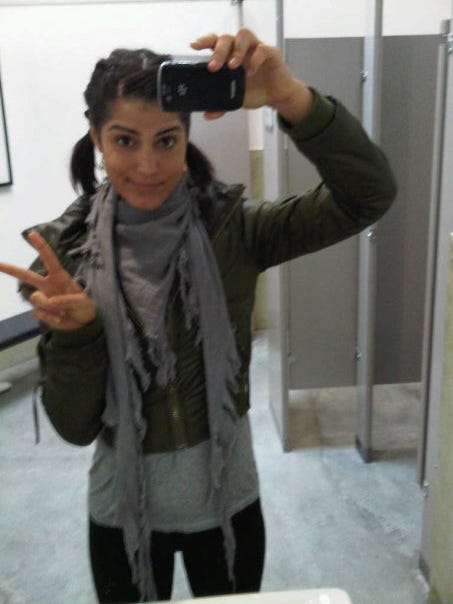
The thing about cringe is that it requires a lack of awareness on your part. Protective of my younger self, I went into the comments section of my old blog to see if there were signs I was missing — tells I was oblivious to at the time that others thought my thoughts were overshares and my writing was juvenile. But all I saw were supportive comments and genuine conversations. We were all just happy to be together.
There was nothing cringe about it.
The only person calling it cringe was future almost-40-year-old me, looking at this relic of a blog years later and wondering how she had ever been so blissfully open.
The second I realized that, I hated it.
So instead of giving in and becoming my own bully, I doubled down and took a deeper look at what was going on back then, what I’ve forgotten in the passing years, and what tf I can do about it now.
Part of what tf I can do about it is this: allow this space to be one where I write as freely as I once did, especially about the sensitive stuff, and the stuff that involves a lot of labor on my end.
Because how can I ask you to be fully YOU, when I am holding back from being fully ME?
Comments
Nothing yet. Say the first thing.
Sign in to join the conversation.