
Author: Artemis

Let’s start with the obvious: nobody in Web3 knows what they’re doing when it comes to marketing. Not the projects, not the protocols, not even the self-proclaimed growth gurus with fifteen pinned tweets about “community strategy.”
The only thing most teams have mastered is spending. Spend on airdrops, spend on KOLs, spend on quests that reward you for logging in and just breathing near a blockchain.
And yet, somehow, nothing sticks.
Every hype cycle burns out faster than the last. The same Discords that roar with energy before a drop turn silent the moment the token hits a chart. The same Twitter threads that rally a thousand replies dissolve into ghost towns when the campaign ends.
As Corey Wright said on Alpha Wolves, “nobody’s cracked Web3 marketing yet.” And frankly, he’s right. Because what we keep calling “marketing” isn’t marketing at all. It’s noise. And we’ve mistaken attention for affection.
Let’s be honest about what most Web3 campaigns actually are. They are quests to farm engagement, wrapped in words like “community” and “activation.”
JPEG Yakuza said it best on Alpha Wolves: “Incentives run Web3.” Everything here runs on rewards. Retweet this, join that discord, follow this founder, hold for a snapshot, get points. But the incentives that keep people moving rarely keep them caring.
That’s the dirty secret that nobody wants to admit. We’ve built an entire ecosystem where attention is cheap and loyalty is stupid expensive. People will show up for the quest, but they won’t stay for the culture. Because really, what culture is there worth staying for?
The fatigue is real. Even Payton admitted that players and builders alike are exhausted. It is not fun to feel like a marketing prop. It is not fulfilling to be part of a community that exists only when there is a drop around the corner.
Traditional marketing at least had one advantage: it built stories. Coca-Cola didn’t just sell sugar water; it sold nostalgia and cute little polar bears. Nike didn’t just sell shoes; it sold ambition and the drive to want to be just like Micheal Jordan. Web3 projects sell neither. They sell possibilities for sure, but then they forget to make it personal.
Airdrops and quests are good at creating motion, but motion is not momentum.The problem isn’t that people don’t care about Web3. The problem is that they care for only a few days at a time.

We have now lived through every era of Web3’s so called “strategy.”
First came airdrops. They were the first big idea. Reward users, give them ownership, let them evangelize. It worked for a hot sec. Then the farmers came, the bots came, and the soul left.
Next came memes. Crypto Twitter convinced itself that virality was the new branding. Projects thought they could become cultural icons by spamming frogs and wojaks and “we’re so back.” It felt fun, but memes work because they grow organically, not because an intern schedules them into a content calendar.
Then came micro-quests. The play-to-earn mechanic of marketing. Teams promised players that every little action would mean something. Follow this account, join this server, click this button, repeat for two weeks, don’t forget to claim your badge. It sounded gamified, but it was really just labor.
The pattern repeats every single time.Each new approach burns through the same community energy faster, leaving more cynicism behind. People don’t want more mechanics. They want meaning.
Corey Wright called it out plainly. Projects are confusing movement with marketing. They think every click equals conviction. But conviction doesn’t come from repetition. It comes from resonance. If your entire growth model depends on bribing people to show up, you will always be paying rent on their attention.
Marketing used to mean storytelling. But now it means spreadsheets. In Web3, teams talk about user funnels and conversion metrics the same way players talk about loot tables. But no spreadsheet can capture how it feels to truly belong somewhere.
Real marketing, effective marketing, that builds memory. It makes people feel like insiders to something that matters. That is why memes like “WAGMI” worked in the first place. It wasn’t a strategy. It was a feeling. When projects forget that, everything turns hollow. No one can “growth hack” culture. You can only earn it.
Look at how Wolves DAO built momentum.They didn’t run massive airdrops or spend a fortune on influencer pushes.They built consistency. Every week, people showed up to share ideas, help each other grow, and actually talk about what was being built. The loyalty came from the shared experience, not the reward system.
Listening back on the older Alpha Wolves Podcasts I think that is what Corey meant when he said most projects “skip the hard part.” The hard part is building trust slowly, conversation by conversation.The hard part is being visible when there is nothing to sell. The hard part is doing the same small, boring things long enough that people start to believe you are going to stick around rather than turn and run at the first sign of trouble.
But most of Web3 treats community like an event, not a relationship. Airdrops end. Quests expire. Memes get old pretty fast nowadays. But people who feel seen will keep showing up long after the token drops to zero.
Marketing in Web3 cannot be about clicks. It has to be about continuity.
JPEG Yakuza called it “incentive fatigue,” and that phrase perfectly nails the mood of the space right now. Everyone is tired of pretending that farming engagement equals progress.
Sure people can act dumb a lot of the time, but deep down we’re smart … sometimes. We can feel it when we’re being farmed for metrics. Every ‘quest’ starts to feel like busywork after the second login streak. That’s why the same players bounce from one project to the next, nobody’s here for meaning, just the math.
And honestly, the builders are just as drained. Payton mentioned how hard it is to keep enthusiasm alive when the attention cycles are that short. You spend months preparing a campaign, and it’s forgotten in a week. The dopamine of the drop fades fast, and what’s left is exhaustion. Or a demand for bigger and better.
This is where many teams start mistaking more for better. More campaigns. More tweets. More drops. More giveaways. But you cannot market your way out of fatigue. More noise doesn’t mean more attention. It just means more people muting you.
What people crave now is silence that means something.They want slower storytelling. They want projects that know when to stop talking and start showing.
The next wave of marketing will not be about louder incentives. It will be about quieter conviction. Or honestly maybe it’s already upon us and we just don’t know it yet.
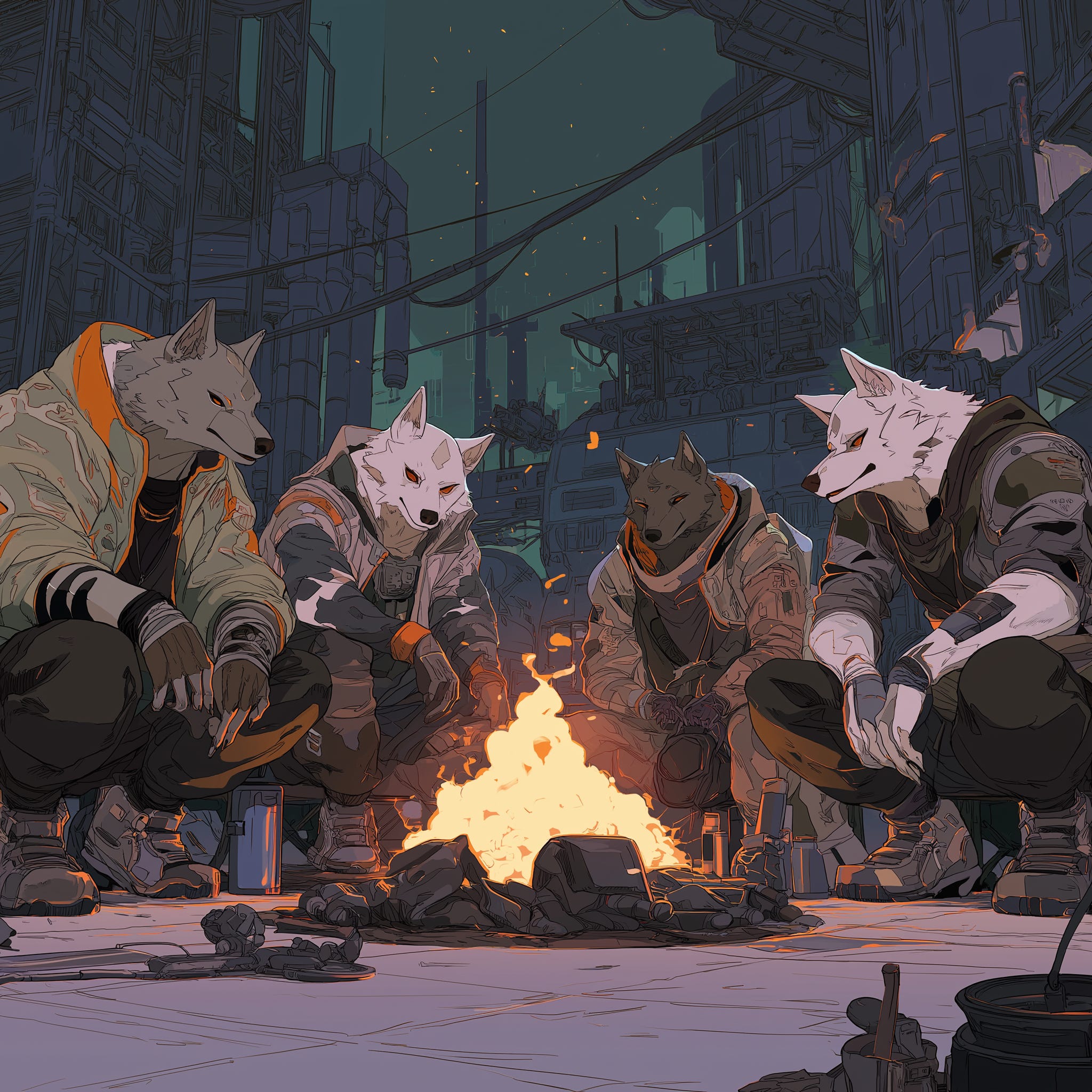
There’s a reason Wolves DAO feels different. It doesn’t shout. It doesn’t chase after its community. It just shows up. Earned attention is what happens when people start to trust that you mean what you say. It is not built on points or prizes. It is built on proof.
Payton and the Wolves team have been slowly building Alpha Wolves bit by bit, bringing builders like Corey Wright, Jihoz, and JPEG Yakuza to talk openly about what is working and what’s not. There are no token drops attached to it. No leaderboard. No secret whitelist at the end. And yet, people keep coming back.Tuning in and reading up on what’s discussed.
That is marketing that works, because it feels human. It gives people value before asking for anything in return. It respects the audience’s time. It speaks like a person, not a press release.
Wolves DAO shows that communities will rally around authenticity. When people feel invited to participate rather than manipulated to perform, they will stay. When you make space for curiosity instead of competition, you end up building a culture that outlasts every token cycle.
That is the difference between earned attention and rented attention. Rented attention vanishes when the rewards stop coming. Earned attention compounds time and time again.
The truth is, Web3’s marketing problem is not a lack of creativity. It is a lack of patience.
Everyone wants to go viral, but no one wants to go steady. Teams jump from trend to trend, chasing the latest “meta” like it is a boss fight they can win. But marketing does not have a meta. It has a heartbeat. And right now, most of the industry is flatlining.
We built the perfect machine for attention, but not the soul to sustain it. Projects hire marketing teams that sound like growth hackers but think like investors. Everything becomes transactional. Every campaign becomes a chart.It is not that the space is incapable of great marketing. It is that we keep confusing visibility with value.
The few who are breaking through understand this: Web3 marketing is not about getting everyone to look. It is about getting the right people to care.
And caring is hard to scale.
If Web3 marketing ever finds its meta, it won’t look like a spreadsheet or a campaign calendar. It will look like community members telling their own stories.
It will look like creators who build for joy, not just yield.
It will look like brands that make people laugh and feel seen, not just fill their wallets.
It will look like teams that can talk like humans again.
Corey Wright said that most projects treat marketing as “an event, not a system.” That is the real insight. You cannot build culture out of campaigns. Culture comes from repetition and resonance, not reach.
When the next cycle starts, the temptation will be to repeat the same playbook. Bigger drops, bigger budgets, bigger hype. But if the past few years proved anything, it is that attention does not equal affection.
The projects that survive the next bear will be the ones that learned to talk slower. The ones that built relationships while everyone else built dashboards. The ones that remembered why people cared in the first place.
No posts
Comments
Nothing yet. Say the first thing.
Sign in to join the conversation.