
O Lord our God arise
Scatter her enemies
And make them fall
Confound their politics
Frustrate their knavish tricks
On thee our hopes we fix
God save us all
What else can be said, other than that it was a complete and utter disaster? Britain’s soldiers had spent twenty years puttering around in the shadow of their American cousins. The long commitments to forever wars, global in their geographic scope, totally sucked up all allocated resources. Saddled with limited funding and paltry recruitment, the British Army, the red-headed step child of the British Armed Forces, was reduced to a second-rate occupation force at best.
As part of the Army’s focus on counter-insurgency during the various wars of the 2000s through till the 2020s, procurement of heavy equipment was totally inadequate in both quality and quantity. The reconstituted British Army of the Rhine, lacking in artillery, tanks, and the necessities of modern peer warfare in general, was nothing but a fifty thousand man speedbump for the 1st Life-Guards Tank Army as it barrelled through the Fulda Gap, but somehow still managed to avoid capture by the invaders. Much further east, the British Caucasian Division fared better, mostly due to being placed under American command and also due to its use in a supporting, anti-partisan role. Similarly, the RAF was swatted out of the sky over Poland and Romania, reduced to a glorified cargo fleet after one-too-many encounters with hostile anti-aircraft batteries.
The only branch of the British armed forces that can be said to have performed adequately was the Royal Navy, which had received just enough new ships1 and funding to enable it to carry out all of its allotted missions. Even the three troubled Queen Elizabeth carriers gave a good account of themselves in the Pacific, halting the Chinese push into Maritime South East Asia and saving Australia from invasion. Britain’s seven nuclear ballistic submarines, the vaunted Silent Service, performed genuinely admirably; much of its success can be attributed to a certain Albert Hacker, the ambitious and dashing captain of the newly commissioned HMS Dreadnought, which achieved a rare success in sinking the Russian cruiser Varyag in the GIUK gap and bottled up the Russian Northern Fleet for the duration of the conventional war. After NATO Allied Command Europe established East Anglia as a main rally point, the Royal Navy also served a key role in evacuating tens of thousands of NATO forces from Europe to Britain.
Of course, when the Russians managed to cross the Rhine, Paris abandoned all restraint, and the rest is history.
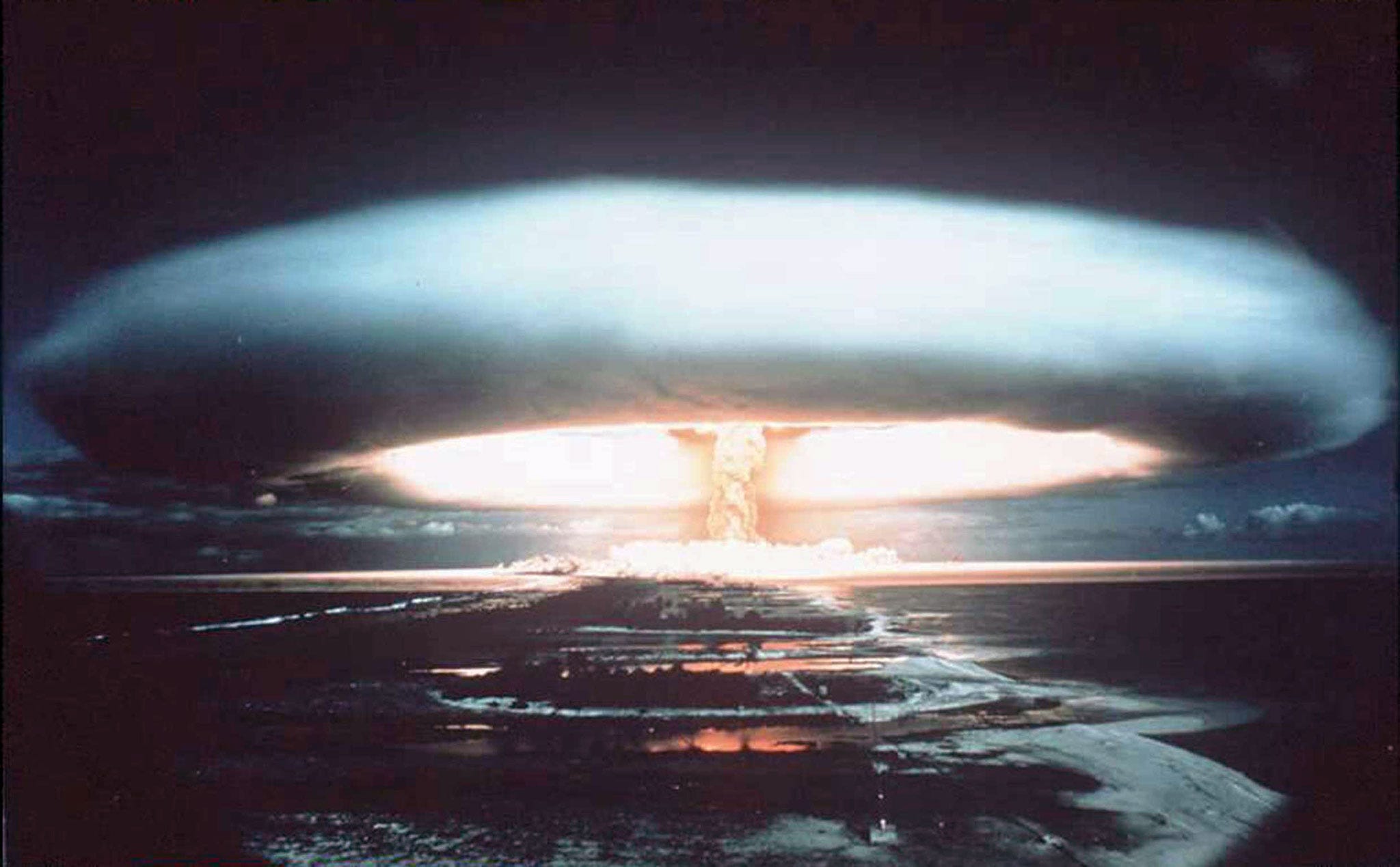
At 2:04pm, British Summer Time, on July the thirty-first, in the year of our Lord twenty-twenty nine, the first nuclear bomb exploded over Westminster. Through no fault of their own, a million souls were extinguished instantly. London was the third European capital to be hit, just minutes after Moscow and then Paris, and there was nothing that any of them could have done once the horrific screeching of emergency warning systems informed them as to their imminent demise. All the klaxons did was cause mortal panic for those in their last moments, and even worse, condemn a select few to draw out the inevitable in shelters, sewers and cellars.
Within minutes, it seemed as though the entirety of Britain was ablaze.
This first day of the global nuclear war goes by as many names as there are stars in the sky. Many of our readers in Bulgaria will be used to calling it Dyavolski Den, or the Devils’ Day. In America, 7/31 is often used. In Britain, the day the old world burned is usually known simply as “The End.” In initial reporting about the nuclear exchange, the BBC often, for lack of a better word, described the events simply as “The Incident,” a term that rapidly became a status marker in post-nuclear British society.
Britain was spared total destruction by both its pre-war dysfunction and its distance from the front lines. By all means, Britain as a tiny, densely populated island should have looked exactly like the Northeastern Great Wastes in the US, a growing crater with a mere handful of survivors scrabbling around in the ruins, but the country was deemed a much lower priority than the USA, France or even Italy when the nuclear exchange began.2
Twenty million died in the week the bombs fell, and another five million died in the next month from radiation positioning, violence, and injuries, leaving Britain with an absolutely monstrous post-nuclear population of 50 million souls, all crammed into an area around the same size as pre-war Romania or Kansas.3 This made it easily the most populous country in Europe, well ahead of Russia and Germany. With central authority in tatters, regional and local authorities took charge of governing Albion’s huddled masses.
Despite this huge population leading to a veritable plethora of issues, due to a variety of reasons, such as population density, a dearth of civilian firearms,4 and generally a much more deferential and compliant population, Britain did not fragment to the same degree as the United States or the former dominions of Canada and Australia. Councils too continued following orders and very few went rogue.
Regionally, pre-war governments held on in Northern Ireland, Scotland, the Channel Islands and the Isle of Man, who also refused to secede as a matter of principle, despite being in the perfect position to do so. Yorkshire and Northumbria, Cumbria, the Scottish Highlands, Lancaster, and Wight are all still de facto ruled by the descendants of local governments in some way or another. Lincolnshire was the only part of Britain outside of the Wild Fields to form its own government without major input from pre-war local government.
Part of the reason was due to how, in the first days after the war, the military assumed control wherever they could, and gave nationally recognised orders to stabilise the situation by any means necessary. Looting and rebellion was put down rapidly and with extreme prejudice by the military and police, and failing that, by hastily-raised militias under the authority of the local Councils. The military remained deferential to civilian authority, which caused no end of angst among both their commanders and the rank and file.
This would not have been possible without the extensive military presence in the British isles, where once again, Britain had been saved by its own pre-war dysfunction. While the Swinson Coalition government had planned to send an expeditionary force the size of the Cold-War era British Army of the Rhine in mid-2028, political horse trading and a crippling lack of manpower and equipment instead delayed the deployment of anything but a reinforced corps-sized unit to Germany as the second BAOR, where they lost combat effectiveness against the Russian Army within days. Reserve formations in the process of being trained remained in Britain, sitting on their hands until all hope for deployment was lost. At the time of the exchange, most of the British army was still in Britain and, despite the loss of most of its command in various strikes, unified and loyal to the government.
Contact was rapidly established with the British armed forces across the world. Despite taking few casualties, the BAOR had devolved into a very large pack of stragglers hiding out in the North German countryside, and was reconstituting itself north of the Kiel Canal. They received orders to stay put. In their place, a similar number of NATO forces who had fled to East Anglia were immediately placed under British command. All acquiesced.5 Meanwhile, cut off by the thick radioactive belt choking the Bosporus, the Caucasian Division were granted permission to do whatever they needed to survive. They duly threw in their lot with the Americans, who remained under Amarillo’s command until contact was lost in the summer of 2030.
Taken in totality, about enough of the bureaucracy and military remained loyal, mostly intact, and outside the reach of the worst of the nuclear fallout to ensure the continuity of the pre-war British state. This is a lineage which continues to this day: the Douglas government, though it overthrew its predecessor in Rhyl, in turn the successor of the Bath and Truro governments, has also largely inherited its apparatus of state, meaning that there remains unbroken continuity with the pre-war United Kingdom.
A government would emerge out of the Ruins, a hastily coined name for what had once been Greater London, to take charge. They gathered in the obvious choice for a new capital: the city of Bath, one of the major few cities in Britain to escape completely unscathed, and also where Cold War-era defence preparations had envisioned Britain’s government would escape to.
While Bath would be the new official seat of government, the Cold-war era bunker complex, Central Government War Headquarters in Corsham, Wiltshire, was reactivated for the government’s use.
The MPs, Lords Temporal and Spiritual, Whitehall officials and other personnel who had either gone to ground or miraculously survived the atomic bombing of London immediately set out on establishing a parliament in the bunkers, with parties frantically promoting anyone and everyone they could to the position of MP to fill the many, many, vacancies. This was short lived and failed to achieve much of note, failing even to map out and distribute the location of nuclear exclusion zones, unlike their American counterpart. The new parliament preferred to spend most of its time attempting to figure out who the prime minister should be instead, along with trading blame over both the British Army’s humiliating defeat in the Third World War and whose fault it was exactly for the dismal state of disaster preparations.
With King William and his children presumed dead in the nuclear exchange, the government established contact with his nearest living heir: Prince Harry, the Duke of Sussex. Crawling out of the wreckage of Santa Barbara, he joined the first Californian rump government in Bakersfield, where he was brought on as an advisor to the Acting Governor. Bath hurriedly and remotely crowned him as Henry IX, dispensing with the traditional pageantry of a royal coronation. The new king somehow proved to be even more indecisive and spineless than his father, and governmental deadlock continued. The only thing the Bath government agreed on, narrowly, was to end the March to the Sea, in which a large column of unruly refugees from Birmingham began terrorising the local countryside. Bath bought them off by allowing them to establish the Worcester Autonomous Zone. The baby of the House of Commons, a certain radical named Rokhsana Sharif was subsequently dispatched to act as the Chief Executive of the region.
It was at this time that Britain’s only surviving cabinet minister, Michael Smith, having lost any remaining scrap of faith in Britain’s remaining leadership, quietly slipped away to Lancaster to attempt to rally his own government with the help of his political allies in the region. Despite his high profile, the disappearance of a figure perpetually at odds with the rest of Britain’s politicians went mostly unnoticed at the time.
Relief was led instead by the Army and local councils. Working with disparate local authorities, the British Army had managed to assemble, with much trial and error, a conclusive map of exclusion zones and began handing out their stockpile of anti-radiation drugs to all and sundry, saving countless lives from a quick death by radiation poisoning and instead condemning them to much more brutal deaths via violence, exposure and starvation.
Not helping the situation were several follow-up strikes launched on Britain, hitting cities that escaped destruction in the initial wave and leading to panicked mass exoduses from the largest remaining cities and towns.6 The atomic destruction of Lincoln in particular wiped out the largest remaining centre of government outside of Bath itself.7 Here, the ensuing power vacuum was filled by landowners, whose actions would send the region and Britain as a whole on a very different path than Bath and Lincoln probably would have liked.
Eventually, three months after the initial exchange, Bath would be hit at the same time as its counterpart in America of Twin Falls. Two warheads were launched, a large one flattening Bath itself, while a second pulverised the Central Government War Headquarters with a direct hit. A few survivors once again dusted themselves off and headed south-west.
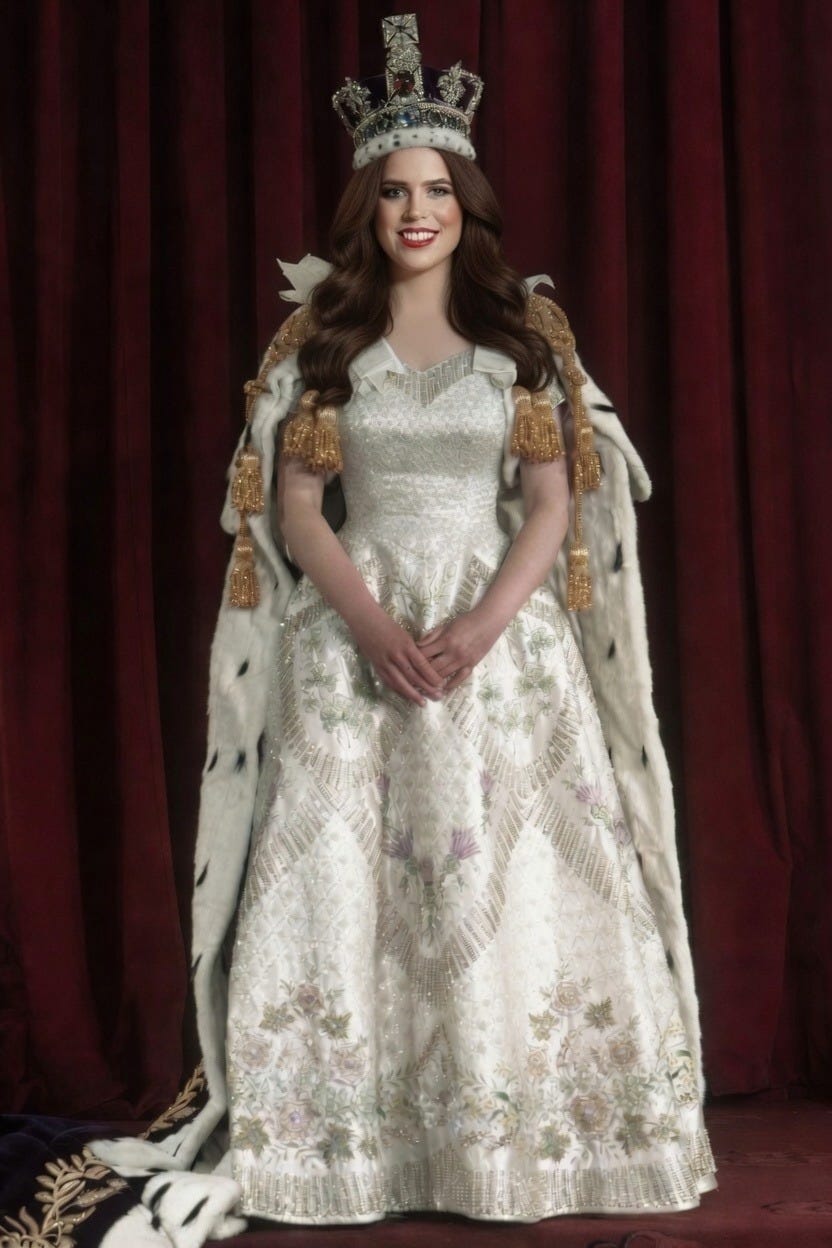
Victoria II’s stiff upper lip on display in her official coronation portrait. She was by all accounts a much shabbier and sadder sight on the day, but it wasn’t anything that image-editing software couldn’t fix.
In keeping with Royal Tradition, Victoria and the Truro government produced a large number of copies of this photograph to be distributed to government bodies, civic buildings and places of worship for free. A surprising number of these would outlast both Rokhsana Sharif and her government and are still frequently displayed as a tribute to Victoria II’s brief but inspirational reign.
As an aside, out of personal curiosity, I did some investigating into the regalia worn in the iconic coronation portrait. After spending too much effort on what was admittedly a wild goose chase over a spot of trivia, I learned the following:
Victoria’s coronation dress was made from white satin over the space of just several days. The dress’ embroidery has been added in post-production. After the coronation, the outfit was auctioned off in exchange for grain to Britain’s wealthiest farmers in what was crystallising into the Agricultural Protection Organisation. The winner of the auction was the disgraced Jack Davis, known as the “Bloody-handed Baron” formerly of Oakham, now of Soham. After the overly-aggressive expansion of his estates rendered him bankrupt, Davis was forced to sell up to Baron Taylor of Oakham, who bought out his entire estate, his entire stock of brutalised Essential Agricultural Workers, and most importantly for our purposes, his personal effects. Davis is building a museum dedicated to the former Queen in the eponymous capital of his Desmene, probably as a tax write-off.
The Robe of Estate is made of silk, acquired for, according to popular myth, several tins of beans. It was carefully painted to resemble embroidery and trimmed with wool, with dyed black spots to resemble ermine. The robe had been on display in Rhyl as a symbol of Sharif’s triumph over the old regime. When Rhyl fell in 2058, Lancastrian soldiers of the 3rd Sabotage and Reconnaissance group would donate the newly acquired robe to Lancaster City Museum in exchange for a sizable finders fee, to the extreme annoyance of King James III.
The current status of the Crown Jewels, including the Orb and Sceptre are less clear, despite the enthusiastic assurances by at least three men I encountered on my travels, they are not, in fact the real article, the real jewels having disappeared for safekeeping before the war and never resurfaced. Like the dress, they were well-made replicas. Once again, counter to claims made by these selfsame, shameless spivs in alleyways, they are not made of plastic either. They are in fact, made out of sugar, of all things. King James III is eager to recover them, for sentimentality’s sake more than anything. As for where they are exactly, a persistent rumour suggests they made their way into the Wild Fields during the Hollowing and are now in the possession of the notorious warlord Siegfriend Murphy, the self-styled “Aryan Emperor.” Given his known proclivities for all things sweet and yummy, it is possible, though perhaps unlikely, that they have been eaten.
The next government, hurriedly assembled in Truro would initially fare little better, at least until the next Coronation. Princess Eugenie, estranged daughter of the hated Prince Andrew, had somehow survived the atomic bombings of London and Bath due to a series of fortunate coincidences. She avoided the fate of her relatives in London by leaving the city, against all advice, to speak at an anti-slavery charity event in Canterbury, which happened to occur at the moment of the nuclear exchange. She likewise avoided any secondary strikes by staying out of Bath in a secure, undisclosed location, only emerging to spearhead relief efforts and visit refugee camps. His Majesty Henry IX was not as cautious; contact with King Henry was cut off following the atomic bombing of Bakersfield. After a month of radio silence, he was presumed dead. Shivering, starving Britons gathered around their few remaining televisions and radios to witness the ascension of Victoria II in Truro.
Eugenie had, on a whim, chosen her middle name as her regnal name in an effort to inspire her subjects during Albion’s darkest hour. The ceremony itself was more of a funeral than anything, with the Queen herself trying to keep up appearances, smiles and all but ultimately breaking down in tears several times during the memorial service to the fallen royals, (notably excluding her disgraced father) before suffering a total mental breakdown after the names of her husband and three children were read out.
Despite this inauspicious start, the popular mood towards Victoria II’s emotional incontinence was one of pure sympathy. Almost everyone had lost someone in the war, but few had lost almost their entire extended family, especially one as prominent in the public imagination as the Windsors. Victoria II ended her coronation with a dramatic speech, in which she swore to not let her subjects down, and after a day of rest, immediately took to her position with a surprising amount of heart and passion, singlehandedly restoring the reputation of the British monarchy virtually overnight.
The Truro era was a period of confusion and upheaval, but one tempered by a uniting sense of panic and disorientation among all of the peoples of Britain. Victoria’s actions put an end to this almost overnight, and hopes of a rapid recovery abounded. People waited patiently in ration lines, held off from raiding their neighbours, and genuinely tried to get on with their lives as best as they could, given the circumstances.
She worked quickly to fulfil these grand hopes. Before the Irish ambassador had even left Britain after attending her coronation, Victoria II delivered Britain its major foreign policy success, with Ireland agreeing to begin food shipments to Britain in exchange for payment at some unspecified future date, a deal that both allowed both sides to save face and also made major inroads to solving the pressing food problem.
Following on from this, another success was registered: The Z-Zone commission was established.8 Over the next few months, intrepid volunteers used maps and geiger counters to demarcate the Z-Zones: zones of elevated radiation, unfit for long-term human settlement.9
Then, Victoria II would break the political deadlock by breaking with tradition and simply appointing Father of the House Martin Vickers as prime minister, to the astonishment of the bickering lawmakers who were awed into compliance by this impetuous display of once-thought obsolete royal authority. After a few feverish days of constant work, Victoria and Vickers triumphantly announced a legislative blitz they would sign into law, a full package of legislation to address the many crises facing post-nuclear Britain: the Queen’s Reforms.
The reforms were thorough and comprehensive. They had thought of everything, consulting with experts from every industry, along with representatives of the common folk to create the best solutions they could. To save Britain from starvation, an ambitious crash programme to improve both agricultural output as well as living conditions of refugee camps by reforming them into self-governing agricultural communes, though the communes would be headed by existing farmers, combining the benefits of both existing commercial farming but also giving workers a say in the system. In hindsight, this has been seen as a much more humane and effective alternative to the totalitarian Lincolnshire System that would instead take root across Britain.
Most notably, these reforms would put an end to the hoarding that Wales, Lancashire and Worcester had engaged by centralising all power governing rationing in Truro. Excess refugees that could not be fed would be resettled abroad, if possible ending the state of limbo that much of Britain’s population had found itself in given the dearth of arable land in the country.
Finally, with the military having taken over law enforcement, Victoria and Vickers began drafting a new legal code, which would have put an end to English common law, had it not been effectively abolished two years prior as part of Op STONEMASON.
It is tempting to look back upon Truro with rose tinted glasses, but ultimately we will never know just what the consequences of these reforms would have been, for history had very different plans for the Bath government, and Britain as a whole.
Once again, Britain’s new capital was yet again blown into a giant pile of rubble by yet another Russian secondary strike, incinerating the dozen or so remaining members of the pre-war British government and hundreds of new appointees just a month after its formation. Victoria II was yet again spared by her work ethic, or perhaps her guardian angel, having been at the ribbon-cutting ceremony of the first of her new farming communities in North Wales. As an aside, it has been speculated that Victoria’s frequent humanitarian missions were part of a deliberate plan to stay mobile and beyond the reach of secondary strikes.10 This left only two remaining MPs in Britain: Michael Smith in Lancaster, and Rokhsana Sharif, who had been camped out with her constituents in a refugee camp that had been creatively termed “New Sparkhill,” arguing that the Worcester autonomous zone should be expanded to the entirety of the Welsh Marches. Before anyone else could react, Sharif, with the help of some of her constituents, seized a radio tower in the Worcester Autonomous Zone, and announced that she, as the sole remaining pre-war MP in Britain, (glossing over Michael Smith’s continued survival,) was now Prime Minister of the United Kingdom. Sharif supporters across the country surrounded town halls, established checkpoints and coerced local military units into complicity with the new government.
There was a good reason why this obvious power play was not met with a hail of bullets. The Senedd had made plans for this eventuality. They had quietly, knowingly, made a deal with the devil, hammering out the details of their pact with Sharif in a shadowy meeting mere hours before her coup. The terms were thus: Sharif promised Wales an unprecedented amount of autonomy, bordering on complete independence in exchange for their support in her coup against Victoria II, and in exchange, Wales would provide both militias and legal authority to help Sharif consolidate power. Support also came from across the Irish Sea, with Ireland immediately recognising Sharif as the new prime minister, partly out of ideological solidarity with Sharif, partly out of a desire to put a government—any government—in place in Britain, and also out of fears that Victoria II and Martin Vickers’ earlier statements about finding land to resettle British refugees abroad would include Ireland. The food aid continued to flow.
Both Sharif and Wales’ combined forces were still no match for the British Army, however. Everything came down to whether they would crush the insurrection, or stand by. With no other orders forthcoming, for Truro was bombed into nothing, the Army would be forced to make its own decision on what to do. It was a strange situation for the British Army to be in, with its long tradition of being politically aloof and totally subordinate to civilian authority rudely interrupted for the first time.
When General Alan Williams, Commander-in-Chief of the British General Staff, was rudely awoken by frantic underlings on the morning of April 25th, 2030 in his headquarters in Norwich, he was left with only two choices: To support the rightful monarch, who had become a national symbol overnight, and risk a brutal civil war that would bring further ruin to Britain, both by the war and through leaving Britain without a government at all in her darkest hour. Or, stand down, and let it happen. Besides, they thought, Sharif, for all her faults had shown a certain decisiveness and initiative in launching her coup, and she did offer Williams the same deal she offered the Welsh with regards to self-governance in East Anglia, now a virtual fiefdom of the British military, which would insulate the military and dependents from anything Sharif could do to them.
The details were irrelevant though, compared to the simple, fundamental question at the heart of the matter. If Williams would just renounce his loyalty to the Crown, a bloody struggle could be avoided. How different could the new government be anyway?
Thus, Alan Williams and his fellow officers entered the annals of history. Not as peacemakers, as they would have liked to have been seen, but as oathbreakers.
Victoria II was now a powerless figurehead at the mercy of Sharif and the Senedd, but she had yet to realise it. Her penultimate actions as a free woman, impassioned protests to the army, whom she expected to support her, fell upon deaf ears. She made one final appeal: To the errant Michael Smith in Lancaster, who she regarded as being slightly less traitorous than the putschists. Despite fleeing and empire-building, focusing on half a county to the detriment of the rest of the country, Smith had at least the decency to not overthrow a reigning monarch. Smith was surprisingly receptive, though apologetic. Being one of the few people left who knew Rokhsana Sharif without being under her spell, Smith knew all too well about the long list of political rivals she had toppled like dominoes during her meteoric political ascent. He warned the Queen that the usurper was spiteful if nothing else, and told her to run, offering any kind of assistance to that end, including sanctuary in Lancaster under his protection. Victoria categorically rejected the offer. Smith begged her to run. Victoria thanked him, wished him a good day, and hung up the phone.
That was the last time Victoria would talk to anyone without someone breathing down her neck for a very long time.
The call was intercepted by GCHQ, who like all British security services, were solely loyal to the bureaucracy, of which Sharif had assumed command. In an hour, Victoria II, having patiently waited for her captors to arrive, was duly placed under arrest, and detained indefinitely under anti-terrorism legislation.
From then on, Victoria II almost totally disappeared from the public eye until eventually, even the increasingly rare occasions where the Rhyl government showed her off ceased. Her eventual fate would not become known for almost thirty years.
When Smith received the call, he knew that with Victoria gone, Sharif’s vengeance would fall upon him and those under his care, sooner rather than later. He was struck with the realisation that he and his fledgling state were very much on borrowed time, and immediately dropped everything to launch the breakneck armaments programme that would save them from Rhyl and Yorkshire’s hordes three years later on the bloody hills of Keighley.
The new government needed a new capital. Worcester, the obvious choice, was vetoed by the Army and the Senedd, who both argued that the capital should move to Wales. The former had pragmatic reasons, given the region’s defensibility from the increasing numbers of raiders and refugee columns pushing out of the anarchic centre of England, soon to be christened the Wild Fields, while the latter’s reasoning was ideological, wanting to enshrine Welsh dominance into the new British political system. Sharif conceded, picking Neath, Wales’s largest remaining city. This was vetoed, as the Senedd had already relocated here from their temporary home in Aberystwyth. Other logical choices like Merthyr Tydfil and Wrexham were also vetoed by the Senedd. Barry was instead vetoed by the Army, who had made this key port the base of their operations in Wales. The Senedd, drunk on their newfound power, was only willing to concede the impoverished, unimportant town of Rhyl on the northern coast of Wales to the Sharif government. This set the tone very well for Senedd-Rhyl relations for the next 27 years.
Displaying a decisiveness that set her apart from her predecessors once again, Sharif assembled a government within one day moving into Rhyl’s town hall. Workers draped the venue with hastily-made banners of red and green as Victoria II was escorted in for the official state opening of parliament. To this end, she had assumed command of the Labour Party,11 Britain’s largest political party, to only mild complaints from ambitious councillors and party officials who had more legitimate claims to the party chairmanship than the putschist. With there now being a vacancy in the Green Party, however, (now Her Majesty’s Most Loyal Opposition,) plenty of squabbling was to be had anyway. Labour and Green councilors from across Britain, community leaders, and shop stewards were confirmed as new MPs by a trembling Victoria II.
Unbeknownst to Sharif and her six hundred and forty nine sycophants, trouble was brewing in Great Yarmouth, on the other side of the Ruins.
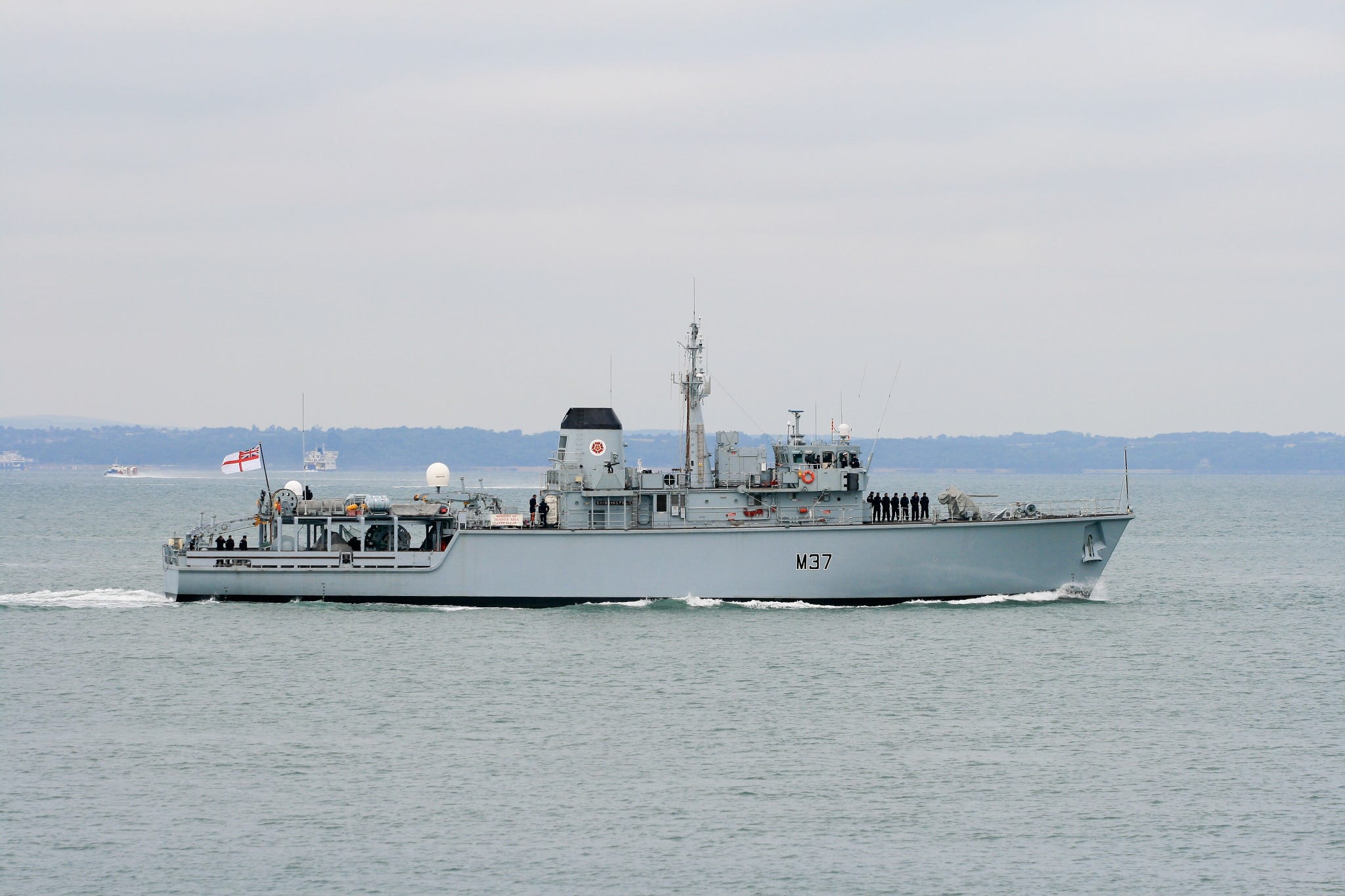
GDS (Grand Ducal Ship) Chiddingfold in pre-war livery. This venerable vessel, now eighty years old, is formally still part of the Ducal navy. Chiddingfold has the distinction of being the first ever ship acquired by the Grand Ducal Navy, and is an enduring symbol of Lancaster’s mythos of resistance to the Rhyl government, ferried aid to the beleaguered Irish government during the Irish War, enforced the Lancastrian blockade of the British Isles, and was even present at the Battle of the Menai Strait that marked the end of the British Civil War.
She hunted Icelandic pirates and East Anglian fishermen in the Cod Wars, serving with distinction in all of the Duchy’s, and later Grand Duchy’s wars at sea.
These days, Chiddingfold now spends most of its time moored in Morecambe harbour or pottering around the Morecambe Bay with a full complement of wobbly-legged naval cadets.
Understandably, this sudden and unexpected change in power caused some alarm in the military, who were weighing the possibility of a counter-coup. General Williams once again intervened decisively to maintain the status quo, however, and several cells of would-be mutineers found themselves facing military justice. His plans to personally bring them to account—even appearing in Great Yarmouth in person—fell apart, thanks to widespread sympathy amongst the demoralised rank and file for the aspiring putschists. Adequately warned by sympathizers who obstructed Williams’ intervention, the mutineers escaped from East Anglia by commandeering the minesweeper HMS Chiddingfold. Steaming out of Great Yarmouth harbour, they were immediately pursued by the rest of the Royal Navy ships in the area, but the captains of the pursuing ships refused to fire upon Chiddingfold without orders from above.
General Williams, having watched the mutineers literally slip out from under his nose, was once again paralysed with indecision. He was genuinely terrified that, despite his earlier actions, that fighting among his army might break out regardless. Seeking to abdicate responsibility, he immediately set about informing Sharif of the situation, implicitly expecting her to dictate to him and the military a course of action. Giving his own opinion, Williams first and foremost viewed conceding to any revolt in the British military as a prelude to a collapse in cohesion amongst the armed forces more generally. Sharif, while sympathetic to Williams’ view, nonetheless stayed his hand. The mutiny had demonstrated that armed forces needed to be purged anyway, she argued, and what better way to deal with them than to let the rubbish take itself out? Williams quickly began to regret his choice to side with the upstart. He argued his position to the best of his (limited) abilities, but still found himself having to submit to Sharif’s will after being rhetorically dismembered by her.
A compromise was negotiated. The mutineers would be free to leave, as long as they gave up the few heavy weapons they had managed to smuggle aboard. What use would they be without them, anyway?
Sensing weakness, the mutineers kept pushing for more concessions. When word of the British government and military negotiating with this motley crew got out, the mutineers’ sympathisers too smelled blood and joined in. Sharif’s rare display of restraint caused a situation that had started off as the theft of a single minesweeper to snowball into open revolt. The government duly offered them the same deal as the mutineers: weapons in exchange for exile, on pain of being fired upon if they refused. All accepted. Within days, a good number of ships from the Royal Navy and other NATO navies along with civilian vessels, all of whom anchored in East Anglian ports since the end of the Third World War began to fan out across the ocean to seek refuge elsewhere.
While the majority of the mutineers were British Army and their families, also aboard the flotilla were thousands of other NATO troops, most notably the Hungarians and Slovaks of NATO’s Carpathian Corps. Their commander, the proud Major-General Bator Gyula had chafed under the rigid chain of command the British military had imposed on them. It was no surprise when officers and enlisted alike, along with a good number of Hungarian and Slovak civilians who had been evacuated to Britain with them, eagerly jumped on the idea of seeking their fortune somewhere else.
Causing some consternation in Norwich and Rhyl was that the worst possible person to mutiny, Captain Arthur MacGregor, did so, delivering his ship HMS Vanguard, one of Britain’s two remaining ballistic missile-armed submarines, into the hands of the rebels, along with several nuclear warheads. This situation was resolved surprisingly easily, thanks to a general desire to avoid a nuclear exchange so soon after the first one, along with backchannel negotiations with an unexpected third party; Arthur MacGregor having called in a favour with the government of his home country of Scotland. Vanguard was able to complete its mission of escorting the other vessels to Fleetwood, in the newly-formed Duchy of Lancaster, without incident. Michael Smith, having assumed control of North Lancashire by leveraging his status as Chancellor of the Duchy of Lancaster, knew a golden opportunity when he saw one and wasted no time in offering the mutineers sanctuary in order to provide a foundation for an army and navy of his very own.
A few proceeded from there to Douglas or Lairne, though the majority of the remainder headed further north, to a Scotland now independent in all but name, though they had relinquished control over most of the mainland. In accordance with the prior agreements made with Scottish officials and the Rhyl government, HMS Vanguard continued on with a handful of ships to Lerwick to place both the vessel and its nuclear arsenal under the command of the Scots.12
Not all headed west. Among the mutineers, there were some who, while objecting to the coup, still saw joining up with governments in practical revolt against the government as tantamount to high treason. These elements instead braved the icy waters of the North Sea to seek refuge among the BAOR remnants in Schleswig-Holstein.
In the end, both Williams and Sharif were right, in their own way. While Sharif had ulterior motives, she was ultimately able to avoid bloodshed and the military retained all of its heavy weapons at the cost of a small fraction of its disloyal personnel and a few rusting hulks. Williams’ warnings about conceding to the mutineers would prove prescient, however. Thanks to the legacy of the mutiny on the Chiddingfold, the military’s shaky loyalty and fractiousness fermented into a recurring issue that still haunts Britain to this day.
For now at least, this was nevertheless no great loss for Rhyl. Sharif, while publicly furious, was privately ecstatic. Before the military could prepare some kind of explanation, Sharif turned her forked tongue on Williams, publicly humiliating the hapless field marshal by blaming him for the entire course of events. Williams, realising he had been had, chose to resign and was immediately replaced by General Sheldon Campbell, who would go on to demonstrate even less spine than his predecessor.
As for the mutineers, she thought, good riddance! For how could she build a new, fairer Britain with goosestepping lunatics infesting her armed forces? And how much damage could they possibly do, exiled to the remote corners of the British Isles, bereft of formidable weaponry that could no longer be produced?
Crucially, now with the Chiddingfold mutiny over and all three of the main organs of state—the Establishment, the Senedd and the Army—finally in alignment, a triumphant Rokhsana Sharif, having finished the hard job of establishing herself as the supreme authority in most of Britain, was rapidly able to begin sinking her teeth into the hardest job of all: Governing.
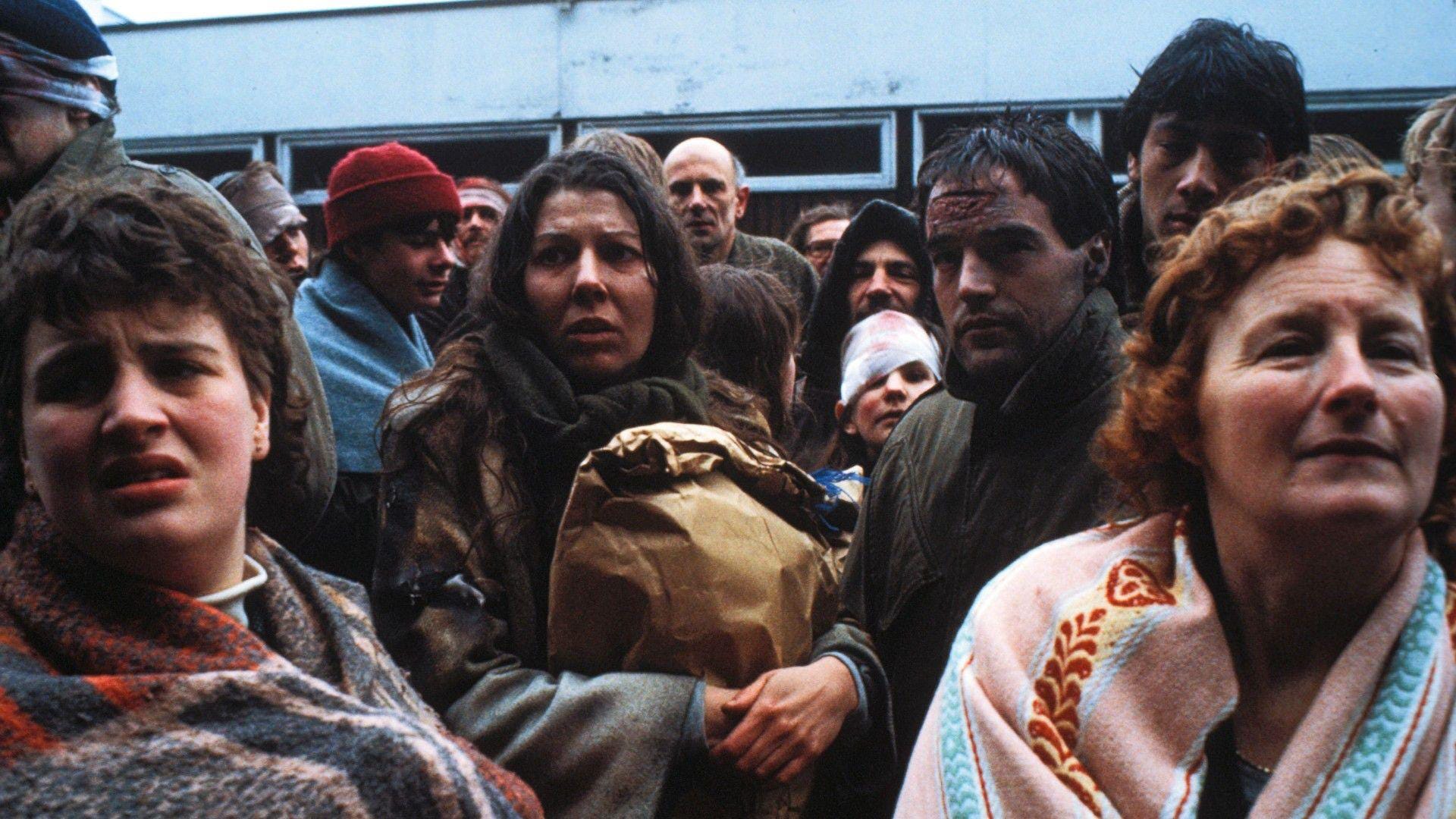
Sharif’s notebooks full of ambitious plans would have to wait. The Rhyl government was immediately confronted with the onset of the Black Thirties, a term in Britain used to describe the general atmosphere of catastrophe and total breakdown of society that dogged the early 2030s, in contrast to the more specific crises that would follow, such as the Hollowing.
The Black Thirties are widely considered to have begun in earnest after the atomic bombing of Truro and the subsequent coup. The first and most obvious cause of this total societal breakdown in Britain was the food situation. By the time of Sharif’s coup in early 2030, while less than a year had passed since the Third World War, the British government’s meagre food stockpiles were running dry. Bread rations were down to four hundred grams a day for a working adult, and half that for everyone else, and of the bread half again was probably inedible, with the best cuts once again saved for the employed. Given the disruption induced by the nuclear war to the British economy, there were not all that many working adults either.
Nonetheless, the Black Thirties are not wholly synonymous with the global famine that engulfed most of the world during this period. In Britain, the decade is remembered for the general breakdown in public order and mass violence that engulfed the country, in stark contrast to the remarkable level of social solidarity during the Bath and Truro governments which fell to pieces virtually overnight.
The next of the Black Thirties was climatic. The winter of 2029-30 had been harsh, yes, but not overly so, all things considered. The worst pre-war climatic fears; the Gulf Stream being turned off, aligning northern Europe’s climate with that of Alaska had not come to pass. When winter turned to spring, and then summer, at least according to the dates on the calendar, everyone in Britain would have to grapple with the bitter reality that the sooty blankets of cloud overhead and frequent downpours of black, ashy rain and sleet were here to stay.
Victoria II’s honeyed words of everyone working together to plough the fields and reap nature’s bounty rang hollow when those same fields were covered in snow in April. As each day crept past without the appearance of spring, anxieties multiplied.13
Finally, the impact of Truro’s bombing and Sharif’s coup had caused the latent anxiety, hitherto contained by the British stiff upper lip, to escalate into outright panic. The fragile hope that had kept the population pacified across the towns, villages and tent cities of Britain evaporated. All the grudges and hatreds fuelling the 2024-29 unrest that had been mostly put on hold by the Third World War now resurfaced with a new fervour, now that the terrifying reality of their situation had become shockingly apparent.
Anarchy reigned, and making things worse, millions of Britons now sought to flee the sinking ship that was Britain by any means necessary. Larders emptied, machetes swung, and chaos reigned over all.
It was patently clear that something would have to be done, and somebody would have to do it. It wouldn’t be the chattering classes, holed up in town halls and fighting off endless waves of those desperate for a crack at their stockpiles. It wouldn’t be the army, still under the impression that there was a Third World War to be fought and won (and that cowering behind the ruins of the Kiel Canal would somehow accomplish this), making even the most callous local councillor blush with their solipsism.
Yes, Britain would easily have disintegrated but for the actions of one woman, a woman who would quickly come to be called by many different names. To her allies she was the Green Queen, a beneficent matriarch, a god-empress in all but name who miraculously held Britain together through its darkest hour. Other appellations were somewhat less positive. The She-Devil, The Whore of Babylon, The Brown Beast, The Tyrant of Rhyl, The [REDACTED]-in-chief, and most poetically, the Gaoler Queen of the Prison Isles.
Playground insults aside, not many other than Sharif would have been up to the task. She had a party machine, loyalists, and enough competence to either avoid making critical mistakes or find a suitable way to deal with their consequences. Most importantly, few, if any, would have been able to match both Sharif’s unassailable faith in her own abilities and the moral self-righteousness which let her justify any and all actions undertaken to keep order.
In the years to come, the hitherto unproven Rokhsana Sharif would demonstrate that she was willing, and able, to wade through any number of corpses to ensure her will became law.
Click here to read the master post of the series, with links at the bottom of the page to all other Fallen Kingdom entries.
Previous Article: Antebellum Britain
Next Article: Physical Geography of the British Isles
As part of the 2017 defence white paper, a third Queen Elizabeth-class carrier was commissioned, along with several more frigates and destroyers to serve as her escorts. Meanwhile, in a minor miracle, the Dreadnought class of nuclear-powered ballistic missile submarines had their construction timetables moved forward a decade, ensuring that three of them would be ready by 2029 for use in the Third World War.
Like most European countries, Russian strikes on Britain took the form of a disproportionate number of smaller-yield warheads as well, meaning that while Britain was hit with a whopping three hundred warheads, totalling 80 megatonnes of explosive yield, the average warhead was only around 250 kilotonnes, though split between 50 kilotonne tactical nuclear weapons and 1 megatonne “city-busters” This is in stark contrast to America where the average warhead was a 1 megatonne “city-buster.”
Considering the large stretches of irradiated territory scarring the country, the effective habitable area more closely resembles the size of antebellum Senegal, or the American State of Georgia.
Many legal gun owners in Britain found themselves prosecuted under the draconian provisions of STONEMASON’s anti-terrorism legislation. Officers found themselves arresting as many gun owners as possible, under any pretext to meet arrest quotas and to hoard said firearms for themselves. Ironically, as it was far more dangerous to own a firearm legally in Britain in the 2020s than it was to possess one illegally, leading farmers and country folk, and even police officers to begin producing their own crude guns and ammunition to keep up with increasingly brazen and heavily armed criminal gangs.
The U.S. rump government in Amarillo, Texas, along with the German government in Flensburg, the Italian government in Cagliari, and others later gave retroactive assent to the decision. Sadly, the large Polish contingent was unable to establish connections with any authority and instead founded its own exile government: the Polish Fourth Republic.
Unlike in America, these strikes were limited enough in Britain to be able to be listed in full here:
—Bradford, and Luton were all hit in the first month after the war, along with Mount Pleasant in the Falkland Islands. This ensured that much of their population was successfully evacuated.
—Birmingham was also hit by a second city-buster a month or so after the other secondary strikes, though almost everyone who survived the first strike had evacuated by then.
—The last secondary strike on a non-capital city in Britain was Lincoln, which had become the second most important city in England by virtue of being the main centre of government east of the Liverpool-Southend line. The city was destroyed along with many of its officials, though once again most of its civilian population had fled.
Despite its devastating effects on state leadership, the secondary strike on Lincoln left the city in a better radiological condition than was initially assumed, and Lincoln is one of the first cities in Britain to be resettled.
The term was used in 1980s era civil defence planning, which was far more comprehensive than their 2020s era equivalents. When the plans were dug up again in 2028, many of the old plans’ provisions and technical terms would be adopted wholesale.
Z-Zones, along with other quirks of British post-nuclear geography will be covered in more detail in a later chapter of this report.
Some of the most effective rump governments were those with itinerant capitals and mobile state machinery, such as Oregon and Michigan. The Americans also successfully ruled from subterranean redoubts, as was the case in Pennsylvania, but this was contingent upon the bunkers’ locations and purposes remaining obscured from the enemy. No amount of reinforcement could have spared Raven Rock or the Cheyenne Mountain Complex from atomic destruction. See our report on Task Force PHOENIX for a more comprehensive analysis.
Sharif had been a Labour MP until 2024, leaving for the Greens over ideological concerns, but rejoined the Labour party for pragmatic reasons upon her accession as Prime Minister. Given that she was the only MP left standing, she felt able (and indeed, was able) to remake the party in her image.
The Scottish Parliament had evacuated from Holyrood to Lerwick prior to the nuclear exchange. They proudly reported to Rhyl that they were politically stable, had ample stockpiles of virtually all resources (that they would not share), and were more than happy to take the mutinous HMS Vanguard and its complement off Rhyl’s hands. Notably, they did not report to Rhyl exactly why their relatively small stockpiles would be enough to feed Scotland’s entire surviving population.
Rhyl and the mutineers found Lerwick’s proposal to be superior to anything they could come up with. Thus, Scotland entered into the hallowed ranks of nuclear-armed nations.
In what must be the most bizarre but by no means the only outbreak of collective delusion during this period, many simply took to screaming at the sun, frantically pleading with it to warm their houses, their bones and their fields or even to just explode and kill them. The sun did not feel the need to respond.
No posts
Comments
Nothing yet. Say the first thing.
Sign in to join the conversation.