
Author’s Note: Truncated versions of this report will be printed for commercial distribution to the local business community and friendly foreign governments. If successful, we may perform a print run for the general public as well. As such, the mandate we were given for Op. GOLDFINCH required this historical primer to be written and added to the report for context.
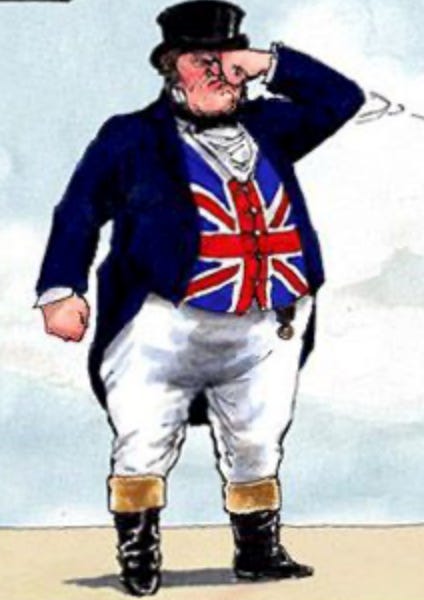
God save our gracious Queen
Long live our noble Queen
God save the Queen
Send her victorious
Happy and glorious
Long to reign over us
God save the Queen
The 2020s were a rough decade for Britain, as it was everywhere, but in perhaps a different way than most other countries. While Russia, France, China and America all slid into hardline militarism, mobilising their economies and societies for war, Britain simply floundered. With its economy in tatters after being forcibly ejected from the European Union, Parliament deadlocked, and sectarianism paralysing the system though never quite flaring into armed conflict, Britain had already conclusively dropped out of the ranks of the Great Powers of the World by 2029.
Despite, or perhaps because of this, Britain spent the noughties and ‘10s playing second fiddle to America during its imperial adventures in a vain effort to inflate its national prestige by association. An increasingly frustrated America struggled to humour Britain in these efforts, angst over the special relationship growing due to endless British grand promises materialising only as under-performance and disappointment on the battlefield, and Britain’s foreign adventures largely ceased by the late 2010s, having gained her nothing at all.
Relations with Europe were no better, with Britain sucked into furious debate over French-mandated Euro adoption, a debate which ended up toppling Prime Minister Gordon Brown, the last pre-war prime minister to preside over a majority government. His departure in 2013, lauded at the time but now seen as the end of a happier era, led to the beginning of chaos in Westminster, as the Labour party, part of a fragile coalition with the Liberal Democrats and Scottish Nationalists began to reenact the infighting and chaos that toppled Major’s Conservative Party in the 1990s both within the party and the coalition as a whole.
This adventurism did no favours for Britain’s desperate attempts to balance its books, already reeling from Ed Miliband’s religious devotion to the environment and unrestrained borrowing by HM Treasury. The latter was a result of the government unashamedly attempting to buy off the British public, increasingly bewildered by footage of nightly atrocities in foreign lands and lines of body bags wrapped in Union Jacks, broadcast in high definition on the BBC. Economic woes, slowly at first, then rapidly, whipped the population into a frenzy, while people and communities grew more and more anxious to keep hold of their slices of a slowly disappearing pie.
This long string of failures might indicate the British Government’s energy was focused somewhere else. This is indeed a correct assessment of the situation; Westminster was totally focused on repressing its own population, being more concerned about internal stability than anything else. This was despite, or perhaps because of, the looming threat of a Third World War, which had already seemed likely after Russia’s shocking imperial restoration in the 2010s.
At first, this mostly included Islamists, fired up by Britain’s participation in invasions of Afghanistan, Pakistan and Somalia, leading to massive numbers of those displaced seeking asylum in Britain. This contradiction resolved itself in the most obvious way, culminating in 2017’s Manchester Attacks, in which dozens of bombs went off across the city in a single day, killing almost a thousand people, including a performing American pop star. Various Anti-Muslim pogroms spearheaded by the New National Front and Sword of Bharat were put down with live ammunition. This, along with the resignation and public censure of PM Miliband for the security lapses that had led to the attack calmed tensions considerably for the next 7 years. Cooler heads prevailed, for now.
The election of Rory Stewart as PM in 2018 (the Conservatives’ first, and only prime minister since John Major), would improve matters. A curb in migration soothed nativist tensions, while a reduction in public spending led to growth returning after a decade of recession.
Stewart would come unstuck by his own weakness. Despite running on the platform of withdrawing Britain from the EU, his half-hearted “attempts” to fulfil his campaign promise angered both the left and his own supporters. After several years of dithering, an increasingly tired EU (by then, a mere proxy of an increasingly psychotic France) simply ejected Britain from the European Union, crippling its economy overnight.
As millions were thrown out of work, Stewart reached for the only policy lever he knew how to use: opening the borders once again, in the vain hope that low-wage migration could get Britain’s economy moving. It didn’t work, and neither did Stewart’s constant insistence that everything was hunky-dory. Stewart’s total betrayal of his voters and his increasingly smarmy, entitled and completely out of touch demeanor led to Kier Starmer’s landslide victory in 2023. The adults were back in the room!
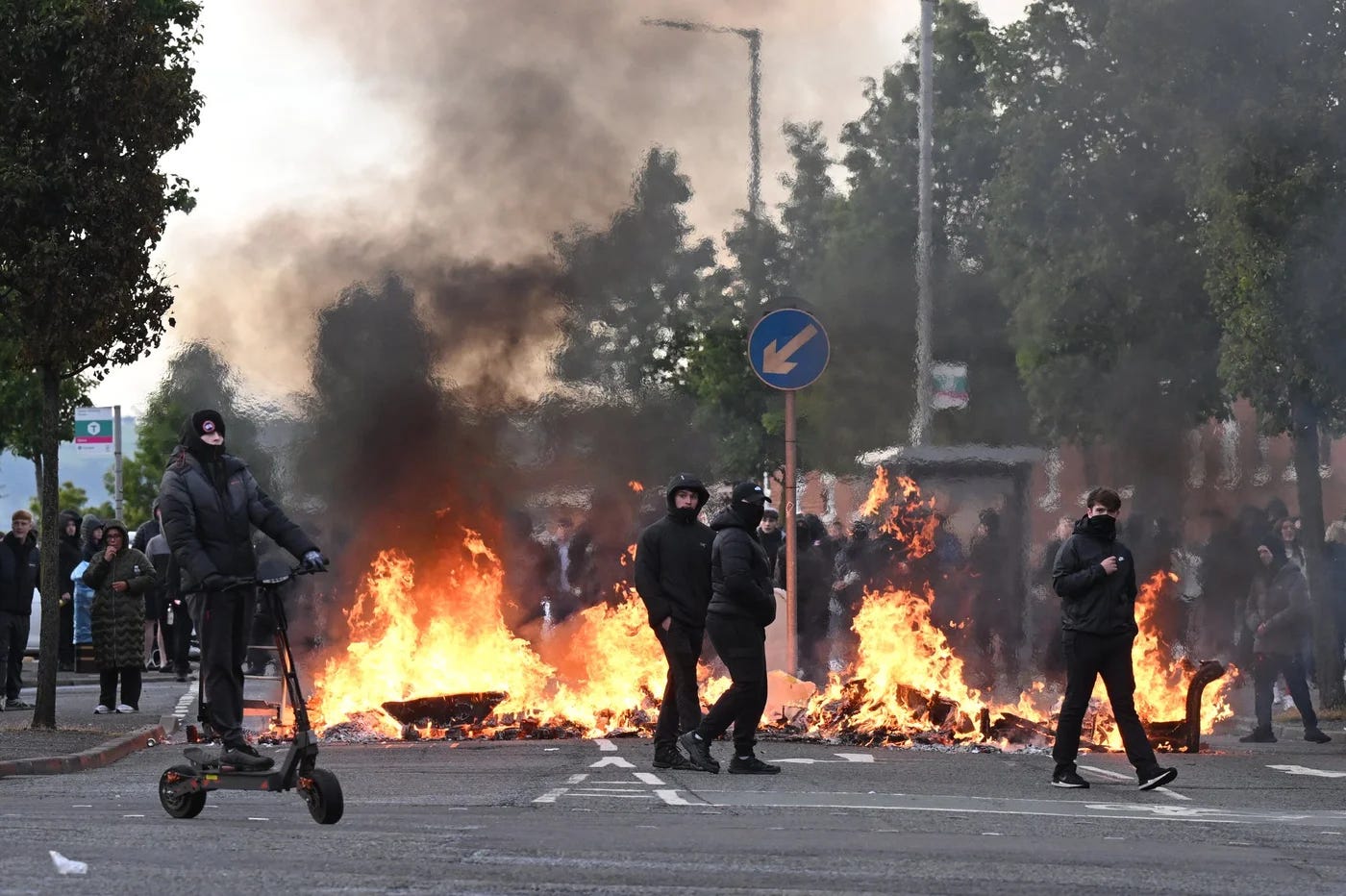
Everything kicked off again just a year later when a dance class of little girls was attacked by a machete-wielding madman. The British government aimed to maintain information hygiene, which led to all manner of theories circulating as to the identity and motive of the attacker. All dance classes across the Isles were cancelled, permanently, and schools placed under armed guard.
The government blamed the atrocity on Russian agents, arresting any who questioned the official narrative. Once the truth came out about the attacker being a second-generation migrant, Britain erupted. Britons had previously had immense tolerance for their government lying to them, having accepted declining living standards, endless foreign wars and Rory Stewart on PMQs, but those were the good times, the good old days, before things had become intolerable, before a time when their bread wasn’t full of sawdust and their circuses run by a barely watchable BBC.
Horrific outbursts of nativist violence led to left wing and Islamic groups mobilising in response, taking up arms in self-defence, monetary gain, and of course, the pursuit of simple vengeance.
As one fire drives out one fire, prevailing forces in a region would physically force out the losing side. Urban ghettoes heaved with those burned out of their homes, and quiet towns and sleepy villages became an uneasy home to those bearing missing limbs and acid-burned faces. This understandably caused many areas receiving these internal refugees to become extremely radical, to pick a side, stick to it and become an echo chamber for the most radical voices.
Societal fragmentation was not aided by the rapid realisation among ambitious junior politicians that the fastest way to power was to inflame tensions as much as possible. The most notable in this regard was one Rokhsana Sharif, who defected from Labour to the Greens to capitalise on political opportunities as they presented themselves.
Some still did side with the embattled government. Many wealthier areas, both urban and rural dealt with change by simply shutting the new world out, becoming passionate about returning society to the time before everyone became a raging sectarian. They were passionate about this to the extent that they somehow became violent sectarians themselves, with the British government as their tribe.1 In this, they were rewarded with the last vestiges of state funding, somewhat functioning public services, favourable press coverage, and of course, a golden ticket for their children to receive one of the diminishing number of good jobs, or even better, the halls of power themselves.
One way or another, rampant tribalism ensured that a siege mentality descended over the minds of all.
Nobody had a stronger siege mentality than Britain’s various police forces themselves. HM Government was wholly reluctant to admit defeat by putting the Army on the streets, so it was up to the thin hi-vis line to keep order somehow. Policemen found themselves virtually imprisoned by their own employer: Forced to come into work every day under pain of imprisonment,2 to do a job that required them to face frequent attacks from insurgents and endure the scorn of virtually every sector of British society, including the government that had all but enslaved them, which vacillated between raging about police brutality and chastisement for not being heavy-handed enough. Understandably, this did not do wonders for morale or cohesion, and many bobbies decided to take out their frustrations on those whom they deemed responsible for their predicament. Or indeed, anyone to hand.
Many officers, out of delayed conscience or fear for their own lives, picked imprisonment anyway, and numbers fell by 25% in a year. With few other than the most ideologically pro-Government, most sadistic or the most desperate enlisting, the British government began drafting many of those arrested into the police forces to fill the ranks, which to the surprise of absolutely no-one outside of Westminster caused the police forces to degenerate into little more than a rabble. This did relieve some pressure on prisons, however, and was marketed as a success in rehabilitative justice.
While the police may have been the group most affected, geographically, nowhere was affected more than Northern Ireland as well, tensions running even hotter than the mainland. Unrest over social tensions, housing and general economic ruin saw Nationalist and Loyalist protestors mobilising, demanding the British government address their concerns, which chiefly concerned their own flavour of nativism and of course, economic concessions. They were immediately blown away by relentless volleys of shotgun slugs and trampled under the iron-shod hooves of police horses in what made the crackdowns on the mainland look like child’s play, as Westminster—displaying its usual amount of knowledge about Northern Ireland—totally misread the situation and saw this as the prelude to a second Troubles. Ulster Volunteer and Provo recognised that for once, they weren’t currently each other’s greatest problem, for now at least, and Northern Irish society finally united in the most unexpected way over their shared hatred of Westminster. This would lead to Stormont electing the Anglo-Irish Nationalist Party, a pro-independence, mostly non-sectarian coalition of hardline Unionists and Nationalists, which despite being nearly as shaky as the British government itself somehow held on until 2029 and beyond.
This was remarked at the time as being a completely contrived development, with the most paranoid suspecting foreign involvement in the creation of this unholy alliance. The truth is that changing Loyalist attitudes towards HM Government led to the beginnings of primary self-identification as “Ulstermen,” rather than “British,” among historically loyalist communities in Northern Ireland. Similarly, Nationalists were disappointed by the Republic of Ireland’s reluctance to criticise Westminster for its heavy-handedness.
While in hindsight, knowing that the world was about to descend into a nuclear hell, HM Government’s anti-nativist hysteria seems almost quaint, the crisis was indeed very severe by pre-war standards and led to a sense of governmental hyper-fixation on the 2024-29 unrest in Britain. The disproportionate focus on nativism was noted by Tory backbenchers, who used the threat of calling a vote of no confidence in tandem with rebel Labour MPs to extend repression to other militant groups and communities as well, against Stewart’s feeble, febrile objections.
Within a year, the state had largely contained the mass, open unrest with tear gas, indefinite detention and eventually live ammunition, forcing the insurgents to change tack. Britain’s porous borders allowed foreign fighters and money to pour in, with nativist groups receiving minor financial and military support from American far-rightists3 and the Russian Empire, ethnic self-defence militias from their home countries in Eastern Europe and South Asia, while left-wing and sectarian groups negotiated funding from the Chinese government, alongside the British government itself in some instances.
The latter half of the 2020s saw Britain suffer through a new phase in the civil conflict: the winding down of mass action, replaced with a dramatic series of bombings, assassinations, and targeted sabotage, ranging in intensity somewhere between the contemporary American Northwest Front’s insurgency and the Troubles, but notable in its sheer scale, raging on from Land’s End to John O’Groats.4
While Westminster’s support base was thin on the ground by now, the conflict cannot be accurately described as a singular insurgency against HM Government, the parties involved spending as much time and effort fighting each other as well as the central government itself. This was of course due to sheer diversity of the parties involved. Right-wing nativist groups, left-wing progressives, Islamists, Celtic Nationalists, Satanists and very opportunistic criminal groups all took the opportunity to make their play as central authority withered.
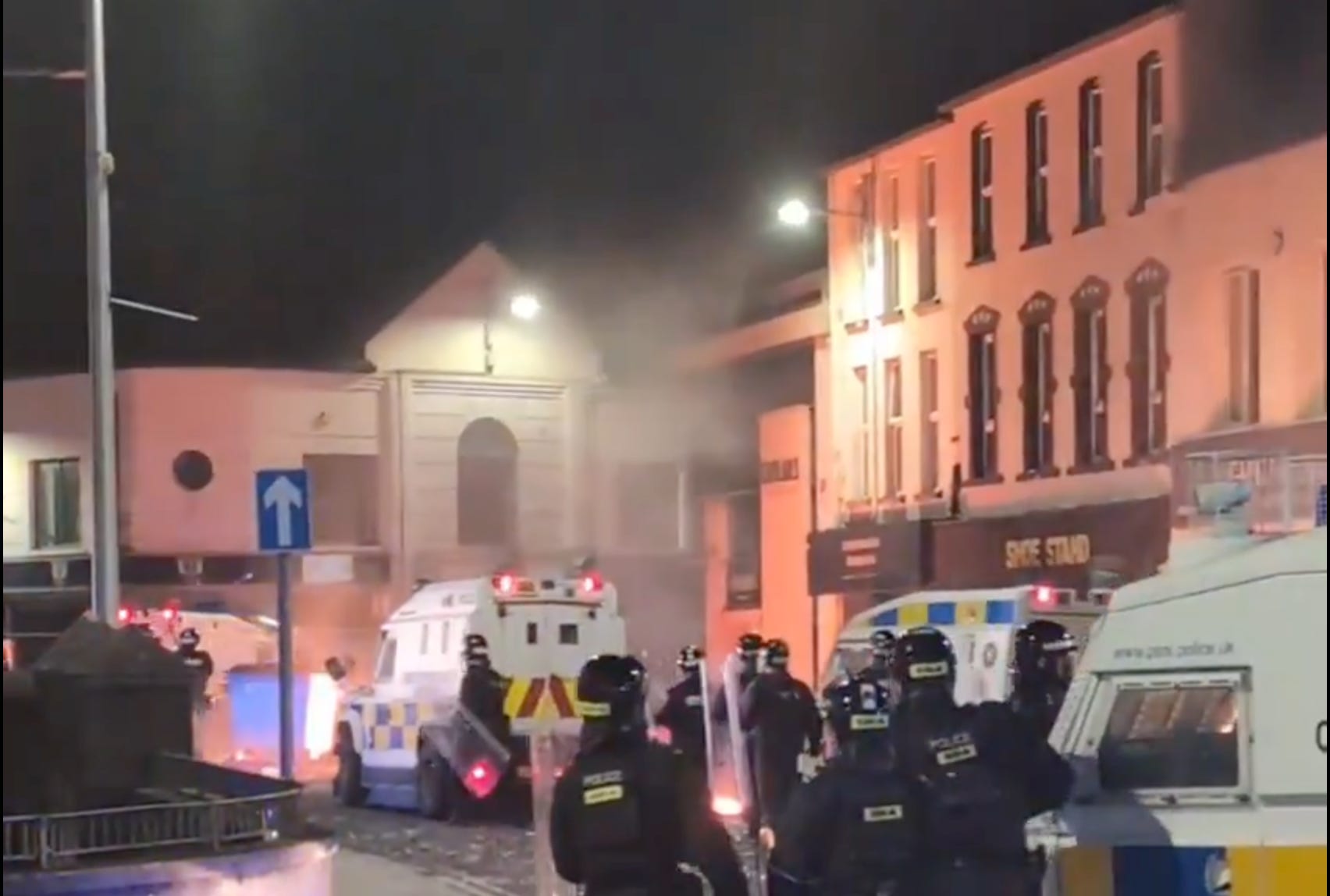
Faced with a complete collapse, the government chose to maintain its crumbling integrity by going absolutely all-out. While the insurgent groups had assumed the government’s silence over the bloody spring and summer of 2028 was evidence of imminent collapse, they couldn’t have been further from the truth. Operation STONEMASON, launched in the autumn of 2028, saw the army deployed in earnest for the first time. Mobilised to conduct a flurry of no-knock raids across the isles, the military dragged thousands out of their beds, homes, and safehouses to be subject to indefinite detention without trial. They provided a fig leaf: a secretly-signed piece of legislation, the Peace in the UK Act, which offered post-hoc justification for the sudden imposition of martial law in peacetime. The inevitable outcry led to the resumption of street protests, riots and even a general strike, but the last vestiges of the rules engagement for the police and army had suddenly disappeared too. Hundreds were killed across the nation in the space of mere hours.
This definitely would have made a decisive impact on electoral politics, had the planned elections of 2029 ever occurred, though it is difficult to say exactly how given that the opposition was in tatters. The Reform Party had long-ago been banned, its elected officials hurriedly replaced with those from the moderate parties, and the radical leader of the Green Party was gently persuaded to step down and replaced with someone more palatable to the security services. The crackdown saw many of those who escaped earlier persecution for their links to these opposition parties imprisoned or beaten by the police or gangs operating at the behest of the security services. Ringleaders that escaped the earlier kangaroo courts now found themselves facing a much worse fate: as permanent test subjects for MI5’s ever-increasing rota of enhanced interrogation techniques.
The brutal state crackdown worked, with all but the smallest and best hidden radical nativist, radical left-wing, and Jihadi insurgents imprisoned or dead by 2029. Thanks to STONEMASON, Britain avoided the insurgent catastrophe later faced by the United States; unlike in America, the insurgent groups would play a relatively minor role in post-nuclear affairs, with the sole exception of Northern Ireland of course, where politics revolves around the paramilitaries.
Prime Minister Starmer, who had personally overseen Op STONEMASON, resigned. The Liberal Democrat leader Jo Swinson was chosen as a compromise candidate to head a coalition government with the Conservatives and Labour in a final, hopeless attempt to put together a stable government.
The real impact the insurgency made on Britain’s post-nuclear position was its effect on Britain’s civil defence readiness. Despite the end of unrest, political deadlock was total, caused by dozens of defections of Labour MPs, most of whom defecting due to their widespread anger against the government and especially Op STONEMASON, though some did so out of open sympathy with left-wing and Islamist groups instead.
Almost all joined the Green Party, now the second largest in parliament, who had come to see the Labour Party as nothing more than a stalking horse for the British far-right—to say nothing of their views on the other, further-right parties. The Greens’ antagonism and obstinacy rendered collaboration impossible. They had strong opinions about civil defence preparations as well, obstructing them in the name of peace.
It had got to the point where most of Westminster, including parliament itself, had not made any major preparations for nuclear war other than ordering a truly monstrous amount of anti-radiation medicines (likely due to a zero or two being added on a spreadsheet somewhere). With all efforts directed toward fulfilling this colossal order, everything else found itself at the back of the queue, and only token efforts were made elsewhere. In theory, with the tax base crushed by two decades of economic ruin, there was simply not enough money, and the national government was all but broke. Their balance sheet, already bad, became catastrophic by the late 2020s, despite multiple IMF bailouts, leading to widespread confusion as to the reason behind the government’s inability to balance its books. It was obvious that the money was going somewhere. Whispers circulated of the establishment hoarding resources for themselves, while tens of billions more were spent on a strange white elephant, a project to renovate the London Underground, necessitating its near-total closure, even as Russian troops stomped through Ukraine and then into the Baltic States.
The floundering government was expected to be thrown out in the next election, with a general election having not been called early due to fears it would inflame sectarianism further (along with, of course, the Labour Party facing the grim prospect of zero seats).
As such, the general mood in the Houses of Parliament was therefore one of procrastination until then. Meanwhile, Scotland, Northern Ireland and Wales all made significant preparations, stockpiling food, resources and preparing evacuation plans for both VIPs and the general population. Many local authorities in England who had begun to see the writing on the wall would siphon funds towards disaster preparation and stockpiling food and other useful materials. This would therefore be a major reason behind drastically divergent outcomes between different parts of England. Some councils, especially in the South East, saw no preparations whatsoever, a sense of fatalism having taken over. Meanwhile in much of England,5 councils had already basically entered outright revolt, having cut all services and instead invested everything possible in preparing for the coming storm.
As such, rearmament never took place on the same scale as other powers, with British commitment to a future war in Europe strictly limited to a relatively small, under-armed expeditionary force in Northern Europe, supported by the Royal Navy and the Royal Air Force on shoestring budgets.
The United Kingdom was ruled by Charles III before the war, a man on death’s door and not expected to survive much longer, personally or politically. What little power the Windsors had could not be exercised by an addled, bloated corpse who was somehow still stuck in the shadow of his mother. The security services, desiring the eventual use of Charles’ successors as public relations devices, did everything in their power to keep him on a tight leash and thereby keep the monarchy intact, and this was successful, until it wasn’t.
Calls for the monarchy’s abolition had circulated among the radical fringe of the British left throughout the 2020s. These reached a fever pitch after the Bradford Massacre, which radicalised both the nativists and ethnic minority groups against the British government. Charles delivered a live address, which consisted of limp-wristed pontificating on universal morality and a marked refusal to condemn any group involved in the bloodshed, whether it be the nativist rioters, the ethnic gangs or the Parachute Regiment, before launching into a screed about environmentalism. This duly earned him the ire of all parties concerned, even moreso than hated Prime Minister Starmer, who at least had the political tact to blame the easiest target, the Paras, for the violence. After this, Britain, a nation of publicans, now seemed like it was rapidly becoming a nation of republicans.
Before any further damage could be done, Charles then at least had the good sense to die,6 with William VI taking the throne and more or less saving what was left of the institution of the British monarchy in the process. Will and Kate, as they were still known despite being the new King and Queen of England, were set to be the perfect constitutional monarchs: quiet, photogenic and inoffensive—perfect mouthpieces for an ailing regime.
Unfortunately for the new Royal Family and their handlers, there would soon be greater problems at hand.
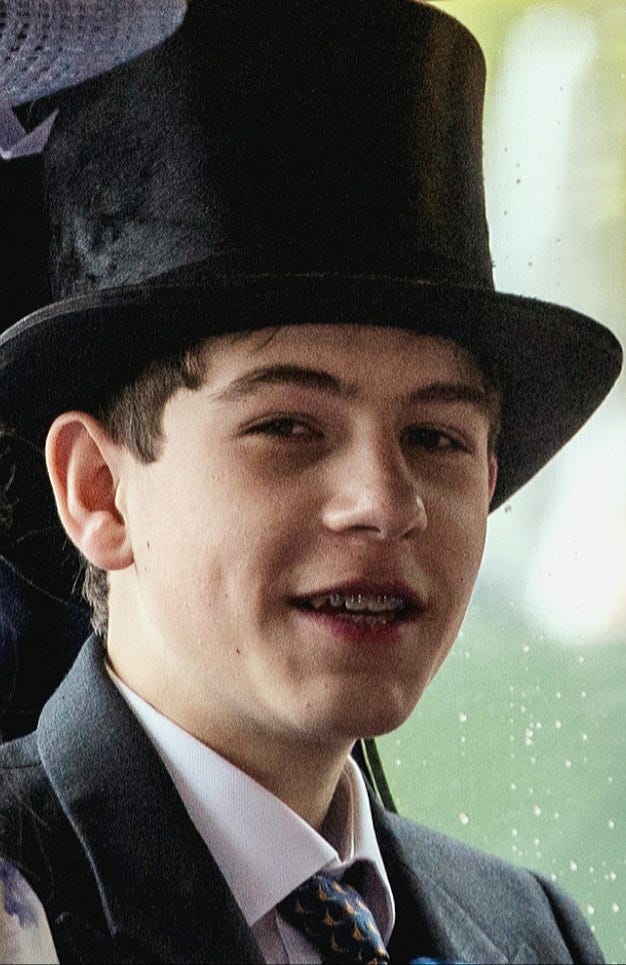
It also bears mentioning that, as part of a plan to ensure the survival of the House of Windsor in the event of the unthinkable, a young James Mountbatten-Windsor, Earl of Wessex and nephew of King Charles, was unceremoniously yanked out of university and sent to serve on the patrol vessel HMS Forth in the South Atlantic as a naval lieutenant. The young Earl was not pleased with this turn of events, but the decision was not his to make. This development, which went completely unnoticed at the time, would have incomparably large repercussions in the years to come.
The world can be forgiven for not noticing the relocation of a minor British royal to the South Atlantic, the media blackout around James’ location notwithstanding. Globally, the wheels of history continued to turn, with or without Britain as an active participant. As the 20s rolled on, every successive proxy war was getting bloodier, and less of a “proxy” war as influxes of military advisors and small arms morphed into thinly disguised expeditionary forces and shipments of tanks and fighter jets. In Eastern Europe, the Middle East, and the Pacific, the revisionist powers sharpened their blades and filled their arsenals, and distributed oddly cheery civil defence pamphlets. The Free World did likewise, and the world lurched in fits and starts towards a conflagration of unprecedented proportions.
Click here to read the master post of the series, with links at the bottom of the page to all other Fallen Kingdom entries.
Previous Article: Introduction
Next Article: The War to End All Wars
Before my departure from Britain in the late 2020s, I was acquainted with a young, professional couple who had been forced out of their home in an ethnically mixed region. The family was relocated by the authorities to an area in their town in which a majority of residents belonged to the same “community” as them, though home to a disproportionate number of state employees who were fervently supportive of the British government. Their arrival was seen to herald the spread of disorder, with locals fretting that the family’s victimisation was due to them being politically radical. So for a second time, they were burned out of their home, leading to the death of their infant son in his crib. They very reasonably decided to cut their losses and leave Britain for New Zealand. Stories like this were sadly, far from uncommon. It was this incident that made me decide to emigrate.
I do not know what they are up to now, or even if they survived the war or not. I hope they are safe.
Or even death, in a few cases where security services deemed that policemen were at risk of defection to one of the insurgent groups, though by this point going to prison was a coming close to a death sentence for imprisoned former officers.
Many American volunteers joined for ideological reasons: The most important of these was a sense of perceived racial unity, amplified by the particular historical and ethnic connection between the two countries. This fed into the American far-rightists’ general desire to proselytise the virtues of white nationalism, but this never really took off in Britain, to their dismay. There were also practical reasons: fighters sought to gain valuable experience in guerrilla fighting in order to go home and apply lessons learned back in the (relatively) more stable United States, especially in the Pacific Northwest.
This was literally the case, as both saw bombings during the 2024-29 conflict as part of a publicity stunt by a particularly radical nativist group, the Reconstructed New National Front.
Cheshire, Cumbria, Lancashire, Lincolnshire, Northumberland and Norfolk all saw councils prioritising stockpiling over the functioning of healthcare, education etc. This led to significantly higher post-nuclear survival rates here and becoming the nuclei of post-nuclear governance.
Historians regard Charles III’s greatest contribution to his country as passing away at an opportune time, continuing in the footsteps of predecessors such as Richard III, Charles I, and George IV.
No posts
Comments
Nothing yet. Say the first thing.
Sign in to join the conversation.