
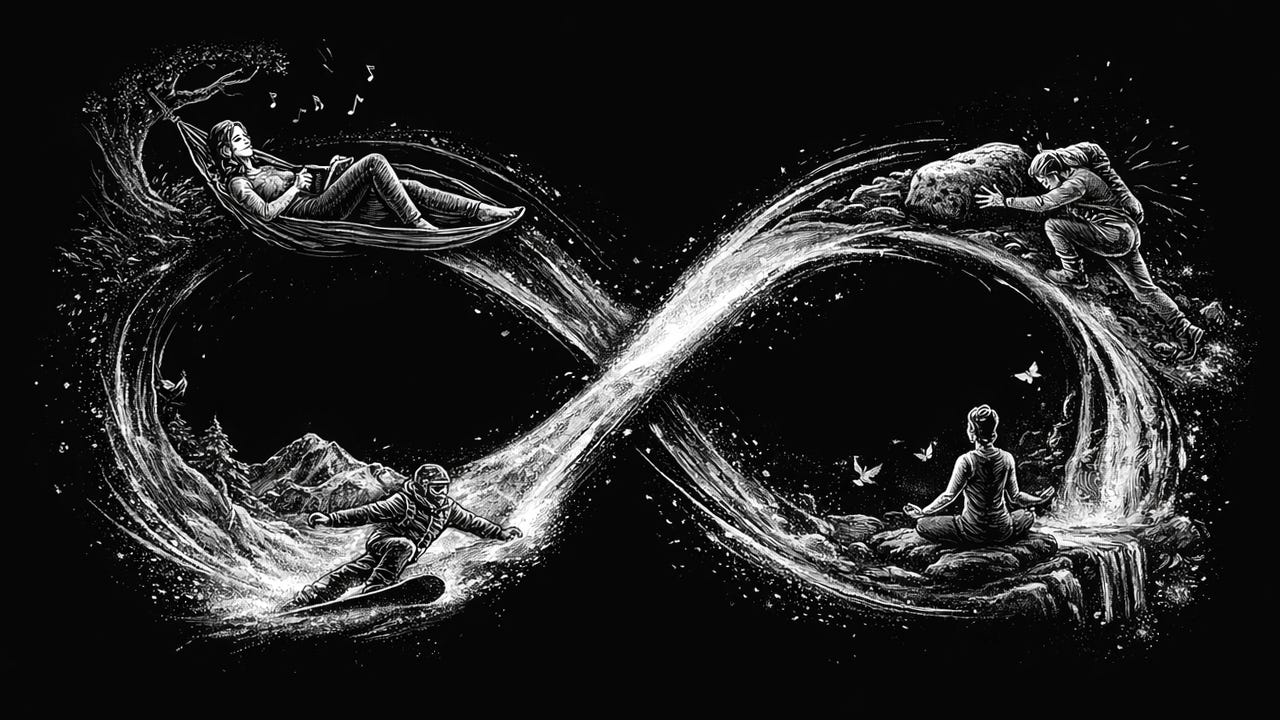
Most creative people blame themselves when they can’t create.
They call themselves lazy.
Undisciplined.
Unmotivated.
They wonder if something is “wrong with them” or if they’re “missing something” that others seem to have.
They feel like everyone else has it figured out, while they’re back at the starting line.
If this sounds like you… you’re definitely not alone.
Here’s what you don’t know:
You’re in creative survival mode.
Your nervous system isn’t broken. It’s protecting you.
And until you understand what it’s protecting you from, you’ll keep wondering why you can’t push through.
Adobe, whose tools are used by millions of creative professionals around the world, publishes a State of Creativity report every year.
In 2016, they found something staggering.
85% of respondents said creativity makes them better leaders, parents, and students.
Yet only 31% felt they were living up to their creative potential.
That means 69% of people admitted they were not.
Think about that number.
69% of people, even with access to more creative tools, freedom, and opportunity than any generation before, still feel disconnected from the creative spark within them.
Is it because they are lazy?
No, it’s because they don’t yet know how their creative circuitry works, so they blame themselves. Instead of going to the root cause of their problems.
Which creates a bigger problem: they turn a temporary creative setback into a lifelong pattern of shame. That can keep them stuck for months or years.
The solution if you find yourself stuck in this state?
Learn a simple way to get back to free-flowing creativity on-demand…
By understanding what creates flow in the first place.
Your creative process isn’t just psychological.
It’s physiological.
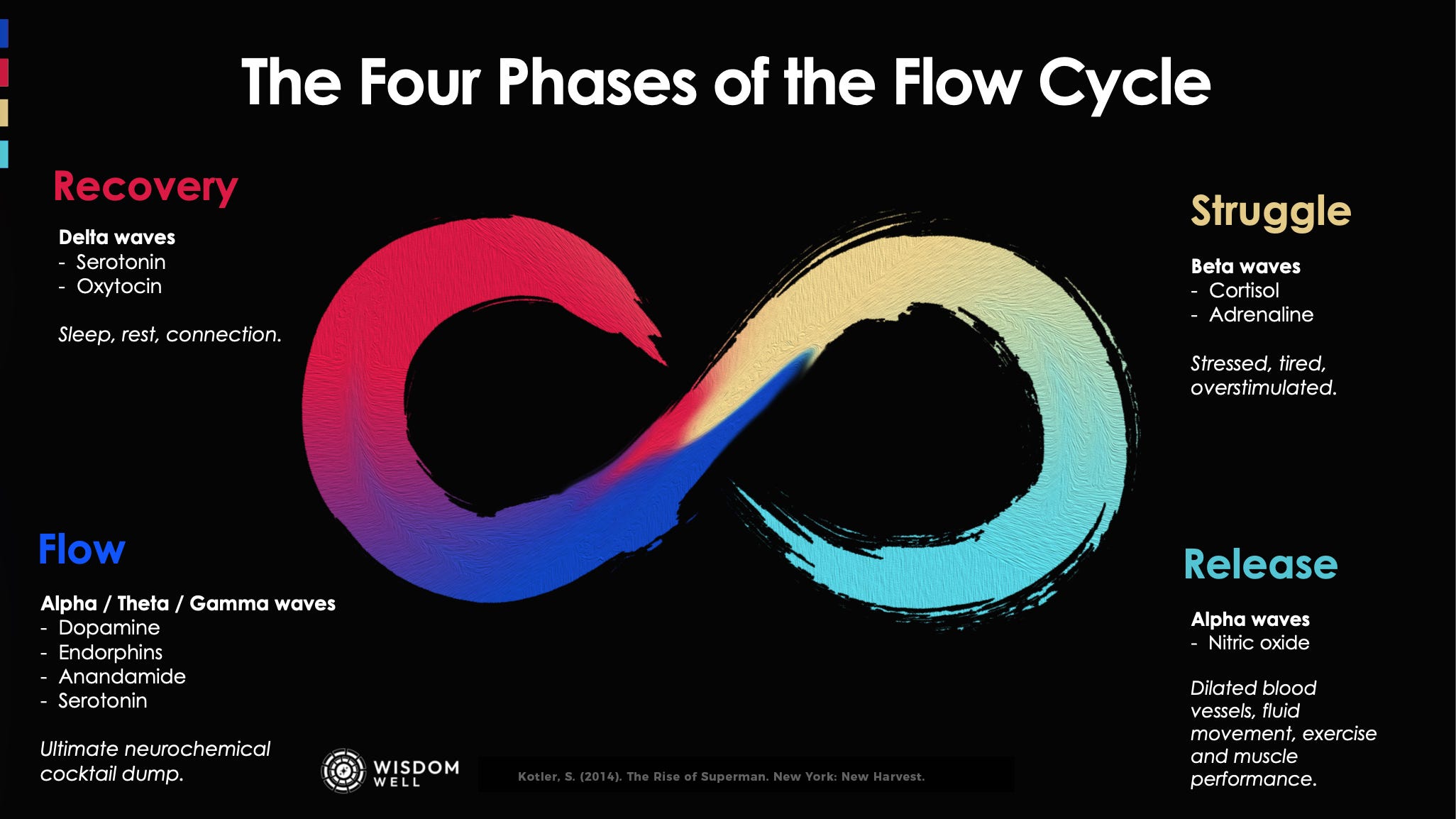
It operates on a four-stage cycle that flow researcher Steven Kotler mapped to neuroscience:
This is creative survival mode.
The stage many get stuck in for days, weeks, or even months. You feel stressed, tired, and overstimulated. Your brain hums with beta waves while cortisol and adrenaline spike.
This is where an unfortunate number of people spend the majority of their days.
Luckily, it’s a temporary stage you can quickly move out of when you focus on the next stage.
The moment you let go.
In Release, alpha brain waves emerge. Blood vessels dilate, nitric oxide floods your system, and tension gives way to openness.
This is what sets the stage for flow.
The state where effort and your sense of self disappear.
Flow is a rare harmony of alpha, theta, and gamma waves. A cocktail of dopamine, endorphins, anandamide, and serotonin.
If this state could be bottled, it would be like the ‘Limitless’ pill from the Bradley Cooper movie. It would be priceless.
The essential stage most people skip.
Not prioritizing this stage is why you get stuck in Struggle and can’t get back to Flow
In Recovery, delta waves, like those found in deep sleep, emerge. Serotonin and oxytocin are triggered by rest and connection.
This is what replenishes you.
Here’s the critical insight for navigating these cycles optimally: if you skip Recovery, or try to force Flow, without clearing the conditions that keep you in Struggle… your system shuts down.
And it can stay shut down for far longer than you imagine.
It feels like a downward spiral, or like you’re broken. But you’re not.
It’s your nervous system going into protection mode because the metabolic resources needed for flow and deep creativity have been depleted.
Most people know how flow feels. And they spend much of their waking hours trying to get back there. Especially creative people.
But almost everyone dramatically underestimates how expensive flow is neurochemically.
The dopamine, norepinephrine, and serotonin that flood your system in a flow state aren’t intangible. They’re costly for your body to produce and depend on precursors.
If those precursors aren’t in place or replenished, there will be no flow.
That’s how your creative circuitry works. And it’s the #1 reason…
Struggle can feel like failure, but it plays a role in the cycle.
It’s the friction that builds heat.
It tells you:
What isn’t working.
What’s draining you.
When you’re holding on too tight.
When you’re trying to force things to be one way, instead of getting creative with how they are.
The only way out of Struggle is to actively trigger the next stage: Release.
But most people don’t know how. And struggle to let go, especially when they’re burnt out.
Little do they know that their internal conditions keep them locked in the Struggle phase, preventing the transition they need.
When you’re depleted, your body doubles down on what feels safe: rigidity instead of flexibility, forcing instead of releasing, thinking instead of moving.
You try to think your way out of Struggle when the only exit is through your body.
You grip tighter when what you need is to let go.
This is why Struggle persists.
Not because you lack discipline, but because your nervous system is doing exactly what it’s designed to do—protect you from spending energy you don’t have.
But even if you manage to clear those conditions and enter Release, even if you find your way to Flow, there’s still one more way you sabotage yourself:
You skip Recovery.
Recovery is the bridge that makes the next flow state possible.
But it feels counterintuitive to rest when what you desire most is to make progress. Especially when you feel behind. When everyone else seems to be shipping work while you’re stuck.
So you push.
You try to force your way back into flow. You beat yourself up for not being disciplined enough.
And all the while, you’re ignoring the fundamental truth of how creativity actually works.
This is the single greatest challenge creatives face that stops most good ideas from becoming realities.
It’s not a lack of talent. Or anything having to do with how good or skilled you are. Not even a lack of money or willpower.
It’s having a complete view of the creative process. And crucially, being certain you aren’t missing any phases.
In Kotler’s model, if you’re missing recovery or release, you have no chance of making it back to Flow. You’ll remain in Struggle.
And frustratingly, you’ll find many reasons to blame for that, without knowing about the invisible guardrails you unknowingly have crossed.
Creativity moves through repeating stages. Each stage must be reached sequentially, and the consequence of skipping steps is staying stuck in the worst one.
Which leads to abandoning good ideas, stress, fatigue, and eventually feeling like your creative spark has gone out.
The way out of this phase is through.
But it isn’t through more effort or striving.
The solution is simple: work with your nervous system instead of against it.
The best way to get out of creative survival mode and release is to:
Move your body.
Go for a walk.
Play a sport.
Hit the gym.
Go in the sauna.
Cold plunge.
Do some yoga.
Ride a bike.
Jump up and down.
When you get stuck in your own head and start intellectualizing all the reasons you’re stuck in Struggle… it only makes you more stuck. It’s like trying to get out of quicksand; the thinking just plunges you deeper into the muck.
Instead, turn your brain off and move your body.
This simple shift stops you from trying to think your way back into flow, and allows your nervous system to do what it’s designed to do.
Fluid movement, exercise, and even a quiet walk trigger the alpha brain waves that set the stage for flow.
It’s simple, but the reason most creatives get stuck in Struggle is because they start trying to think their way out instead of feeling their way out.
Once you know the full Flow cycle, you can tend to it, so you never get stuck for long again.
And to do that, there’s one more part of the cycle you must master: Recovery.
Once conditions are cleared and you can move through Struggle into Release and Flow, you must honor the final phase: Recovery.
Recovery isn’t optional.
It’s the bridge that makes the next Flow state possible.
Without it, you’re trying to run a car without refueling.
Recovery triggers Delta waves, serotonin, and oxytocin. These rebuild the neurochemical precursors flow depends on. You can’t skip the biology.
The best forms of Recovery are sleep, rest, and connection. After Flow, your body and mind need actual replenishment. Time spent sleeping, restoring, and reconnecting with who and what matters.
How long you stay in Flow determines how much recovery you need. Besides adequate recovery, the best way to avoid getting stuck in Struggle is not to linger in Flow longer than you need.
The average Flow session lasts about 90 minutes before your brain’s resources deplete.
So, when you hit it, don’t push through. That’s how you end up stuck in Struggle.
Bookend your Flow sessions with micro-recovery (meditate, take a nap, etc.), and you can move right through struggle, right back into Flow next time you need it.
When you understand the flow cycle, you see that there is a time and place for everything that feels good about being human.
Each stage serves a purpose.
And sequencing them optimally is the key to entering flow more often.
Lazy is a story people tell when they don’t understand themselves.
Or what sets exceptionally creative people apart from the rest.
You’re not lazy. You never were.
You’re in creative survival mode. A state that your body goes into when it isn’t getting the recovery it needs to flow again.
The answer when you’re in this state isn’t to push harder or punish yourself for what you cannot do.
The answer is to:
Move your body to trigger a release.
Honor Recovery as a sacred part of the creative process, instead of skipping it.
Stop trying to think your way into Flow.
Your creative potential never just disappears.
It just waits for the right conditions to ignite again.
And now you know exactly what those conditions are.
I’ve created a free infographic with all the science-backed triggers you can use to move through each stage of the cycle. Everything from the specific movements that trigger Release to the exact recovery practices that rebuild your creative capacity.
The same triggers used by elite athletes, top performers, and creative professionals to enter flow on demand.
Get the Flow & Recovery Triggers Infographic Below:
Enjoy this resource?
And consider sharing to help other creatives:
Comments
Nothing yet. Say the first thing.
Sign in to join the conversation.