
We were told it might be two or three weeks before they awoke from their deep sleep.
Two or three weeks of waiting and hoping we had done everything we could for the grape vines while we planted them.
After being removed from cold storage the 1,000 Portuguese grape vines had languished in the bath as we realised we wouldn’t be able to plant them all in one go.
Even with the help of friends it would be a few days before they were all safely in the ground.
The bathtubs will become compost-guzzling worm-baths, but they helpfully kept the vine roots wet over the few days of cool weather and even a little rain which helped us (and them) as we gradually planted them.
In Portuguese vinho is wine and vinha is grape vine – if only getting from one to the other was as easy as tweaking a vowel.
We were facing many days of worrying if we had placed the Vines of the Stars properly in the ground, given them enough water but not too much.
“Give them plenty,” said one expert. “Don’t give them much,” said another. But how much it too much and how much isn’t enough?
We ended up pretty much flooding them after being told multiple times they hate having any air around the roots and it must to be forced out through a combination of water from below and pressure from above.
The ground just kept taking more and more water as it soaked down into the metre deep trenches we had cut in the clay and where we had placed the plants about one and a half metres apart.
It’s hard enough planting a tree or a bush in the right place at the right time – and we have killed a few over the Springs – but we’re talking about 1,000 plants all going into the ground around the same time in the same way – a systematic error could be catastrophic.
As you can see…we started slowly but then got into the swing of it!
Nights were spent wondering if we had cut their roots at the correct point and then not burned them with the mountain of compost we’d mixed into the soil.
Of all the advice we’d been given by all the very knowledgeable people, one thought lingered and helped me to sleep: they’re basically weeds and they’ll be just fine.
On one of my daily wanders through the now-dusty land of bamboo canes and little red-wax covered plant noses poking out from the dry soil – pondering once again whether they would ever live or die before ever awaking from their sleep due to my poor planning or cruel treatment – I spotted something.
I had a closer look...was that..?
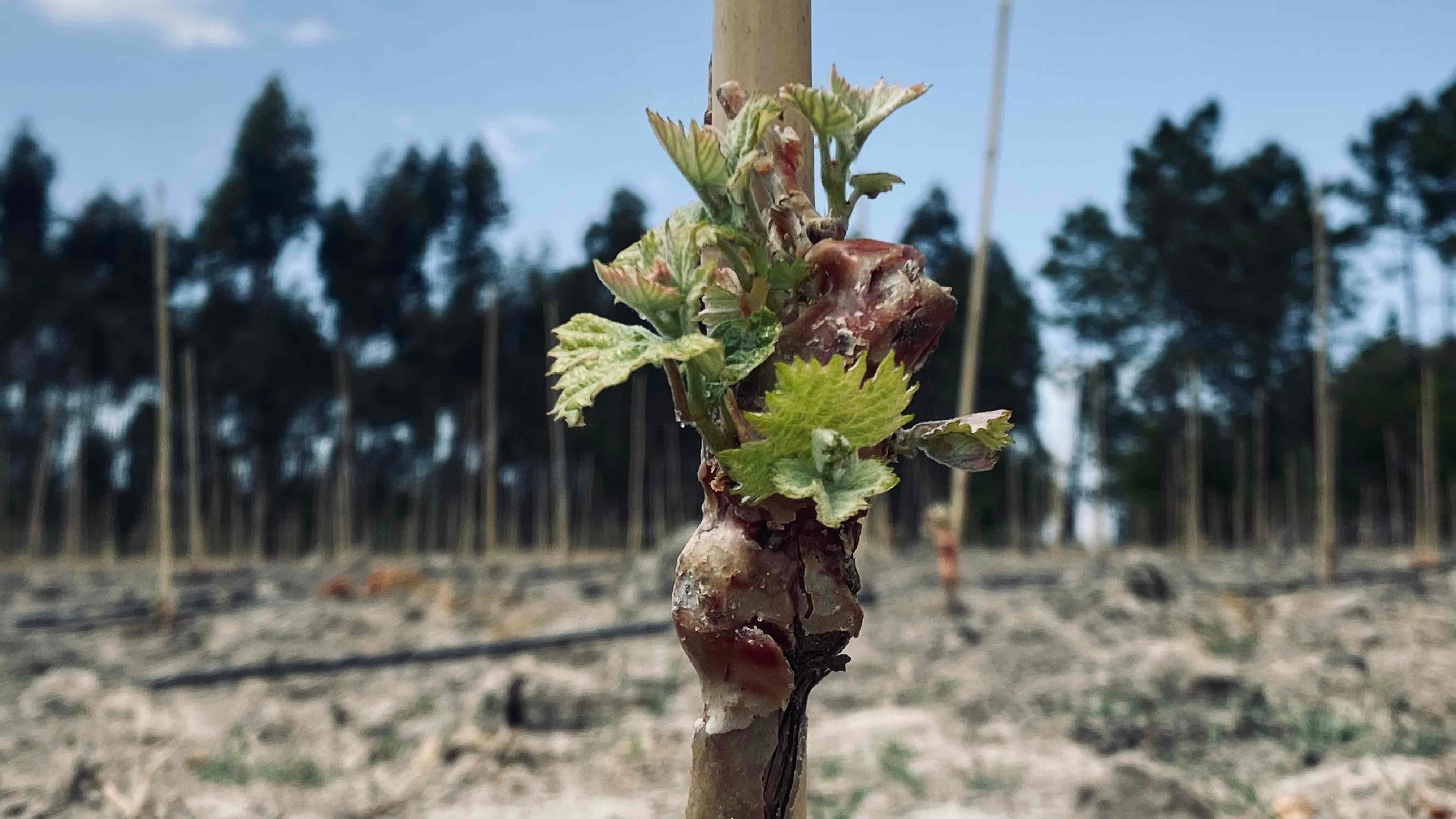
Yes...it had been just 10 days since the Castelão reds had gone into the ground, but there it was – a little tiny green growth.
The early signs of a leaf emerging from the wax cap which was covering the couple of centimetres of vitis vinifera grape and protecting the place it had been grafted on to a much longer root.
And then there was another...and another. Same with the Alvarinho and the Arinto – the two white varieties we had planted last and a little later.
In the books they call it “bud burst” as winter hibernation ends and the first leaves of Spring sprout from the woody vines and the insanity begins.
Once they start, all that stored energy explodes into leaves and vine creepers and flowers...and it all happens incredibly quickly.
I haven’t tried staring at vines for an hour solid, but I’m pretty sure if I did I could actually see them grow. I’ll definitely use time lapse photography to capture it next year...providing all goes well.
It’s been going on for weeks already down at the house where we’ve been learning-by-doing with table grapes over the last six years.
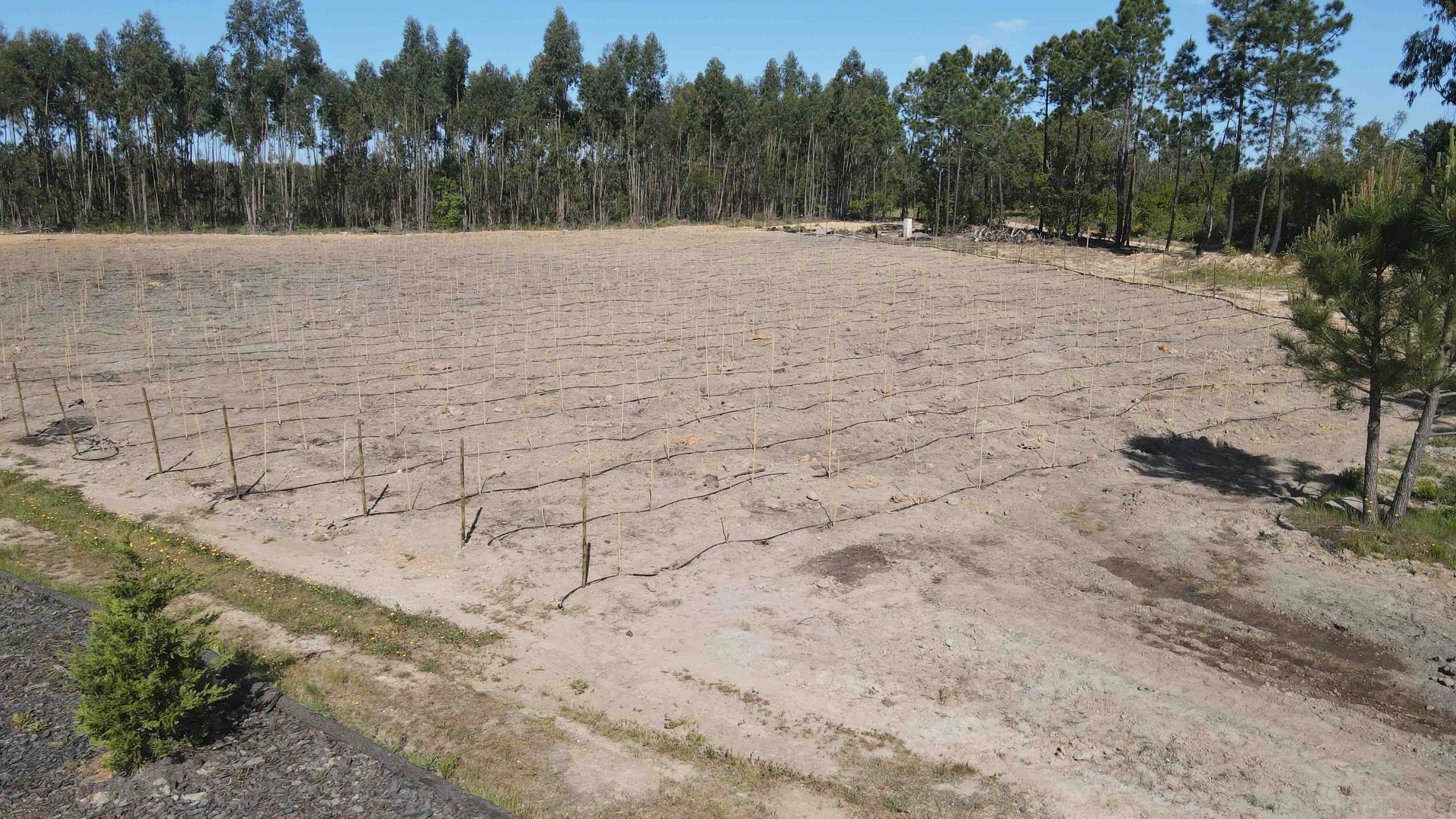
Prune early and prune aggressively we’ve learned – and the level of brutality is terrifying.
Act too late and they “bleed” sap from the cuts (and you can almost hear them screaming), don’t prune enough and a jungle of vines take all the energy from the growing of the grapes.
“Is it too late?” I asked our landscaper friend Carlos a few years ago – “almost,” he said. “Do it before the next full moon and you should be OK.”
It seems the combination of higher temperatures and exposure to increasing amounts of light – during the day and the night – sends a signal that it’s time to wake up and get busy.
And we’ve had an impressive crop of table grapes every year, so I guess either we’ e been doing something right or they’re not that sensitive.
But this new project is a different matter – this isn’t passive grape harvesting, it’s actual farming.
It’s a thousand little plants which we hope to coax into bushes, to nurture and protect.
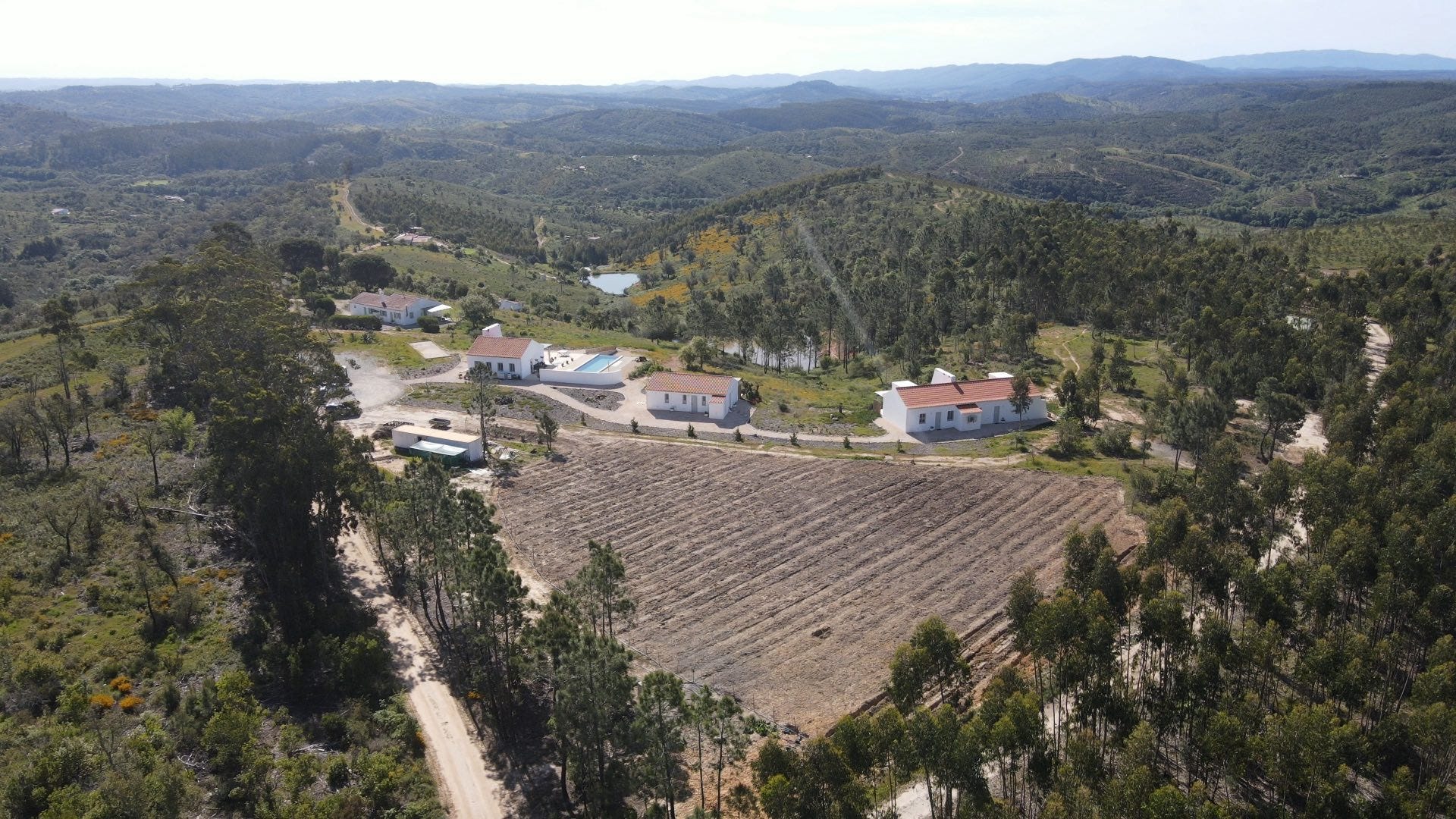
But to survive in the heat they need to fend for themselves – their roots need to go down deep in search of water, to burrow through the clay before the trenches close up and to give them a strong foundation for the future.
Too much water now and they won’t need to go looking for it and will miss the opportunity...but too little water and they may die.
It might be just half a hectare, but to misquote a phrase: with grape flowers comes great responsibility...let’s hope they make it to the flowering stage.
Oh, and before I go…it’s your last chance to join the first Wine Retreat in May. We only have two places left…but if you can’t make this one we are hosting another in October (Thursday 1st- Monday 5th). Send us a message for more details…

Thanks for following The Big Portuguese Wine Adventure which has just got real thanks to our new vineyard project. Over the next few posts I’ll be sharing some of the background to how we reached this point and what happens from here. What could possibly go wrong, right?
No posts
Comments
Nothing yet. Say the first thing.
Sign in to join the conversation.