
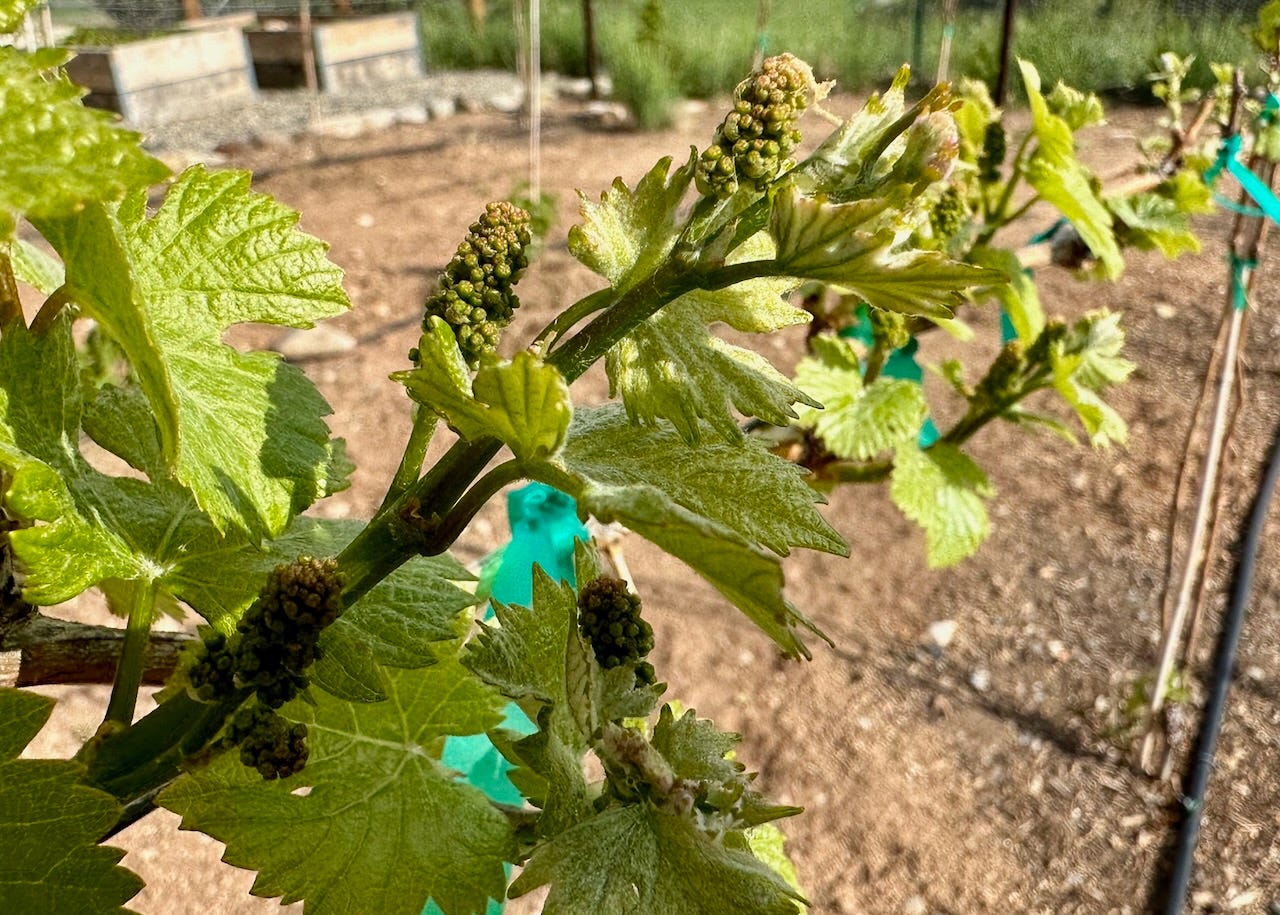
Having explored vineyard challenges in Part A of this chapter, it’s time to work through the lessons learned from those trials.
Know What to Expect in Your Locale
Understanding my growing region was crucial to charting the path through vineyard creation and maintenance. This involved learning about the climate, determining which vine types to plant, and coming to terms with the soil, insects, animals, and other biological factors.
A great source of information can be found at State University Farm Extension offices. Most states with wine-growing regions have university extension offices that can provide guidance on vineyard practices, including regional geological and climatic characteristics, recommended varieties, and information on common pests and threats.
Many provide their resources online.
Another great asset are local wineries and vineyard growers. The value of receiving their reflections and recommendations, based on firsthand experience, cannot be overstated. Undoubtedly, they had to start their learning at some point in life as well, and I found them happy to assist an eager novice like me.
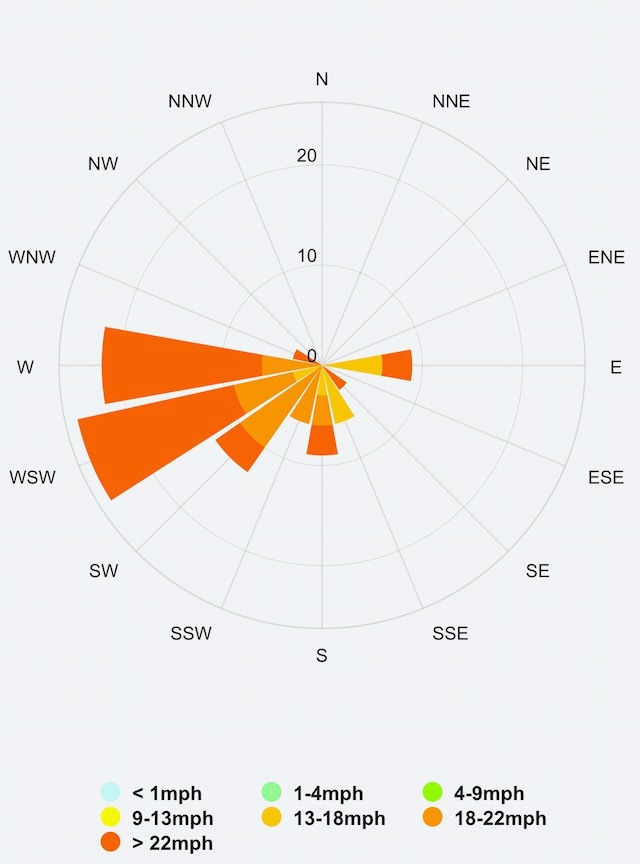
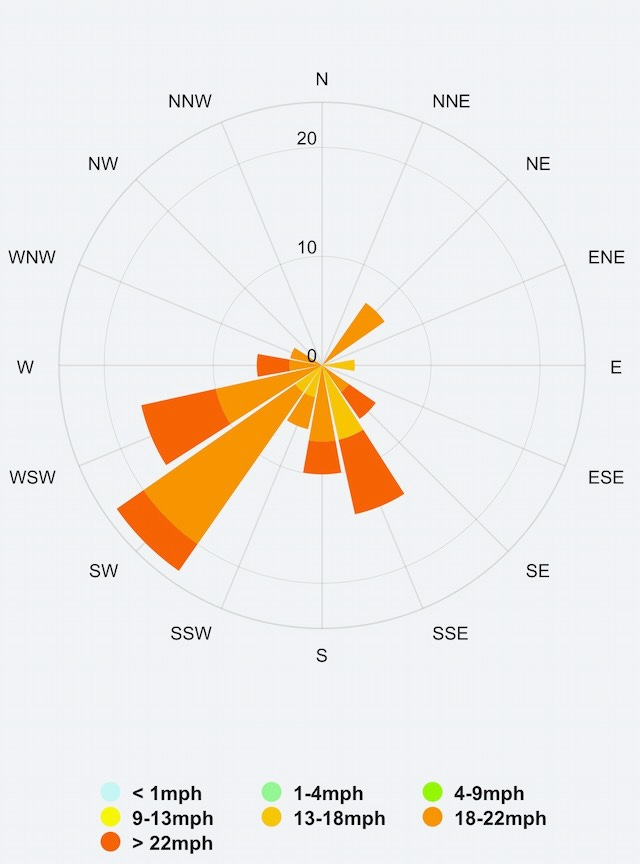
Keeping records generated by a vineyard weather station is great to have in your knowledge toolkit. Several years of data assist vineyard decision-making. For example, you can affirm: average growing temperatures and extremes; average late spring and first fall freeze dates; wind averages, gusts, direction, and timing; precipitation; and solar/UV levels.
With several years of vineyard station data, I’ve learned:
The average last spring freeze date is May 3, although a slight freeze in the lowest portion of the vineyard occurred on May 20 one year.
The average first fall freeze date is October 23.
Confirmation that wind was the cause of grape flower shatter one spring.
The average diurnal shift from grape veraison to harvest is 30.3 degrees. Diurnal shift is the difference between nighttime and daytime temperatures over a 24-hour period. Swings of 25 degrees and more allow grapes to develop sugars on warm days while preserving acidity, aromas, and freshness on cool nights—resulting in a more balanced wine.
Bottom line: take advantage of knowledge and resources specific to your region when possible.
Soil and Water Management is the Crucial Underpinning of a Vineyard
Soil conditions, irrigation placement, and ground cover all play critical roles in vine health and grape quality.
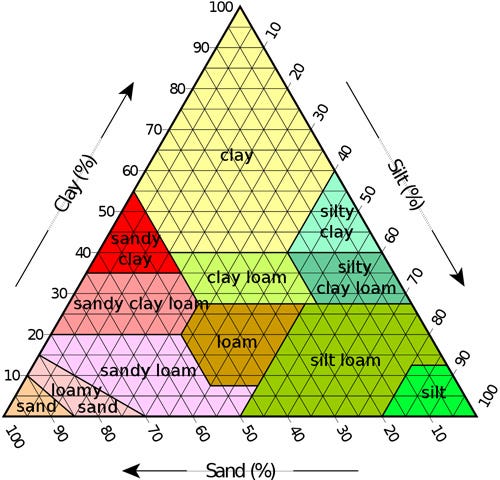
As first highlighted in Chapter 3 - Planning the Vineyard, soil texture determines both composition and irrigation needs. The three primary components of soil are sand, silt, and clay. Sand drains water quickly, while clay retains it. When silt is combined with sand and clay, it forms loam—an excellent growing medium. Loam balances water retention with efficient drainage, making it ideal for vineyard soils.
To better understand my soil, I conducted a simple DIY Jar Test found online, which revealed a clay loam composition. In practical terms, the soil holds water and tends to cake on the soles of my shoes, yet it still allows water to move slowly downward and outward following the slope of the vineyard floor.
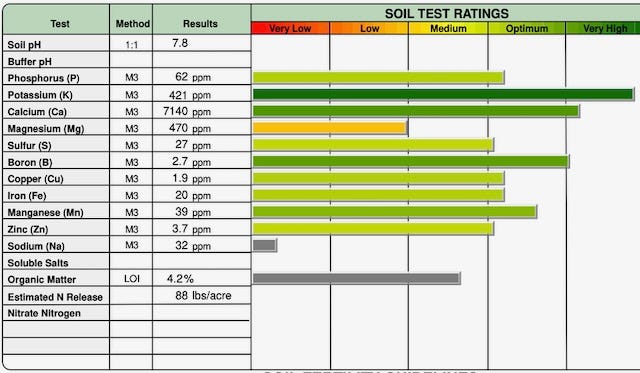
Understanding nutrient and mineral levels is equally important in determining whether soil amendments are needed. I sent a sample to the commercial nursery where I purchased my vine rootstock for analysis. The results confirmed that the soil was highly alkaline and required adjustment, but also showed that nutrient and mineral levels were otherwise optimal, meaning no additional supplementation was necessary at the time.
For most soil types, evenly distributing irrigation between vines encourages roots to grow outward in search of water. However, during the first growing season, young vines require water applied closer to the plant. In subsequent years, irrigation can be moved farther away to promote deeper, more resilient root systems.
For several years, my vineyard had bare soil. I have since transitioned to a natural grass ground cover—one of many viable options for vineyards—because bare soil increases heat stress and accelerates grape ripening. Establishing ground cover, or cover crops, improves soil health by enhancing structure and organic matter, moderating soil temperatures, and extending grape hang time, ultimately improving fruit quality.
Understanding your soil and water conditions is the foundation for healthy vines and quality grapes.
Infrastructure Isn’t Optional
This can’t be emphasized enough: a strong and reliable trellis system is foundational. Cutting corners—whether due to cost, terrain, or convenience—creates compounding problems later. Determine the trellis system that works best for your vine training approach, get the recommended materials, and install it with the long term in mind.
Cutting corners while installing my trellis was the biggest mistake I made when starting my vineyard.
You want your children to be proudly using that same trellis when they inherit your beautifully curated vineyard.
Another critical infrastructure element that should not be overlooked is irrigation. In many regions, supplemental drip irrigation is essential and requires careful planning and proper installation. Increasing weather variability driven by climate change has intensified extremes, resulting in more frequent droughts and periods of excessive rainfall. As a result, even areas that historically received sufficient annual precipitation to support grapevines may now be affected by these fluctuations.
Install it right the first time, or be prepared to rebuild it.
Be Present—Constantly
Daily observation is the single most valuable practice. Walk the vineyard. Look closely. Question everything—leaves, fruit, soil, structure, and activity. Small issues can resolve themselves—or escalate quickly without intervention. You won’t know which unless you’re paying attention.
This is how I first came across the almost invisible leafhoppers eating on the leaf canopies. A quick organic spray before they spread vineyard-wide took care of the situation.
The old saying holds true: the grower’s footprint is the best fertilizer.
Pest Management Requires Strategy, Not Reaction
Different pests require different controls, and timing matters. Early intervention—such as trapping emerging yellow jacket queens from their winter nests in early spring—can dramatically reduce later pressure.
Layered approaches work best:
Targeted pesticide and fungal sprays; preferably organic, where effective.
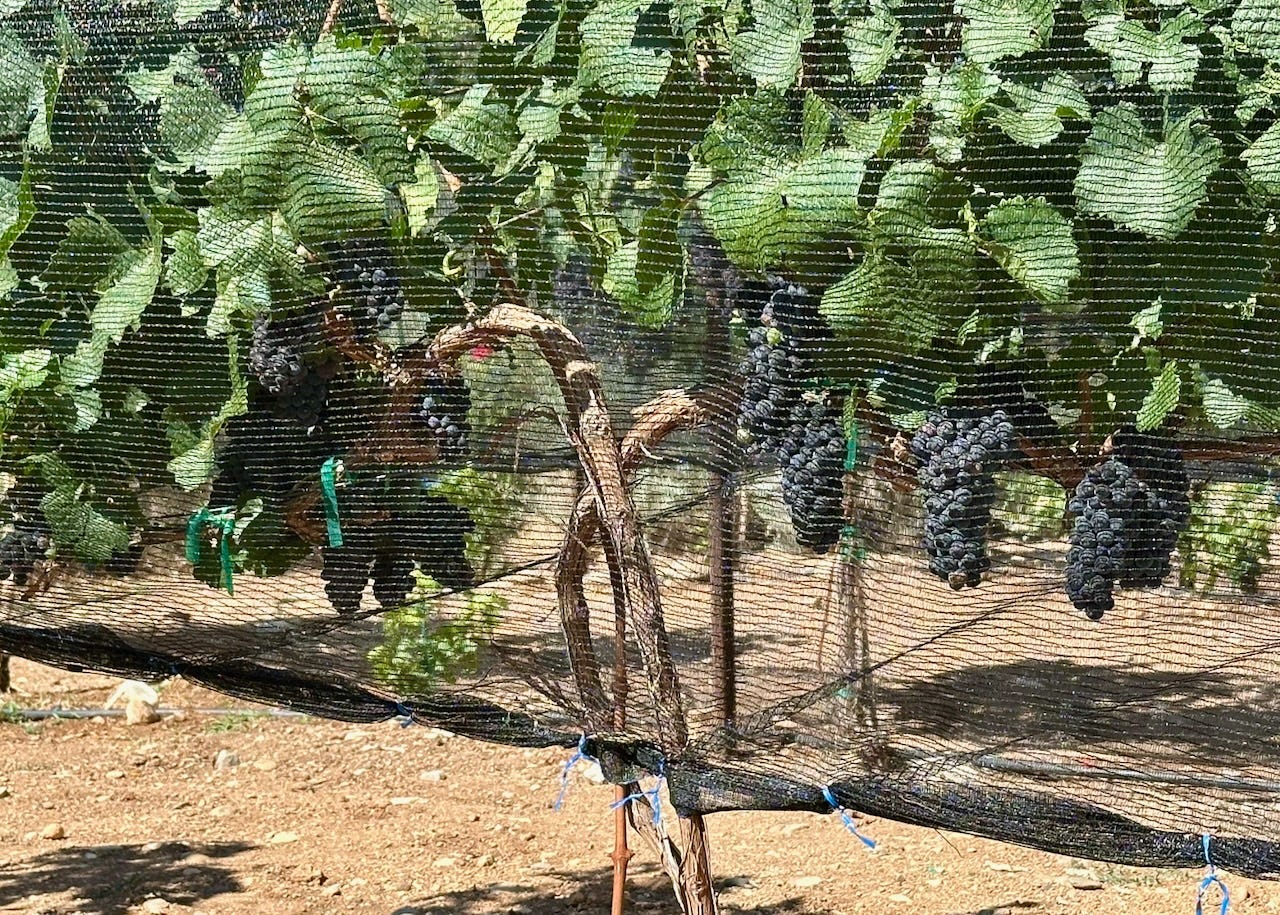
Physical barriers like a wildlife fence and vine netting.
Environmental controls, such as traps and managing nearby habitat.
A great example of strategic action balanced with adaptability is spraying to prevent fungal outbreaks such as powdery and downy mildew. Determine the spray solutions best for your circumstances and create a spraying schedule. Different growing regions and associated climates suggest a spraying schedule of every two to four weeks. However, changes in weather conditions may necessitate adjusting the schedule to meet potential needs.
Even then, success one year doesn’t guarantee success the next. Be ready to learn and adjust.
Vineyard Timing Is Everything
From pruning to spraying to canopy management and harvest, timing drives outcomes:
Prune back a previous season’s cane growth before budbreak, whether when the vines are dormant in winter or in spring.
Manage canopy growth continuously from budbreak to harvest.
Spray proactively, not reactively.
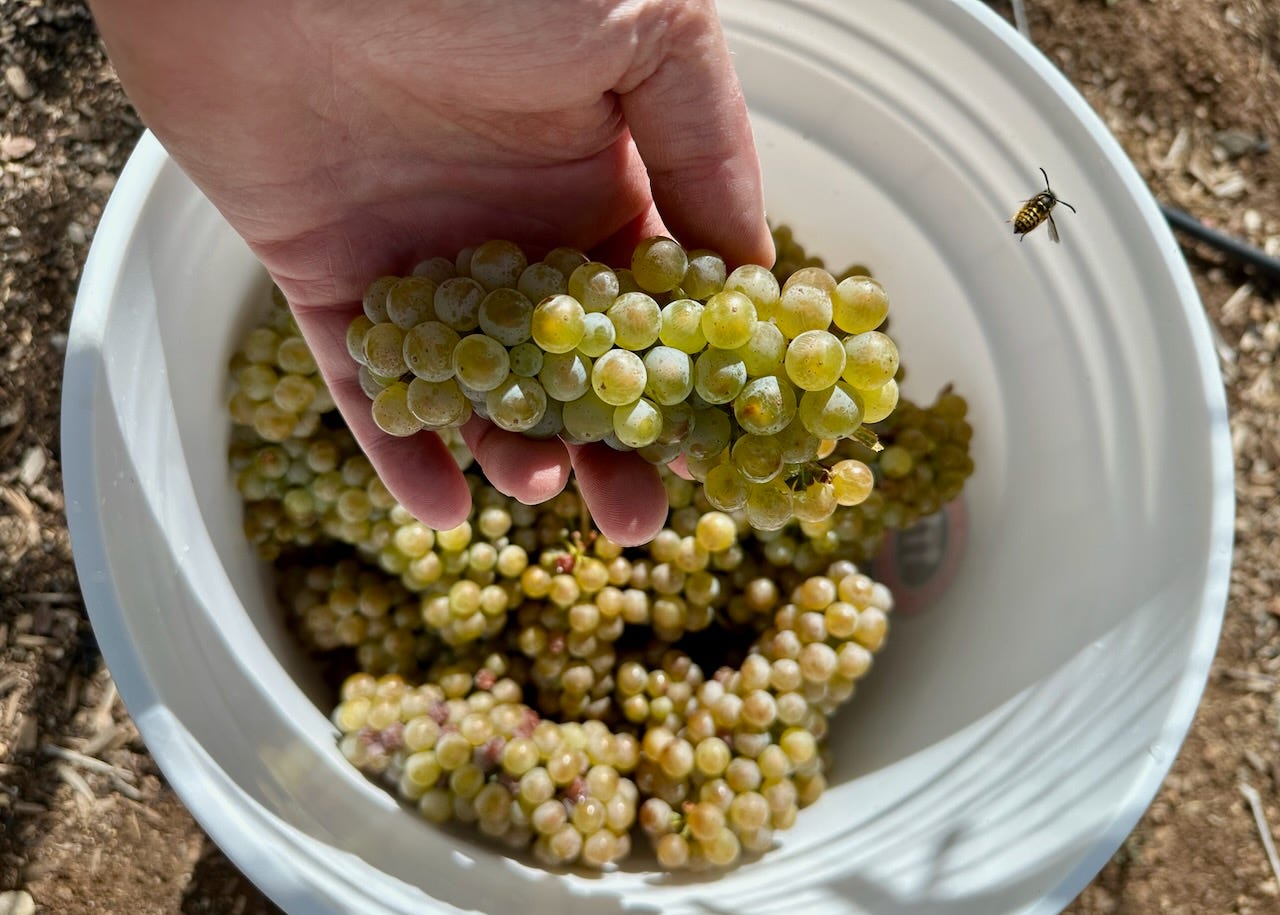
Monitor ripening metrics (Brix, pH, TA) closely late in the season to affirm harvest dates.
Miss a window, and you’re playing catch-up with the vineyard in the crosshairs.
Canopy and Crop Balance Matter
Left unchecked, vines prioritize shoot and leaf growth over quality fruit. As initially summarized in Chapter 6 - Vineyard Year Three and Beyond, effective management includes:
Prune to a training system. I use Vertical Shoot Positioning (VSP), which promotes upward-growing shoots spaced at least 4 inches apart along horizontal cordons.
Control lateral shot growth within the canopy to help maintain airflow to reduce disease pressure.
Thin leaves to balance sun exposure and shade to the grapes. For example, a common approach involves thinning leaves around grapes on the east side of a vine to catch the cooler morning sun, while leaving more leaves around grapes on the west side to shade them from the hot afternoon sun.
Maintain a minimum of 12 to 16 active exposed leaves along the vine shoots per grape cluster. This level of leaf area produces enough sugar to properly mature fruit and ensure vine health.
Thin grape clusters when crowded. For example, a common approach using VSP involves thinning to one or two clusters per shoot, depending on the length of the shoot.
The goal is always the same: shift the vine energy toward grape development, not excess vegetation.
Keep Records—Your Memory Isn’t Enough
Each season brings new variables. Tracking observations, actions, and outcomes creates a feedback loop that improves decision-making year over year. I keep an annual calendar where activities are chronicled.
Without written notes, you’re left to memory and guesswork, often repeating past mistakes and overlooking what worked.
On a programming note, Appendix One provides month-by-month details of common vineyard expectations and tasks, along with the solutions applied to the circumstances encountered.
Coming soon to a theater near you.
Expect the Unexpected (and Plan for It Anyway)
This isn’t just a theme—it’s a requirement. Weather shifts, pest surges, equipment failures, and biological surprises are part of the process.
Originally disclosed in Chapter 6 - Vineyard Year Three and Beyond, exhibit one of this lesson occurred late one August when my solar pump supplying water to the vineyard, including our domestic supply, burned out due to a blockage in the spring water supply line. Luckily, I had a plan B: a piston pump powered by water pressure. Using the pump wasn’t sustainable for the long term. The pumping action wasted water (discarding 3 gallons for every gallon pumped), and the half-gallon-per-minute pump rate wasn’t enough to meet our needs.
Thank goodness it only took three weeks to identify the blockage, remove it, repair the pipe, order a replacement solar pump, and install it. DIY in action. Plus, the setback had an upside: I upgraded to a higher-capacity pump that moved 2.25 gallons per minute, improving my irrigation capability.
A win-win.
The goal isn’t to eliminate surprises. It’s to respond effectively when they show up.
Don’t Fret It - Take the Time to Smell the Roses
Don’t let the details overwhelm you. With a plan and a work ethic, you can tackle anything. Find ways to de-stress. Have fun. Life isn’t worth living if you can’t relax and enjoy what you’re doing. My de-stressor involves talking to the vines while pruning, having a glass of wine at the end of the day as I stroll the vineyard, and marveling at what has been accomplished.
Don’t be too self-critical; you can’t control everything.
Wrap up
Looking back, these lessons aren’t just about growing grapes—they’re about embracing a process that refuses to be fully controlled. The vineyard has a way of humbling assumptions while rewarding persistence.
This journey fits squarely within my wine encore—a deliberate shift into something hands-on, physical, unpredictable, and mentally engaging. It’s not always efficient, and it’s rarely easy, but it’s meaningful in a way that’s hard to replicate elsewhere.
I’ve approached it the only way I know how: roll up my sleeves, figure things out, and keep moving forward. Some solutions work. Some don’t.
All of them teach. Which, honestly, is part of the fun.
No posts
Comments
Nothing yet. Say the first thing.
Sign in to join the conversation.