
Many of us believe that America has lost much of the strength and virtue which it once had. We see an America that isn’t working the way it should. And we know that corruption, incompetence, and division are on the rise. I was born in 1962. For anyone my age or older, it should be clear that the nation has culturally and socially declined in our lifetimes. The roots of this decline stretch back into the 20th century.
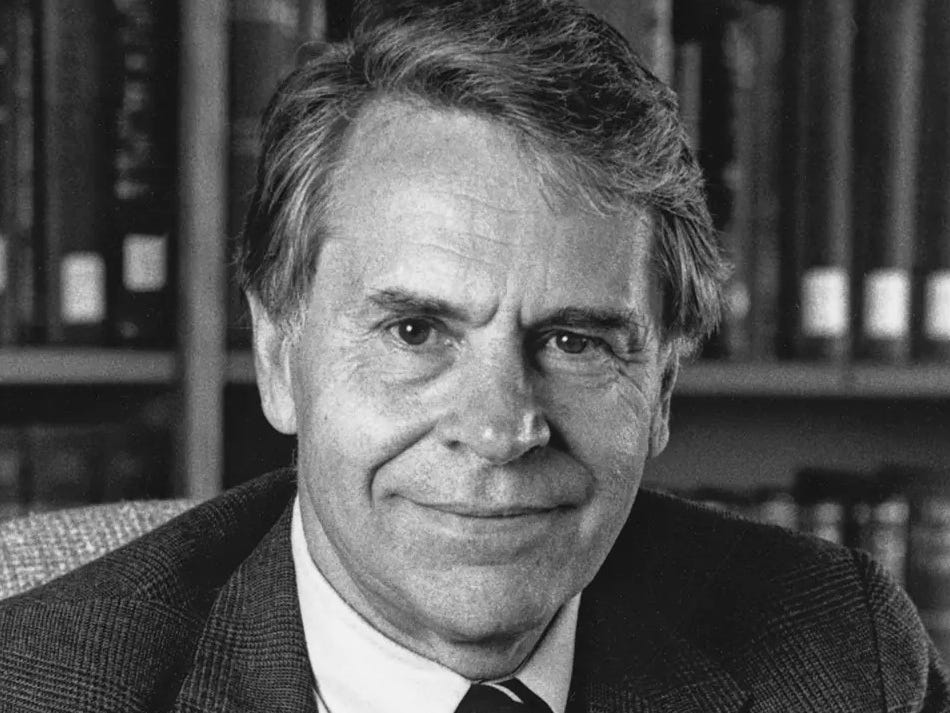
In the 1990’s, historian and sociologist Christopher Lasch presented a diagnosis of what had gone wrong. While he is right in many of his conclusions, and while he accurately describes much of what happened, I believe that he misses some of the reasons for America’s decline. But despite any shortcomings, he is well worth reading.
Lasch sadly died too young in 1994. In his last book, The Revolt of the Elites and the Betrayal of Democracy, which was published the year after his death, he warned that Americans in higher social positions had developed a contempt for their own nation, and for fellow citizens. These so-called “elites” isolated themselves from the rest of us, praised themselves as more enlightened “Citizens of the World,” and merged into the group that is today called the Globalists.
In his introduction to Revolt of the Elites, Lasch listed a number of concerns that non-elite Americans had at the time:
“Americans are much less sanguine about the future than they used to be, and with good reason. The decline of manufacturing and the consequent loss of jobs; the shrinkage of the middle class; the growing number of the poor; the rising crime rate; the flourishing traffic in drugs; the decay of the cities—the bad news goes on and on. No one has a plausible solution to these intractable problems.”[1]
Sound familiar? It should. And remember, Lasch wrote this in 1994. America still has many good people, but the qualities that made America healthy are still under threat. We, today, could add to Lasch’s list of concerns: uncontrolled immigration, Woke, declining education, family breakdown, social disorder, institutional corruption, an upper class that is hoarding more and more of America’s wealth, and last but not least, a demoralizing war on beauty.
Since Lasch’s day, Americans have also been dissatisfied with the state of politics and government. Neither major American political party has adequately addressed our urgent problems. According to Lasch, the increased isolation of American elites has caused the “unreal, artificial character of our politics.”[2] This isolation has also ensured that powerful people don’t suffer from the results of their many failed policies. This has been a relatively recent development in American history. There actually was a time in the past when large numbers of Democrats didn’t want to destroy America, and large numbers of Republicans weren’t servile to a foreign country.
It’s very important for us to understand that, as a group, our elites were not always as unmoored and hostile to the rest of us as they are now:
“There has always been a privileged class, even in America, but it has never been so dangerously isolated from its surroundings. In the nineteenth century wealthy families were typically settled, often for several generations, in a given locale. In a nation of wanderers their stability of residence provided a certain continuity. Old families were recognizable as such, especially in the older seaboard cities, only because, resisting the migratory habit, they put down roots. Their insistence on the sanctity of private property was qualified by the principle that property rights were neither absolute nor unconditional. Wealth was understood to carry civic obligations. Libraries, museums, parks, orchestras, universities, hospitals, and other civic amenities stood as so many monuments to upper-class munificence.”[3]

The new “elites,” for want of a better word, are a very different breed. They partially developed out of a system of “mobility of capital and the emergence of a global market.” This economic system arose in the last quarter of the 20th century. The new elites also have taken advantage of a recently-developed system of educational credentials, acquired from approved schools such as the Ivy League universities. This credentialism that has become so important is associated with “Progressive” ideology, which gained a foothold in America in the early-20th century. Among the new elites, the “old money ethic of civic responsibility” has disappeared.
“The new elites, which include not only corporate managers but all those professions that produce and manipulate information—the lifeblood of the global market—are far more cosmopolitan, or at least restless and migratory, than their predecessors….”
“Those who covet membership in the new aristocracy of brains tend to congregate on the coasts, turning their back on the heartland and cultivating ties with the international market in fast-moving money, glamour, fashion, and popular culture. It is a question whether they think of themselves as Americans at all. Patriotism, certainly, does not rank very high in their hierarchy of virtues. ‘Multiculturalism,’ on the other hand, suits them to perfection, conjuring up the agreeable image of a global bazaar in which exotic cuisines, exotic styles of dress, exotic music, exotic tribal customs can be savored indiscriminately, with no questions asked and no commitments required….
The growing insularity of the elites means, among other things, that political ideologies lost touch with the concerns of ordinary citizens.”[4]
This new class has tried to change the meaning of the word “democracy” for its own benefit, and to favor certain social classes which have supposedly been treated unfairly. “The word [democracy] has come to serve simply as a description of the therapeutic state. When we speak of democracy today, we refer, more often than not, to the democratization of ‘self-esteem.’”[5]
Christopher Lasch appreciated the American Founding Fathers, and the civic and social life of America that flourished well into the 19th century. Our Civil War was a terrible rupture, of course. But although antebellum politicians obviously failed to find a peaceful resolution before that war erupted at Fort Sumter, many of them had tried diligently, using political channels that worked well in earlier decades, and would again work well after the war, until the new elites rose to domination.
Lasch carefully studied and understood the earlier, sometimes novel American ideas of democracy. He appreciated how the American republic and its democratic elements, based on the founding documents, rule of law, and separation of powers, provided ways for people of all social classes to thrive and earn respect. Early-19th-century Americans tended to have a very different understanding of American democracy than the ideologues who refer to “Our Democracy” today. They understood the need for a cohesive society with wide, active participation, and warned of the dangers that would arise from a widening gap between the rich and the poor….
“Democratic habits, they thought—self-reliance, responsibility, initiative—were best acquired in the exercise of a trade or the management of a small holding of property…. It stood to reason, therefore, that democracy worked best when property was distributed as widely as possible among the citizens.”
“The point can be stated more broadly: Democracy works best when men and women do things for themselves, with the help of their friends and neighbors, instead of depending on the state. Not that democracy should be equated with rugged individualism. Self-reliance does not mean self-sufficiency. Self-governing communities, not individuals, are the basic units of democratic society…. It is the decline of those communities, more than anything else, that calls the future of democracy into question.”[6]
While individualism was often emphasized in America, it was balanced, from America’s beginnings, by the activities of religious and other voluntary organizations, which provided assistance to those in need, strengthened social bonds, and promoted cultural pursuits. The decline of these organizations is now attested by many empty churches, and countless other empty, crumbling buildings in small towns and cities, which once housed thriving community groups such as the Grange, the Odd Fellows, and the Lyceum.

The Role of the “Experts”
Along with globalized economics, Lasch assigns blame for America’s decline on the rise of “experts,” and an unquestioning trust in “science” to solve all problems. This process accelerated in the late-19th century, as American intellectuals looked to Europe for new ideas. Among the results in government were a professionalized bureaucracy, which continually grew and changed in unforeseen directions, and an increased reliance on educated experts for developing policies. This new system of the American “Progressives” showed its fallibility by the 1930’s, with failed policies that prolonged the Great Depression. “The Best and the Brightest” also showed their short-sightedness in the 1960’s, with the development of the welfare state, the direction of the Vietnam War, and other policies which ruined American cities. As we saw later with Covid in 2020, and the “climate change” hysteria of the last few decades, scientists and other experts have continued to be wrong in many cases. True science knows its limits, and always encourages professional argument and rational criticism. In order to offer convincing evidence, it must show that the results of a scientific experiment can be duplicated. This is very different from today’s “scientism” delusion, which is prevalent among many persons who believe that they are well-educated. Another difference from the days before the “Progressive Era” is that, in recent years, many in the expert classes have not been anchored in the Christian, Western morality which served America so well. Traditional Christian, Western morality taught that there are limits to the understanding and capability of science and knowledge. Without this, a blinding arrogance has developed among the new elites.
“This arrogance should not be confused with the pride characteristic of aristocratic classes, which rests on the inheritance of an ancient lineage and on the obligation to defend its honor. Neither valor and chivalry nor the code of courtly, romantic love, with which these values are closely associated, has any place in the world view of the best and brightest…. [T]he new class has to maintain the fiction that its power rests on intelligence alone. Hence it has little sense of ancestral gratitude or of an obligation to live up to responsibilities inherited from the past.”[7]
Lasch also criticizes the ideal of a “meritocracy.” He argues that, paradoxically, this tends to encourage an upper class to become more entrenched, rather than providing truly fluid social mobility. This happens by allowing capable persons from lower classes to rise who, in the process, develop allegiance or obligation to the established upper class. And the lower classes lose effective leaders. I’m not sure that I am completely convinced by Lasch’s argument here, but it is food for thought. Lasch does provide plenty of evidence for what Charles Haywood describes, in another review of Revolt of the Elites:
“Until quite recently, in fact, the American ideal was not rising up through the class structure, but succeeding within one’s own community and frame.”[8]
In Lasch’s own words, for a 19th-century American worker,
“‘going beyond his circle’ referred to the opportunity to mingle on an equal footing with persons from all realms of life, to gain access to larger currents of opinion, and to exercise the rights and duties of citizenship.”[9]

The republican system which America’s founders and their adherents established provided the means for many humble people to live productive lives. It didn’t necessarily enable everyone to become a tycoon or to get rich quick, but it did offer a share of social respect to any citizen who acted responsibly. 19th-century workers, farmers and craftsmen considered this kind of respect to be their due. They weren’t interested in a social revolution that would overthrow the wealthy. And many of them didn’t insist on the opportunity to rise above their class. Compared with the rest of the world, a high proportion of working-class and middle-class persons participated in the civil aspects of the American system. Those in other classes also benefited from this system.
Lasch rightly lamented the loss of these civil aspects of America. He claims that the rise of wage labor and large corporations, along with the dwindling of more independent workers, were among the reasons for this change. There was also the growth of the new, more isolated elite classes who lacked solidarity with the less wealthy. Among the Progressives of the early-20th-Century, an attitude arose that “most political questions were too complex” for the public. In more recent decades, prominent politicians have denounced the supposedly benighted “deplorables” and “bitter clingers” of the middle and working classes—those who have earned civil responsibility and respect, but are shut out from the workings of the current system, and are sometimes even denied full freedoms in a system of Anarcho-Tyranny.[10]
The Decline of Journalism and Debate
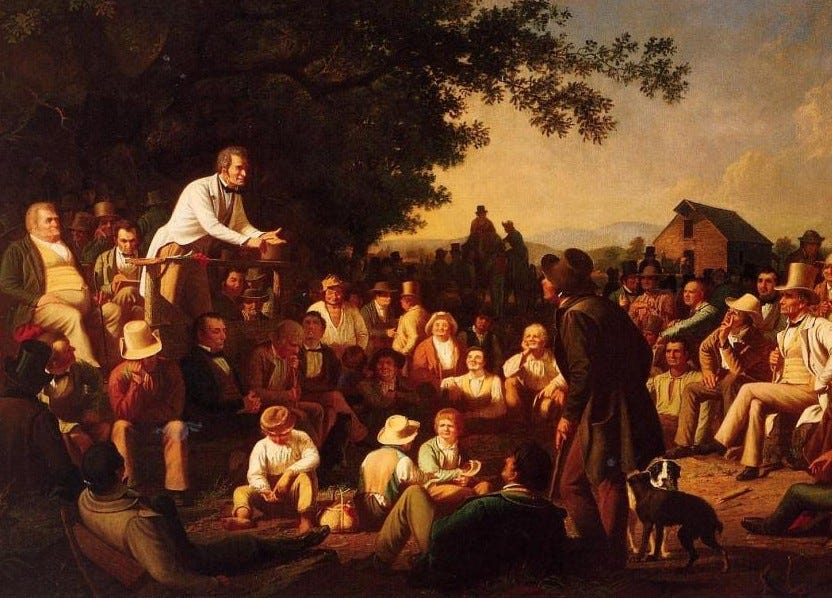
From 1830 to 1900, political participation was much higher in America. And there was a thriving press which contributed mightily to public debates, unlike our later mainstream media. Newspapers were “fiercely partisan,” as Lasch described. Many papers tended to advocate for one political party or another. Some refused to be in the thrall of any party. Many cities and towns offered multiple papers which offered views in opposition to each other. Despite the recent development of the so-called “Information Age,” Lasch says frankly that by the late-20th Century, “the public knows less about public affairs than it used to know.” This is partly a result of transforming journalists into a more credentialed “profession,” and discouraging open debate.
“The nineteenth-century press created a public forum in which issues were hotly debated. Newspapers not only reported political controversies but participated in them, drawing in their readers as well. Print culture rested on the remnants of an oral tradition. Print was not yet the exclusive medium of communication, nor had it severed its connection with spoken language. The printed language was still shaped by the rhythms and requirements of the spoken word, in particular by the conventions of verbal argumentation. Print served to create a larger forum for the spoken word, not yet to displace or reshape it.
The Lincoln-Douglas debates exemplified the oral tradition at its best. By current standards, Lincoln and Douglas broke every rule of political discourse. They subjected their audiences (which were as large as fifteen thousand on one occasion) to a painstaking analysis of complex issues. They spoke with considerably more candor, in a pungent, colloquial, sometimes racy style, than politicians think prudent today. They took clear positions from which it was difficult to retreat. They conducted themselves as if political leadership carried with it an obligation to clarify issues instead of merely getting elected.
The contrast between these justly famous debates and present-day presidential debates, in which the media define the issues and draw up the ground rules, is unmistakable and highly unflattering to ourselves. Journalistic interrogation of political candidates—which is what debate has come to—tends to magnify the importance of journalists and to diminish that of the candidates….”[11]
“Hidden persuaders’ (as Vance Packard called them) replaced the old-time editors, essayists, and orators who made no secret of their partisanship…. Unless information is generated by sustained public debate, most of it will be irrelevant at best, misleading and manipulative at worst. Increasingly information is generated by those who wish to promote something or someone—a product, a cause, a political candidate or officeholder—without arguing their case on its merits or explicitly advertising it as self-interested material either. Much of the press, in its eagerness to inform the public, has become a conduit for the equivalent of junk mail….”[12]
Lasch sums up the issue in this way:
“Democracy requires a vigorous exchange of ideas and opinions. Ideas, like property, need to be distributed as widely as possible.”[13]
Let’s also remember the whining by American deep-state apologists during the past decade about what they called “misinformation” and “disinformation.” Of course false information exists, but this recent effort was a coordinated targeting of information that was truthful and did not fit the narrative of the regime. This effort was completely opposed to what Lasch called “sustained public debate.” It was a contempt for the public, exhibited by Biden administration officials and several members of the media. They actively tried to shut down free discussion online. Both major parties have been guilty of media manipulation, but the aforementioned campaign was an especially aggressive example, using government agencies to impose censorship.
This didn’t only happen in the USA. During Covid-19 in New Zealand, Prime Minister Jacinda Ardern insisted that the only true source of information for the public would be the government. “We will continue to be your single source of truth,” she stated. And she emphasized, “Otherwise, dismiss anything else.” This was during a time when, throughout the West, we were repeatedly misled and lied to by government officials and media. During her reign, Ardern and her government inflicted a drastic lockdown on New Zealand, which included human rights violations and significant economic damage. She admitted openly that there would be “two classes of people” in the country, the vaccinated and unvaccinated. We are steadily learning how very harmful the lockdowns and other Covid policies were to our societies. As one alternative media figure put it, this was “weaponized, phony niceness.” It was also totalitarian and rooted in unreality.[14]
This leads me to a positive note. One thing has improved in my lifetime: the opening up of political discussion beyond the limits that were strictly enforced for decades by the mainstream media and their controllers. The Internet has allowed much more free discussion—a very welcome widening of the Overton Window. Elon Musk’s X has played a role in this, along with the ability for anyone—such as your humble author—to post their musings on a variety of Internet platforms. It’s a bit like a return to the wild and woolly days of 19th-century newspapers, although not quite. It certainly has allowed for more sources of information. Thoughtful, substantial arguments for a variety of perspectives can be found, when one ignores the vituperation, lies and vast amounts of other noise. As the British commentator “Richard the Fourth” said, “Without things like Twitter [now called “X”], we just wouldn’t know half of this information.”[15] And that might be an understatement. He said this in the context of the mainstream media trying to cover up vital information about a vicious assault on a Northern Irishman by a migrant from Sudan.
Race Relations and Cities
Revolt of the Elites offers a good, succinct summary of what went wrong with race relations in the 1960’s. Lasch highlights how communities were destroyed by radical civil rights activism and related government actions. Much of this was also caused by social engineering that was pushed by the new elites. Lasch might have retained some naïveté about the civil rights movement, yet he saw through the platitudes of extreme activists who demanded equality at all costs, equality of results, and more….
“By demanding that the nation live up to its promise, [civil rights activists] appealed to a common standard of justice and to a basic sense of decency that transcends racial lines. The social engineering initiated in the mid-sixties, on the other hand, led to a rapid deterioration of race relations. Busing, affirmative action, and open housing threatened the ethnic solidarity of neighborhoods and drove lower-middle-class whites into opposition. In the face of their resistance, liberals ‘reacted with self-righteous indignation,’ in [Jim] Sleeper’s words. Black militants encouraged racial polarization and demanded a new politics of ‘collective grievance and entitlement.’ They insisted that black people, as victims of ‘white racism,’ could not be held to the same educational or civic standards as whites. Such standards were themselves racist, having no other purpose than to keep blacks in their place. The white left, which romanticized Afro-American culture as an expressive, sexually liberated way of life free of bourgeois inhibitions, collaborated in this attack on common standards. The civil rights movement originated as an attack on the injustice of double standards; now the idea of a single standard was itself attacked as the crowning example of ‘institutional racism.’”[16]
In recent years, Christopher Caldwell has added to Lasch’s analysis by describing the harmful effects of civil rights legislation on our legal system and society in general, including its subversion of our constitution.[17] While the civil rights movement was active, many white Americans understandably wanted fairness for all, but much of what happened with civil rights was something different.
Social engineering had other dire impacts. One of the most striking signs of America’s decline is the current state of its cities, which were profoundly harmed by government policy and the influence of powerful private foundations. As suggested above, this was a set of “misguided policies intended to break up ethnic neighborhoods that allegedly [stood] in the way of racial integration.” Revolt of the Elites doesn’t mention it much, but increasing urban crime also played a large role in forcing whites to migrate to the suburbs. I can remember from my own lifetime when our cities were safer than they are today. Commentators such as Thomas Sowell have documented this decline.
There have been slums and a degree of urban crime for millennia. But American cities generally went from thriving social and cultural centers to, in many cases, places that many normal citizens try to avoid. Lasch does mention how the tax base of cities was eroded by white flight and the loss of industry, and he emphasizes the very valuable role that city neighborhoods once played in the lives of humble citizens. Much of that neighborhood cohesiveness is gone.[18]
Decline of Psychology
One theme which continues to run through Lasch’s book is the nature of respect and self-respect. We’ve already looked at how American workers, farmers, and craftsmen claimed the opportunity to earn a respectable place in society. This is of course related to self-respect. Lasch goes against the grain of many recent intellectuals by insisting that,
“Respect is what we experience in the presence of admirable achievements, admirably formed characters, natural gifts put to good use.”
“Self-respect cannot be conferred; it has to be earned. Current therapeutic and pedagogical practice, all ‘empathy’ and ‘understanding,’ hopes to manufacture self-respect without risk. Not even witch doctors could perform a medical miracle on that order….”
“The ideology of compassion, however agreeable to our ears, is one of the principal influences, in its own right, on the subversion of civic life, which depends not so much on compassion as on mutual respect…. We respect those who are willing to be held accountable for their actions, who submit to exacting and impersonal standards, impartially applied.”
I’ll venture to say that almost all Americans shared Lasch’s view of respect and self-respect, before modern psychological and teaching theories took effect. Psychology and teaching—what Lasch calls the “helping professions”—have jettisoned “realism,” and they now make “extravagant claims for their expertise.”[19]
As I read the first pages of Lasch’s chapter, “The Abolition of Shame,” I wondered how it would connect with the rest of his arguments. Here, Lasch explores in detail some psychological theories of human shame, and recommended strategies for coping with it. Lasch gradually reveals his concern about a very destructive development: how shamelessness “now sets the tone of our culture as a whole.”[20] This growing attitude has resulted from the increased influence of politicized psychiatrists and psychologists, and the declining influence of Christianity. Lasch also reviews how “Freudian revisionists” in the 1930’s began to insist that American society as a whole was in need of psychiatric treatment. “This has remained the dominant view, right down to the present day.”[21] And, it has had a tremendous influence in changing our society, for the worse. Related to the attack by psychologists on human shame was a large push in the 1990’s to promote “Self-Esteem.” Lasch describes how feminist Gloria Steinem’s involvement was a “plea to the effect that politics and therapy are indistinguishable… completely consistent with the dominant brand of liberalism.” Steinem’s ideas were implemented in policy in some states such as California.[22]
Higher Education, Culture, Society, and Trust
In a Revolt of the Elites chapter on higher education, Lasch bent over backwards trying to be even-handed, in answering concerns about Political Correctness. He believed that the biggest problem in academia was the growing influence of corporations. That has certainly been a destructive force, against the traditional academic model and in other ways. But while Lasch also criticized far-left ideologues who were becoming very influential in faculty departments, he underestimated the extent of the PC problem, and how pervasively it would subvert and eventually dominate higher education. Since the 1990’s, far-left ideology has taken over vast swathes of college faculties and administrations throughout the country. Not only has this resulted in a widespread emphasis on leftist indoctrination of students, but it has also contributed to the lowering of academic standards, and has promoted policies such as DEI. As many other commentators have noticed, the Woke tail wagged the corporate dog in many cases. Very significantly, far-left ideas that became prominent in higher education have been embraced throughout the primary and secondary educational systems in America. And in HR departments.
Lasch also does not discuss some major influences on American culture and society in the 20th century such as Alfred Kinsey’s books on sexual behavior, the 1950 collaborative book The Authoritarian Personality, and Herbert Marcuse and other figures of the New Left. Lasch was very troubled by the breakdown of the traditional family, but in my opinion he did not explore this as thoroughly as he should have in Revolt of the Elites.
He also did not delve as much into the loss of social trust as I would have liked. America, along with other Western nations, once had a relatively high-trust society. In many places, we could leave our doors unlocked all the time. We could prop up our unlocked bicycles outside a store, while we went shopping. At a farm stand, we could deposit money in an untended box, to pay for farm produce. And parents could allow their children to play outside unsupervised, without much worry. Such elements of a high-trust society are disappearing. Much of this is a result of increased cultural diversity, which inevitably lowers trust, as the liberal social scientist Robert Putnam finally admitted. Lasch touched on some of the problems of diversity, and mentioned that the market and the welfare state tend to weaken “ties of trust,”[23] but he did not focus on this process.
A Critic of Lasch
There have been some other counterpoints to Lasch which I think have merit. Historian Claes Ryn agreed with Lasch to an extent. In a 2023 interview he said, “The most telling illustration of America’s fraught condition is the inability or refusal of our dominant, trend-setting elites to recognize and act on reality.” He also agreed that there was a major transformation of America in the 20th century.[24] Yet, back in 1993, anticipating the populism that Lasch favored in Revolt of the Elites, Ryn offered the following warning. In it, he might be harder on Thomas Jefferson than I would be, but his general concerns are valid….
“One of the least salutary parts of Thomas Jefferson’s mixed and contradictory legacy is his populism: elites should always be mistrusted (especially if they are kings, nobles, or priests), but the common people are OK. Government must be cleansed from time to time by the right-thinking masses. Populism seems plausible today, because present elites are so clearly dominated by decadent, escapist attitudes. But it would be a great mistake, especially in our disoriented era, to look to ‘the people’ for sources of purity and social unity. Populism is only another form of escape from the real problem, which is that Western civilization as a whole is disintegrating at the moral center. The people in general may today be less obviously corrupt than the elites in some respects, but that is not because of some natural propensity to virtue greater than that of elites. The mass is just slower to change and lags behind the more daring and creative elites. The people seem culturally conservative today only in comparison with more adventurous leaders. If the mass of common men have such sound instincts, who is digesting all those television programs, movies, records, musicals, and novels? Who is paying all those college and university faculty and electing and reelecting all those congressmen?
True, among the common people are the millions of decent and responsible individuals without whom American society would fall apart. Popular culture at its best forms the wholesome ballast for the ship of state. Populist rhetoric may be defensible for political leaders who are trying to dislodge destructive elites, but no illusions about the wisdom of the masses should surround populist appeals. Such appeals are a sign of desperation; they are in effect a declaration of cultural and political bankruptcy. Populism of a more programmatic, ideological kind plays with fire. It masks an unsound drive for power. It pursues a stifling and merely artificial social unity. John Adams was more representative of early American political thought than Jefferson when he said that the people can be as tyrannical as any king.
If a renewal of American and Western civilization is still possible, it requires advanced ethical, intellectual, aesthetical, and political creativity and leadership. New elites must form and replace or sway the present ones. What could be more superficial than the idea that a couple of electoral triumphs for “the people” might set America right.”[25]
While I agree somewhat with Lasch that “Populism is the authentic voice of democracy,”[26] Ryn expresses some important truths here. It’s undeniable that today’s masses have fallen under the spell of Bread and Circuses. And most of us who have read history and observed the world around us would agree that the nature of “the People” has changed since the American founding. John Adams, in 1798, made another applicable remark: “Our Constitution was made only for a moral and religious people. It is wholly inadequate to the government of any other.”[27]
Another Perspective on Decline
In the 1960’s an American scholar, Eugene Rose, studied the decline of the West. He found that our culture, society, and politics had become ill with a deep-seated Nihilism. Having read widely in history, philosophy and religion, Rose believed that elements of this civilizational illness were unprecedented, such as the extent of religious unbelief combined with an unhealthy restlessness, which had grown to “a scale so vast as to be almost universal.” Rose found that,
“Toward the end of the nineteenth century increasing numbers of quite ordinary men had begun that restless search—so much a part of our own contemporary scenes—to find a substitute for the God Who was dead in their hearts.”[28]
Rose described four stages of Nihilism that have been especially active in the West since the French Revolution. He called these stages Liberalism, Realism, Vitalism, and the Nihilism of Destruction. They have worked together in a dialectical way, opposing but also embracing each other, to propel the West further into decline and destruction. The cause of these nihilistic developments is the denial of absolute truth.
As he was examining the West’s decline, Eugene Rose found solace and personal healing in the Russian Orthodox Church, and he became a monk. He was given the title of Father Seraphim Rose, and his writings have become influential since his early death in 1982. Christopher Lasch probably would have agreed with at least some of Rose’s diagnosis. For me, Rose provides a more complete and satisfying analysis, but Lasch’s work adds a lot of very important details, specific to developments in America.

I was surprised that Christopher Lasch did not cite James Burnham in Revolt of the Elites. Burnham wrote The Managerial Revolution (1941) and Suicide of the West (1964), which examined and sharply criticized America’s emerging, increasingly dominant managerial classes of the 20th century. Burnham became influential in some American intellectual circles, and his diagnoses are still frequently studied. But, we can’t have everything. Lasch gave us some important, clear insights into how the Powers That Be in America have steered us wrong.
An Independent Mind
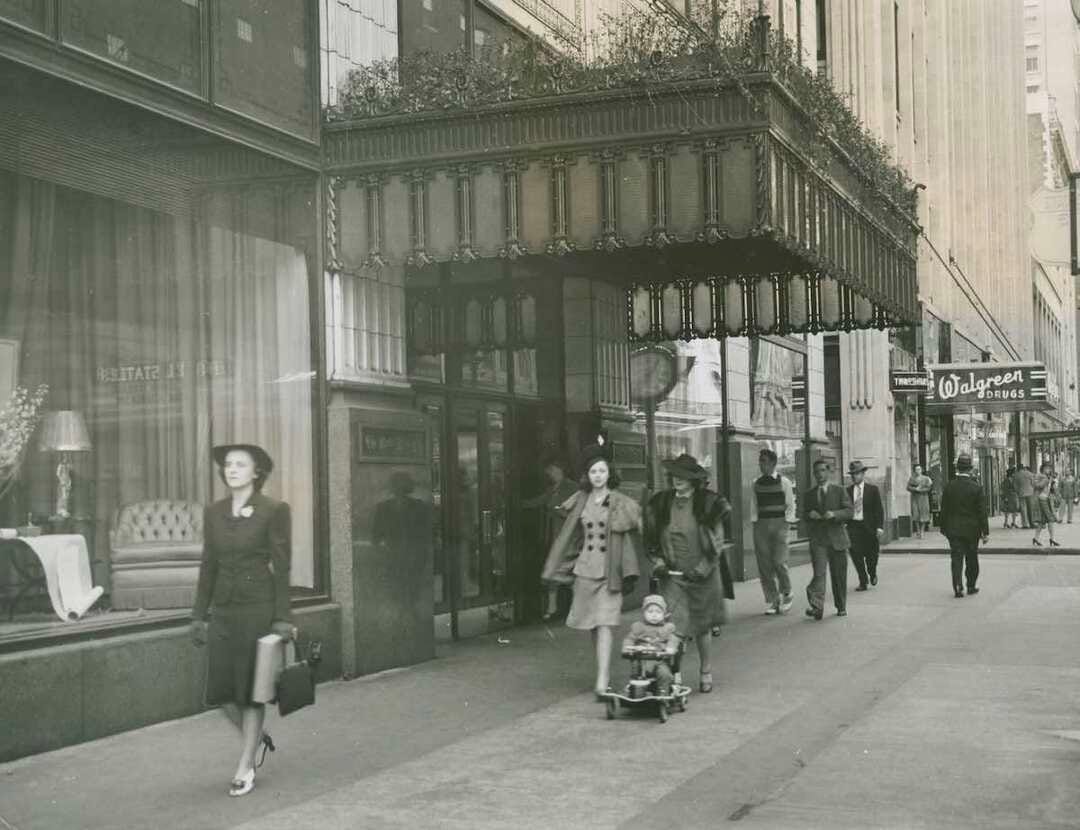
My wife grew up in another country, and I have lost count of the number of times that I’ve told her, “It wasn’t always like this!” I resist looking at the past with rose-colored glasses, but it’s undeniable that we have lost a tremendous amount that was good in America. Zoomers today are often understandably shocked when viewing photographs and documentary film footage of Americans in the past. They see evidence of a safer, more cohesive society, with well-dressed people of all classes showing self-respect and respect for others. Our past wasn’t a utopia, but it offered much that was healthy and good. Lasch would understand.
Lasch leaned politically leftwards during much of his career, but in Revolt of the Elites he said many things which today’s leftists would label “far-right.” His general remedy for America was “to emphasize responsibility rather than rights,” to tame both capitalism and the welfare system, to strengthen community, and to prevent “a centralized state bureaucracy.”[29] He also urged a commitment to past and future generations, and quoted Horace Mann in this regard:
“The successive generations of men, taken collectively, constitute one great commonwealth.”[30]
Earlier in his academic career, Lasch used some Marxist approaches in his thought and study. His “paleoconservative” academic friend Paul Gottfried claimed that he was devoted to “a non-mainstream form of socialism.” He had a “lifelong hatred of consumer capitalism…. His project was to find a religiously based communitarianism that could serve as an alternative to multinational capitalism. This communal identity would focus on service to one’s family and neighbors, and it would supposedly take everyone’s mind off consumption and the false idea of “Progress.” He also “personified an old-fashioned Presbyterian way of life.”[31]
Lasch angered people on the Left and the Right. Pundits argue about where he really stood on the political spectrum. Anyway, as I’ve written elsewhere, you’re often not doing your job if you don’t make someone angry. Lasch was criticized for inconsistency, but I think that some of the anger directed against him was because he was good at bursting people’s bubbles. Original, independent thinkers like him aren’t completely cast in an ideological mold.
In his scholarship, Lasch studied many thinkers who are not commonly cited by either the Left or the Right today. He examined the ideas of some who were widely known during their lifetimes, such as William Henry Channing, Horace Mann, Daniel Webster, Abraham Lincoln, and Orestes Brownson. He also offered the perspectives of many others who have been less known, including Robert Rantoul, Jr., Charles Ingersoll, David Ramsay, R. H. Tawney, and Michael Young. All of them still have useful, interesting things to say to us. And I hope I’ve shown that Lasch does also.
[1] Lasch, Christopher, The Revolt of the Elites and the Betrayal of Democracy, New York: W.W. Norton & Co., 1995, p. 3
[2] Ibid., pp. 3-4
[3] Ibid., 4
[4] Ibid., pp. 5-6, 80
[5] Ibid., pp. 6-7
[6] Ibid., pp. 7-8
[7] Ibid., p. 39
[8] Haywood, Charles, “The Revolt of the Elites and the Betrayal of Democracy (Christopher Lasch),” Sept. 7, 2021, https://theworthyhouse.com/2021/09/07/the-revolt-of-the-elites-and-the-betrayal-of-democracy-christopher-lasch/
[9] Revolt of the Elites, p. 58
[10] Ibid., p. 167; See also the writings of Sam Francis.
[11] Ibid., pp. 162, 164-65
[12] Ibid., pp. 173-74
[13] Ibid., p. 10
[14] “Jacinda Ardern’s COVID response created ‘two classes of people’”, Sky News Australia, YouTube, Jan. 22, 2023,
[15] “Something Amazing is Forming Out of Europe’s Immigration Crisis,” Richard the Fourth, YouTube, June 10, 2026,
[16] Revolt of the Elites, p. 136
[17] Caldwell, Christopher, The Age of Entitlement, New York: Simon & Schuster, 2020
[18] Revolt of the Elites, pp. 8-9, 98-99, 118-19
[19] Ibid., pp. 89, 105, 206-7
[20] Ibid., pp. 204
[21] Ibid., p. 207
[22] Ibid., 208-10
[23] Ibid., p. 102
[24] Ryn, Claes, in “”The Failure of Conservatism and the Road Not Taken” — A conversation with Claes Ryn,” Michael Vlahos Channel, YouTube, May 8, 2023,
[25] Ryn, Claes, “Cultural Diversity and Unity,” Chronicles, June 1993 (reprinted June 7, 2018), https://chroniclesmagazine.org/web/cultural-diversity-and-unity/
[26] Revolt of the Elites, p. 106
[27] Adams, John, Letter to the Officers of the 1st Brigade of the 3rd Division of the Massachusetts Militia, Oct. 11, 1798
[28] Rose, Eugene (Father Seraphim), Nihilism: The Root of the Revolution of the Modern Age, St. Herman of Alaska Brotherhood, 1994
[29] Revolt of the Elites, p. 113
[30] Revolt of the Elites, p. 146, from Horace Mann, Annual Report of the Board of Education (Massachusetts), X, 127
[31] Gottfried, Paul, “Voices Against Progress: What I Learned from Genovese, Lasch, and Bradford,” Front Porch Republic, Aug. 11, 2009, https://www.frontporchrepublic.com/2009/08/voices-against-progress-what-i-learned-from-genovese-lasch-and-bradford/
Comments
Nothing yet. Say the first thing.
Sign in to join the conversation.