
On February 12, a young Frenchman was viciously beaten by a group of leftists. The victim, Quentin Deranque, died two days later. Videos of the incident are very disturbing. They show prolonged violence directed against the young man, who was thrown down and then lay prostrate on the pavement, while several blows were made to his head.
23-year-old Quentin was a quiet, devout Roman Catholic who was studying mathematics. On the day of the assault, he was standing with some female protesters from the non-violent right-wing group Collectif Nemesis, at a gathering in Lyon. They were protesting the infiltration and control of universities by Islamists and leftists. Nemesis had been physically attacked at previous events, so they arranged for Quentin and other young men to stand guard as a deterrent on February 12, while the Nemesis women held a banner aloft. Leftist militants attacked the group, and Quentin and two other supporters were separated from their comrades. Then the fatal beating of Quentin began. He was murdered because he was a nationalist and a Christian traditionalist.
At least some of Quentin’s murderers belonged to the “Young Guard,” an Antifa group which has been closely affiliated with a major leftist political party, La France Insoumise (“France Unbowed” or LFI). Raphaël Arnault, a current Member of Parliament for LFI, helped found and lead the Young Guard. Unlike Quentin Deranque, Arnault had a violent past and a criminal record. Jean-Luc Melanchon, the leader of LFI, has called the Young Guard his “young comrades.” [1]

The murder of Quentin has shaken many in France. Normal people understand the evil of the crime. In response, some of the mainstream French media have expressed platitudes about how violence is inappropriate in politics. President Emmanuel Macron stated that “the hatred that assassinates has no place among us.” He called for “calm, moderation, and respect.” But a few days after the attack, some French media began to falsely portray Quentin and his friends as violent far-right activists.
As in the aftermath of the assassination of Charlie Kirk, many French leftists reacted with pleasure and satisfaction to the murder. A march in tribute to Quentin was met with obscenities and other insults by leftist bystanders.
And somehow, the Left has portrayed itself as the victim in all of this. The LFI’s Jean-Luc Melanchon expressed sympathy for Quentin’s family, and said that “death has no place in our practices,” but he also insisted, “it’s we who are being attacked, meeting after meeting!” With this statement, he was referring specifically to non-violent protests by opponents of the LFI. Thus, Melanchon equated non-violent opposition with murder. He equated the holding of a banner by his opponents to a young man being kicked in the head. Let’s look further at how this absurd claim of victimhood occurred, and how the Left justifies its own violence, particularly in France.
The Left Claiming to Be the Victim
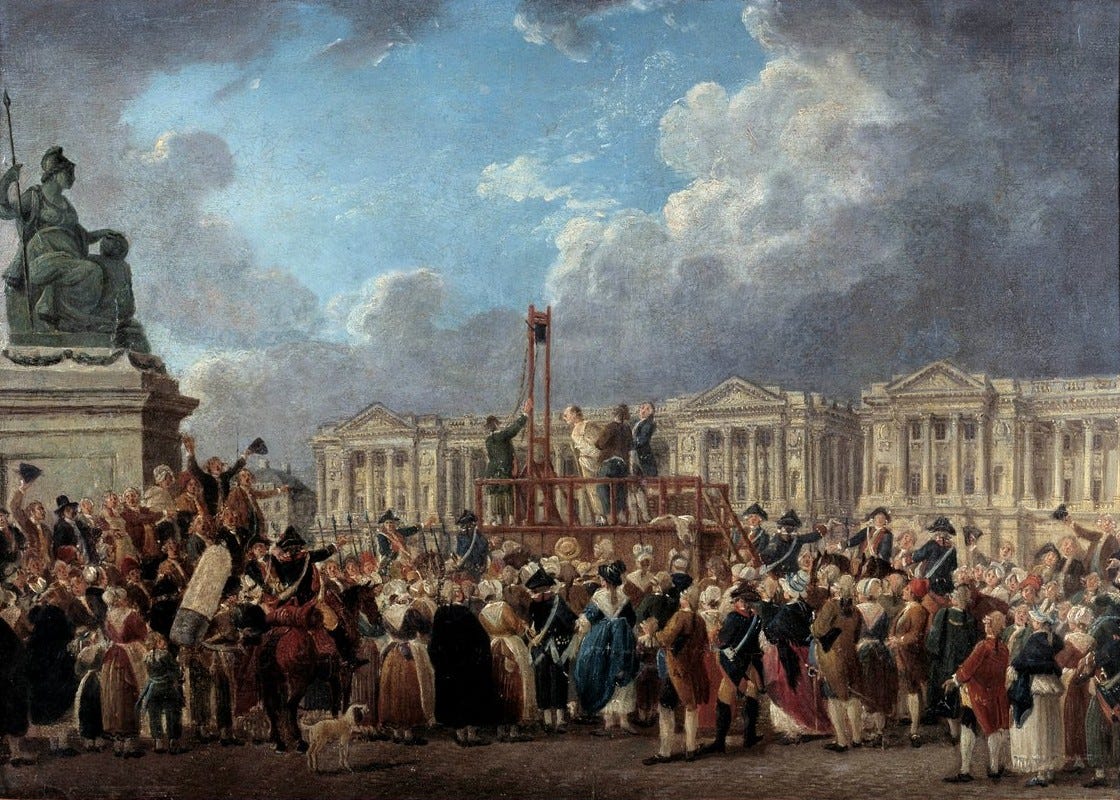
Commentator Raphaël Paillot has carefully studied philosophy, politics, and French history. He describes how the French Revolution was “a symbolic event for every leftist across the world,” since it not only overthrew the pre-existing monarchy, but also violently attempted to create a new society. This revolution included the Reign of Terror, during which several thousand people were executed and massacred. The victims included many common people, along with aristocrats and clergy. They were killed because they were considered enemies, or potential enemies, of the revolution. Since the days of the Terror, many leftists have considered violence as a legitimate tool in achieving their aims. In France, some nationalists have committed violence in response, yet as Paillot shows, leftists up through recent times “have inversed the argument and claimed, ‘we are defending ourselves,’” as a justification for their own violent acts which include murder. Paillot describes this as “classic leftist paranoia.” Significantly, this paranoia has “deep philosophical roots.” [2]
What specifically does the Left consider to be a threat to itself? Typically it is not an actual, imminent threat of violence. Stelios Panagiotou notes that the Left often considers simple disagreement as a major threat, which must be met with more than reasoned argument. [3] We’ve often heard the strident Woke slogans “Words Are Violence!” and even “Silence Is Violence!” A supposedly violent threat to the Left can also be a particular religion such as Christianity, or traditions, norms and customs, or widely-acknowledged heroes from the past. Or it can be the state, an educational system, or the rule of law—anything that is considered an obstacle to the Left’s plans.
And any of these obstacles become targets. As journalist Laurent Obertone has described, booksellers in France who sell right-wing books are threatened by activists, along with restaurants who host right-wing speakers. In addition to physical violence against the Right, “there are blackmail, manipulations, and accusations that are part of the same aggressiveness, a way of suppressing thoughts and preventing freedom of expression, and they are very common.” [4]
Violence As a Core Element of Leftist Thought
Despite what some political hacks have recently claimed, Wokeness has not gone away in the West. It is still embedded in our governments, educational institutions, and media. A geography professor at the university where Quentin Deranque studied has said that its campuses are dominated by an Antifa group, which “reigns” there. This professor has been directly threatened in his classroom by leftists, and he must be protected by private security as a result. Graffiti which threatens him is still visible on campus. [5] In America, I personally have witnessed the intimidation of non-leftists in academia as far back as the 1980’s. This has steadily increased throughout Western countries. French author Philippe de Villiers describes our Woke-dominated world as “an intellectual ice age, where the world is divided in two: the oppressors and the oppressed.”[6] De Villiers is referring to the two categories in which the Left divides society. And this “oppressor/oppressed” dogma provides a rationale for subversion and violence.
Philosopher Antoine Dresse, originally from Belgium, is now living in Poland. In a conversation with Liselotte Dutreuil, he provides a clear, informative review of why the Left often acts so violently. Dresse agrees with Paillot that the reason is because violence is rooted deeply in their ideas. Importantly, Dresse emphasizes that we need to be precise about the meaning of words, and he describes how leftists manipulate language to their advantage. “The Left, very, very often renames violence…. [It] will rather speak willingly of resistance, self-defense, direct action, disobedience, insurrection, convergence of struggles… [and] many more examples.” [7] As we have seen, they also deceptively use the term “violent” to describe institutions such as existing churches, schools, and governments which stand in their way.
Dresse emphasizes that “there is really a theoretical core within left-wing thought, or at least radical left-wing thought, which means that violence is not an excess, is not a deviation… but is rather inscribed in its DNA, in its political project.” Marxists view social classes as having “antagonistic interests… they can never have common interests.” Contrary to the assertions of philosophers such as Aristotle and Thomas Aquinas, the “idea of a common good does not exist in Marxism.” Hence, it’s always “oppressors” versus “oppressed” in non-communist societies.
Karl Marx ridiculed unsuccessful revolutions because he thought, to paraphrase him, “they weren’t violent enough.” [8] In the Manifesto of the Communist Party of 1848, Marx and Friedrich Engels are clear about the forceful nature of their enterprise:
“The Communists disdain to conceal their views and aims. They openly declare that their ends can be attained only by the forcible overthrow of all existing social conditions. Let the ruling classes tremble at a Communistic revolution. The proletarians have nothing to lose but their chains. They have a world to win.” [9]
This is just one example of Marxist rhetoric that directly encourages bloodshed, unlike the non-Marxist rhetoric which is condemned today as “Violence.” Another example from Marx:
“It is only in an order of things in which there are no more classes and class antagonisms that social evolutions will cease to be political revolutions. Till then, on the eve of every general reshuffling of society, the last word of social science will always be: combat or death: bloody struggle or extinction. It is thus that the question is inexorably put.” [Marx’s own emphasis in bold] [10]
Historian Jean-Christophe Buisson has studied Communism, Fascism, Nazism and civil wars in the 20th century. He provides some further warnings from history, and describes how, according to Marxists:
“We must wipe the slate clean of the past, erase, eliminate, eradicate everything that embodies the old world. The Communards in 1871 followed this advice by massacring a large number of people, but they failed, unlike the Bolsheviks in Russia in 1917. Other revolutions followed, with their procession of deaths by the millions, in China, Cambodia, or Cuba for example. These are all models that the French Marxist left would claim as its own throughout the 20th century.” [11]
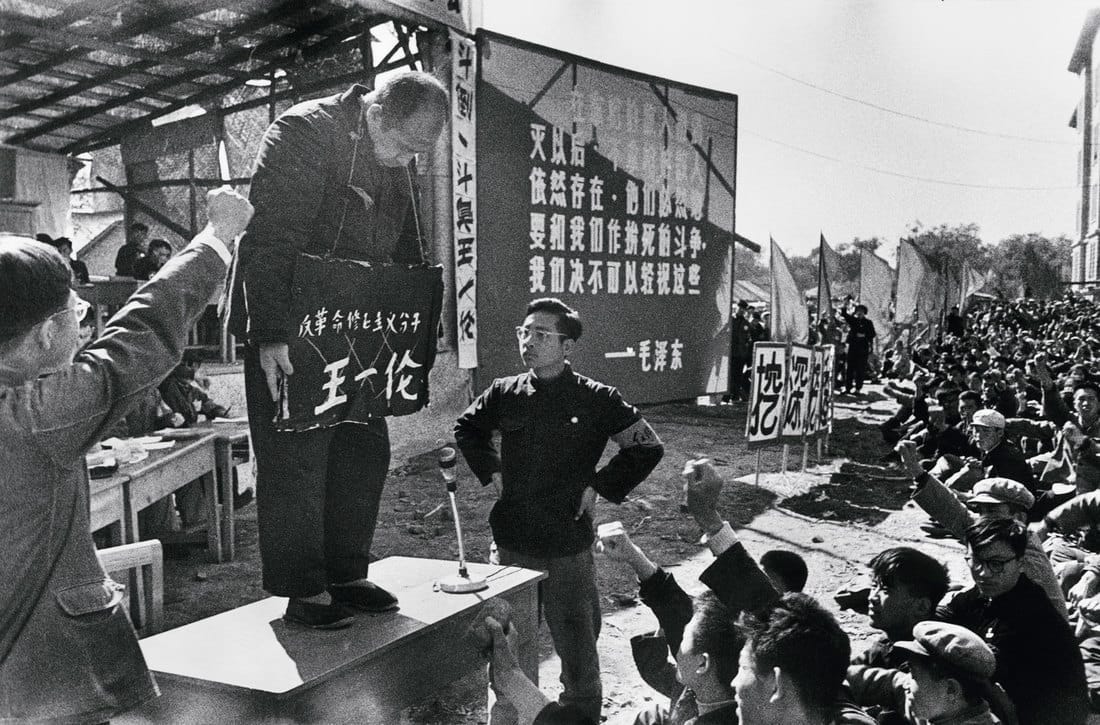
The Lie That There Are Either Oppressors or Oppressed
History clearly shows that the separation of everyone into either an oppressor or oppressed class is false. Within the British Empire, for example, subjects in the colonies were provided with better economic and social conditions than they had before colonization. Most of these subjects did not become a part of the imperial ruling class, but they still benefited immensely. It was often a win/win situation. This was true for European colonies in Africa, the Americas, and Asia. Practices such as slavery, human sacrifice, cannibalism and the regular murder of widows were abolished by the imperial authorities. And European empires provided rule of law, improved hygiene and health, and modern transportation and communication systems. Life spans of colonial subjects increased. [12] In 1965, Rhodesia declared itself independent from British oversight and control, while maintaining a multiracial nation that was ruled by white elites. It continued to provide its black population with economic and health conditions that were much better than those in black-ruled nations. Blacks who did well in school and at work were offered opportunities by white authorities to advance, while the general black population remained relatively prosperous. Literacy of blacks was three times the average of those in the rest of Africa.
Also, in the Western world, living and working conditions improved for the working classes through gradual reform, rather than revolution. Charles Dickens understood social problems and cared for the poor and downtrodden as much as anyone. He wisely advocated peaceful reform rather than revolution. There were many more like him who are less well-known. Powerful elites in countries such as Great Britain understood the need for reform, and acted upon it. The “proletariat” in the West typically remained patriotic and non-revolutionary, so the Left changed its definition of proletariat to one that consisted of women and various minorities—racial, sexual, etc.—rather than the working classes. This was one factor which led to today’s Wokeness.

Going further back in history, to the European Middle Ages, there were sometimes mutually beneficial projects that embraced all classes. The building of the cathedrals is one striking example. The Church also provided charity to the poor, and helped with the development of hospitals and universities. Clergy and aristocrats looked out for peasant children who showed potential, and channeled those children into educational opportunities. Medieval society as a whole tended to be strictly hierarchical, but the benefits of this arrangement did not only go in one direction. Injustice and oppression occurred in some places, but they were also corrected by actions of the Church and conscientious rulers. Clearly, not all members of the ruling classes were oppressive.
And yet with the substantial number of win/win examples throughout history, the rigid classification of everyone into either oppressor or oppressed predominates among the Left. It is one of its most prominent and inflammatory features.
Other Left & Right Perceptions & Practices
Antoine Dresse also discusses the difference in how the Left and the Right view the concept of social order. “For the Right… order is something positive in itself…. Even when the order may be bad, we will be tempted to improve what may be improved. But we are aware that disorder would cause even more harm.” For the “radical Left… there is no order that is positive in itself…. Social order is not peace… [but is] a form of violence that is simply made legal.”
The influential leftist theorist Herbert Marcuse assumed that an “established hierarchy” is bad and oppressive, and that in such a system, “law and order are always and everywhere the law and order which protect the established hierarchy.” [13] Of course, Marcuse doesn’t acknowledge that law and order in a hierarchical system might actually protect those in lower classes, and might benefit society as a whole. Today, a high proportion of the victims of rampant crime in Western cities, which has been enabled by left-wing judges, mayors and prosecutors, are from those lower classes.
Liselotte Dutreuil reminds us how the Left will claim that institutions such as schools are guilty of “violence” if traditional norms are taught. In the Left’s way of thinking, traditional norms are used to oppress the lower social classes. But schools, the state and other institutions are also “levers that are activated by the Left itself when it comes to power.” And the Left will make use of these institutions in forceful ways that are typically opposed by substantial numbers of citizens; for example, as Dutreuil describes, with “the way we are forced to educate our children or not… to impose certain discourses on them.” Is this not oppression by the Left?! Also, as Dutreuil states, “today there is a large majority of French people who no longer want immigration. Well, there is a certain part of the Left who would be ready to impose it at all costs. [And to impose] control of speech, control of thought.” The state and other organizations have been relentless with this in recent decades, to the point that many serious commentators believe that France is on the brink of civil war. It is already experiencing some severe social fracturing. In the United States we have seen a similar flexing of power by the Left during the Obama and Biden administrations, with political censorship, lawfare, criminal investigations of political opponents, debanking, imposition of DEI, politicizing of education, and mass migration.
Dresse notes, “I wouldn’t single out the Left for using its tools of domination. What I would criticize it for is rather perpetuating the myth that domination, that hierarchy, can one day disappear…. Quite simply, once it takes power it becomes the dominant party like any other, and it then uses the means of domination…. Anything that falls outside its intellectual sphere is a scandal in itself that must be repressed.” An example of this is private, Christian schools.
Dresse specifies that, typically, there appear to be moderate leftist politicians, distinct from more extreme leftists who openly advocate violence. The moderates advocate for reform within a political system. Some have been sincere and principled about this. Yet some moderates also tend to maintain “underground bridges” with the extremists. We saw this in the United States during recent unrest in Minneapolis, and during the riots of 2020, when Democrat and some “moderate” Republican politicians supported or at least tolerated the rioters. Political donors and media also played major roles in this support. And in America, at least before the Trump Administration designated Antifa as a terrorist organization, Antifa acted with impunity because of support in high places.
In France, according to Liselotte Dutreuil, “The Left puts itself in the position of victim… Yet… we get the impression that this left wing is actually protected, [and] is even encouraged by the system.” This is noticeable in multiple ways, and not only in France and America. The politicizing of all activities, and the Cancellation mania of recent years, along with the aforementioned debanking, lawfare, and other tactics, show the nefarious use of power by left-dominated institutions, in and outside of government. Even museums and historic sites now promote “de-colonization” and other extreme political agendas. [14]
Among established politicians and pundits of the Right, “there’s a tendency to try to avoid being seen with anyone further to the right than yourself.” Conversely, in Western Europe, leftist and centrist political parties have cooperated in freezing out more conservative parties from participation in government. Extreme-left parties have been tolerated, and even encouraged. The purpose of some politicians who initially created this arrangement, and who might have been well-meaning, was possibly to prevent another outbreak of Nazism. They did not seem to worry about the possibility of another Reign of Terror.
Raphaël Paillot has studied crime statistics related to political violence. He has found that in France, “The overwhelming majority of murders is from the left…. It is so because the left is allowed to be violent and to kill people.” As in America, data is manipulated by the media to hide this. Meanwhile, the justice system has turned a blind eye towards far-left violence, with some exceptions. Because video of the murder of Quentin was available, it was harder for French institutions to ignore the incident.
Getting back to the use of language, Dresse points out how commentators commit a serious mistake when they refer to the Left as “today’s fascists,” since violence has been a common feature of the Left from its beginnings. If one says that “Leftists are today’s fascists”…
“[It] exonerates the radical left and its entire ideological framework from its own crimes…. It implies that it’s distorted, that it has deviated from its own core principles…. On the contrary, [violence] is deeply ingrained in its very core principles. Communists are not the real fascists, communists are simply communists, and they act like communists…. Fascism is another school of thought, another current of thought on the right, with a different intellectual framework. It emerged in a very specific context—and it’s important to remember this—often in reaction to communist violence. That is to say, first there was communist violence in Italy, and in reaction, fascist militias formed to fight against this violence…. [In general], we mustn’t reverse the causality. It was communism, it was Bolshevism that came first.”
Utopian Urges versus Organic Developments
It’s important that we clearly understand another distinction between Left and Right, which helps to explain much of the political conflict that has occurred. Raphaël Paillot aptly describes this crucial, fundamental difference:
“The left perpetually refers to revolution and utopia, thus justifying all possible and imaginable violence, while the right refers to a created, non-malleable human nature to which we must adapt. Being on the right requires compromise while being on the left imposes total, uncompromising and violent intolerance. [15]”
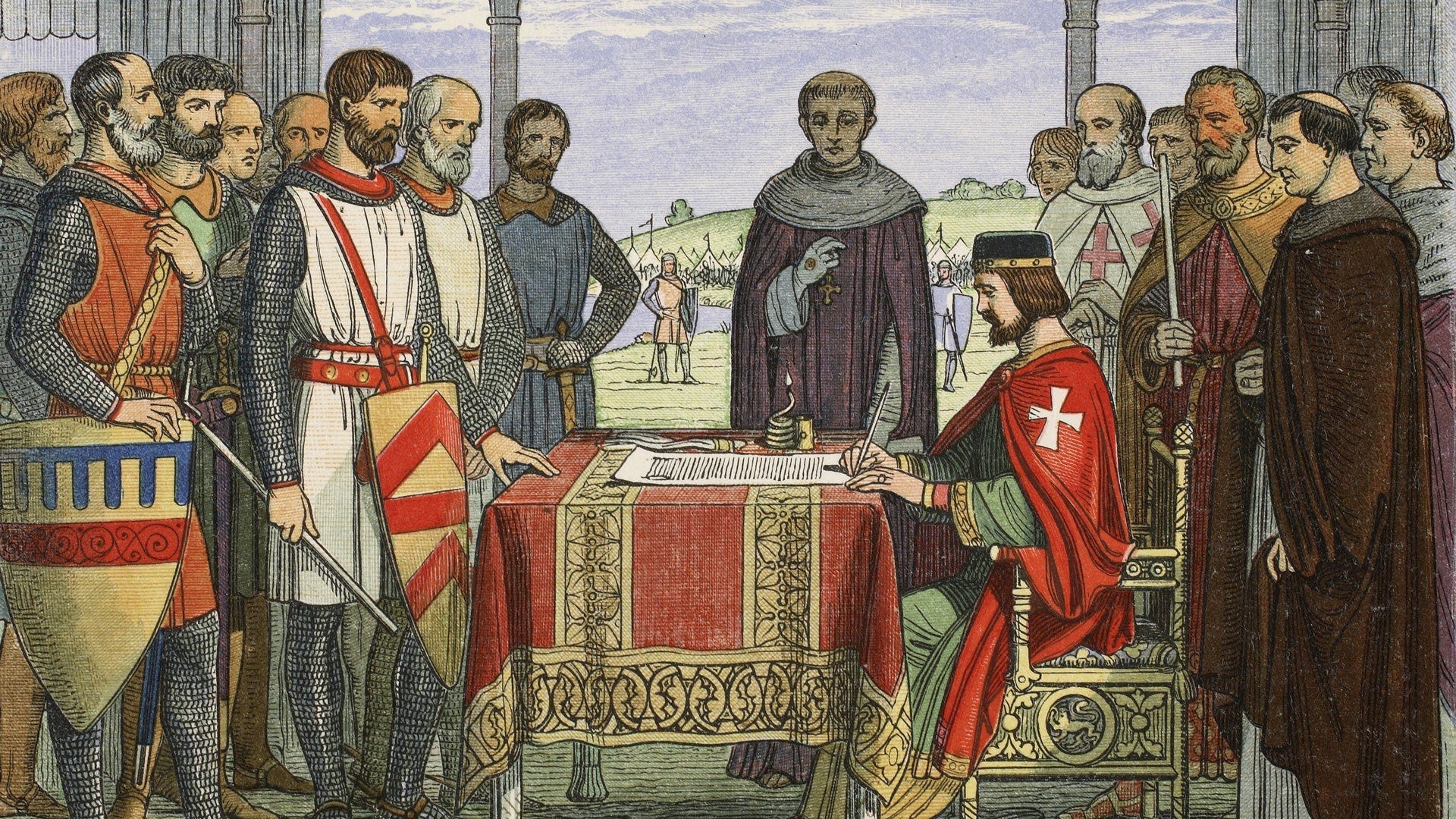
In the West, Greco-Roman, Germanic and Christian culture and philosophy inspired codes of behavior which were at least standards, that all were expected to meet. These codes were balanced by concepts of natural law and rights, that grew from the same cultures. Systems of practical law developed that were based on these standards and rights. For example, the Magna Carta was a constitutional charter in England that limited the king’s authority, and ensured some basic rights of his subjects. When powerful persons broke these standards, there were laws to which victims could effectively appeal. These practices had developed from very old social customs in northwestern European cultures.
Our society is now dominated by anti-western utopian activists, who reject these standards and systems that developed organically. Today’s utopians use the excuse of good intentions for their actions which are against traditional, Christian morality, and are often illegal. Antoine Dresse states how, “Even if [the Left] expressly contravenes the law, the letter of the law, they still [claim to] have a moral compass on their side. That is to say, yes, they can break windows, they can burn a car, they can even cause a man’s death, but they do it in the name of a good cause.” At least some of us once understood where some roads led which were paved with good intentions. In his book Bleak House, Charles Dickens offered a cautionary figure, Mrs. Jellyby, who caused havoc with her do-gooderism.
Agatha Christie was a famous writer of mystery novels. She also was very perceptive about human nature:
“Evil can put on a better presentation of magnificence and importance than good can. Humility is and should be the first of the Christian virtues. I think nowadays that the worship of violence, and of cruelty, and the people who think that no aim can be achieved without it, is a very evil influence, and it is successful in many countries and in many places.” [16]
In the West, our cultures and societies are seriously threatened by a “worship of violence, and of cruelty.” Against the wishes of citizens, mass migration is now being used to completely transform our countries into low-trust, violent, corrupt and crumbling societies. We are called “racist” or “bigoted” for objecting to this, and for wanting to preserve the good that we inherited. We need to remember that our Western societies were once filled with good qualities, which are threatened or lost. Whatever names we are called, we need to follow our principles, stand together, stand in the way, and rebuild.
[1] Buisson, Jean-Christophe, “Death of Quentin: where does the ideology of The Young Guard come from?” [original in French], Le Figaro, Feb. 19, 2026,
[2] Paillot, Raphaël and Stelios Panagiotou, “The French Far Left Is Getting More Radicalised - Interview with Raphaël Paillot,” Lotuseaters Dot Com, March 11, 2026,
[3] Ibid.,
[4] Obertone, Laurent and Alexandre Devecchio, “Devecchio and Obertone: At the Heart of the Hate of France!” [original in French], Boulevard Voltaire, March 14, 2026,
[5] Moriaux, Augustin, “At the University of Lyon 2 where Quentin Deranque studied, a professor reveals that he teaches under “private protection” [original in French], Le Figaro, Feb. 24, 2026, https://www.lefigaro.fr/actualite-france/a-l-universite-lyon-2-ou-etudiait-quentin-deranque-un-professeur-revele-donner-cours-sous-protection-privee-20260223
[6] “De Villiers, Philippe: “France is in a revolutionary and pre-civil war situation” [original in French], Europe 1, March 28, 2026,
[7] Dresse, Antoine and Liselotte Dutreuil, “Hitting to rule: violence in the DNA of the left - Antoine Dresse” [original in French], Ligne Droite, March 11, 2026,
[8] Buisson, Jean-Christophe, “Death of Quentin…,”
[9] Marx, Karl and Friedrich Engels, Manifesto of the Communist Party, 1848, https://www.marxists.org/archive/marx/works/download/pdf/Manifesto.pdf
[10] Marx, Karl [in part quoting Georges Sand] from The Poverty of Philosophy, 1847, https://www.marxists.org/archive/marx/works/1847/poverty-philosophy/ch02e.htm
[11] Buisson, Jean-Christophe, “Under the paving stones, the blows: The violent legacy of the ultra-left” [original in French], Europe 1, Feb. 19, 2026,
[12] For a fascinating discussion of the benefits provided by the British Empire, see historians Nigel Biggar and Steven Chavura, on John Anderson Media, Jan. 23, 2025,
[13] Paillot, Raphaël, “Is the left inherently violent and destructive?” [original in French], Panache!, April 9, 2025,
[14] For one of many examples, see the recent madness of Shakespeare’s birthplace being “de-colonized.”
[15] Paillot, Raphaël,” Is the left inherently violent and destructive?”
[16] Thompson, Laura, Agatha Christie, A Mysterious Life, New York: Pegasus Books, 2018, p. 468
Comments
Nothing yet. Say the first thing.
Sign in to join the conversation.