
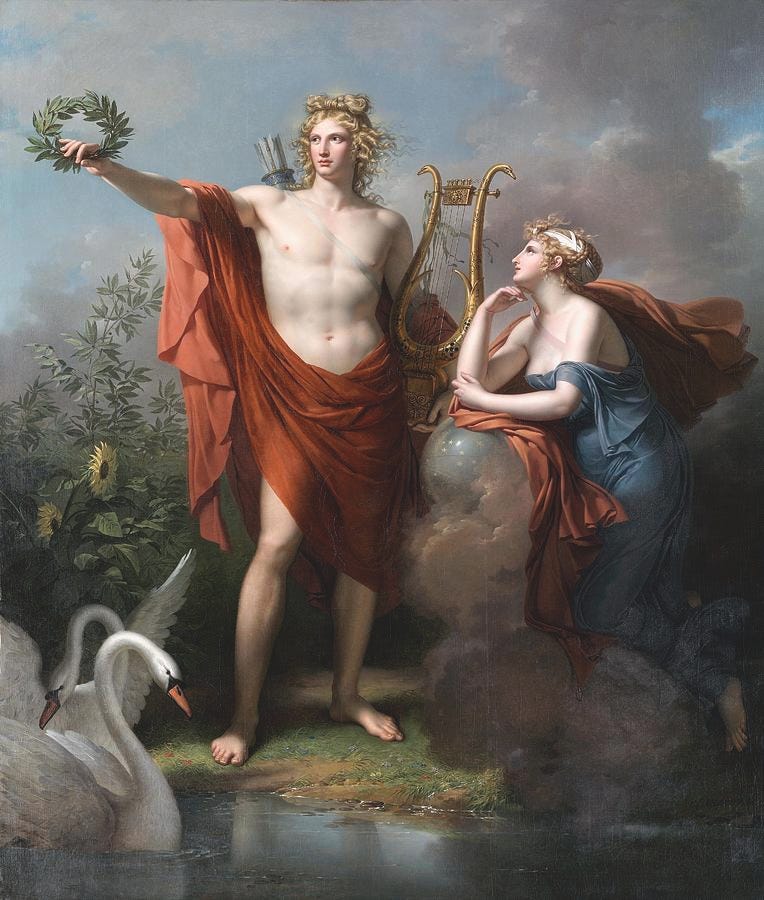
Some things help to clean your mind and soul. We all go through upsetting times, and we have concerns that linger and drag us down. It could be trouble at home, or at work, or on our street, or in the news. And in daily life we get bombarded constantly with unwelcome sights and sounds. Some of us find ways to relieve the mental load—watching or playing a baseball game, walking in nature, spending time with family and friends, praying. Another thing that helps me is to find something beautiful, whether natural or man-made.
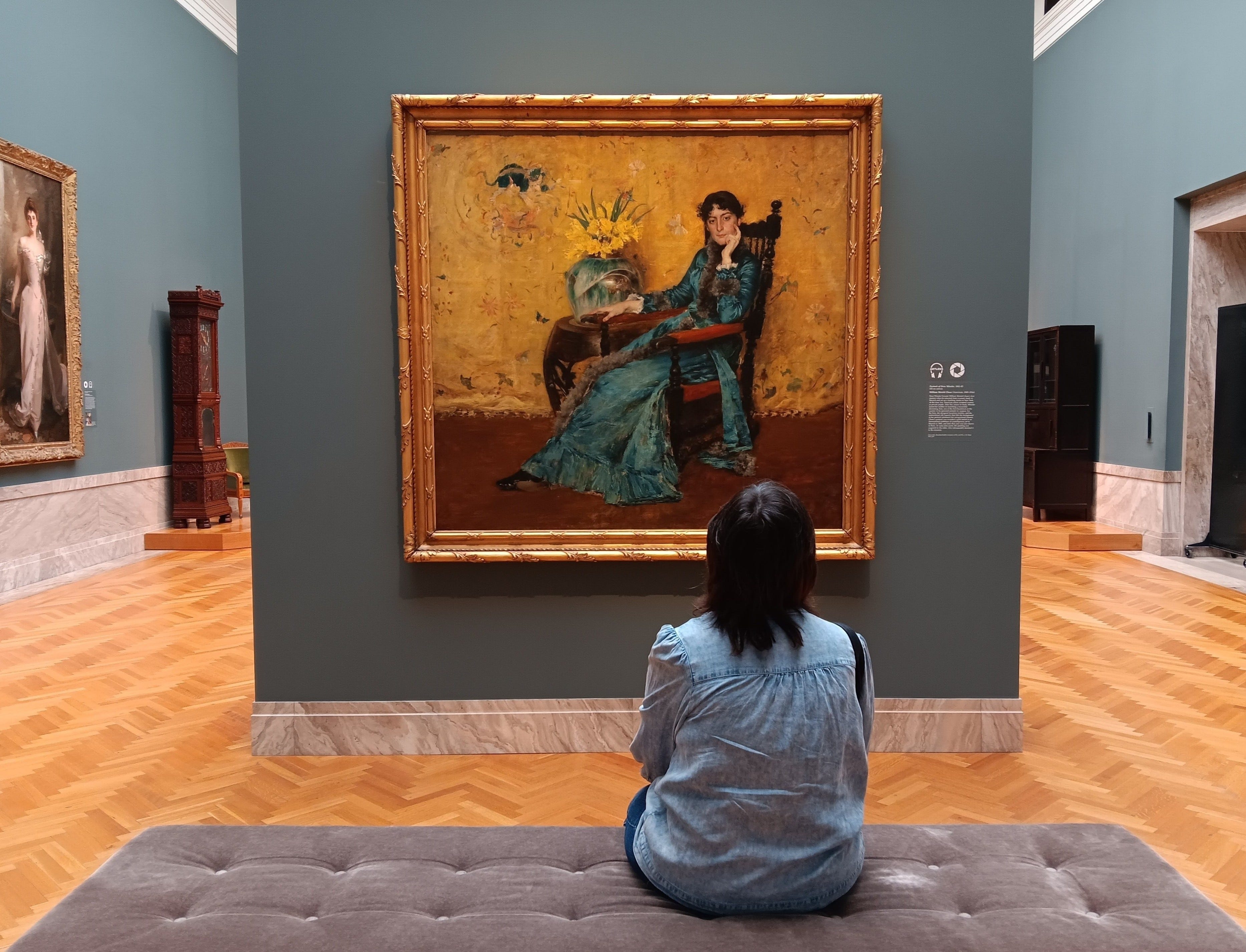
A few days ago, my wife and I took a trip to the Cleveland Museum of Art. Ever since, my thoughts have returned to some of the pictures and sculptures on display there. The world hasn’t stop intruding, but those memories will remain for a long while. And they are reminders that there is goodness and beauty in the world.
During our visit, we spent a few hours entranced by Western art dating from ancient times to 19th Century Europe and America. We didn’t manage to see all the collections, but we felt very fulfilled when we left. We also plan to return, multiple times. I’ll try to explain further what draws me there.
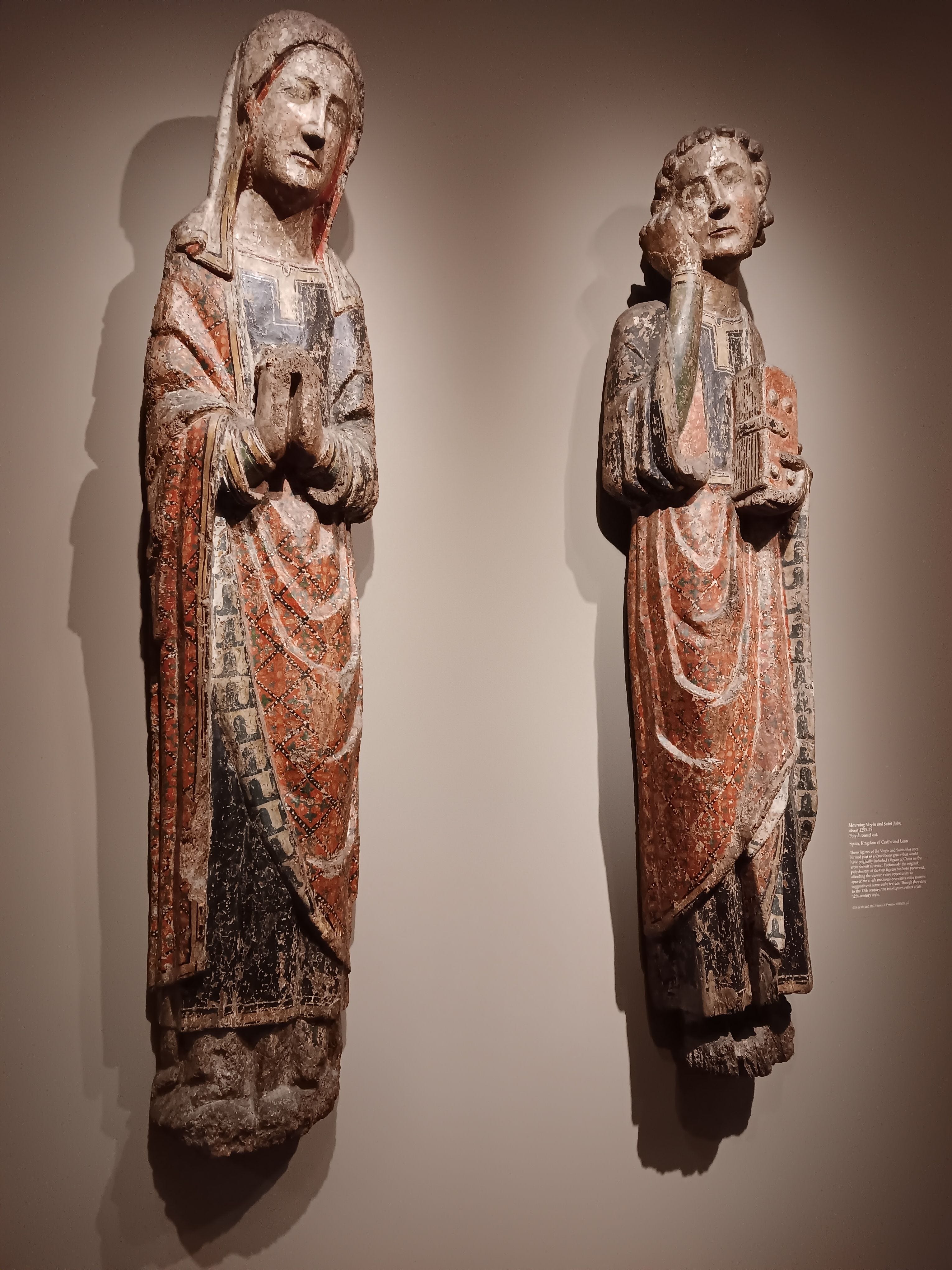
In the museum’s Medieval exhibit are a pair of sculptures from 13th Century Spain. They are chipped and cracked, and the paint is faded in places, but the spiritual intent of the sculptors shines from them. The figures depict Mary the mother of Jesus, and the apostle John, at Jesus’s crucifixion. Their facial expressions are subdued, but they still speak powerfully of deep sorrow.
These two sculptures were probably originally located on the wall of a church or cathedral. Medieval churches were filled with art, which helped instruct and inspire people of that time who couldn’t read the Bible. Churches and cathedrals were actually built by medieval people of all social classes. As Bishop Robert Barron of the Roman Catholic Church explains,
“It’s often the poor and the suffering who most appreciate the beautiful. Think of the poor who contributed massively to the building of the great Medieval cathedrals. You know, they wouldn’t have happened without the sponsorship of kings and dukes and lords and all that. But they were largely built by very poor, ordinary people who were undoubtedly suffering immensely. And they felt a tremendous connection to these great works of art and wanted them.”[i]
Some of us still feel that tremendous connection.
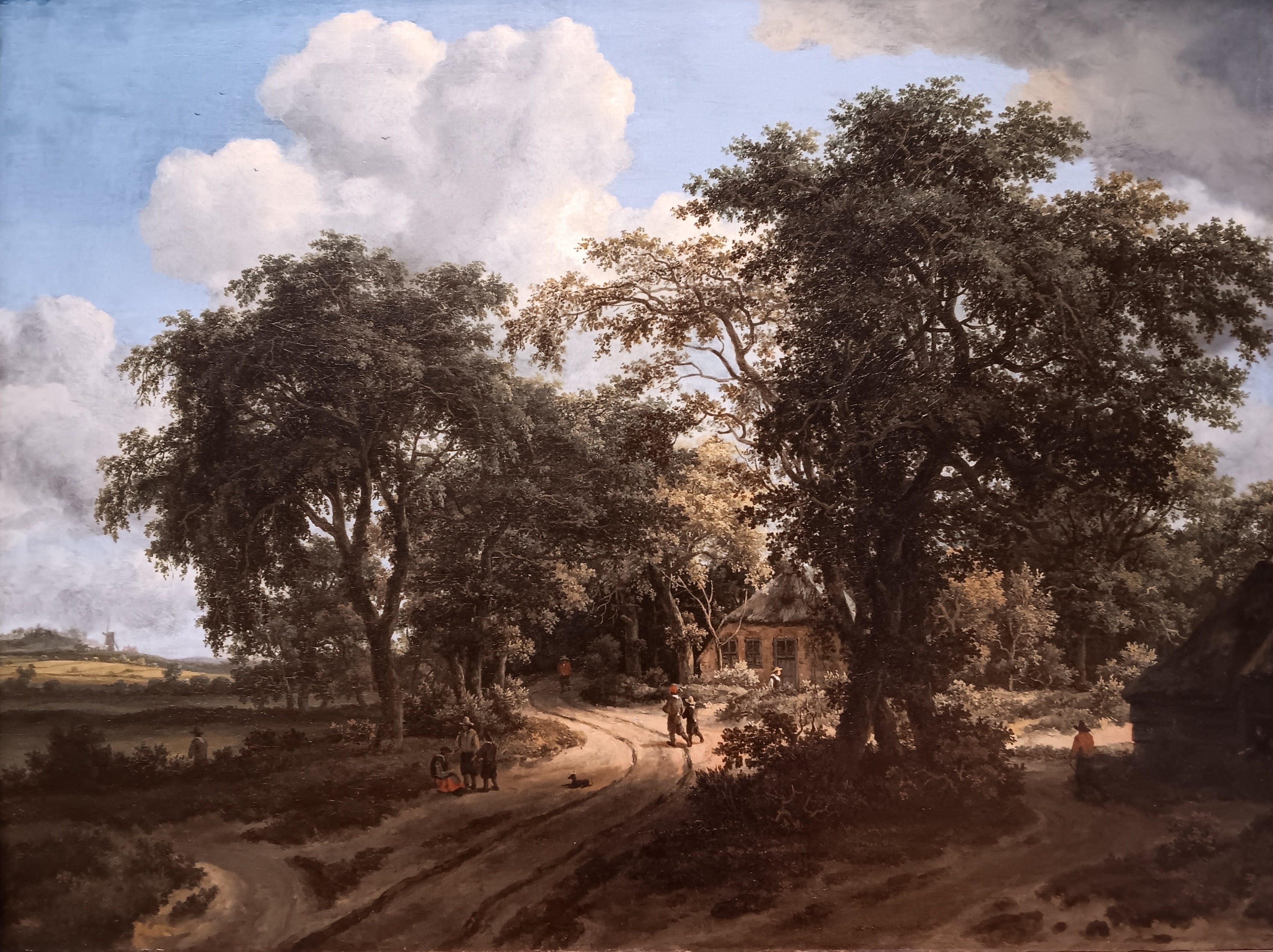
We’ll skip around a little bit from one historical period to another. One painting in Cleveland which especially appealed to me is by a little-known Dutch artist of the 17th Century, named Meindert Hobbema. At a quick glance the picture seems like it could be an attractive but standard landscape, showing a sandy road that enters some woods. Beautiful old trees hover over the road. With a closer look, interesting details emerge. There is a small, pleasant-looking house amidst the trees. A man walks along the quiet road, holding the hand of a small child. A dog sits on the road, near the edge of a shadow. Two people converse with a resting woman. Farm fields, hedges, and a windmill are off in the distance. A whole, complex world is revealed when you study the image.
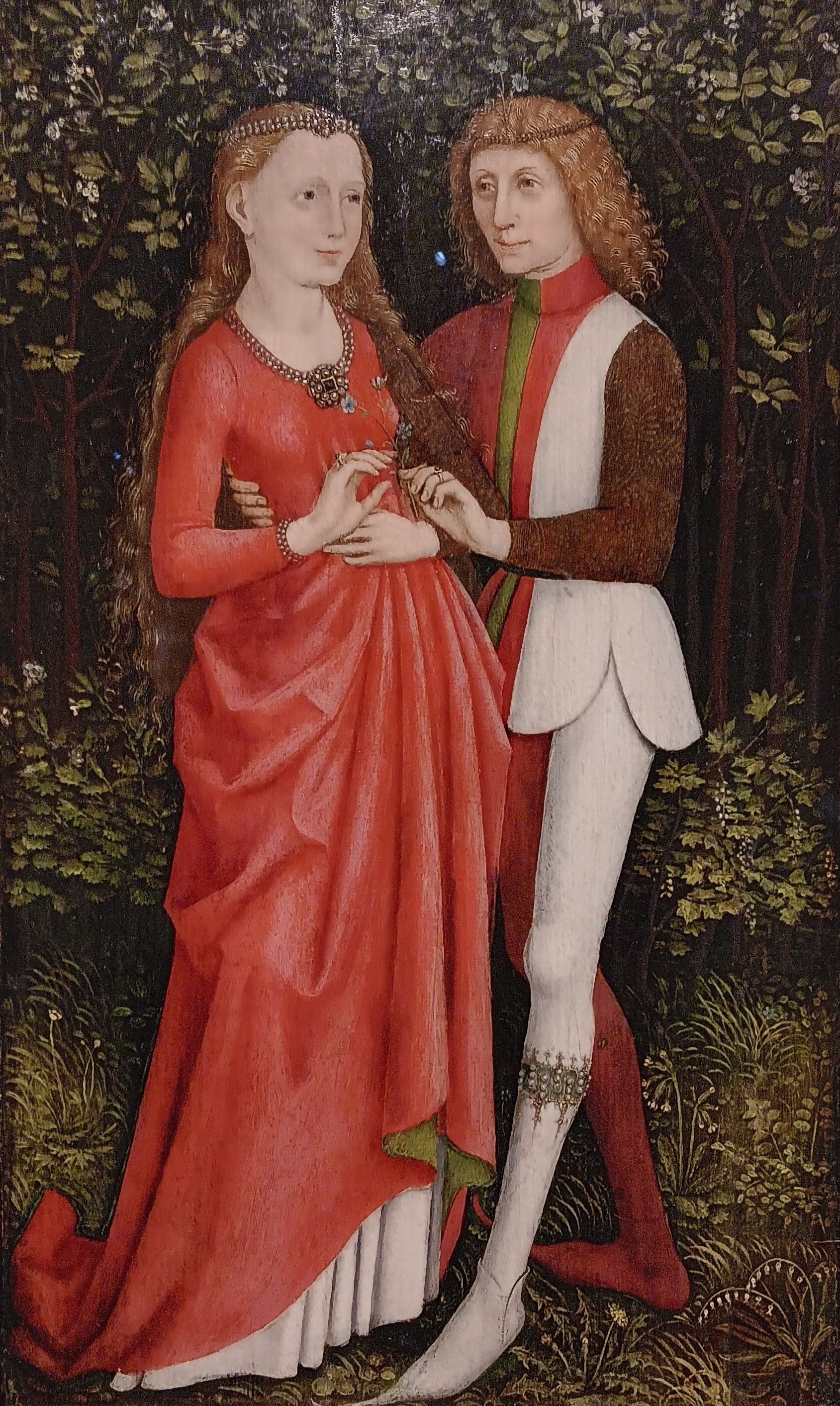
It’s fascinating for me to look at human faces in art from hundreds of years ago. During the Renaissance, artists were very skilled at portraying the human face, and capturing its subtleties. This was especially the case in northern European countries. The painting above shows a young German bride and groom. Their facial features closely resemble some Americans of German ancestry whom I have known, 500 years after the painting was made. This reminded me that, if recent political and social developments in Germany continue, the German people might become extinct sometime in this century or the next. Reasonable and moderate commentators such as Hans-Georg Maassen,[ii] Thilo Sarrazin[iii] and “Red Pill Germany”[iv] have documented this. Art can evoke a variety of thoughts, feelings and concerns, can’t it?
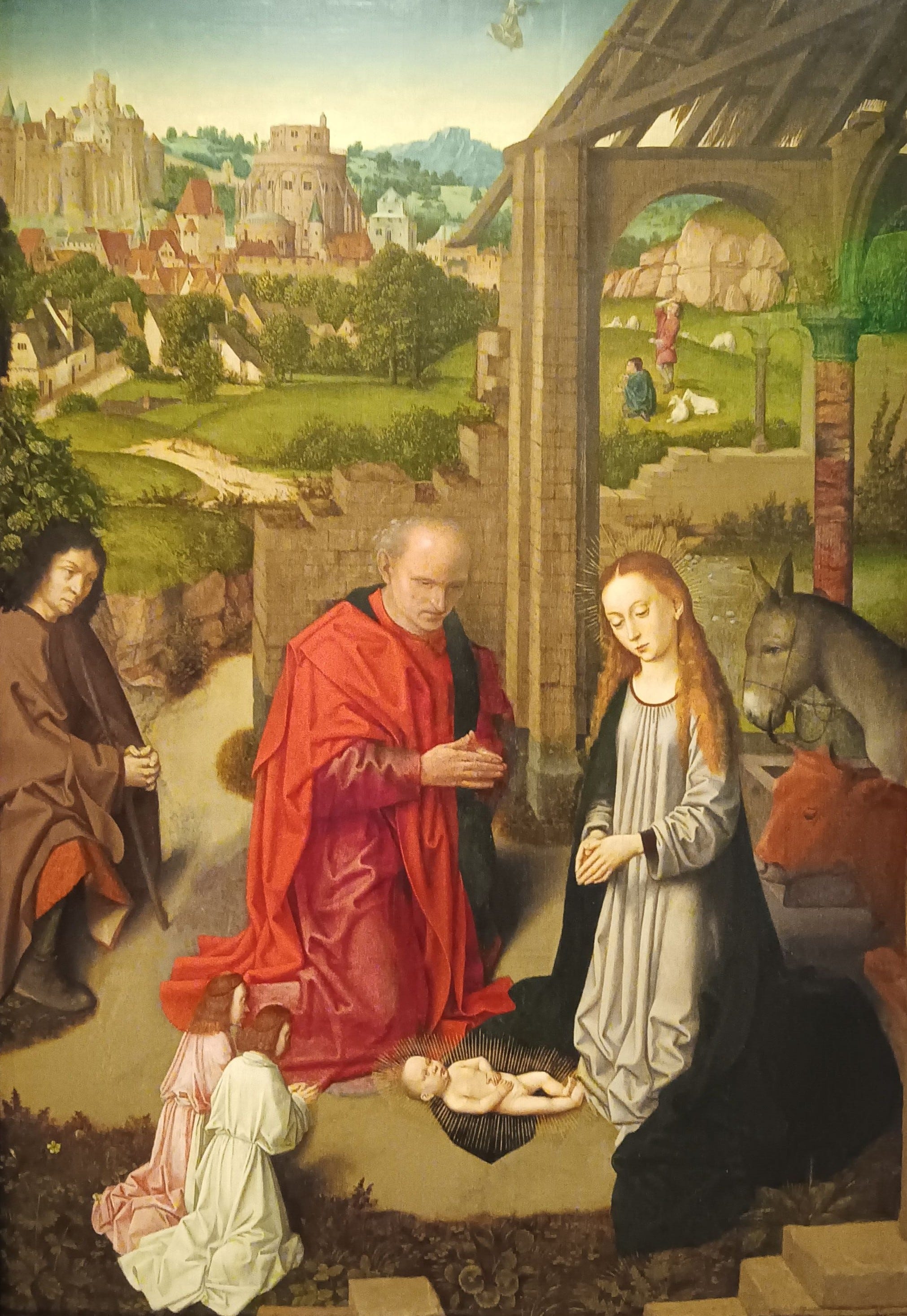
As with the later Dutch landscape painters, artists in Renaissance Europe often included fascinating details in the way they depicted clothing, background scenery, architecture, and technology. One can look for a long time at portrayals of Jesus’s nativity, which were very widespread, and find all kinds of interesting features. In the painting above, I was eventually drawn to the town and castle in the background, in addition to the interesting faces in the foreground.
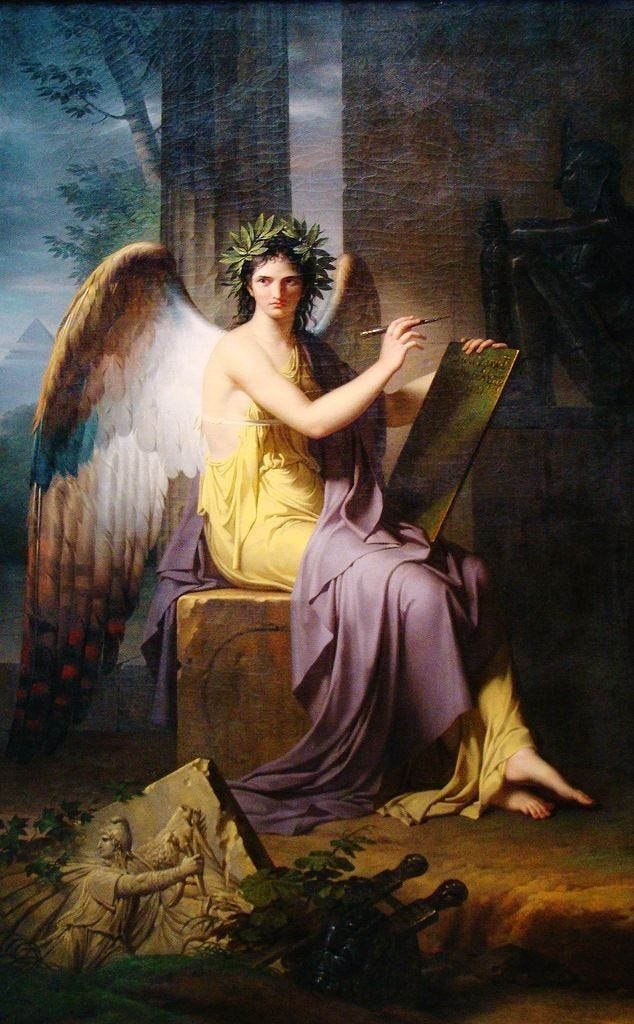
One set of later paintings attracted me unexpectedly—“The Muses” by French artist Charles Meynier. Often I’m drawn to art that has at least some realism in it—a portrait, or a landscape, or a historical scene—but these five pictures aren’t exactly any of these things. In Greek mythology, the Muses were nine spirits who were concerned with art, music, poetry, history and other endeavors. They offered inspiration to humans who pursued these activities. At the end of the 18th Century, Meynier painted the five Muses that are on display. It seems that some younger artists during his lifetime looked down on him for being old-fashioned, and there actually were objectively greater painters than him. Yet his Muses moved me very much. I’m guessing that it was because I could sense his reverence for the Classical Greek world, and the way he portrayed that with beauty and drama. Beauty appears in the faces and in several other forms—the leaves of wild plants in the background, a Greek column, and the simple, flowing robes worn by the Muses and the god Apollo, who appears with the Muse of astronomy. There are hints of a Romantic style which was developing at the time, with windy, stormy backgrounds, and brooding, pensive facial expressions, along with serene, tranquil ones. And the paintings have another impressive quality—they are large! As someone said—maybe it was Joseph Stalin—“Quantity is a quality all of its own.” Well, Stalin was right about something. Here, the subjects are mythological, yet they have a real, deep, appeal to me. Something about these pictures raised in me the kind of longing, yearning feeling which C. S. Lewis experienced, when he read Norse mythology or listened to Richard Wagner’s music.[v]
Of course life was also sometimes ugly long ago. There were wars, plagues, famines, perennial human sinfulness, and—nothing to sneeze at—a lack of flush toilets and modern dentistry. But there also were family and community networks which offered real help to those who suffered. There was widespread moral certainty and deep spirituality, which gave many people healthy, solid foundations in their lives. You can see these positive qualities in some of the works of art in Cleveland, along with depictions of the troubles and terrors that existed.
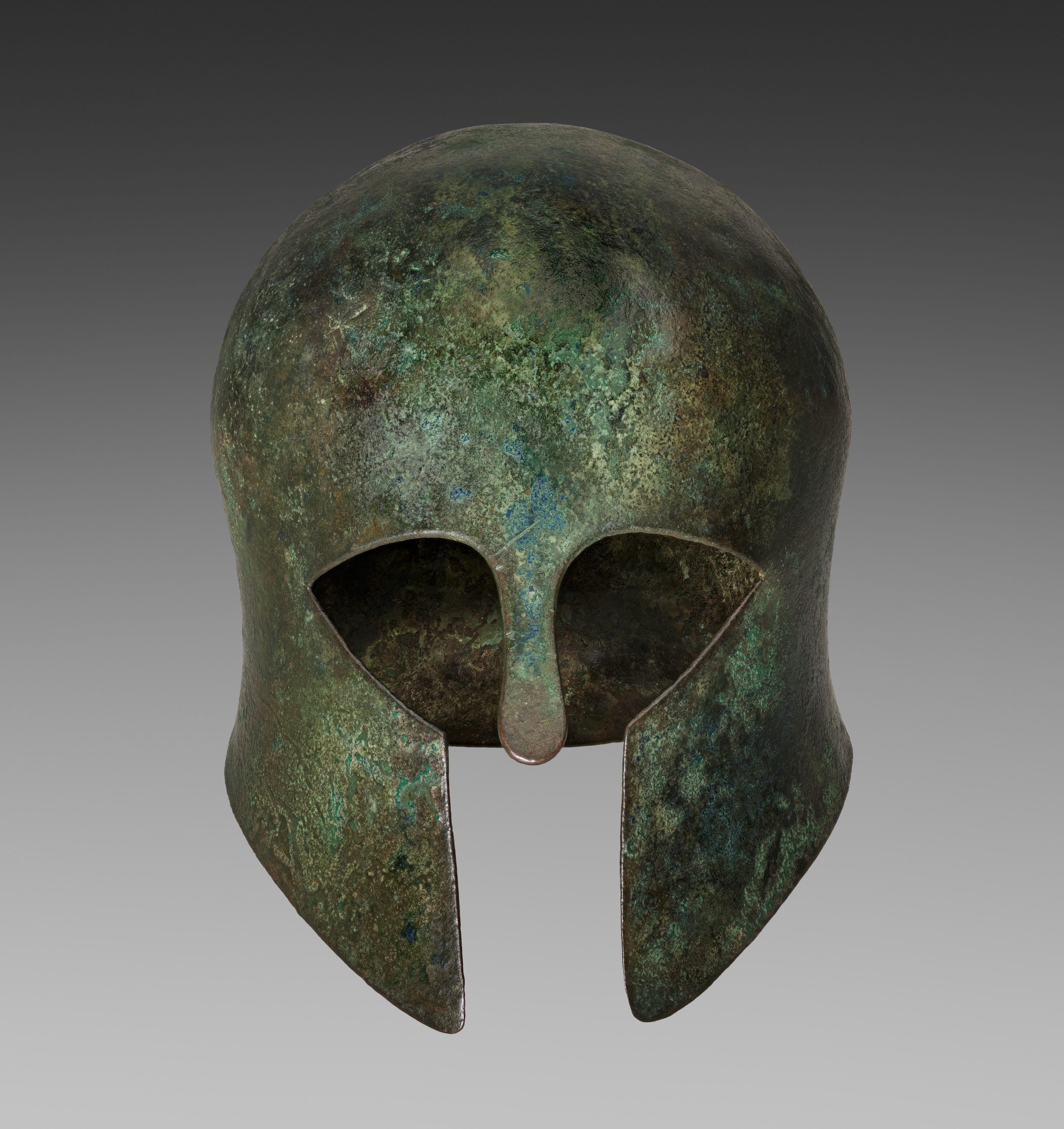
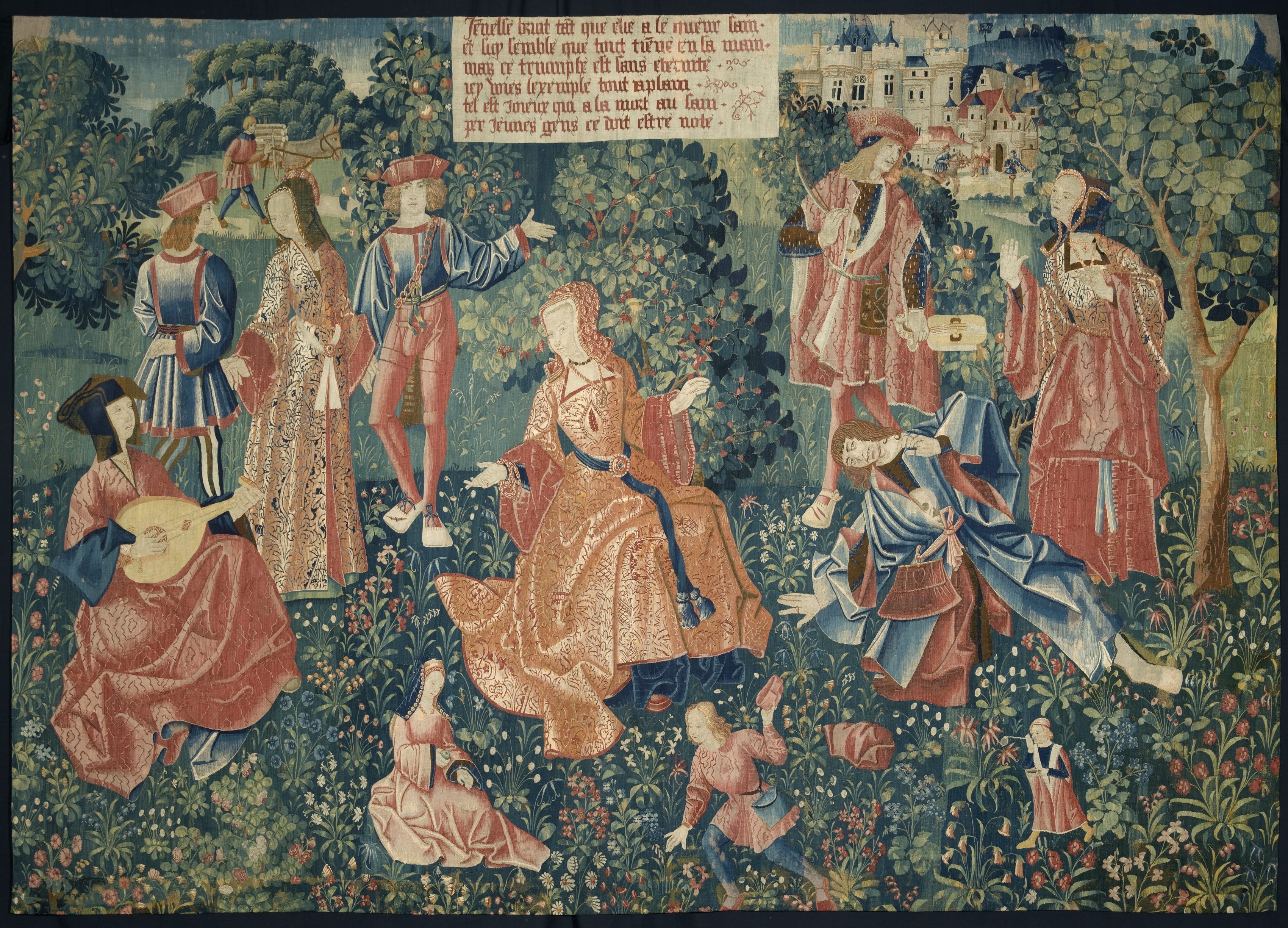
And beauty didn’t only appear in paintings and sculpture. There are many examples of attractive furniture on display: sturdy, wooden chairs which were beautifully carved and decorated, and also more delicate pieces. The ancient Greeks made helmets for warriors which were very protective and also graceful-looking. Medieval and Renaissance tapestries hanging on walls kept rooms a little warmer, but they offered more, of course. Some early-16th Century French tapestries show allegorical scenes that represent Youth, Time, and Eternity. These images are attractive but include symbols which are mysterious to us now. Still, you can immerse yourself in another world by gazing at them. And the museum provides signs which explain the symbolism.
Maybe you have some idea by now of why my wife and I were so caught up in what was on display. There are a few other general impressions that I think are key, though.
Certain works of art, literature, and music have been considered “classics,” not just because they impressed scholars as being excellent, but also because they were understood as being valuable for all people. With the dabbling I’ve done in art, I learned first-hand that not everyone can create at the high level of many of the artists on display in Cleveland. Not all of us can create classics. But we can still enjoy and appreciate what is great.
And this great art reminds us of our responsibilities. Edith Hamilton was a renowned scholar of classical Greece and Rome, who lived from 1867-1963. She also came down from the ivory tower pretty often, and spoke about the concerns of Americans in her day, and what Americans should hold onto….
“We have a great civilization to save—or to lose. The greatest civilization before ours was the Greek. They challenge us and we need the challenge. They, too, lived in a dangerous world. They were a little, highly civilized people, the only civilized people in the west, surrounded by barbarous tribes and with the greatest Asiatic power, Persia, always threatening them. In the end they succumbed, but the reason they did was not that the enemies outside were so strong, but that their own strength, their spiritual strength, had given way. While they had it they kept Greece unconquered and they left behind a record in art and thought which in all the centuries of human effort since has not been surpassed.”[vi]
On how the ancient Greeks viewed their world, she wrote,
“The Greeks were keenly aware, terribly aware, of life’s uncertainty and the imminence of death. Over and over again they emphasize the brevity and the failure of all human endeavor, the swift passing of all that is beautiful and joyful. To Pindar, even as he glorifies the victor in the games, life is ‘a shadow’s dream.’ But never, not in their darkest moments, do they lose their taste for life. It is always a wonder and a delight, the world a place of beauty, and they themselves rejoicing to be alive in it.”[vii]
And you can see this in their art. We also know how so much is lost in this world, but some things are still worth saving, and passing along.
Bishop Barron, who told us that beautiful art was important to the Medieval poor, has often described how art and beauty are related to spirituality. According to the bishop, a beautiful work of art “leads by steady steps, if we allow its power to work on us, to the very source of beauty.… Beautiful things here below ultimately are anticipations of the beauty we’ll see forever in heaven”[viii]
Museums have been important to me. When I was a boy back in the 1960’s, my parents and grandparents took me to small and large ones, and these visits made some deep impressions. Later, I sometimes worked in museums. During the past few decades, many of them sadly descended into Political Correctness and Wokeness. The Cleveland Museum of Art doesn’t seem to have gone as far down this hole as many other institutions, but there were elements of it around during our visit. Some of the museum’s written descriptions of the works of art included distorted, Woke statements, along with some poor English. One sign emphasized that the museum is getting rid of the traditional B.C./A.D designations for dates (“Before Christ” and “Anno Domini”). But there were also several helpful, friendly staff, at least some of whom seemed to appreciate the great works of art that surrounded them. And the art is still there, safe for now, to be enjoyed and appreciated by us.
Beautiful art has been under attack recently, sometimes by iconoclasts who think they are making the world a better place. In response to this, Bishop Barron recalled a tour guide at Chartres Cathedral, Malcolm Miller. Miller warned, regarding political and religious movements that try to reform something or start a revolution: “The best sign that a reformation process has gone wrong is when people start destroying beautiful things.”[ix] Hopefully, enough of us will understand that we should preserve all of the beautiful things that we can see in Cleveland, and anywhere else.
________________
The Cleveland Museum of Art has a website at https://www.clevelandart.org/home. You can see photographs there of many items in the collection, if you go to “Art” and then ”Search the Collection.” It also provides helpful information about visiting the museum. I’m glad that we can have photo reproductions of art, but they don’t quite match the experience of seeing the original work in person.
_________________
References
[i] Barron, Bishop Robert, “Why Art Matters,” Bishop Robert Barron Channel, YouTube, Dec. 5, 2022,
[ii] Maassen, Hans-Georg, “Migration as an Ideological Project,” National Conservatism Channel, YouTube, April 19, 2024,
[iii] Sarrazin, Thilo on “The Bolt Report” with Andrew Bolt, Channel 10 Channel, YouTube, July 30, 2011,
[iv] Red Pill Germany Channel, YouTube, https://www.youtube.com/@redpillgermany2162
[v] Lewis, C. S., Surprised by Joy, New York: Harcourt Brace & Co., 1984.
[vi] Hamilton, Edith, “The Lessons of the Past,” The Saturday Evening Post, September 27, 1958, p. 25.
[vii] Hamilton, Edith, The Greek Way, New York: W. W. Norton & Co., 1942, p. 33.
[viii] Barron, Bishop Robert, “Beauty in the Catholic Tradition,” Bishop Robert Barron Channel, YouTube, Feb. 28, 2023,
[ix] Barron, Bishop Robert, “Why Art Matters,” Bishop Robert Barron Channel, YouTube, Dec. 5, 2022,
[x] Barron, Bishop Robert, “Beauty in the Catholic Tradition,” Bishop Robert Barron Channel, YouTube, Feb. 28, 2023,
Comments
Nothing yet. Say the first thing.
Sign in to join the conversation.