
Steven Gress admitted his role in the horrific death of 16-year-old Miranda Corsette. Now he wants the judge to sentence him to death.
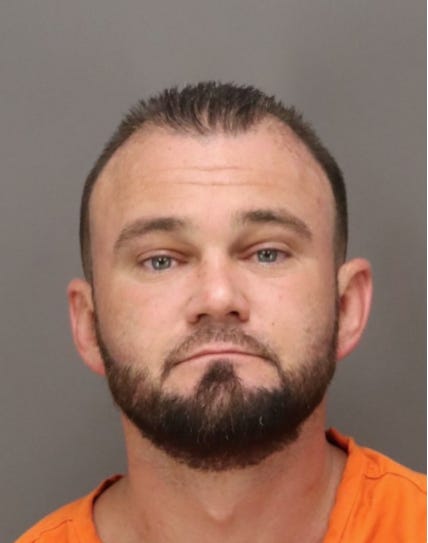
Steven Gress walked into a Pinellas County (Florida) courtroom on August 19 and did something very unusual.
He pleaded guilty to first-degree murder and kidnapping. Then he told the judge that he wants to die.
The victim was 16-year-old Miranda Corsette of Gulfport, Florida.

According to investigators, Gress met Miranda through a dating app in February 2025. She was later held captive inside the St. Petersburg home Gress shared with his partner, Michelle Brandes.

Authorities say Miranda was beaten and tortured after being accused of stealing a ring. Court records reportedly show that several people knew she was in danger, yet nobody called 911.
Miranda was eventually killed. Her body was taken to another location, dismembered and thrown into a dumpster. Her remains were never recovered.
Gress has admitted his involvement, but he still claims that he did not personally kill Miranda. He has blamed much of the violence on Brandes, who has pleaded not guilty and is being prosecuted separately.
His guilty plea means there will be no trial to decide whether he committed the crimes. But that does not automatically mean that he will receive a death sentence.
Florida law requires a separate proceeding to determine the punishment in a capital case. Even after pleading guilty, a defendant would normally have a jury hear evidence about why death should - or should not - be imposed. That process is known as a “bifurcated” trial where, following a guilt/innocence trial, a separate trial is held to determine whether the defendant should receive a life sentence or be sentenced to death.
Gress waived that guilt/innocence jury trial.
He wants the judge to make the decision alone. He reportedly told the court that he would rather be sentenced to death than spend the rest of his life in prison.
That is an extraordinary request.
A presentence investigation is now underway. The judge is expected to return to the question of sentencing during a November 4 court appearance.
The judge must still consider the evidence. Gress cannot simply order the State of Florida to execute him. Under Florida’s capital-sentencing law, the court must examine the facts of the crime, any reasons supporting death and any reasons supporting a life sentence. This includes any mitigating evidence, or evidence that should serve as a reason not to receive a death sentence.
Even if Gress is sentenced to death, an execution would not happen immediately. Capital cases are subject to an automatic legal review, and that process can take years.
There is also an important difference between waiving a jury now and giving up every possible appeal later. Gress has clearly asked for death, but he has not yet been sentenced, and he has not necessarily surrendered every legal right he may have after sentencing.
This case is certain to raise hard questions about punishment, mental health and whether the state should execute someone who openly asks to die.
But through all those questions, one name must not be pushed aside.
She was 16 years old. She was somebody’s daughter and granddaughter. She was a mother - her baby was 11 months old at the time of her death. Both of Miranda's parents had already died before she was killed, and her grandmother had legal custody of both her and the baby.She was held, abused and killed by adults who should never have had control over her.
Whatever happens next, the courtroom must not allow the wishes or behavior of Steven Gress to become more important than the life that was taken from Miranda.
She deserves justice.
She also deserves to be remembered as more than the victim in another Florida death penalty case.
Sources: Tampa Bay Times and FOX 13 Tampa Bay.

Steven Gress wants Florida to sentence him to death. As an abolitionist, I can respect his decision without supporting the state’s decision to kill him.
Let me begin by making something perfectly clear.
I am not defending Steven Gress.
What happened to 16-year-old Miranda Corsette was horrible. She was held captive, beaten, tortured, killed and dismembered. Several people reportedly knew she was in danger, yet nobody called for help.
There is no excuse for that.
There is no soft or simple way to describe it.
There is no argument I can make that will lessen the horror of what happened to that child.
Gress has now pleaded guilty to first-degree murder and kidnapping. He told the judge that he wants the death penalty. He waived his right to have a jury hear the penalty phase and wants the judge to decide his punishment.
That puts someone like me in a very difficult position.
I oppose the death penalty. I have spent years speaking against it. I have defended them, filed writs and motions for them, and have spent their final hours with them.
I have stood beside condemned prisoners, their families, victims’ families and people who have watched this system fail again and again.
But what do I say when the accused man himself asks to die?
Do I attack his decision and tell him that he has no right to make it?
Or do I defend his choice, knowing that the State of Florida may use it to carry out another execution?
There is no easy answer.
As activists, we have to respect that Gress has made his decision - provided that he understands it, is mentally able to make it and is not being forced into it.
It is his life. It is his case.
We cannot demand personal freedom and human dignity only when someone makes the choice we prefer.
But respecting his decision is not the same as agreeing with it.
It certainly does not mean that we must support the State of Florida killing him.
Gress may decide that he no longer wants to fight. The state must still decide whether it is willing to kill.
Those are two separate decisions.
And that is where my outrage begins.
The State of Florida must not wash its hands of responsibility by saying, “He asked for it.”
An execution does not become humane because the condemned person requested it. The execution chamber does not become something clean or merciful simply because one prisoner would rather die than spend his remaining years behind bars.
The state would still prepare the drugs.
The state would still strap him to a gurney.
The state would still employ people to end his life.
The state would still call the killing justice.
I also worry deeply about what this case could mean for other death row prisoners.
Gress does not speak for them.
Most condemned prisoners are fighting to live. Some maintain their innocence. Some received poor representation. Some have serious mental illness or intellectual disabilities. Some were sentenced after juries heard only a small part of their lives, a tiny portion of what led them to do whatever it is they did.
Others have been on death row for decades, slowly losing hope while living under conditions that can break the human spirit.
When one prisoner asks to die, supporters of the death penalty may point to him and say, “See? Even he believes death is the proper punishment.”
That is absolutely 100% dishonest.
His personal wish does not prove that the death penalty is fair. It does not prove that the system is accurate. It does not erase wrongful convictions, racial bias, poor lawyering or the huge differences between counties in how death sentences are pursued.
His request may not create a new legal rule. But it can still shape public opinion. It can help make executions appear normal. It can keep Florida’s or Louisiana’s or any states’ machinery of death moving for the prisoners who desperately do not want to die.
That is what frightens me.
One man’s surrender can be used against hundreds of other prisoners.
There is another danger here. When a prisoner asks the state to kill him, the death penalty can begin to look like a form of state-assisted suicide.
The court may decide that Gress is mentally competent. But understanding a court proceeding does not answer every question about why a person wants to die.
Is he accepting responsibility?
Is he trying to escape decades in prison?
Is he seeking control over a situation in which he has lost all control?
Is his request connected to despair, guilt or mental illness?
Those questions matter because death cannot be reversed.
I can respect his right to stop fighting without supporting Florida’s desire to finish the job.
And I refuse to allow the awful facts of this crime to silence that position.
Miranda deserves justice. Her family deserves justice. The public deserves protection from Steven Gress.
Life without parole can provide that protection.
It can hold him responsible.
It can ensure that he never walks free.
It can punish him without allowing the state to turn killing into public policy.
I am outraged by what happened to Miranda. I am also outraged by the idea that her suffering may now be used to justify another death - and then another one after that.
Her life should not become fuel for Florida’s execution machine.
Steven Gress may choose not to defend his own life. That does not mean the rest of us must abandon our principles.
His decision belongs to him.
The decision to execute belongs to the state - and, in a democracy, it is made in our name.
That is the line I cannot cross.
I can respect his choice.
I cannot support his execution.
Thanks for reading Death Penalty Corner! This post is public so feel free to share it.
Or. Help Me Continue Writing By Buying Me A Cup Of Coffee!
Just Click The Image Below!

Wanna’ Help Us Abolish The Death Penalty?
Click The Button Below!

At any rate, THANK YOU for being here and THANK YOU for supporting me!
Comments
Nothing yet. Say the first thing.
Sign in to join the conversation.