
Georgetown sits a half hour north of me, so I have watched it become one of the country’s fastest-growing cities up close and personal. Its population has climbed from around 67,000 in the mid-2010s to more than 115,000 today, and the U.S. Census Bureau named it the nation’s fastest-growing city more than once in that span.
Growth like that arrives with a cost, literally and figuratively. Taxes climb and traffic gets worse, and the small-town charm people fell in love with begins to feel decidedly not-so-charming. Anti-growth sentiment follows close behind, and social media platforms give residents an easy, satisfying place to vent.
How Georgetown has successfully tackled that problem is worth a closer look.
I caught the city’s session at the Texas Association of Municipal Information Officers conference in Austin in June, presented by Beth Wade and Mallory Tallas from Georgetown’s communications team. What they described is a system they call “positive marketing” with interlocking parts.
“We treat negative sentiment as market research,” Beth said. “We identify emotional drivers and not just surface complaints. We build campaigns that address concerns directly.”
It’s a savvy approach. And like so many feel-good stories, it started out as anything but.
In 2019, a utility billing upgrade went sideways when residents could not set up their new accounts. (And stop me if you’ve heard this before, but the comms team wasn’t brought in to help until things went from bad to worse). Around the same time, Georgetown’s move to power its municipal utility with 100 percent renewable energy, once a point of national renown, curdled when the market turned. The city had locked in more power than it needed and resold the surplus at a loss, running millions into the red and adding a surcharge to monthly bills that cost the average household about $13 per month. Ouch.
For the city, the cost was more than just financial. Trust dropped. City leaders responded with a communications audit. The audit set four objectives:
Adopt a proactive and strategic approach to communications
Position the city to anticipate and respond better to crises and everyday issues
Foster a stronger sense of community partnership and stakeholder engagement
Establish a more consistent, distinctive brand voice
The first step toward achieving those objectives and rebuilding trust is something the public never sees: creating robust internal communications. Georgetown holds monthly comms meetings that pull in representatives from every department. They have had as many as 50 attendees. Everyone contributes. “We just check in with each other,” Mallory said.
A quarterly one-on-one with each public-facing department keeps the campaign calendar full—and surprises rare. When a comment lands the social team can’t answer, directors know they need to return the call ASAP. And it’s not just because there’s a policy for a 48-hour comment turnaround. It’s “because we’ve spent so much time building these connections with these meetings,” Mallory said.
One of the best examples of a proactive approach is “More Than Welcome,” a monthly campaign that puts residents, staff, and local events in the spotlight.
“It’s a monthly, community focused campaign that showcases our culture, people and events,” Beth said. “So, we use storytelling instead of promotional messaging alone to help weave the connection between community members and staff members.”
Georgetown humanizes the people behind the work, photographing staff among the spring poppies (poppies are a thing in Georgetown) and streaming ride-alongs as an inspector walks a new build. The point is to move residents from picturing a faceless “city” to seeing a neighbor who paved the road.
Or the new father of quadruplets!
Last year, I wrote about how Georgetown reworked its State of the City event into an open house, a relaxed event that featured a “grazing table.” Sometimes you win hearts and minds through stomachs. Or as public engagement coordinator Cindy Medrano put it: “It’s easy to be mean online, but once you’re there in person, it’s different.”
The digital approach looks like this: Someone on a neighborhood Facebook page spots a worker swapping out a water meter, warns that bills are about to spike by $50 a month (sigh), and the comments pile on. Georgetown’s goal is that a few of those neighbors—having met employees in person or virtually—go check the city channels, find the facts, and post the correction before staff even weigh in. And, indeed, that happens.
“We’ve seen it several times,” Beth said. “They post the news link that we published. Rates aren’t actually going up $50, they’re going up 5 cents. So always make sure that you’re being as direct as possible and you’re meeting your residents with direct messaging.”
When it comes to engagement, the city “closes the loop.” When Georgetown asks residents what they think, it circles back to show what changed. This is the kind of accountability that research shows builds trust.
Is it working in Georgetown? Their data says yes.
In 2019, the city conducted a survey as part of that comms audit. About 31 percent of residents called themselves dissatisfied or very dissatisfied with city communications. By late 2025, that share had fallen below 9 percent. The two surveys asked the question differently, so treat it as directional rather than a controlled comparison. Still, the direction is hard to argue with.
Georgetown isn’t a client, and that’s part of what makes this worth noting. I’ve never consulted a day for the city; I’m a fan from one town over. The same pattern I see where residents report real improvement turns up here too, and Georgetown hits all five elements I write about: strategy, leadership, engagement, brand, and content. The city didn’t need my framework to get there. Effective organizations do these things on their own, which is the whole point. The Five Elements of High-Performance Communications name what good already looks like.
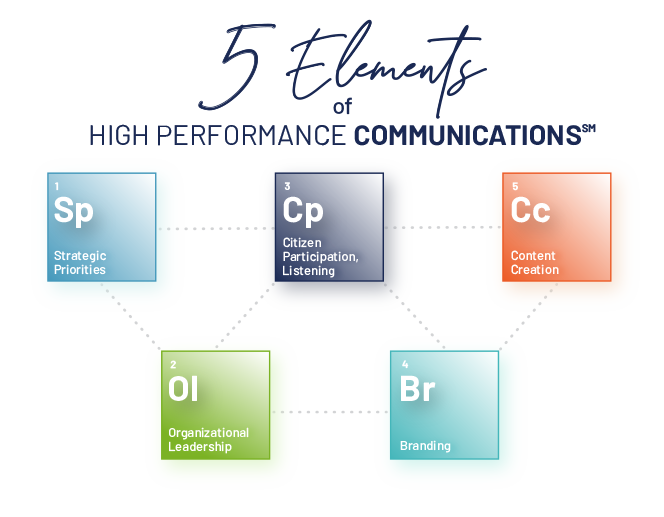
The lesson under all of it is smaller. A complaint is data. Answer the concern behind it early, in public, with a story about the people doing the work, and you starve the negativity of the oxygen it needs.
That’s the widest way to work the problem, from above the whole conversation. The series narrows from here. Next week, a city that did something surprising with its most persistent critics. Then the finale, the piece this series has been building toward: a communicator who has answered more angry comments than anyone I know, one reply at a time, and turned a warm, unmistakable voice into the city’s brand. If you want to see this done in the feed at the highest level, comment by comment, that’s the one.
Onward and Upward.
When every post turns into a fight in the comments, the answer that lasts is a communications system built to work as one, the way Georgetown’s does. Building that with cities and public agencies is the work I do. When you’re ready, let’s talk.
No posts
Comments
Nothing yet. Say the first thing.
Sign in to join the conversation.