
Dear Lunatics,
Should you glance eastward this evening, shortly after sundown, you will see (or be seen by) a bold Harvest supermoon.
Don’t try to approach it.
Don’t attempt to feed it.
Don’t interfere at all as the solitary moon makes its dignified climb across the sky.
Just watch this majestic creature with the gleaming coat of a silverback.
Observe it with quiet, enduring patience.
In other words, be like Jane Goodall.

Before she died this week, Jane Goodall recorded some choice words for Trump, Putin, Xi, and Netanyahu. “I would like to put them on one of [Elon] Musk’s spaceships and send them all off to the planet he’s sure he’s going to discover,” the primatologist said.
Some people were taken aback by Goodall’s posthumously delivered comments. After all, she was famously patient—enduring years of disease and isolation as she slowly, painstakingly gained the trust of wild chimpanzees in Tanzania—and so it truly says something that she was ready to launch certain world leaders into space.
But we shouldn’t be too surprised that this solution to the planet’s problems came from someone who spent her entire life studying chimpanzee societies that routinely overthrow and banish tyrannical alpha males.
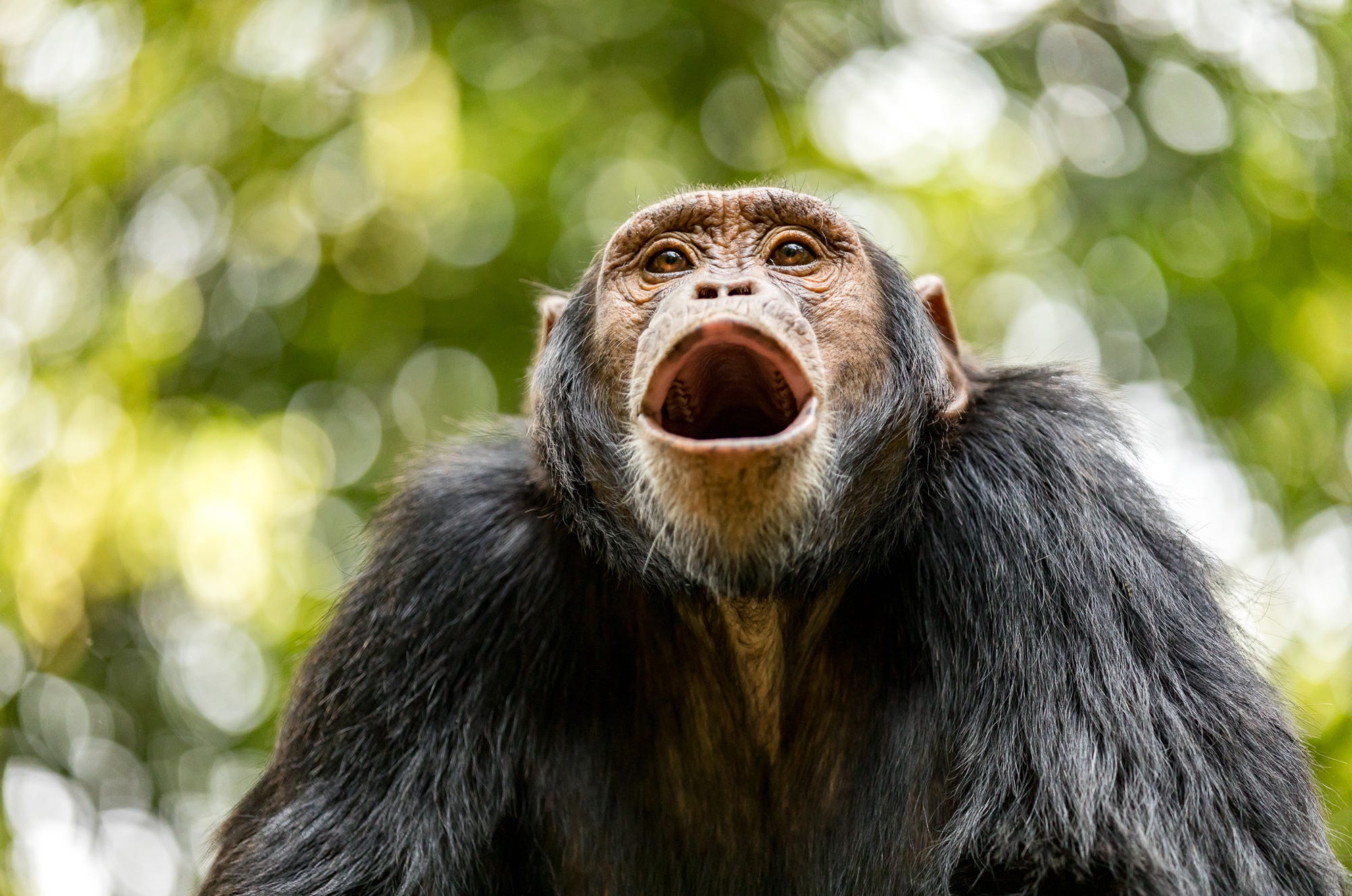
At the same time that Jane Goodall leaves us, something else is inbound.
A massive interstellar object the size of Manhattan is streaking through our solar system. Named 3I/ATLAS, our visitor has just passed Mars and slipped behind the Sun.
3I/ATLAS is either a comet, possibly ejected from another star system billions of years ago, or the messenger of an alien intelligence older and wiser than we can imagine.
This second possibility, raised by Harvard astronomer Avi Loeb, has grabbed international attention. I asked the professor what it would mean to our little species if 3I/ATLAS turned out to be a piece of alien technology rather than a rock skimmed across galactic space.
Dr. Loeb directed me to one of his recent essays:
This encounter is a blind date of interstellar proportions, and on any blind date my best advice is: “Observe the other side.”
Unfortunately, we won’t be able to observe 3I/ATLAS for the next month. For the rest of October, whenever you look up at the autumn Sun, remember that 3I/ATLAS is sneaking silently behind it, potentially readying the release of probes that will descend onto the Earth like falling leaves.
(Given its current trajectory, 3I/ATLAS will reach its closest point to the Sun on October 29th, so expect any 3I/ATLAS-related UAPs just in time for Halloween.)
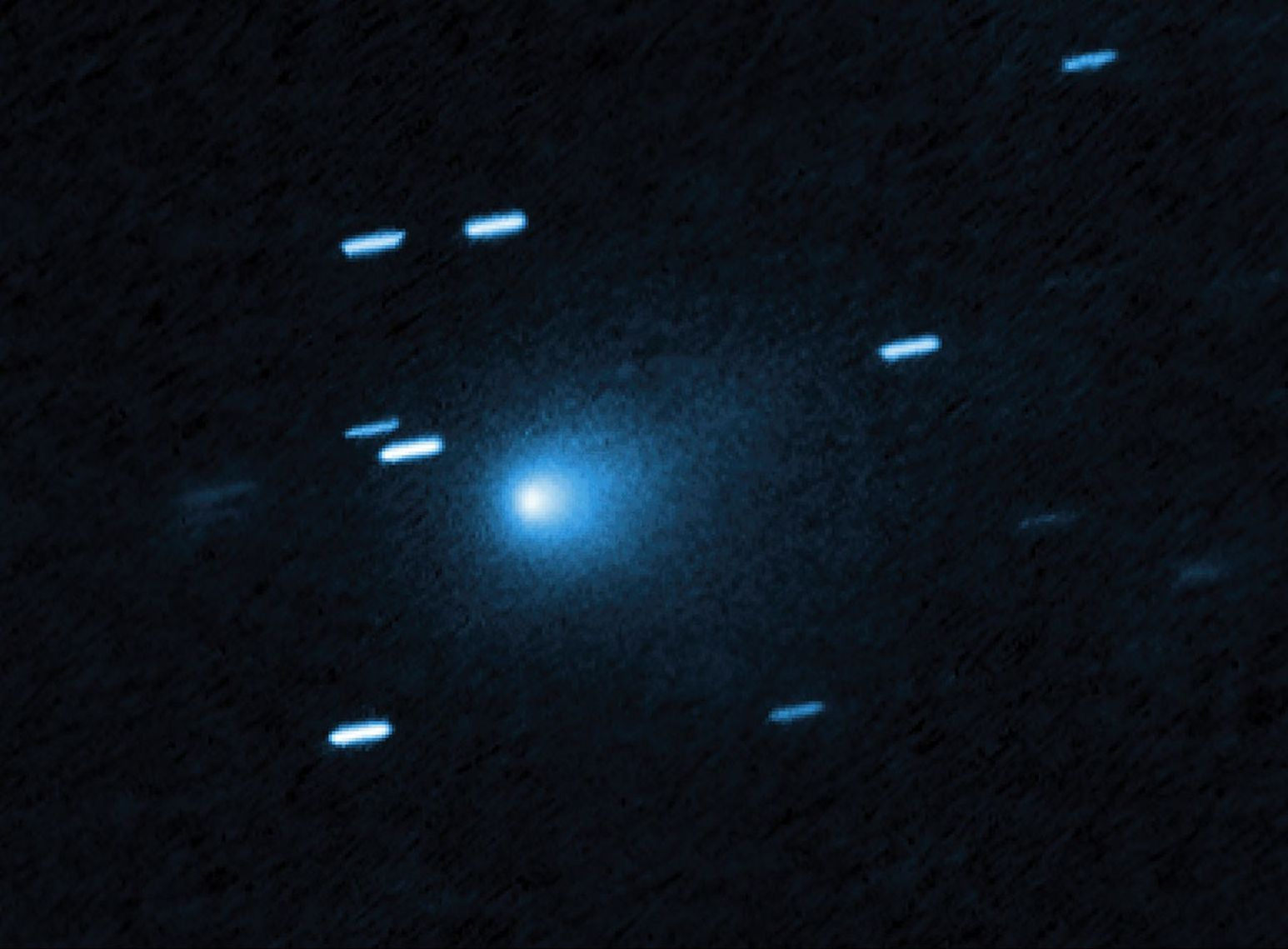
Dr. Loeb has suggested one reason why 3I/ATLAS may be arriving now:
We had already revealed our existence by broadcasting radio signals for over a century. This act might have triggered the visit. If 3I/ATLAS had originated from the inner edge of the Oort Cloud at about 1,000 times the Earth-Sun separation, it would have started its journey 80 years ago when radio transmissions became routine on Earth. The first nuclear explosion took place on July 16, 1945, exactly 80 years ago.
So is 3I/ATLAS part of a cosmic neighborhood watch? Are we about to get our wrists slapped for misbehavior? Or, as the Dark Forest Hypothesis suggests, have we shouted too loudly into the dark void, alerting predatory alien civilizations to our presence?
Dr. Loeb doesn’t think so.
“Any interstellar visitors to our backyard must have survived under duress for billions of years,” he recently wrote. “They might abide by the principle of ‘survival of the kindest.’”
Survival of the kindest.
Is there a better phrase to describe Jane Goodall’s legacy?

Before the next full moon, our planet may or may not be showered with mini-probes designed to study Earthlings.
If humanity is to find itself in the role of the chimpanzee—defensive, curious, incapable of fully conceiving the magnitude of the gaze upon us—we can only hope that we are being observed by an alien race of Jane Goodalls.
See you on the Beaver Moon!
—WD
Comments
Nothing yet. Say the first thing.
Sign in to join the conversation.