
Dear Lunatics,
Tonight, as the last full moon of the year—a supermoon, no less—burns a mighty hole in the sky, I am in a sulky mood, mourning the loss of a future pet.
Over the past few weeks, I’d quietly begun researching service dogs. In my imagination, this dog would help me with small but annoyingly difficult tasks around the house while being damn good company.
However, earlier this week, my imaginary dog was put down. Because I am attached by drooping tubes to a machine, a service dog would pose a risk of “cord-pulls” and “line-entanglement.”
When I pushed—“but what if the dog is, like, extremely well-trained”—I was informed, in a tone usually reserved for small children, it’s still an animal.
Hence my sulking, and my decision to call December’s full moon the “Bitter Moon,” as the Chinese do.
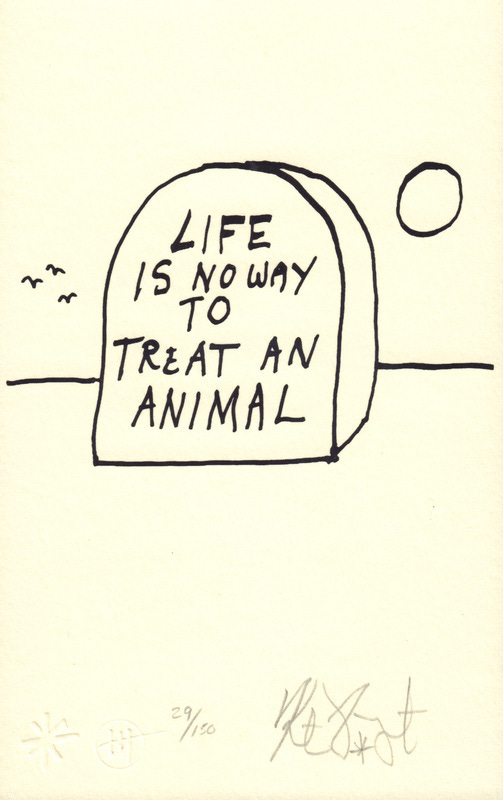
It’s still an animal.
That sentence, with its blunt, dream-snuffing finality, has been ringing in my ears.
It reminds me of a drawing by the late novelist Kurt Vonnegut, Jr.
Kurt Vonnegut had a very contentious relationship to the Moon.
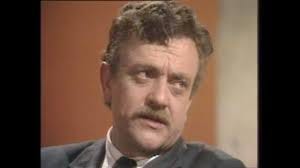
As a prominent author of literary science fiction, Vonnegut was invited on CBS’s Evening News on the night of the first moon landing.
Producers quickly realized they had made a grave mistake.
Vonnegut objected to the Apollo program’s astronomical price tag. “For that kind of money,” he quipped, “the least [NASA] can do is discover God.”
The same month, he wrote in The New York Times. “We have spent something like $33-billion on space so far. We should have spent it on cleaning up our filthy colonies here on earth.”
The CBS anchor was miffed. “To Vonnegut, the moon landing didn’t mean anything,” Walter Cronkite later said. “He just set the wrong mood, a big downer.” He also called Vonnegut “bitter.”
Viewers agreed. CBS was inundated with thousands of letters complaining that the un-American novelist had soured the historic event.
Even his hometown newspaper, the Barnstable Patriot, labeled him a “pessimistic personality…who has something bad to say about everything.”
Vonnegut’s grudge against the moon landing went beyond budgetary concerns.
He worried that the view of Earth from space—a sight we assume will engender a new respect for Earth’s precious fragility and a sense of interconnectedness with the whole of humanity—would actually give us a false impression.
“Earth is such a pretty blue and pink and white pearl in the pictures NASA sent me. It looks so clean,” Vonnegut wrote. “You can’t see all the hungry, angry earthlings down there—and the smoke and the sewage and trash and sophisticated weaponry.”
If anyone had seen the uncleanness of the world up close, it was Vonnegut. He had survived the three-day bombing of Dresden, after which he spent years transforming his trauma into his classic novel Slaughterhouse-Five.
Throughout that book, Vonnegut describes the desolate, bombed-out city as a moonscape: “Dresden was like the moon now, nothing but minerals…”
The protagonist Billy Pilgrim, like the author, was a POW forced by his German captors to help recover bodies from the rubble.
“[Billy] dug into the inert, unpromising gravel of the moon. The materials were loose, so there were constant little avalanches…There was no machinery. Not even horses or mules or oxen could cross the moonscape.”

No wonder Vonnegut was unimpressed with the “short-haired, white athletes” who rode to the moon on expensive machinery.
He’d already been to the moon—with no suit to block out the smell of rotting corpses, and with no Mission Control speaking in his ear like the reassuring voice of God, guiding him home.
“Am I religious?” Vonnegut wrote toward the end of his life. “I practice a disorganized religion. I belong to an unholy disorder. We call ourselves ‘Our Lady of Perpetual Consternation.’”
This quotation comes from Vonnegut’s famous Butler University commencement address, which he never made. He died two weeks before he was scheduled to deliver the speech—a speech that would have ended:
And how should we behave during this Apocalypse? We should be unusually kind to one another, certainly. But we should also stop being so serious. Jokes help a lot. And get a dog, if you don’t already have one.
I myself just got a dog, and it’s a new crossbreed. It’s half French poodle and half Chinese shih tzu.
It’s a shit-poo.
And I thank you for your attention, and I’m out of here.
These words—a mix of the eschatological and the scatological—would have made the perfect goodbye from Kurt Vonnegut. Fortunately, his son Mark stepped in to deliver the address in his place.

Once, I ran into Mark Vonnegut at my friend’s house. He was the family’s pediatrician.
Seemingly possessed by the spirit of a thousand spluttering readers who must have accosted Mark Vonnegut before, I told him how much his father had meant to me as an adolescent reader, and, as I floundered with the English language, how his father had inspired me to become a writer.
“For a lot of people, he was a gateway drug into literature,” Mark told me politely, while keeping a healthy distance.
I nodded and summoned the decency not to tell him that one of the many books his father had spurred me to read had been written by Mark himself.
Years earlier, Mark Vonnegut wrote a blistering memoir called The Eden Express, which recounted his experience with psychosis in his early twenties.
As mental illness slowly engulfed him, Mark recalls the terror of becoming unglued in time: “I’d find myself somewhere else wearing completely different clothes or no clothes at all. Time stopped being continuous; it jumped around with lots of blanks.”
When Mark’s delusions became more apocalyptic, he believed, fleetingly, that he was capable of traveling backward in time—a faculty that would allow him to “straighten out the things that were about to result in the end of everything…”
However, what ultimately saved Mark was not slipping through time. His father traveled three thousand miles to pick up his son and bring him to a mental hospital.

I’d always been struck by how closely Mark’s experience of psychosis mirrors the experience of Billy Pilgrim, who becomes “unstuck in time.”
I’d developed a pet theory that Vonnegut’s science-fictional conceit had been inspired by his son’s traumatic episode.
With a presumptuousness that now makes me cringe, I wrote to Mark after our paths crossed, floating my hypothesis.
He wasn’t impressed. He responded to my theory the way doctors respond to patients who march into their office with a sheaf of printed-out paper, convinced by the internet they have a rare disease last documented in the 1800s.
My shame was soon compounded when I realized that Slaughterhouse-Five had been published two years before Mark’s psychotic episode.
Ever since this exchange, I haven’t been able to look at my dog-eared copy of Slaughterhouse-Five without feeling a deep and bitter self-recrimination.
My only defense is that perhaps I’d become unstuck in time. Such things have been reported before.
In a preface to the 25th-anniversary edition of Slaughterhouse-Five, Vonnegut takes aim at another scientific paragon—this time, Stephen Hawking.
The British mathematician Stephen Hawking, in his 1988 bestseller A Brief History of Time, found it tantalizing that we could not remember the future. But remembering the future is child’s play for me now. I know what will become of my helpless, trusting babies because they are grown-ups now. I know how my closest friends will end up because so many of them are retired or dead now… To Stephen Hawking and all others younger than myself I say, ‘Be patient. Your future will soon come to you and lie down at your feet like a dog who knows and loves you no matter what you are’…And the dog of my future, lying at my feet, is snoring now.

In Slaughterhouse-Five, Vonnegut marks every mention of death with the phrase: “so it goes.” Sometimes this phrase feels like a cynical shrug, other times a heavy bow of the head.
These three words are repeated 106 times throughout the novel until they become a morbid punchline, encapsulating how Vonnegut saw the Earth: horrifying and hilarious.
So I hope he won’t mind if I float one last impertinent theory.
I think Vonnegut would have found the way he died funny.
He was 84. He had just finished writing a speech he was to deliver in a few weeks—a speech that would end with him calling his dog a “shit-poo.” He rose from his typewriter and, throwing on a coat, stepped outside to give said “shit-poo” a walk. While descending the stairs of his brownstone, he tripped over the shit-poo’s leash. He hit his head and never regained consciousness.
I won’t say them, those famous three words.
Those words were his punchline, and they belong to him.
For those of us who loved his books, the urge to quote Vonnegut is a constant temptation with which we must wrestle.
I’ll give in, one last time:
“Be patient. Your future will soon come to you and lie down at your feet like a dog who knows and loves you no matter what you are.”
See you on the Wolf Moon!
—WD
Comments
Nothing yet. Say the first thing.
Sign in to join the conversation.