
Boston School Committee met this week, approving grants and quickly adjourning.
Not on the agenda? Boston’s exam school admissions data, which was just updated here.
This past fall, Boston School Committee did something for the first time in decades: it committed to an exam school admissions policy for multiple years. Since 2020, BPS has made annual changes to rules and formulas that blend test scores, grades, socioeconomic status, and geography to determine which students are invited. The stated goal has been to increase diversity/city representation at exam schools, while also passing constitutional muster. The accumulation of big changes (e.g., limiting seats by where a student lives) and small changes (e.g., A+’s count the same as A’s) make it difficult to say exactly what has been the impact of the policy/policies.
But there are visible trends.
Access to exam schools has fundamentally changed, in expected and surprising ways. As I have written before, the most significant change has been in demand. Significantly fewer students now apply to Boston’s exam schools, and that is true for both students enrolled in BPS and non-BPS schools.
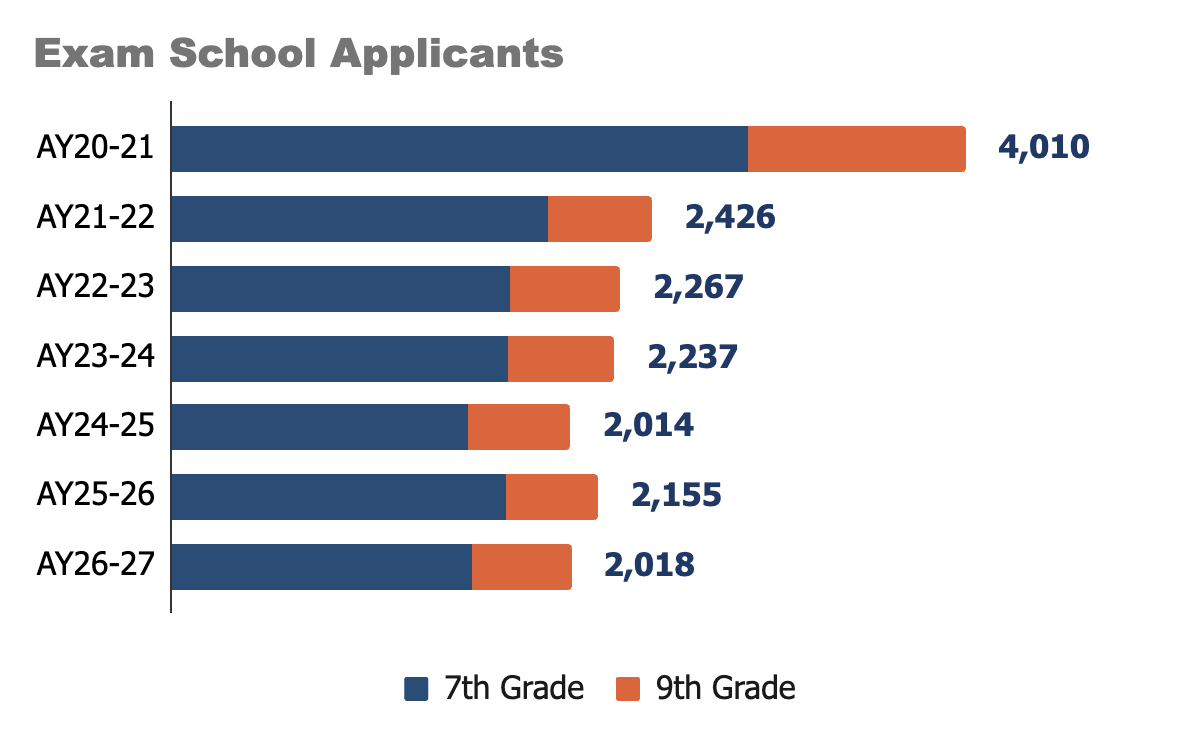
But that has not dramatically changed enrollment; 7th grade entry is slightly down, but 9th grade enrollment has filled the gap.
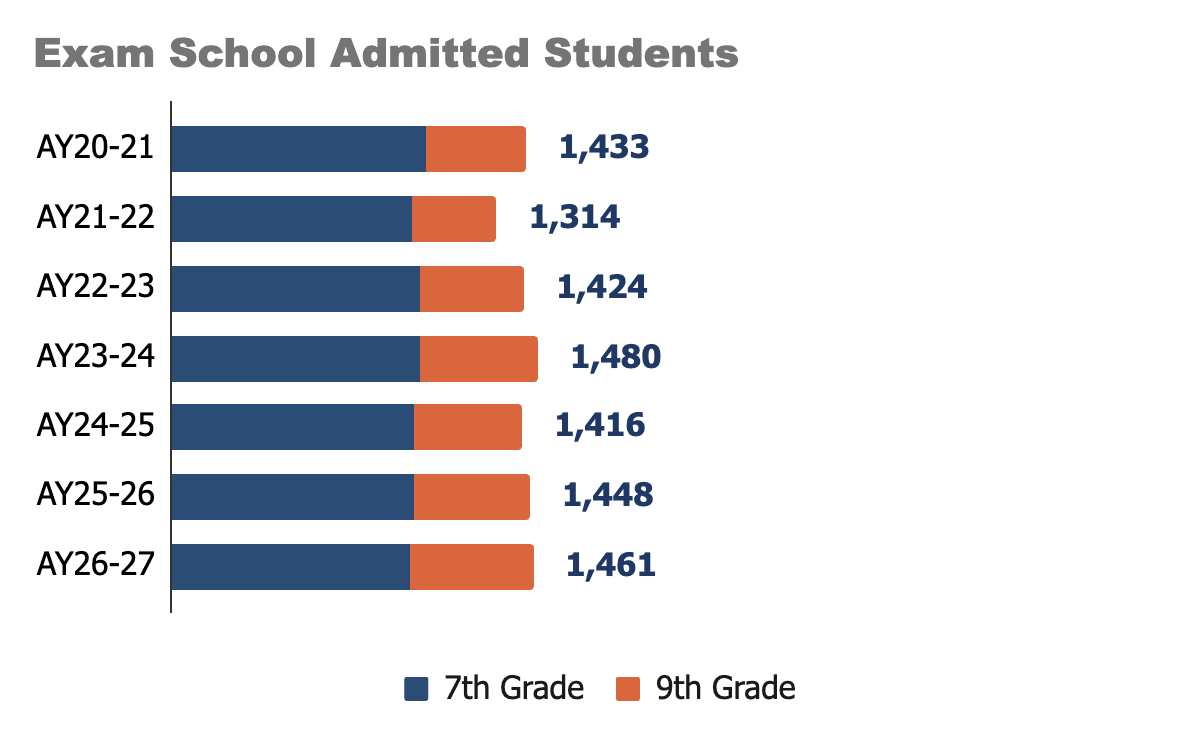
The result? Acceptance rates - inclusive of all eligible students - are much higher now.
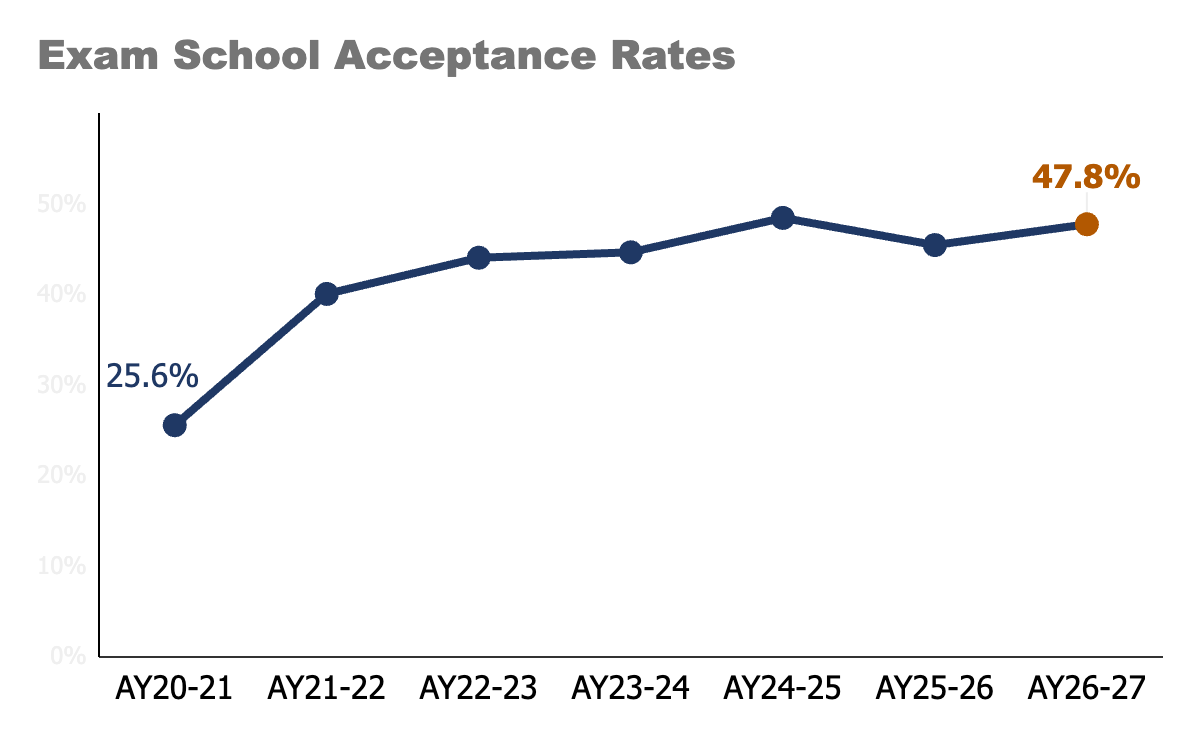
The rate climbs even higher when you only factor in students who actually apply: greater than 2 out of 3 of those students were offered a seat this spring.
Does this mean better access, or is it just easier for students to get in now? That’s a Rorschach test of your opinions on this issue, and related ones (like tracking):
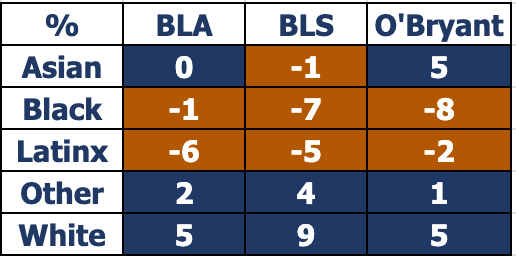
Policy changes have also impacted enrollment by race.
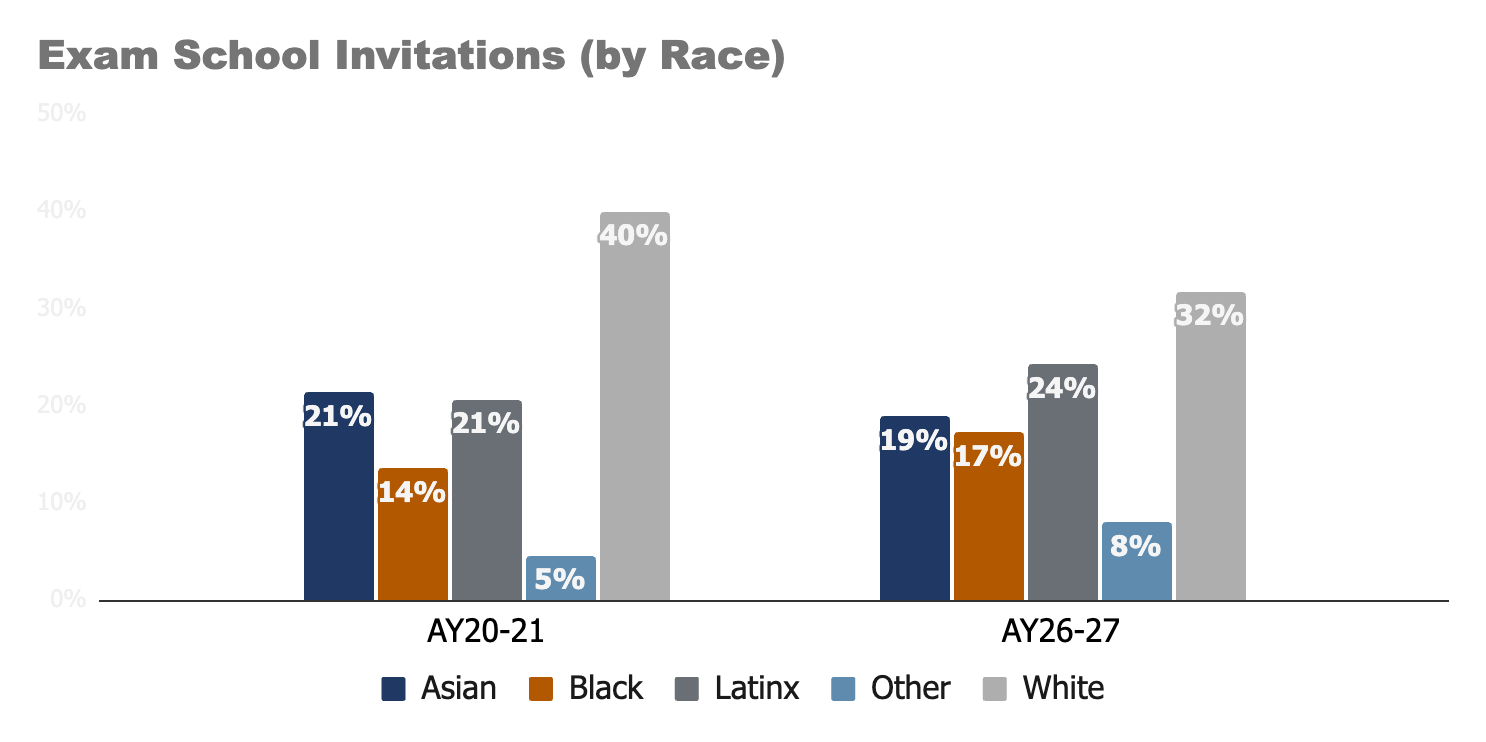
But more recent tweaks to the system - collapsing geographic tiers, eliminating “bonus points,” reserving invitations for higher scoring students - depressed this trend. Since 2023, invitations for Black and Latino students have actually declined.
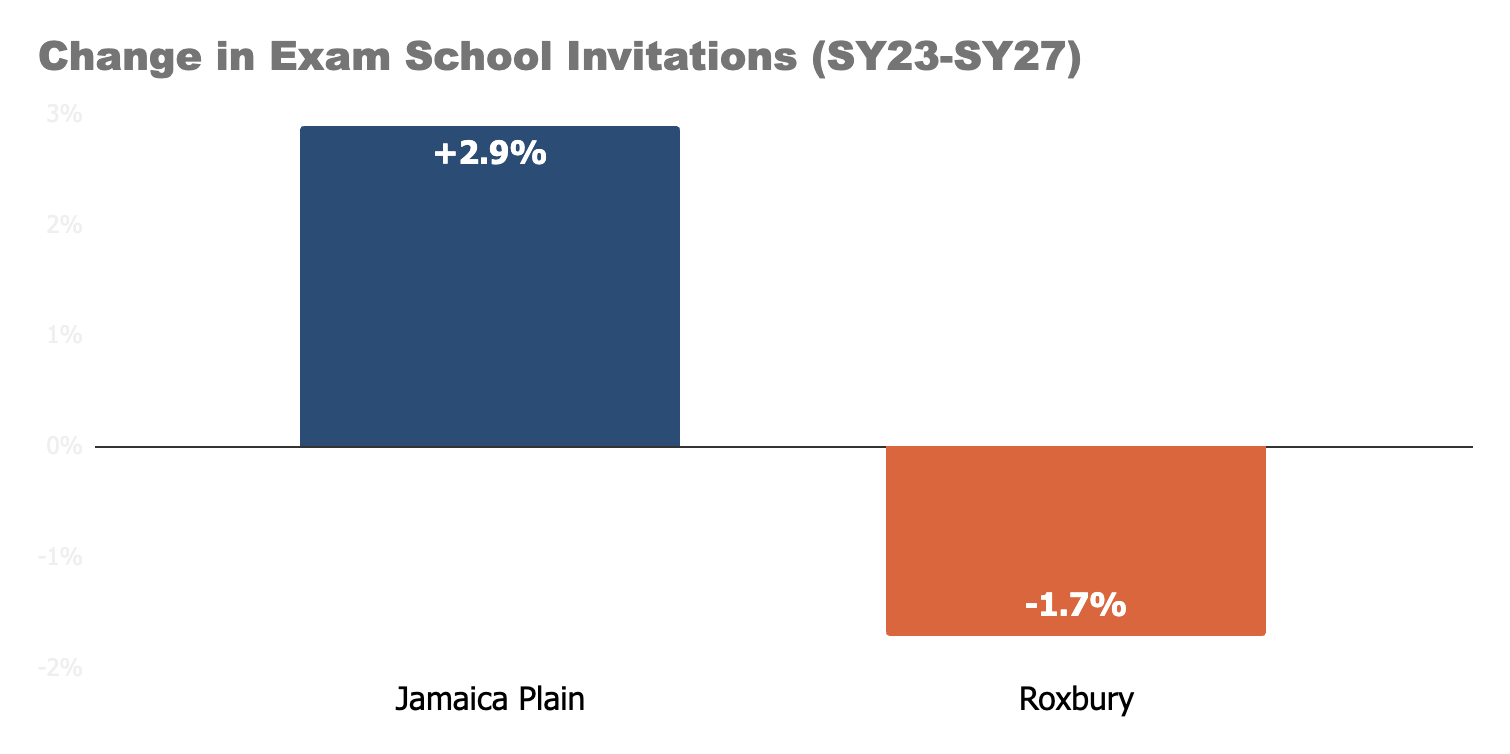
Like most things in Boston, this is reflected at the neighborhood level, too. The biggest beneficiary of the recent policy changes: Jamaica Plain. Lost the most ground? Roxbury.
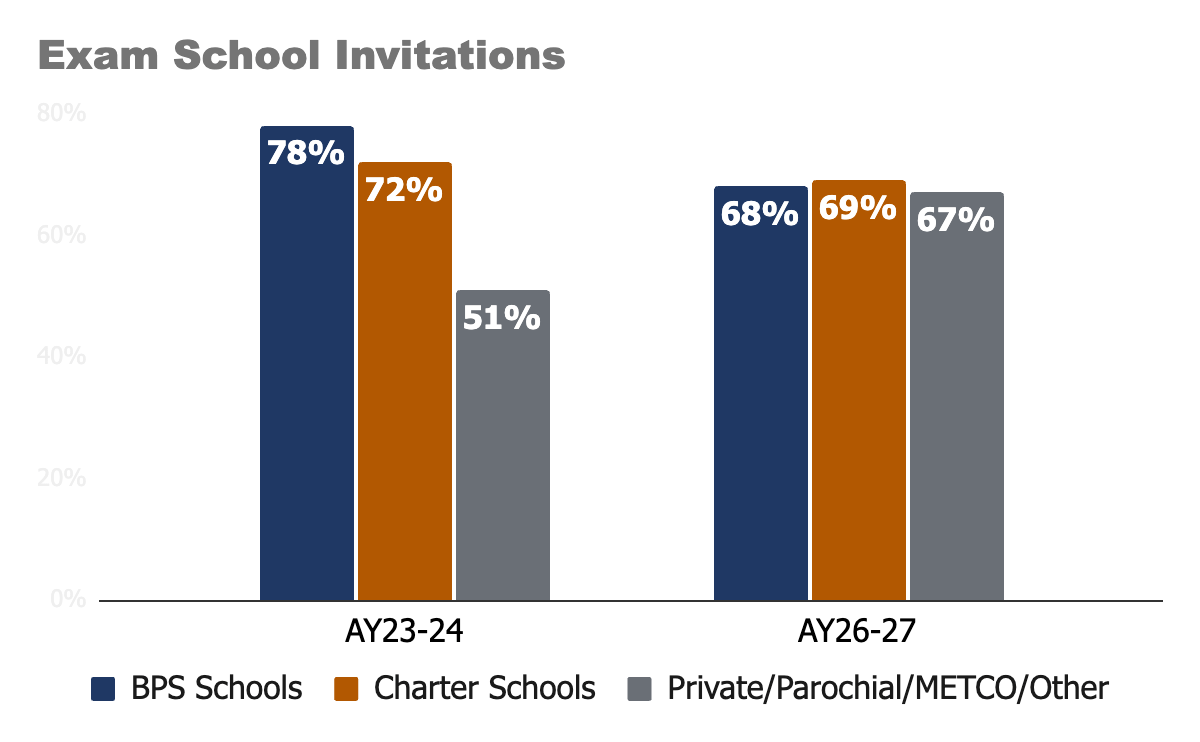
Recent changes likely eliminated the invitation gap between BPS and non-BPS schools, too.
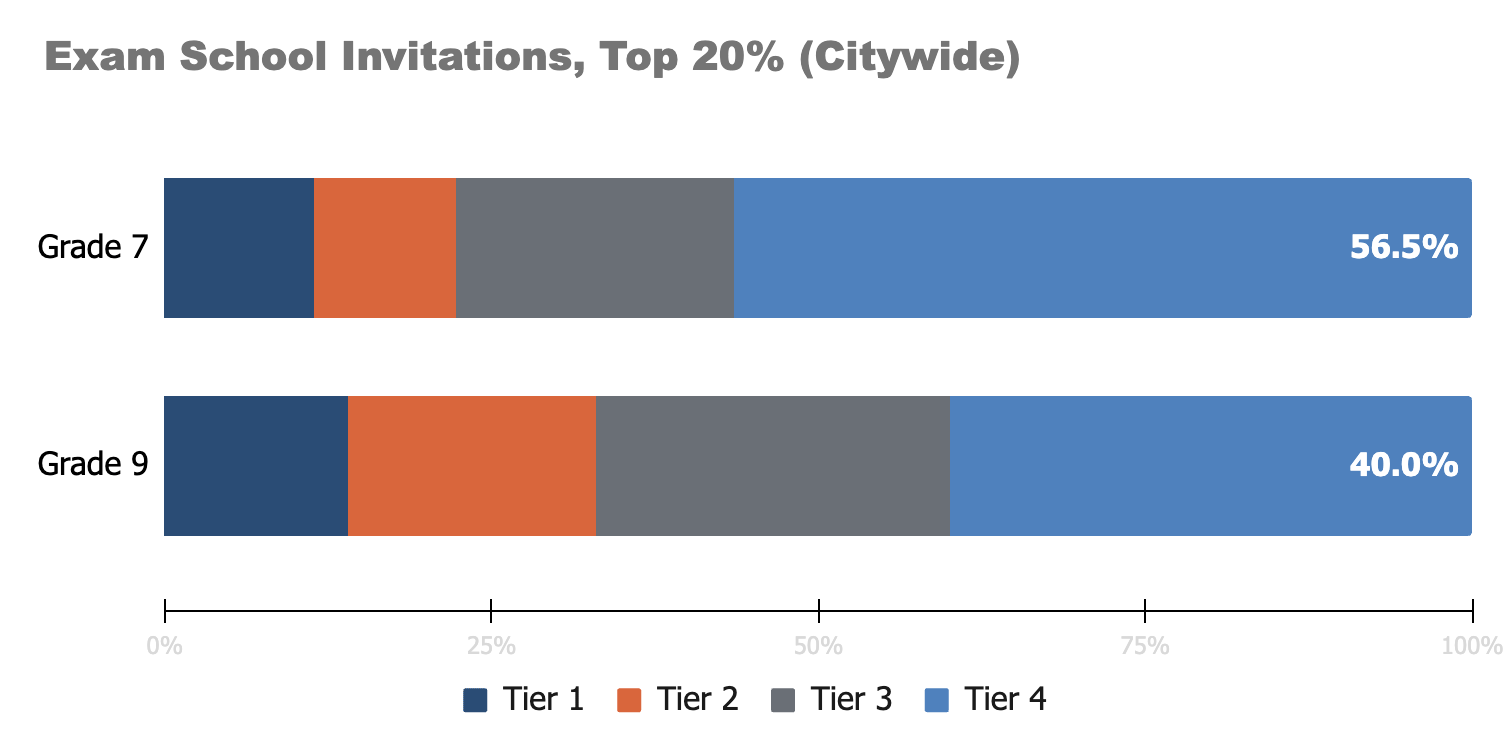
The likely cross-cutting factor for all of the above was the decision to invite students with top scores, regardless of background. The majority of those students live in Tier 4, the tracts with the highest socioeconomic status.
What does this mean going forward? With the same policy for three years, policymakers will now be able to more accurately assess how the assignment policy is operating.
But that will never answer whether or not the policy is good, or even if exam schools are good.
So long as there are real or perceived limits on access to school quality, there will continue to be debate.
Building off of previous research, BU’s Wheelock Educational Policy Center released a new data dashboard to examine enrollment trends in Massachusetts.
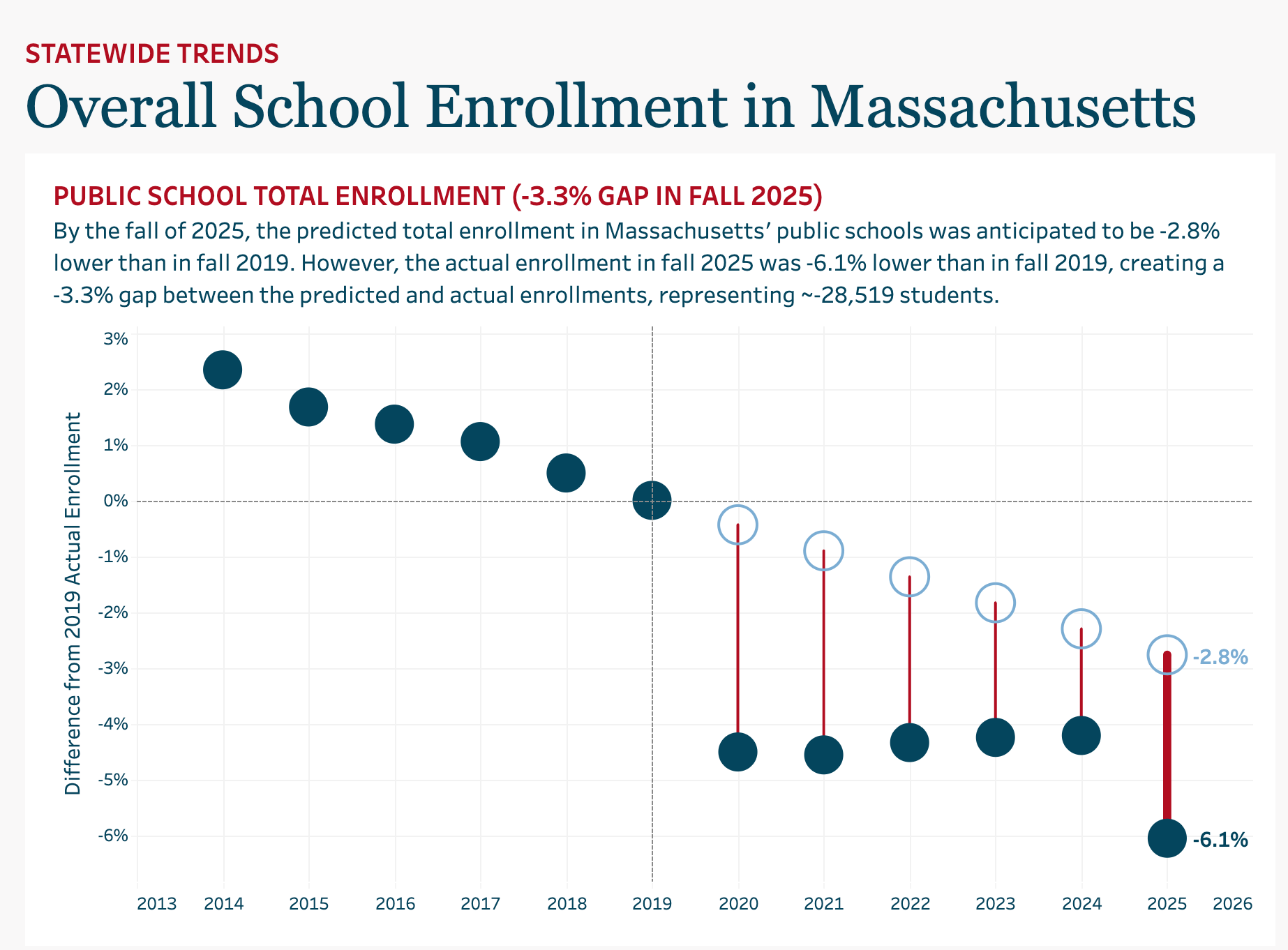
The approach is novel, comparing projections (based on demographics, birth rates, etc.) to actuals. The space between is where public policy and school quality probably matter.
Schools are included in the state’s new PROTECT Act to limit ICE enforcement.
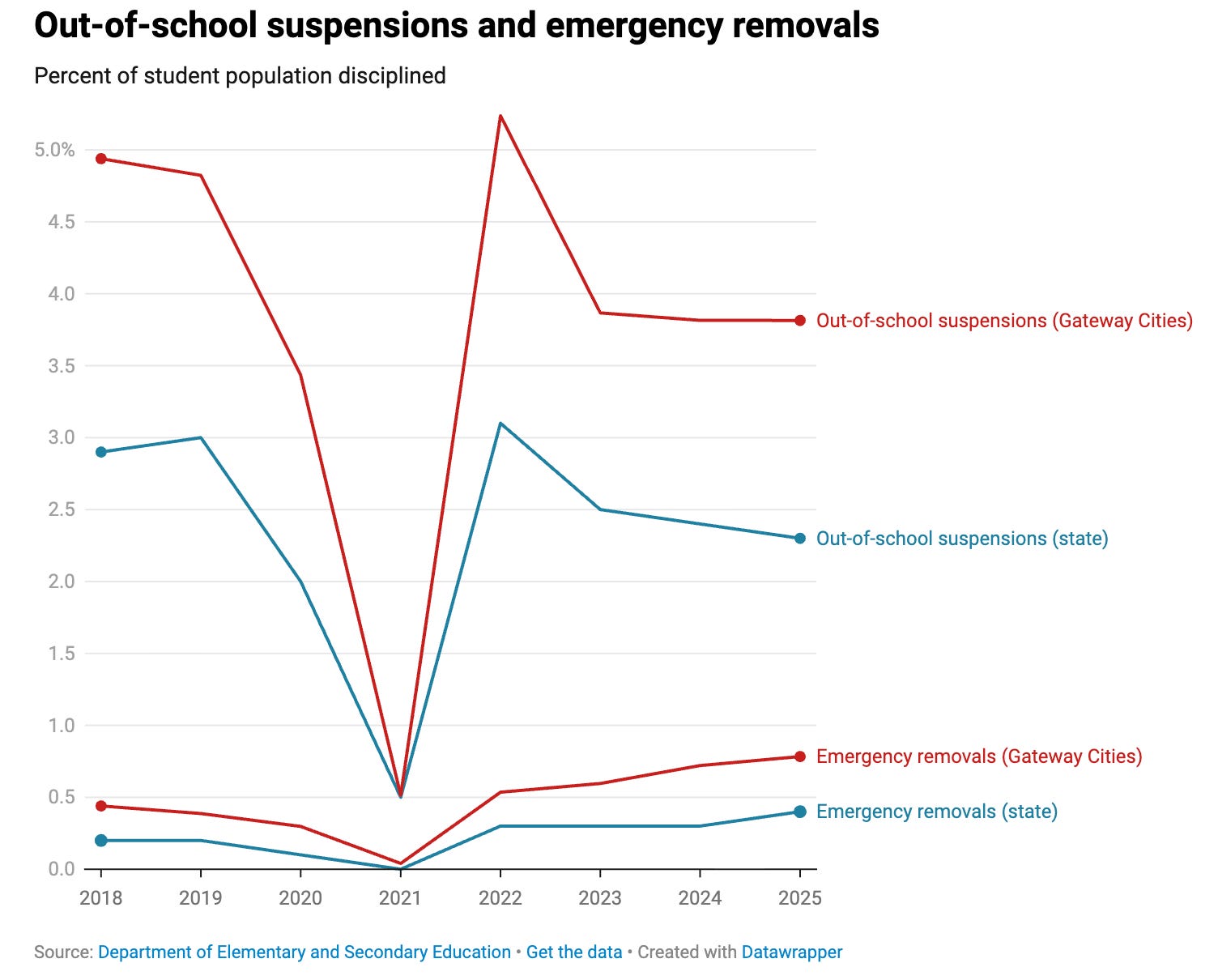
Massachusetts public schools have seen a dramatic decline in school suspensions, but administrators may be using an end-run for student discipline.
In a state with +350 school districts, residency checks have big budgetary and political implications. This reporting on Milton’s practices is getting attention from the state.
The official, but sort-of-not closing of the Massachusetts legislative session left a long to-do list, including several school/youth items: cell phone bans in schools, social media protections for minors, expanding retirement benefits for some teachers, higher ed facilities, and high school mascots.
An interview with the Mass Municipal Association around challenging school budgets.
A new wrinkle in the uprisings against data center construction: researchers project nearby schools will see lower student achievement.
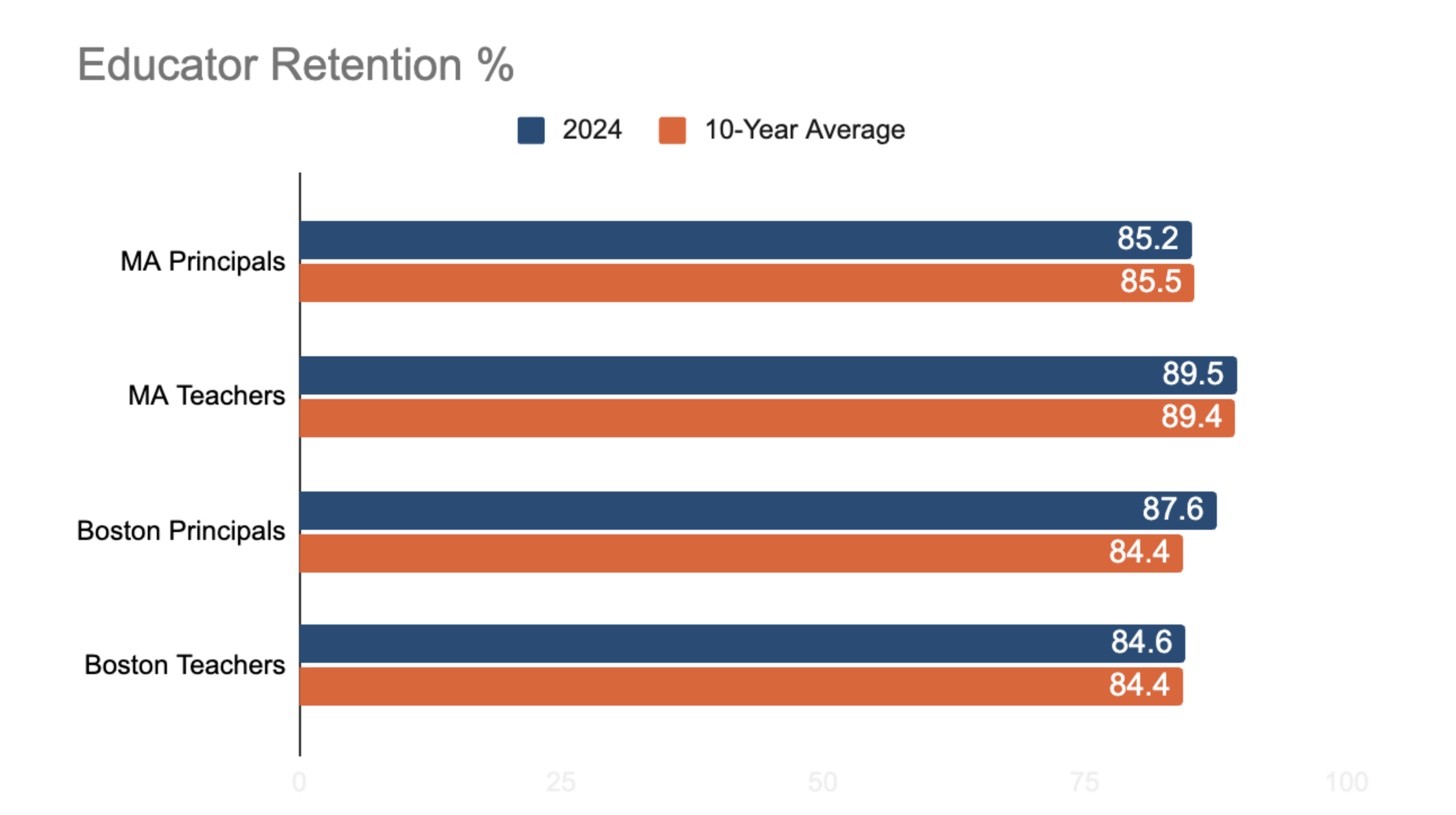
In a post-pandemic, changing economy, will teacher turnover be on the rise? A longer view of Massachusetts data implies “no,” for now.
Students from all 50 states gathered at the Edward M. Kennedy Institute to draft AI policies for schools.
After losing a New Mexico lawsuit, Meta will now pay $567M and be forced to limit social media use by minors. This is exactly how the anti-smoking and opioid accountability movements began.
Higher ed is back on the Trump Administration agenda: this new public questionnaire may or may not have carrot and sticks attached and foreign donations are being scrutinized.
Clever turn: some states are leveraging financial literacy standards/classes to address online gambling.
Reader note: Taking some time off, so expect shorter pieces until 8/28.
Comments
Nothing yet. Say the first thing.
Sign in to join the conversation.