
Note: This was originally published January 6, 2024
Summary. Recently I learnt that 2 yrs after the Magna Carta helped establish human rights, an extraordinary but far less known ‘Carta de Foresta’ (1217) helped establish environmental rights.
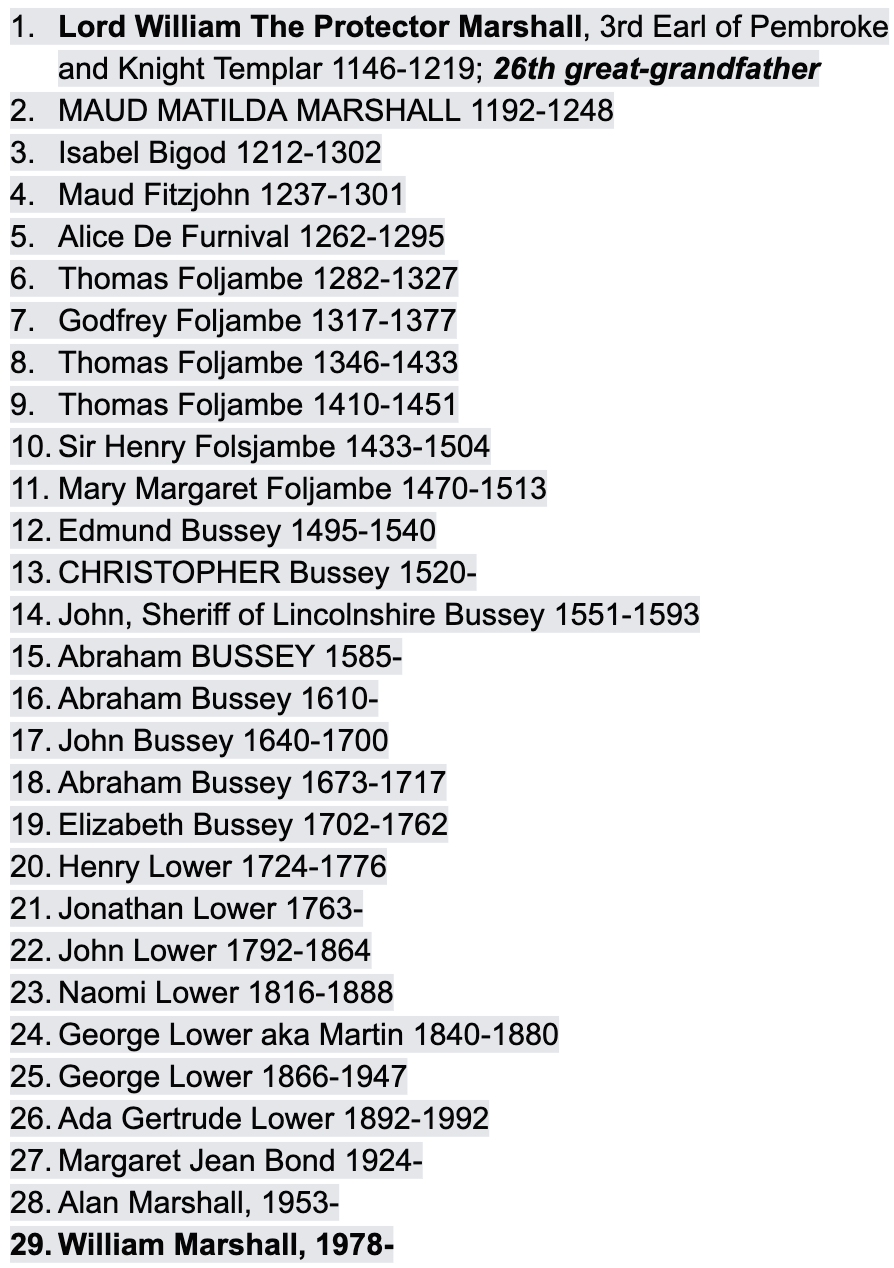
A little reading led me to learn that both were signed by one William Marshal (1146–1219) an advisor to King John. I thought this coincidence enough(!), but then found out he was my 26th great-grandfather!!
Given my passion for Nature, & protecting forests, it made this a fun quest! It was with a tiny sense of fait, then, that just after learning all this I received a letter from King Charles III to help advise on a ‘Charter’ he had in mind…
…I wrote up this fun story to motivate us to take bold steps to protect nature. The Forest Charter of 1217 was a seismic shift to the protection of Nature in England. Eight hundred years on, we need a similarly seismic shift in our approach to Nature, but on a global scale. The Forest Charter could serve as a template: today we need a Global Forest/Nature Charter! (& satellites to monitor obviously! :)
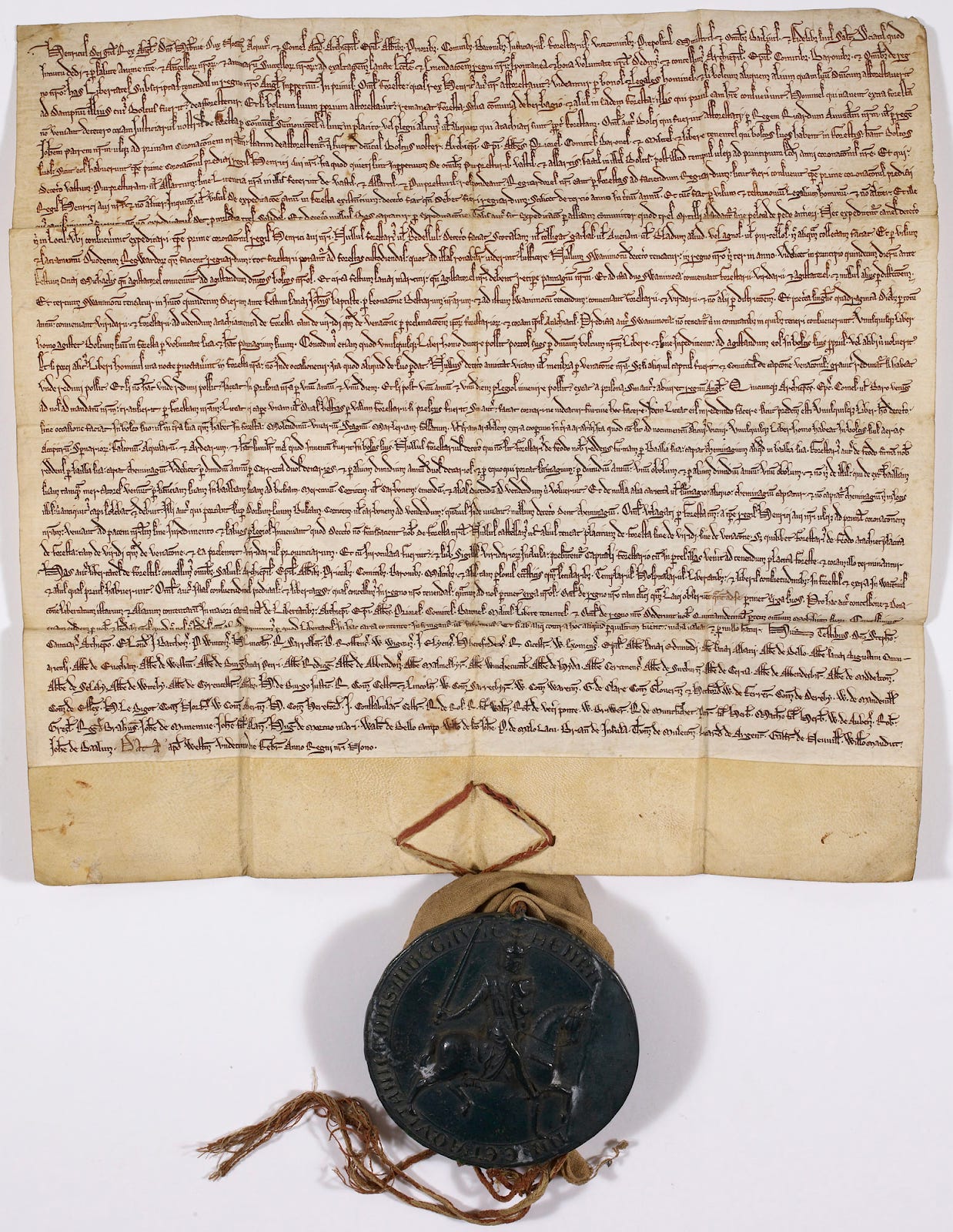
History. Two years after the Magna Carta (1215) helped establish foundations for human rights, an extraordinary but far less known piece of environmental legislation was signed called the Carta de Foresta, or ‘Forest Charter’ (1217). The Forest Charter returned forests in England from royal control to public use and in doing so placed much of them into the ‘commons’,by establishing collective stewardship over them. In a review paper marking its 800th anniversary, Magraw et al. surmised its significance:
“The Forest Charter is one of the world’s earliest pieces of environmental legislation, and the earliest example of democratic environmental governance. … The charter lays down a system of governance for the common stewardship of shared resources, specifically for the management of the commons by commoners and others for the preservation of the forests themselves …the charter can be said to embody the kernels of several important ecological concepts and principles that resonate today:.. the concept of intergenerational equity, the concept of sustainable use, and the value of biodiversity.”
It was broad, since ‘forests’ were defined to include grassland, farmland and waterways. And whilst the Magna Carta dealt only with rights of barons and royalty, the Forest Charter applied to all. It was in force in England for over 750 years — making it the longest of any statute there, and as with the Magna Carta, its principles are in use in myriad ways in the UK and beyond.
Relevance Today. I believe much of the principles of the Forest Charter are relevant today:
It rolled back great areas of Royal Forest following overreach by prior kings & expanded the ‘commons’ → Today we must protect and re-wild great areas that have been lost to various human overreach especially deforesting for agriculture & overfishing, and we need to turn much of it back into wilderness, per the 30x30 goal.[2]
Established principles of sustainable use, the value ‘ecosystems’ have in preserving wildlife, and the concept of intergenerational equity → Today we need to bring sustainable use principles to large areas including agriculture and fisheries.
Established governance of the commons — including a system of local forests courts — for the preservation of the forests. → Today we need to establish governance of the global ecological commons with global coordination but local stewardship.
Expanded the rights of those that lived and cared for these forests. → Today we must expand the rights of indigenous peoples who steward much of the remaining wild areas of Earth.
Thus, in all four key ways it provides a blueprint for what we need to do today, just at a global scale.
Why? Because today, global forests and other natural systems are at breaking point. Humans have wiped out most wildlife on Earth, with an average of 70% population decline of most animals.[3] It is nothing short of an ecocide. (Perhaps not surprisingly, global deforestation today (the largest driver of the ecocide) is about the same point proportionally to that of forests of England in 1,200 AD, so for analogous reasons is at breaking point, and for analogous reasons, needs intervention).
Personal Connection. I have a passion for nature and have dedicated much of my life’s work, through Planet primarily, to protecting it. Indeed the canonical case for Planet’s mission ‘to image the whole world every day…’, was enabling tracking of every tree on the Earth every day (this resulted in the ~3m resolution daily scan goal) — such that deforestation could be tracked in real time. So I feel particularly motivated to share the significance of the Forest Charter and its relevance today!
Coincidence would have it that the Forest Charter was instigated by my namesake, Earl William Marshal (1146–1219), a knight and advisor to four kings. When the last of these, King Henry III, was enthroned aged 9, William was appointed Regent of England. He led the Forest Carter in his first year of rule. It, and the second issuance of the Magna Carta, were signed over his seal.
That would be coincidence enough but then I learnt that William Marshal was my 26th Great Grandfather! And he is buried in Temple Church (as he was a Knight Templar) in the City of London, so last time I was there I went to see his tomb. Furthermore, my two sisters happen to live within walking distance of Hamstead Marshall, the hamlet in which he lived in, and whose church he built still has services today.
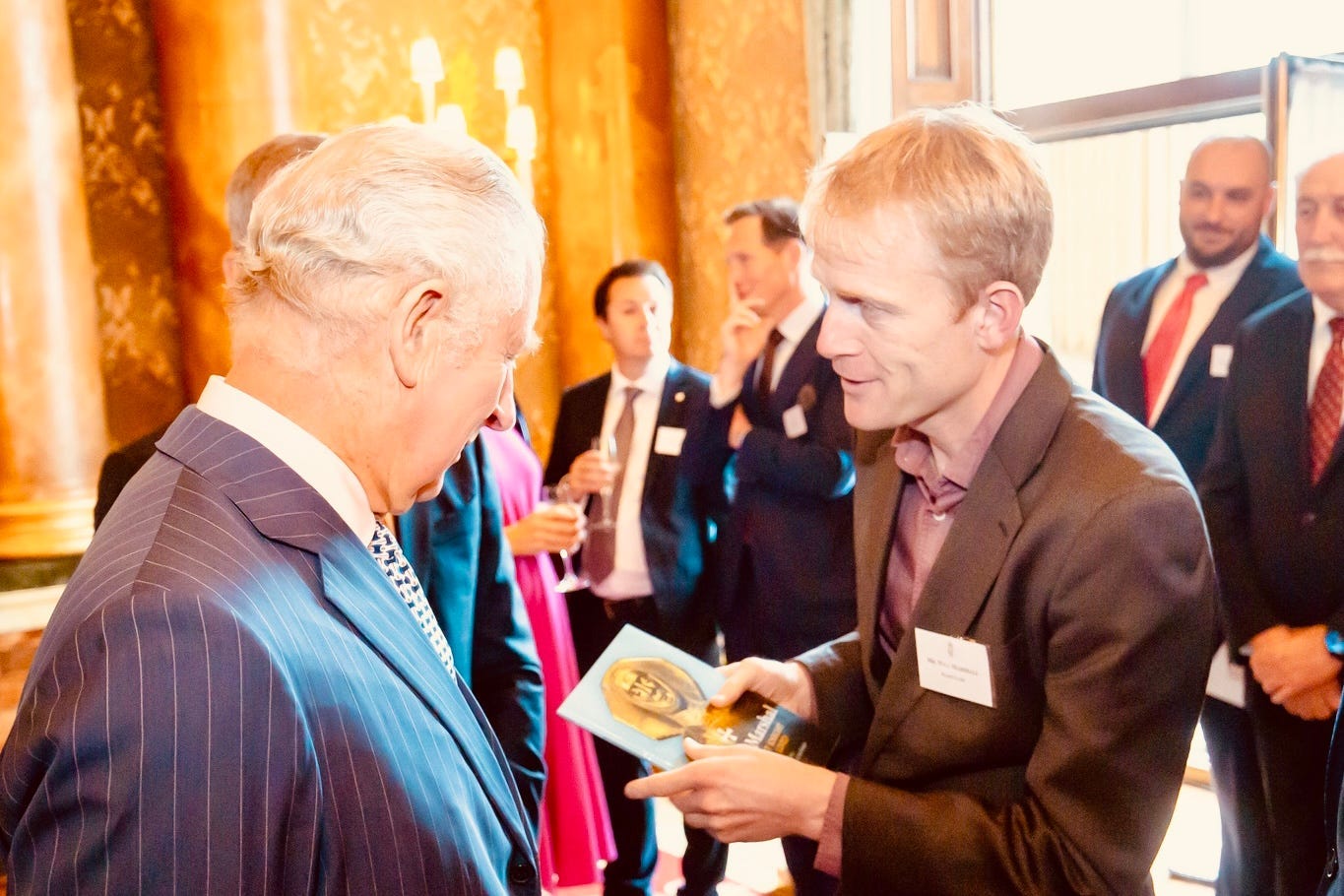
With these coincidences in hand, it was with some exhilaration (and a tiny sense of predestination), that I received an invitation from the current King, Charles III to help advise on a Charter he had in mind! The ‘Astra Carta’ is an effort to lay out a set of principles for protecting the space environment — an area in which I have some expertise from my career at NASA researching orbital space debris. And this follows his ‘Terra Carta’ launched in 2021 — a push to protect our terrestrial environment.
And Charles’ two Charters are related because space is not just relevant to environmental causes, its foundational: satellite data serve as the core way we measure, monitor and model earth’s climate and precious ecosystems. They’ve served this purpose for some decades but there’s a huge revolution underway: a flood of new data of Earth from fleets of hundreds of satellites that have gone up the last decade enable us to take care of our home in real time — to go from awareness to action. This, along with tremendous recent advances in AI, are fantastically powerful tools to enable our planetary sustainability objectives; tools that are massively underleveraged today. I contend they could enable a significant speedup of our path to sustainability from a few decades to a few years.
Thus, my advice to King Charles, was that the Astra Carta and Terra Carta be linked: that the former should not only call on the space community to care and sustainably use the space environment, but also that all the powers of the space community be leveraged and coordinated to help protect the Earth. That our collective number 1 mission as a sector be an Apollo project for Earth. And, mirroring this, that Terra Carta should draw attention to countries, companies and communities to make use of these incredible new tools to accelerate their sustainability efforts.
Conclusion. The Forest Charter of 1217 was a seismic shift to the protection of Nature in England. Eight hundred years on, we need a similarly seismic shift in our approach to Nature, but on a global scale. The Forest Charter could serve as a template. Much as it did, we need to: 1) protect and re-wild large areas of land and ocean rolling back human practices such as conversion of forests into agricultural lands or overfishing; 2) do so hand-in-hand with (& protecting the rights of) indigenous peoples who live there and steward much of it and 3) we need a system of global and local governance to back this up. I’d add that we need to value Nature into our economic system to enable true cost accounting. It could all start with a global version of the Forest Charter, as King Charles-III has instigated in his Terra Carta!
The Forest Charter was a bold piece of legislation which established principles and mechanisms to protect nature. This should inspire us to have similarly bold goals to protect Earths’ nature on a global scale.
Will Marshall
Further Reading
D. Mcgraw et. al., Carta de Foresta: The Charter of the Forest Turns 800, Env. Law Reporter 47, 10934, 2017.
30 by 30 is a worldwide initiative for governments to designate 30% of Earth’s land and ocean area as protected areas by 2030.
UN Biodiversity Report, May 2019 & my rant on medium here.

No posts
Comments
Nothing yet. Say the first thing.
Sign in to join the conversation.