
Ukraine accidentally stumbled into (or is it part of a master plan? We’ll break it down) a third war front. Trita Parsi from the Quincy Institute wrote on July 28th that Zelensky is trying to merge two wars into one single large theatre of operations, because if they become one, Ukraine stops receiving US military aid and becomes a belligerent party against Tehran instead – and that changes everything else.
Three years of Western arms supplies with a political expiration date, waning domestic social support, European rearmament that is no longer an automatic consensus every time a government has to explain why it’s spending on drones for Kyiv instead of on its own firefighting planes – that’s the background. On July 25th, Ukrainian drones struck ships in the Caspian Sea and Zelensky claimed credit, boasting of “very solid results” against a Russian warship and military cargo linked to Iran. Although Iran identified the ship and confirmed it through the state agency IRNA, Ukraine had pointed to two other vessels, the Port Olya 2 and the Begey – both already under international sanctions related to the war with Russia. The names of the ships don’t even match between the two versions, something that by this point in the conflict shouldn’t surprise anyone anymore.
Zelensky added the accusation that Russia has been sharing satellite images of US bases in Bahrain, Jordan and Kuwait with Iran since early July. And although there’s no way to verify this independently, it still serves its purpose. Elizabeth Kavanagh in Newsweek said there is little evidence of real cooperation between Israel and Ukraine, but that Zelensky understands that the only way to win his war is to expand it, dragging Washington and Europe further in.
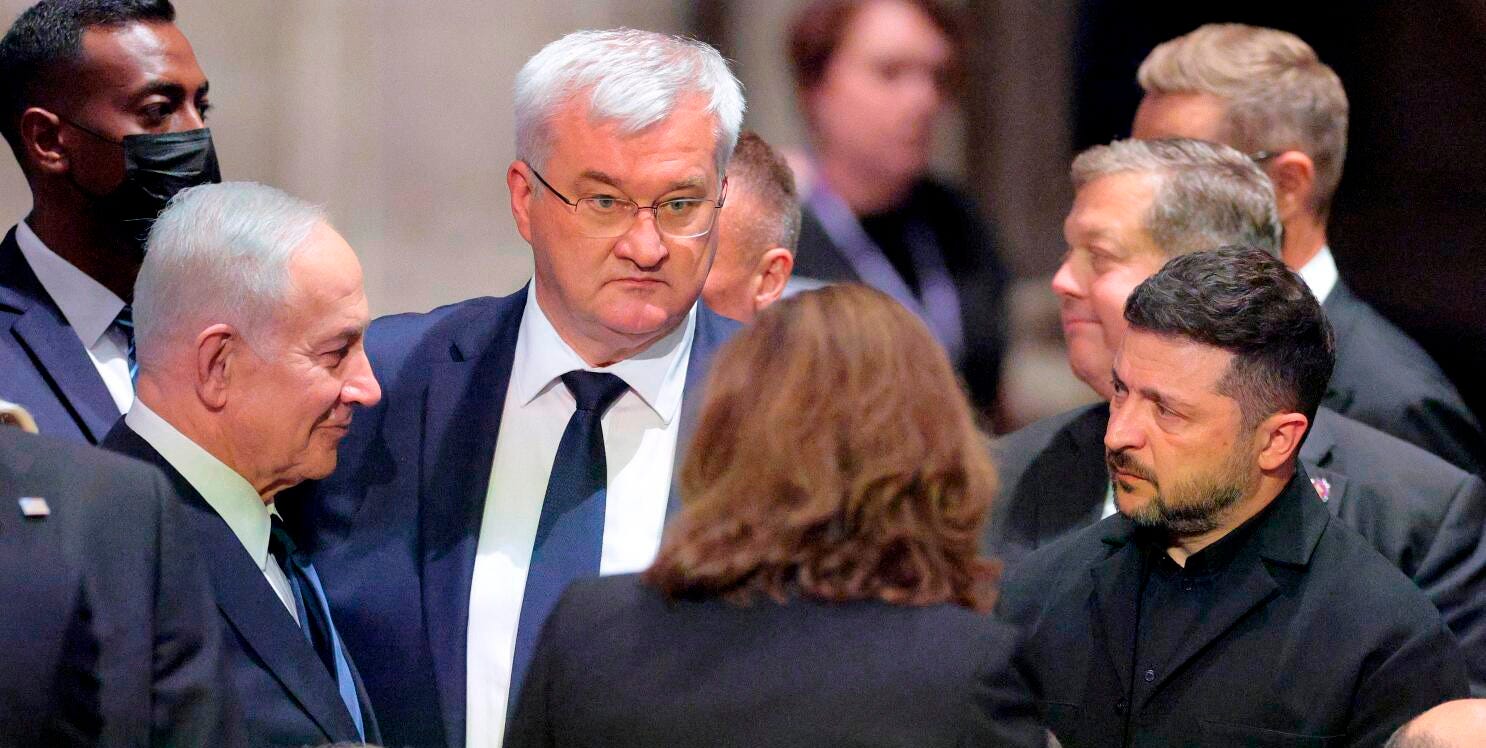
On the same Tuesday that Zelensky and Netanyahu met separately with Trump at the White House, coinciding with Lindsey Graham’s funeral, Ukraine received a license to manufacture the Patriot system on its own soil. A contradiction from Trump – in 2022 Zelensky had said he didn’t want Ukraine to emerge from the war as a neutral Switzerland but as a great Israel, an ethno-state in permanent mobilisation.
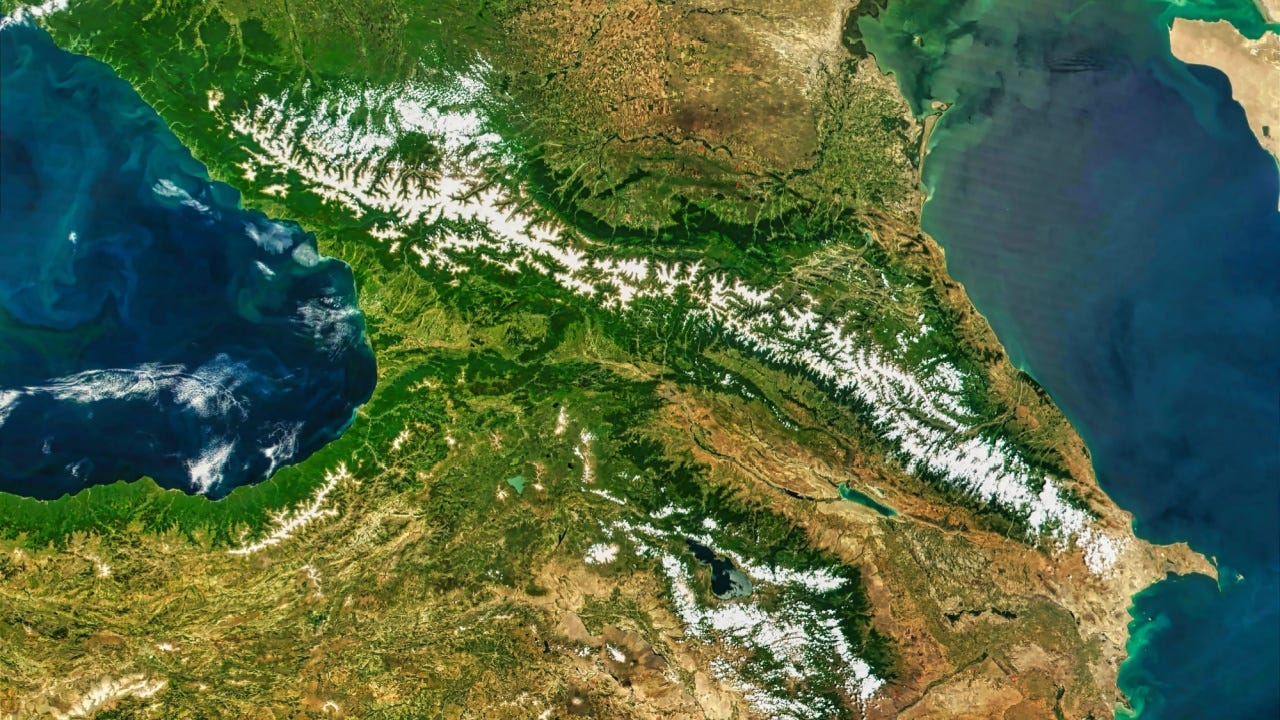
What is told separately as if it were another story is what’s happening in the Black Sea. Since early July, Russia has been hitting the port infrastructure of Odesa, Chornomorsk and Mykolaiv with missiles and drones, sinking merchant ships and killing port workers and foreign crew members. The commander of Ukraine’s Unmanned Systems Forces said that in July alone, 159 vessels were attacked between the Sea of Azov and the Black Sea. Ukraine exports about 60 per cent of its income from wheat and cereals grown in the chernozem, the black earth that is among the most fertile in Europe, and every hit on that infrastructure strikes directly at the only source of domestic income left to a country that received around 90 billion euros in Western aid this year. The corridor also has another node: the Caspian Pipeline Consortium pipeline, which carries Kazakh oil from the Tengiz field – where Chevron has a 15 per cent stake – to the Russian terminal of Novorossiysk on the same Black Sea. When talking about the Caspian and the Black Sea, one must consider that it’s the same basin connected by the same Volga-Don canal, and that what happens to an Iranian ship at one end has repercussions on Kazakh oil at the other.
Not everyone reads Zelensky’s move as a master plan. Mark Ames, a veteran reporter on Russian affairs, played down the incident as something smaller in bne IntelliNews on July 27th, suggesting it was a PR operation to win over Trump. That might be true, but it doesn’t explain why Ukraine maintained its public claim for days instead of playing it down as soon as Tehran threatened retaliation – which is what it does when diplomatic costs start to outweigh the media gains.
And in Europe, the Germans at Rheinmetall and Volkswagen are planning to convert the idle Osnabrück plant into an armoured vehicle factory after its CEO, Armin Papperger, announced that an era of rearmament in Europe has begun that will bring the company unprecedented growth. Its projections for 2026 are up to €14.5 billion in sales, a 45 per cent jump from 2025, leveraged in part on restocking missiles consumed by the war against Iran. That contract won’t collapse even if tomorrow it’s proven that the Russian threat was overblown, because the plant has already been purchased and needs future orders to pay for itself. The CSIS calculated in June that the conflict with Iran could bring Russia an extra $45–151 billion in 2026 from oil prices alone – money that ends up financing the war that Ukraine claims to be fighting, but which is now also being waged port by port in the Black Sea.
For now, nobody is losing here. Zelensky has his licence and temporary backing for the entente, Netanyahu has his expanded war with Ukrainian cover, Rheinmetall has a second excuse to expand that it no longer even needs Russia to advance another metre in the Donbas, and Russia gets paid in the Persian Gulf and in its own Caspian-Black Sea backyard, while the chernozem that feeds half of Africa is left without a port to export through, and the US midterm elections are approaching.
[References in the comments]
No posts
Comments
Nothing yet. Say the first thing.
Sign in to join the conversation.