
Welcome back to our monthly case study breaking down how successful brands win. This issue is exclusive to paid subscribers and includes practical takeaways for any brand or strategist looking to use the past as a strategic asset, whether yours is a heritage brand with decades of archive or a newer one finding meaningful ways to borrow from history.
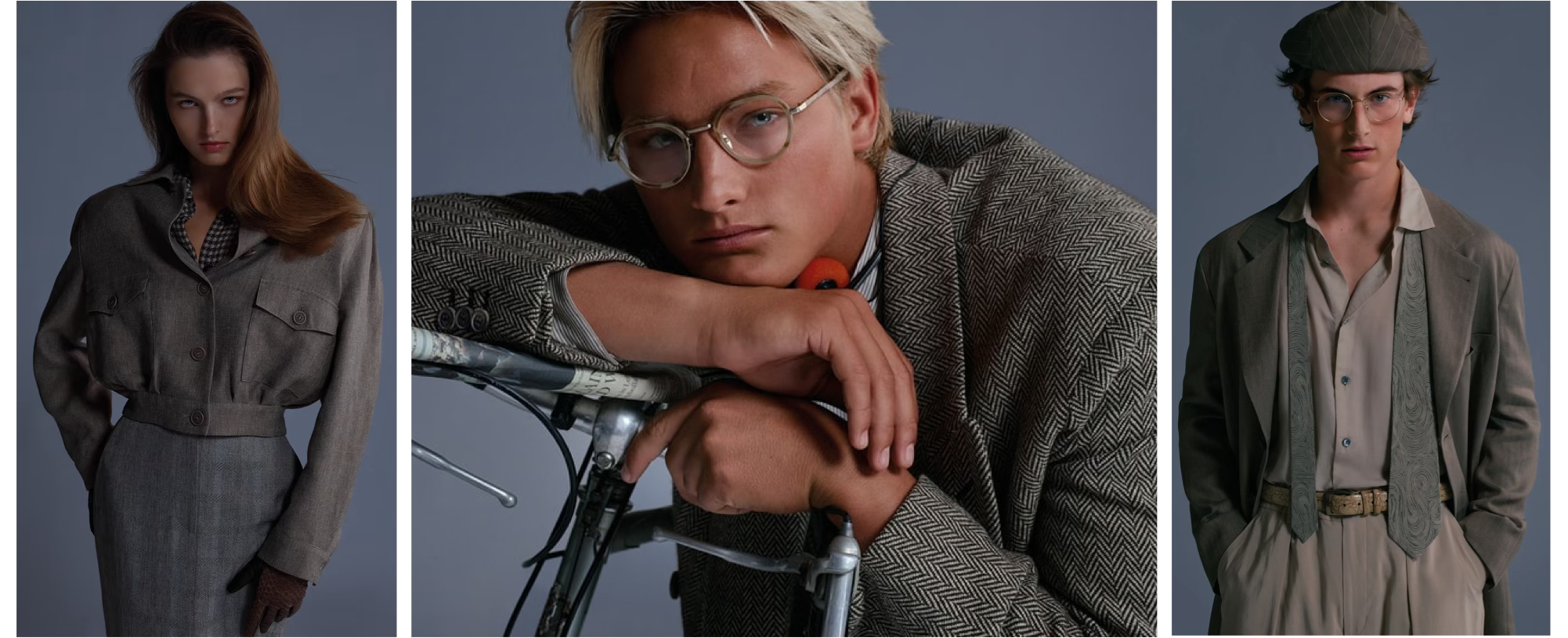
Giorgio Armani’s work is one of fashion’s most solid cornerstones. His vision defined womenswear and menswear alike, and now, a year after the founder’s passing, the brand has launched the second chapter of its Armani/Archivio project, allowing people to dive into - and wear - the archives that defined what fashion looks like today.
Armani/Archivio is a capsule of 13 looks inspired by pieces dating between 1979 and 1994: an interesting project for a brand whose entire world was based on its founder’s vision, and whose future direction is still uncertain after his passing. But the project shows something hopeful: that you can use the past to say something about the present, and maybe even about the future.
The fashion industry as a whole is digging into the archives. Sometimes this is an effort to make sense of the present, sometimes to showcase a brand’s history and long-standing tastemaking ability, and sometimes simply to compensate for a lack of new ideas.
What makes this project interesting is its balance between past and present. Pieces from the archive, yes, but reinterpreted and shown in a campaign that looks very different from the brand’s usual aesthetic language. The choice of Eli Russell Linnetz’s creative direction is certainly an unusual one, but it shows the brand in a new light: one that feels fresh instead of dusty, and infuses that bit of Californian ease where you might have expected Italian formality.
This is also how Armani taps into a market that has long been hunting for its iconic archives on vintage platforms and resellers - a market that has been generating value for everyone except Armani.
Time will tell how successful this project actually is. The strength of Armani for this initiative is its ability to draw on decades of archives. The weakness is the opposite side of the same coin: will the collection actually sell? When the brand’s classic looks can be found all over vintage platforms for a fraction of the price, the selling potential of this capsule is narrow, working only for a select few aficionados willing to pay the premium that come with owning a reissued piece of brand history.
But selling might be only one of Armani/Archivio’s goals. Through this initiative, the brand is also signalling, both to its top-spending clients who can afford the collection and to the rest of the audience who sees the campaign, that no matter the current trends, Armani looks still matter today.
So what’s the right way to go about archives? How can brands tap into the current archive obsession without looking creatively exhausted? And how can emerging brands - without the luxury of a decades-old archive - still draw on the past in a meaningful way? Keep reading to find out.
Below the paywall:
The four-pillar system behind Armani/Archivio, applicable to brands with or without an archive. Upgrade to paid to read the full breakdown - and unlock every case study in the series (Aesop, Miu Miu, Bode, Saint Laurent), alongside other exclusive pieces and travel guides.
Comments
Nothing yet. Say the first thing.
Sign in to join the conversation.